
New York winters aren’t just cold. If you live here, you know they’re relentless. Coastal winds, snowmelt, and freeze-thaw cycles crack concrete, flood basements, and drive up heating bills. Whether you’re protecting a Long Island home or keeping a Brooklyn apartment warm, small gaps and weak insulation can lead to big problems.
As Long Island’s trusted insulation, waterproofing, and foundation repair experts, Zavza Seal helps New Yorkers stay warm, dry, and energy-efficient all winter long, protecting what they’ve built from the inside out.
Protect Your Home Before The First Freeze! Schedule Your Free Consultation Now!
What Is a Freeze-Thaw Cycle and Why It Matters
When winter temperatures swing above and below freezing, moisture trapped inside concrete, brick, or soil expands as it turns to ice. That repeated expansion and contraction creates internal stress known as the freeze-thaw cycle, one of the leading causes of foundation cracks, spalling concrete, and basement leaks in New York.
Real-World Examples
- Driveways & Walkways: Surface water seeps into pores, freezes overnight, and pops off thin layers of concrete, causing flaking and crumbling by spring.
- Steps & Retaining Walls: Repeated cycles loosen mortar joints and tilt walls outward.
- Basements & Foundations: Water collects along exterior walls, freezes, and pushes inward, creating cracks that later let meltwater leak through.
Home Winterization Guide: Insulating Your Home for Winter Energy Efficiency
Most New York homes lose heat through attics, crawl spaces, rim joists, and around windows. Even small gaps allow warm indoor air to escape and cold drafts to enter, driving up energy costs and increasing the risk of frozen pipes. The winning formula? Air sealing + insulation working together to keep warmth inside and moisture outside.
Key Areas to Insulate
Attic Insulation: Retains Heat & Prevents Ice Dams
Hot air rises and escapes through under-insulated attics, melting roof snow unevenly and causing destructive ice dams. Proper attic insulation keeps roof temperatures balanced and prevents meltwater from backing up under shingles.
Wall & Rim Joist Insulation: Stops Cold Air Infiltration
Rim joists and wall cavities are notorious leak points. Dense-packed or spray-foam insulation air sealing blocks drafts and stabilizes room temperatures, especially in older Long Island homes.
Basement & Crawl Space Insulation: Prevents Freezing & Humidity
Uninsulated lower levels allow cold, damp air to creep upward. Basement insulation, foundation wall insulation, and crawl space insulation protects plumbing, keeps floors warmer, and reduces humidity that leads to mold.
Schedule a Free Insulation Inspection Before the Next Cold Front Hits.
Waterproofing Before the Freeze
As temperatures drop, the ground around your home hardens and expands. When frozen soil swells, it exerts tremendous pressure against foundation walls, pushing trapped water into even the smallest cracks. Once that ice melts, water reenters those gaps, causing leaks, seepage, and long-term structural damage.
Core Waterproofing Solutions
- Basement Waterproofing: Basement waterproofing protects your lower level from hydrostatic pressure and moisture intrusion. Interior drainage and vapor barriers keep spaces dry year-round.
- Foundation Sealing: Exterior membranes and professional-grade coatings create a watertight shield against freeze-taw damage.
- Crawl Space Encapsulation: Crawl space encapsulation includes a sealed vapor barrier system that keeps humidity, mold, and cold air from creeping upward.
- Exterior Drainage: French drains and proper grading divert snowmelt and rainwater away from your home before it can refreeze near the foundation.
Local Winter Challenges
From Nor’easters that dump heavy snow to rising groundwater after rapid thaws, Long Island and NYC homes endure repeated stress each winter. Waterproofing before the freeze ensures your foundation stays dry when the next storm hits.
Check your sump pump and perimeter drains before the first freeze. A quick test run today can prevent a flooded basement tomorrow.
Preventing Snowmelt Floods and Ice Dams
Rapid thaws can overwhelm a home’s drainage system. As warm air from inside rises, it melts roof snow unevenly, only for the water to refreeze at the eaves, forming ice dams that trap meltwater under shingles and send it dripping into attics and walls.
Common Causes
- Roof Heat Loss: Poor attic insulation allows uneven melting and refreezing.
- Clogged or Poorly Graded Drains: Direct snowmelt toward foundations instead of away from them.
- Frozen Gutters & Downspouts: Prevent runoff from escaping, forcing meltwater into siding or basement walls.
Recommended Fixes
- Gutter Guards & Downspout Extensions: Keep flow channels clear and direct meltwater safely away.
- French Drains: Capture excess runoff before it reaches your home.
- Attic Insulation: Maintains consistent roof temperature to stop ice dams at the source.
Stopping snowmelt and ice dams before they happen preserves your home’s structure and energy efficiency. Proper insulation and waterproofing work together to keep your roof, walls, and foundation safe from winter’s freeze–melt cycle.
Protecting Plumbing & Outdoor Fixtures
When temperatures drop, water expands as it freezes, turning ordinary pipes into ticking time bombs. A single burst pipe can release hundreds of gallons of water in minutes, flooding basements and walls. The good news: prevention takes less than an hour.
Homeowner Checklist
- Drain Outdoor Spigots and Hoses: Disconnect hoses, drain lines, and shut off outdoor faucets from the inside.
- Insulate Exposed Pipes: Focus on unheated areas like basements, crawl spaces, and garages. Use foam sleeves or fiberglass wrap for quick protection.
- Use Heat Tape: Wrap electric heat tape around vulnerable pipes to keep water flowing even on freezing nights.
- Know Your Main Shutoff Valve: Make sure every family member knows where it is and how to close it in an emergency.
HOMEOWNER TIP: Set a reminder to open cabinet doors under sinks on cold nights. This keeps warm air circulating around pipes.
Prevent Burst Pipes Before the Freeze! Schedule Your Plumbing Winterization Service Today!
Winterizing Windows, Doors, and Vents
Tiny gaps around windows, doors, and vents can leak as much warm air as a half-open window. Sealing those leaks boosts comfort and reduces heating bills, especially in older New York homes.
Smart Sealing Solutions
- Air Sealing & Caulking: Seal cracks where framing meets walls or trim. Silicone caulk works best for exterior joints exposed to cold air.
- Window Film Kits: Add an invisible layer of insulation that traps warmth inside and reduces condensation.
- Weatherstripping: Replace worn rubber gaskets around doors and windows to stop drafts.
- Vent Insulation & Covers: Add insulated vent plugs or magnetic covers to keep cold air from entering through unused vents.
- Thermal Curtains & Door Sweeps: Simple upgrades that create an extra barrier against winter air.
Protecting Outdoor Areas (Decks, Driveways & Foundations)
Decks, driveways, and foundation walls take the brunt of winter wear. Salt, ice, and moisture degrade coatings, leading to cracks and costly repairs once spring arrives.
Pre-Winter Maintenance Checklist
- Apply Deck Coatings or Sealants: Protect wood from snowmelt and UV exposure.
- Use Breathable Concrete Sealers: Allow vapor to escape while blocking water intrusion. Avoid plastic coatings that trap moisture.
- Inspect Foundation Walls: Repair cracks early to prevent water expansion inside concrete.
- Clear Surfaces Regularly: Avoid salt buildup and use calcium chloride instead of rock salt to minimize erosion.
Landscaping and Drainage Preparation
Good drainage prevents winter flooding and foundation damage. When snow melts or rain freezes, poor grading traps moisture where it causes the most harm.
Homeowner Checklist
- Regrade Low Spots so water runs away from foundation walls.
- Clear Yard Drains and Downspouts of leaves and debris.
- Trim Vegetation Away From Foundations to allow airflow and prevent root pressure.
- Shut Down Irrigation and Sprinklers by scheduling a professional irrigation blowout before the first hard freeze.
Crawl Space & Air Quality Check
Cold, damp crawl spaces are breeding grounds for mold spores and musty odors that spread through HVAC systems. Even a small amount of winter humidity can raise crawl-space moisture beyond safe levels.
Professional Inspection & Testing
Zavza Seal’s air quality testing and crawl space inspection services detect hidden moisture, mildew, and poor ventilation before they cause health issues. Encapsulation, dehumidifiers, and targeted insulation maintain dry, balanced air year-round, protecting both your foundation and your family’s lungs.
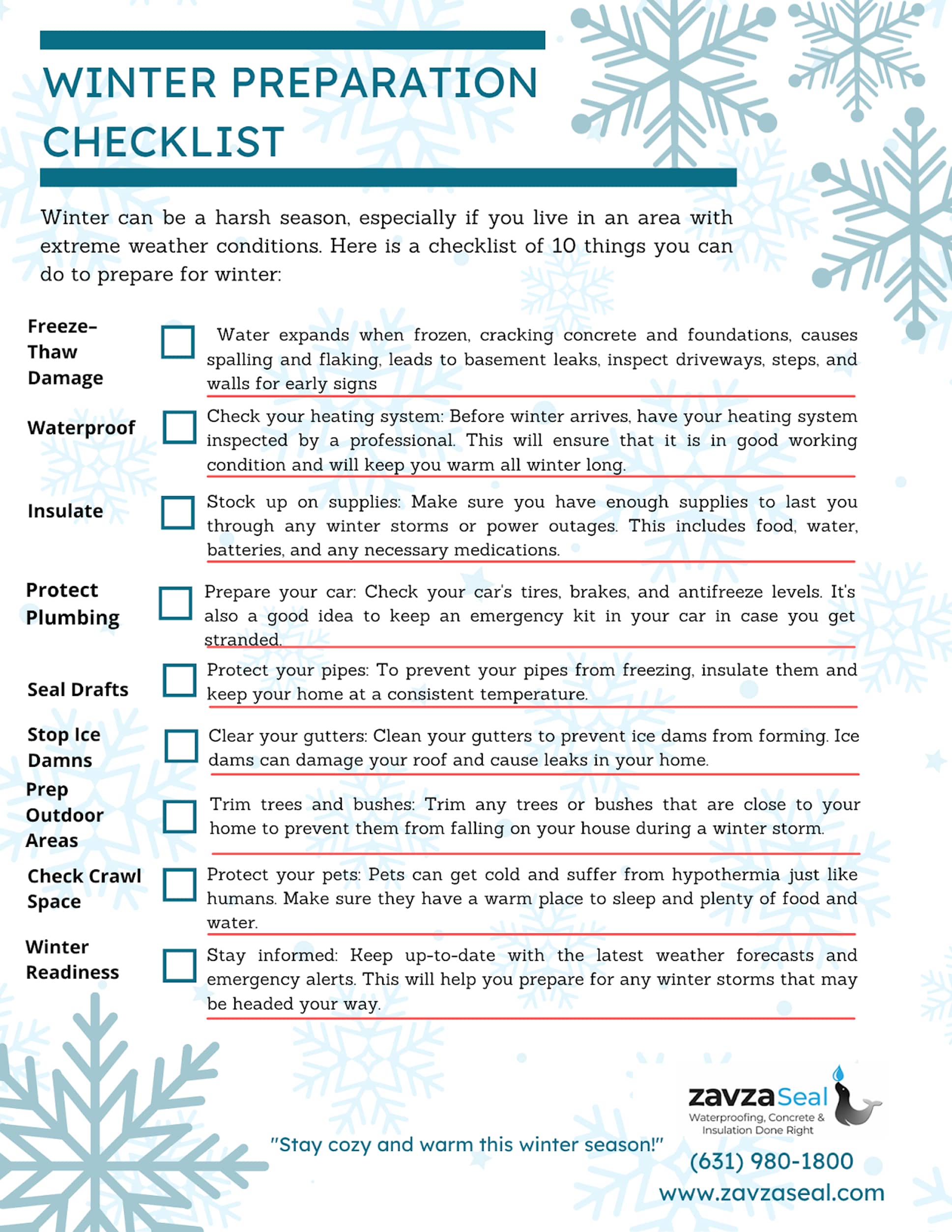
Winter Emergency Preparedness Checklist
Before temperatures dip below 32°F, review this homeowner checklist:
- Drain and insulate plumbing pipes
- Test sump pump and backup battery
- Inspect insulation in attic and crawl space
- Clear gutters and downspouts
- Seal drafts around windows and doors
- Schedule heating system tune-up
- Check yard drains and grading
- Review emergency supplies and shut-off locations
Remember, a 10-minute review before the first cold snap can prevent thousands in repairs. Don’t wait for the first freeze to find a leak. Call Zavza Seal today for a free winterization and waterproofing inspection.
Home Winterization Guide: How Zavza Seal Protects Long Island Homes Year-Round
We hope this home winterization guide is something you put in action to protect your home. Remember, with a little bit of prep work, you can save thousands in potential damages during the winter.
From flood-prone basements in Nassau County to wind-beaten attics in Suffolk, Zavza Seal LLC has helped thousands of New York homeowners stay dry, energy-efficient, and storm-ready. Protect your home from freeze-thaw cycles, flooding, and cold drafts with the team New York trusts most.
Get Your Free Consultation Now →