
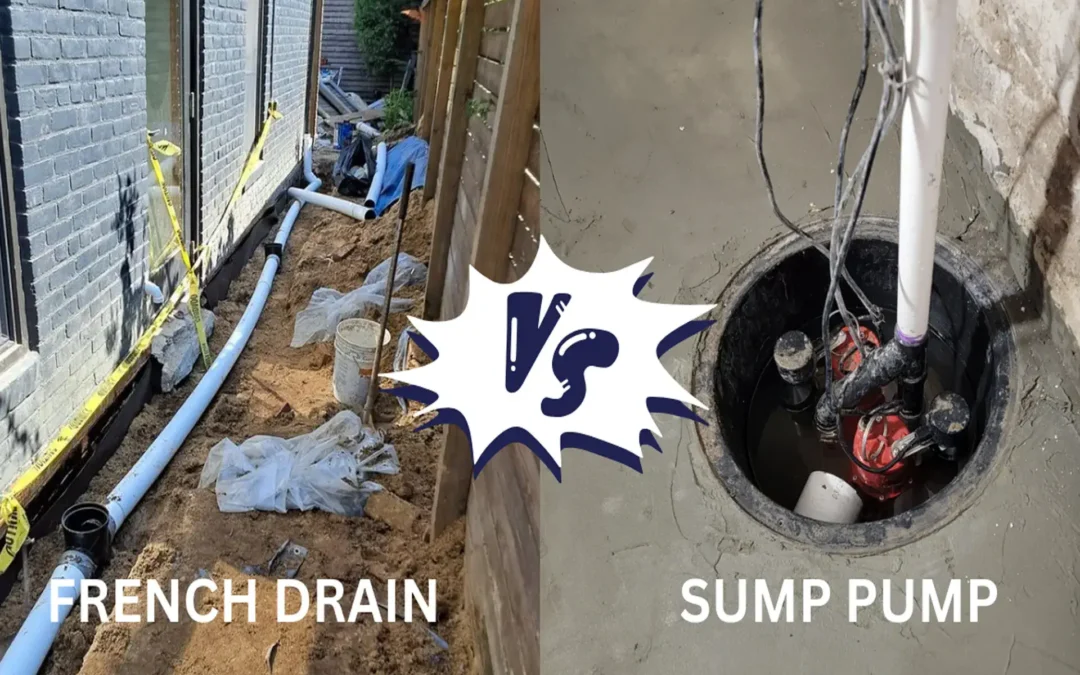
When you’re dealing with water in your yard, basement, or around your foundation, it’s common to compare French drains vs sump pumps and wonder which one you actually need. Both help you manage moisture problems, but they work in completely different ways, and choosing the wrong system can leave you right back where you started.
This guide walks you through everything you need to know so you can make the right call for your home. You’ll see the real differences between the two systems, how each one works, what they cost, when a sump pump vs French drain makes the most sense, and the situations where you’ll need both for full protection.
By the end, you’ll understand the strengths, limitations, and pricing of each drainage system so you can choose a solution that keeps your basement dry, protects your foundation, and gives you long-term peace of mind.
Let’s break it down in a simple, stress-free way, starting with the key difference between the two systems.
Not Sure What Drainage System is Best for Your Long Island Home or Business? Contact Us for a Free Assessment! Our Opinion is Always Free!
What’s the Difference Between a French Drain and a Sump Pump?
A French drain is a subsurface drainage system that redirects groundwater away from your home to reduce moisture around the structure. A sump pump, on the other hand, collects water inside a basin and pumps it out mechanically once the water level rises.
The core difference is simple:
A French drain is passive, using gravity for groundwater control.
A sump pump is active, removing water through powered equipment.
Understanding this helps you decide which water intrusion solution fits your basement waterproofing needs.
Benefits of a French Drain
When comparing the benefits of a French drain vs sump pump, a French drain is often the better option when you need long-term, low-maintenance protection from subsurface moisture.
Benefits of a French Drain:
- Reduce hydrostatic pressure around the foundation
- Prevent water from reaching the structure before it becomes a problem
- Rely on a passive drainage system with no electricity, switches, or mechanical failure points
- Improve yard drainage, crawl space moisture control, or exterior perimeter waterproofing
Because it works continuously and quietly underground, a French drain is one of the most dependable ways to manage subsurface water over time.
Benefits of a Sump Pump
A sump pump is the right choice when you’re dealing with active water removal, especially inside the home. It excels in situations where water collects quickly and needs to be pushed out fast.
A sump pump is ideal when you want:
- Fast water removal during sudden leaks or flooding
- A solution for basements with frequent flooding or pooling water
- A system that performs well during major storm events
- The option to pair it with an interior French drain for a complete interior waterproofing setup
Because it’s a powered water removal system, a sump pump handles emergencies that passive systems can’t manage on their own.
French Drain vs Sump Pump Cost Comparison
When you’re comparing French drain cost vs sump pump installation cost, the biggest difference comes down to how each system works and what your home actually needs. A French drain typically costs more because it requires excavation, labor, and materials over a larger area. A sump pump has a lower upfront cost, but includes mechanical parts and ongoing maintenance.
Your drainage installation pricing depends on a few key factors:
- How much water needs to be controlled
- Whether the work is inside or outside the home
- Soil conditions and access for equipment
- Linear footage (for drains) or system type (for pumps)
- Your overall waterproofing budget
Most homes fall within predictable ranges, but the right system depends on whether you’re dealing with groundwater flooding, standing water, or both.
French Drain Cost (Exterior, Interior, Yard, Crawl Space)
French drain pricing varies widely because every property is different. In most homes, you can expect:
- Exterior French Drains: Moderate to higher pricing due to excavation depth
- Interior French Drains: Higher-end pricing because concrete must be cut and restored
- Yard Drains: Typically on the lower end unless grading or landscaping needs correction
- Crawl Space Drains: Moderate ranges depending on access and moisture conditions
Costs are driven by:
- Depth of excavation
- Soil type (sand, clay, or rocky soils)
- Access constraints around the home
- Total linear footage required
A detailed breakdown appears in the pricing table below.
Sump Pump Cost (Standard, Battery Backup, Combination Systems)
Sump pump systems are generally more affordable upfront, especially if you already have a basin in place. Typical pricing includes:
- Standard pump + pit installation: mid-range cost depending on discharge route
- Battery backup system: additional cost for protection during power outages
- Combination systems: higher investment but ideal for homes with heavy water intrusion
Keep in mind:
- Pumps need routine maintenance and eventual replacement
- A sump pump alone may not solve hydrostatic pressure problems, interior drains are often required
- Backup power is strongly recommended for storm-prone regions
French Drain vs Sump Pump: Pricing Table
| System Type | Ideal Use Case | Average Cost Range | Ongoing Maintenance | Pros | Cons |
|---|---|---|---|---|---|
| French Drain (Exterior) | Yard drainage, foundation protection | $25–$60 per LF | Low | Passive, long-lasting | Excavation required |
| French Drain (Interior) | Basement groundwater | $60–$120 per LF | Low | Relieves pressure | Concrete removal |
| Sump Pump | Standing water, basement flooding | $1,200–$3,000 | Medium | Fast water removal | Requires power + maintenance |
| Pump + Interior Drain Combo | Heavy water intrusion | $8,000–$15,000 | Medium | Comprehensive solution | High initial cost |
For commercial or complex structural projects, exact pricing requires an inspection since site conditions vary significantly.
When You Need a French Drain, a Sump Pump, or Both
Choosing the right drainage solutions comes down to understanding where the water is coming from and how it behaves around your home. Below are the clearest scenarios to help guide your basement waterproofing strategy:
Choose a French Drain When:
- Groundwater pressure is pushing against your foundation
- Your yard floods or stays soggy after rain
- You have exterior drainage issues that cause moisture to collect around the structure
- You want a long-term moisture control system without mechanical parts
Choose a Sump Pump When:
- Water is entering your basement during storms
- You experience sudden or repeat flooding
- Water gets trapped inside and needs to be removed quickly
- Interior protection is the priority
Choose Both When:
- Water is entering the basement and groundwater pressure exists outside
- You want maximum foundation protection from multiple water sources
- Your home sits in a high-risk flood zone, low-lying area, or has a history of seepage
In many homes (especially older ones) you get the best performance by combining both systems.
French Drain vs Sump Pump: Performance in Real-World Situations
How each system performs depends heavily on the conditions you’re dealing with. Here’s what you can expect:
Heavy Rain:
- French Drain: Redirects rising groundwater away from the structure.
- Sump Pump: Removes interior water quickly if levels rise inside.
Seasonal Groundwater Spikes:
- French Drain: Excellent at preventing pressure buildup around the foundation.
- Sump Pump: Helps if groundwater enters the basement during high-water seasons.
Snowmelt:
- French Drain: Handles slow, sustained moisture in soil as temperatures warm.
- Sump Pump: Activates in basements where melted snow seeps inside.
Flood-prone basements:
- French Drain: Reduces pressure but won’t remove large volumes of interior water.
- Sump Pump: Essential for active pumping during heavy events.
Crawl Spaces:
- French Drain: Ideal for protecting crawl space perimeters and reducing damp conditions.
- Sump Pump: Useful when standing water collects beneath the home.
Both systems support each other when conditions involve both pressure and pooling water.
Maintenance Requirements: Which System Is Easier to Own?
When comparing sump pump maintenance with French drain longevity, the long-term workload is very different.
French drain maintenance:
- Requires only occasional flushing or inspection
- No power source, switches, or mechanical failure points
- Can last decades with minimal attention
- Best for homeowners who want low-effort home drainage upkeep
Sump pump maintenance:
- Needs regular cleaning and testing to stay reliable
- Should include a battery backup to work during power outages
- Pumps typically last 5–10 years before replacement
- Requires more hands-on care due to moving parts and electrical components
If you want the lowest maintenance commitment, the French drain is the easier system to own.
Pros and Cons: French Drain vs Sump Pump
Here’s a simple, fast-reference comparison to help you choose confidently:
French Drain Pros
- Long-lasting, low maintenance
- Reduces groundwater pressure
- Protects foundation from exterior moisture
- Works without electricity
French Drain Cons
- Higher installation effort due to excavation
- Costs vary based on property layout
Sump Pump Pros
- Removes interior water quickly
- Essential for basements prone to flooding
- Works well during storms and sudden events
- Can integrate with an interior French drain
Sump Pump Cons
- Requires regular maintenance and power
- Mechanical parts can fail
- Ineffective alone against exterior pressure
French Drain vs Sump Pump: Final Thoughts
A French drain and a sump pump solve different kinds of water problems, and choosing the right system depends on whether your moisture issues come from outside, inside, or both. Costs vary based on the project, but the most effective waterproofing plans often combine the two systems for full protection. If you want clarity about what your home actually needs, a professional evaluation will give you a tailored, accurate solution.
Get a Free French Drain or Sump Pump Evaluation Today!
Frequently Asked Questions About French Drains and Sump Pumps
Do I need a French drain or a sump pump for basement waterproofing?
It depends on where the water is coming from. If groundwater pressure is building around the foundation, a French drain helps most. If water is entering the basement, a sump pump handles interior removal.
Can a sump pump replace a French drain?
Not always. A sump pump removes water after it enters your basement, while a French drain prevents water from reaching the structure. They solve different problems.
How much does it cost to install a French drain vs a sump pump?
French drains usually cost more due to excavation and linear footage. Sump pumps cost less upfront but require ongoing maintenance. Exact pricing depends on location, access, and system type.
Will a sump pump work during a power outage?
Only if you have a battery backup or generator. Without backup power, the pump can’t run during storms—the time you need it most.
How long do French drains last?
A properly installed French drain can last decades with minimal maintenance because it has no mechanical parts.
Do sump pumps require a lot of maintenance?
They require regular cleaning, testing, and occasional part replacement. Most pumps last 5–10 years before needing replacement.
Can I install both a French drain and a sump pump?
Yes. Many homeowners benefit from a combined system—French drain for groundwater control, sump pump for interior water removal.
What causes groundwater pressure around a foundation?
Soil saturation from heavy rain, poor grading, or a high water table can push moisture toward the foundation, which a French drain can help relieve.
Do French drains help with yard flooding?
Yes. Exterior French drains are one of the most effective solutions for soggy yards and soil that doesn’t drain properly.
How do I know which system is right for my home?
A professional assessment looks at soil conditions, water patterns, foundation structure, and interior moisture levels to determine whether you need a French drain, a sump pump, or both.