
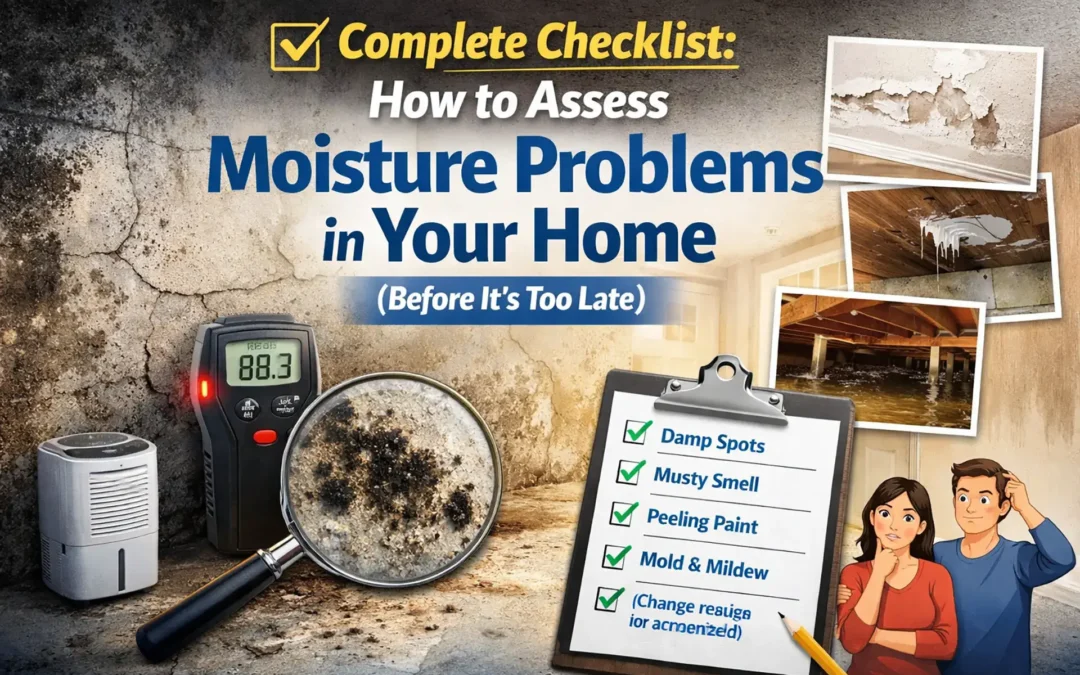
Most moisture problems do not start with a flood or standing water.
They start quietly.
A musty smell that will not go away. Paint that begins to peel. A basement that feels damp no matter the season. These small signs are easy to ignore, but they are often the first warnings of a bigger issue developing behind the scenes.
This guide will help you understand how to spot moisture problems early, before they turn into mold, structural damage, or costly repairs.
Why Moisture Problems Are Often Missed
Many homeowners assume moisture issues will be obvious. In reality, the most damaging problems usually stay hidden for a long time. Water can seep through foundation walls, collect behind drywall, or build up in crawl spaces without ever forming visible puddles.
By the time mold appears or materials begin to fail, the moisture has often been present for months or even years.
That is why learning what to look for early matters.
Who This Checklist Is For
This checklist is meant for homeowners who feel that something might be off in their home but are not sure how serious it is. It is also helpful for new homebuyers who want peace of mind or anyone living in areas like Long Island, Queens, Brooklyn, or the Bronx where moisture issues are common.
You do not need tools or technical knowledge. You just need to observe your home carefully.
Start With the Basement or Lower Level
Basements are the most common place for moisture to show up first.
Pay attention to smells. A persistent musty odor is often the earliest warning sign. Look closely at the walls and floors for staining, peeling paint, or a white chalky residue. After heavy rain, notice whether certain areas feel damp or look darker than usual.
Rust on appliances or metal fixtures can also be a sign that humidity levels are too high.
If you notice more than one of these signs, moisture is likely entering the space and not properly escaping.
Do Not Ignore the Crawl Space
If your home has a crawl space, it deserves attention even if you rarely go down there.
Damp soil, standing water, or sagging insulation are all red flags. A strong earthy or musty smell often means moisture has been present for a long time. Mold on wood framing or excessive condensation can indicate that moisture is spreading upward into the rest of the home.
Crawl space moisture does not stay contained. It affects floors, indoor air quality, and structural supports over time.
Look at Walls and Ceilings Throughout the Home
Moisture problems do not always come from below.
Discoloration on walls or ceilings, bubbling paint, soft drywall, or mold near corners and windows often point to hidden leaks or trapped humidity. Condensation that forms regularly on interior walls is another sign that moisture levels are not balanced properly.
These issues are easy to dismiss as cosmetic, but they are often symptoms of something deeper.
Check Around Windows and Doors
Windows and doors are common entry points for water.
Take a moment to look around frames and trim. Rotting wood, cracks, or damp areas after rain are signs that water may be getting in. Condensation combined with drafts can also signal sealing or insulation problems that allow moisture to build up inside walls.
Over time, even small leaks in these areas can lead to mold and structural damage.
Do Not Forget the Attic
Moisture problems can also start from above.
In the attic, look for water stains, damp insulation, or mold on rafters and plywood. Poor ventilation can trap moisture, leading to insulation failure and long-term roof issues. Many homeowners never check their attic until a problem becomes severe.
A quick inspection can reveal early warning signs before damage spreads.
Pay Attention to How Your Home Feels
Sometimes moisture problems show up in comfort rather than appearance.
If your home always feels humid, if condensation forms regularly on windows, or if you rely heavily on a dehumidifier just to stay comfortable, excess moisture may be circulating through the house. Frequent allergy symptoms or lingering odors can also be connected to hidden moisture issues.
Your home should feel dry, comfortable, and stable year-round.
When a Checklist Is Not Enough
This checklist is designed to help you spot warning signs, not diagnose the cause.
It cannot measure moisture inside walls, detect hidden mold, or determine whether foundation or drainage problems are present. If you notice several issues across different areas of your home, it is a strong sign that a professional assessment is needed.
Why Acting Early Matters
Moisture problems do not go away on their own.
When left unaddressed, they often lead to mold growth, structural damage, and higher repair costs. They can also affect indoor air quality and your family’s health.
Catching the problem early almost always means simpler and more affordable solutions.
When to Call a Professional
You should consider a professional moisture assessment if you notice recurring dampness after rainfall, persistent odors, visible mold, or signs of moisture in multiple areas of your home. It is also a smart step before finishing a basement or starting major renovations.
Zavza Seal specializes in identifying moisture problems at their source and providing long-term solutions, not temporary fixes.
Frequently Asked Questions
How serious are moisture problems in a home?
Even minor moisture issues can lead to mold, material damage, and air quality concerns if ignored.
Can moisture problems cause mold?
Yes. Mold can begin growing within one to two days when moisture is present.
Is basement moisture normal?
No. While common, basement moisture usually indicates drainage or foundation issues that should be addressed.
Can I fix moisture problems myself?
Surface issues can sometimes be managed, but underlying causes often require professional solutions.