
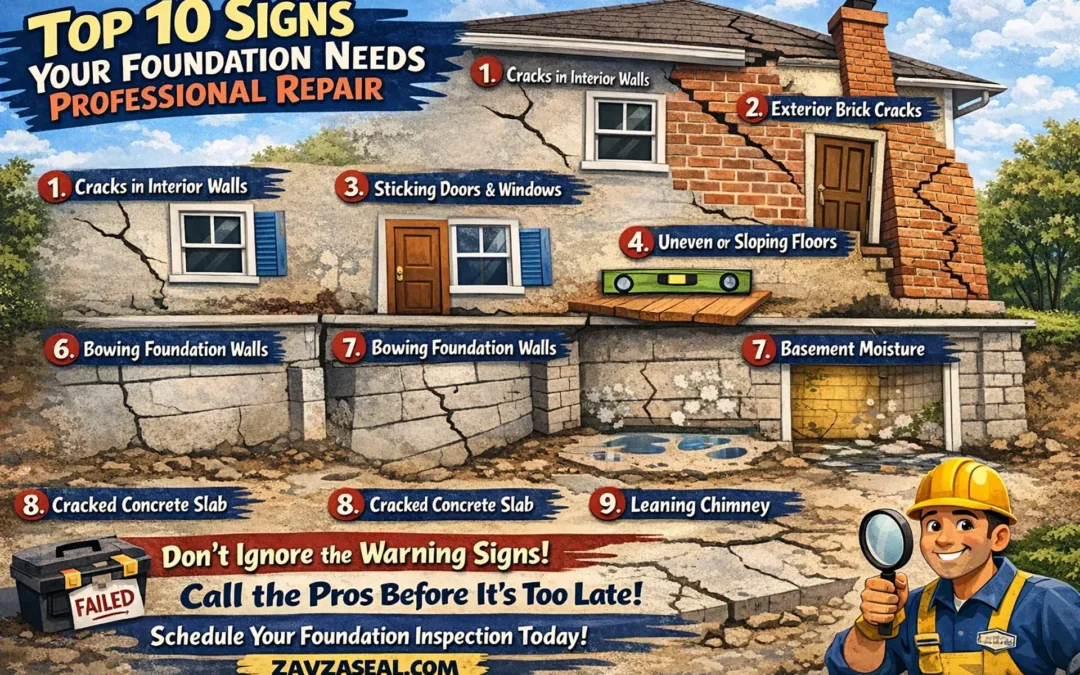
Your foundation holds your entire home together. When something starts to go wrong, the signs are often subtle at first. Many homeowners ignore them until the damage becomes expensive and disruptive.
If you notice any of the signs below, your home may be telling you it needs professional foundation repair.
This guide explains what to look for, what it could mean, and when it is time to call an expert.
1. Cracks in Interior Walls or Ceilings
Hairline cracks can be normal as a house settles over time. The concern starts when cracks become wide, jagged, or continue to grow.
Common red flags include:
- Diagonal cracks near doors or windows
- Stair-step cracks in drywall
- Cracks that reappear after being patched
These cracks often indicate foundation movement, not just cosmetic issues.
If cracks are spreading or returning, a professional inspection is recommended.
2. Cracks in Exterior Brick or Foundation Walls
Exterior cracks tell a more serious story because they reflect structural movement.
Look closely for:
- Stair-step cracks in brick or block
- Horizontal cracks along foundation walls
- Cracks wider than a quarter inch
Horizontal cracks are especially concerning and usually require immediate professional attention.
3. Doors and Windows That Stick or Will Not Close Properly
When a foundation shifts, the frame of your home can become misaligned.
You may notice:
- Doors dragging on the floor
- Windows that suddenly become difficult to open
- Gaps forming around frames
If multiple doors or windows are affected, foundation movement is a likely cause.
4. Uneven or Sloping Floors
Floors should feel level and solid underfoot. If they do not, your foundation may be settling unevenly.
Signs include:
- Floors that slope in one direction
- Soft or bouncy areas
- Furniture that slowly moves or tilts
These symptoms should never be ignored, especially if they worsen over time.
5. Gaps Between Walls, Ceilings, or Floors
Small gaps can form naturally, but growing gaps often indicate structural movement.
Watch for:
- Separation between walls and ceilings
- Baseboards pulling away from walls
- Visible gaps around trim
These changes suggest the home is shifting, not just aging.
6. Bowing or Leaning Foundation Walls
Foundation walls should be straight and stable. When they begin to bow inward or lean, pressure from soil and moisture is usually the cause.
This is a serious condition that can lead to structural failure if left untreated.
Professional evaluation is critical in this situation.
7. Moisture Problems in the Basement or Crawl Space
Foundation issues and moisture problems often go hand in hand.
Common warning signs include:
- Damp walls or floors
- White chalky residue known as efflorescence
- Musty odors or visible mold
Water intrusion weakens foundation materials and accelerates damage over time.
8. Cracked or Uneven Concrete Slabs
If your home sits on a slab foundation, cracks in the slab itself are an important warning sign.
Pay attention to:
- Wide or uneven slab cracks
- Cracks that create height differences
- Cracks that continue to expand
These issues typically require professional repair rather than surface patching.
9. Chimney Pulling Away From the House
A leaning or separating chimney is often one of the clearest signs of foundation trouble.
If you notice:
- Gaps between the chimney and siding
- A visible tilt
- Cracked mortar around the chimney base
This usually indicates uneven settlement and should be addressed promptly.
10. Foundation Repairs That Failed in the Past
If your home has already had foundation repairs but symptoms are returning, the underlying issue may not have been fully resolved.
This could be due to:
- Improper repair methods
- Ignored drainage issues
- Ongoing soil movement
A professional reassessment can identify what was missed the first time.
Why Ignoring Foundation Problems Can Be Costly?
Foundation damage does not fix itself. Over time, small issues often turn into major structural repairs that cost significantly more.
Early professional intervention can:
- Prevent further structural damage
- Protect your home’s value
- Reduce long-term repair costs
When to Call a Foundation Repair Professional?
If you are seeing multiple signs from this list, or if symptoms are getting worse, it is time to call a professional.
A trained foundation specialist can:
- Identify the root cause of the problem
- Determine whether repairs are needed
- Recommend long-term solutions, not temporary fixes
Schedule a Professional Foundation Assessment With Zavza Seal
At Zavza Seal, we specialize in identifying and repairing foundation issues caused by moisture, soil movement, and structural stress.
If you are unsure whether your foundation needs repair, a professional assessment can give you clear answers and peace of mind.