
Solving Persistent Water Intrusion After Interior Waterproofing
Project Overview:
Zavza Seal was called to a property in South Setauket, NY after the owner noticed continued water intrusion even after previous interior waterproofing work had been completed. While the interior system was functioning as designed, water was still entering through cold joints between an underground tunnel and the adjacent building structures.
This type of problem often points to exterior conditions that interior systems simply cannot reach. Our job was to identify the true source of the water and correct it at its origin.
The Problem:
Water Entering Through Cold Joints:
During our on-site assessment, we identified that water was entering along cold joints located higher than the interior waterproofing system could intercept. The tunnel ceiling sat at approximately 9 feet, while the adjoining building slab was closer to 14 feet, creating a vertical difference of about 5 feet.
Because of this elevation gap, hydrostatic pressure was forcing water through higher-level cold joints. Interior waterproofing alone could not resolve the issue.
Settlement and Drainage Issues:
We also found:
- A concrete slab near Building 1 that had settled about one inch, creating a tripping hazard and allowing water to collect near the foundation
- Poor surface drainage directing water toward the structures
- Downspouts discharging water too close to the buildings
- A concrete patio near Building 2 that allowed water to move toward a sensitive cold joint
Without correcting these exterior conditions, water intrusion would continue.
The Solution:
Building 1 Concrete Slab Lifting and Drainage Improvements
To address settlement, joint leakage, and surface water issues, our team completed the following work:
- Lifted and leveled a 12 by 12 concrete slab using stone slurry grout to fill voids beneath the slab
- Gently raised the slab back to its proper position and patched all injection holes
- Cleaned and sealed the vertical foundation joint using foam backer rod and high-performance polyurethane non-shrink sealant
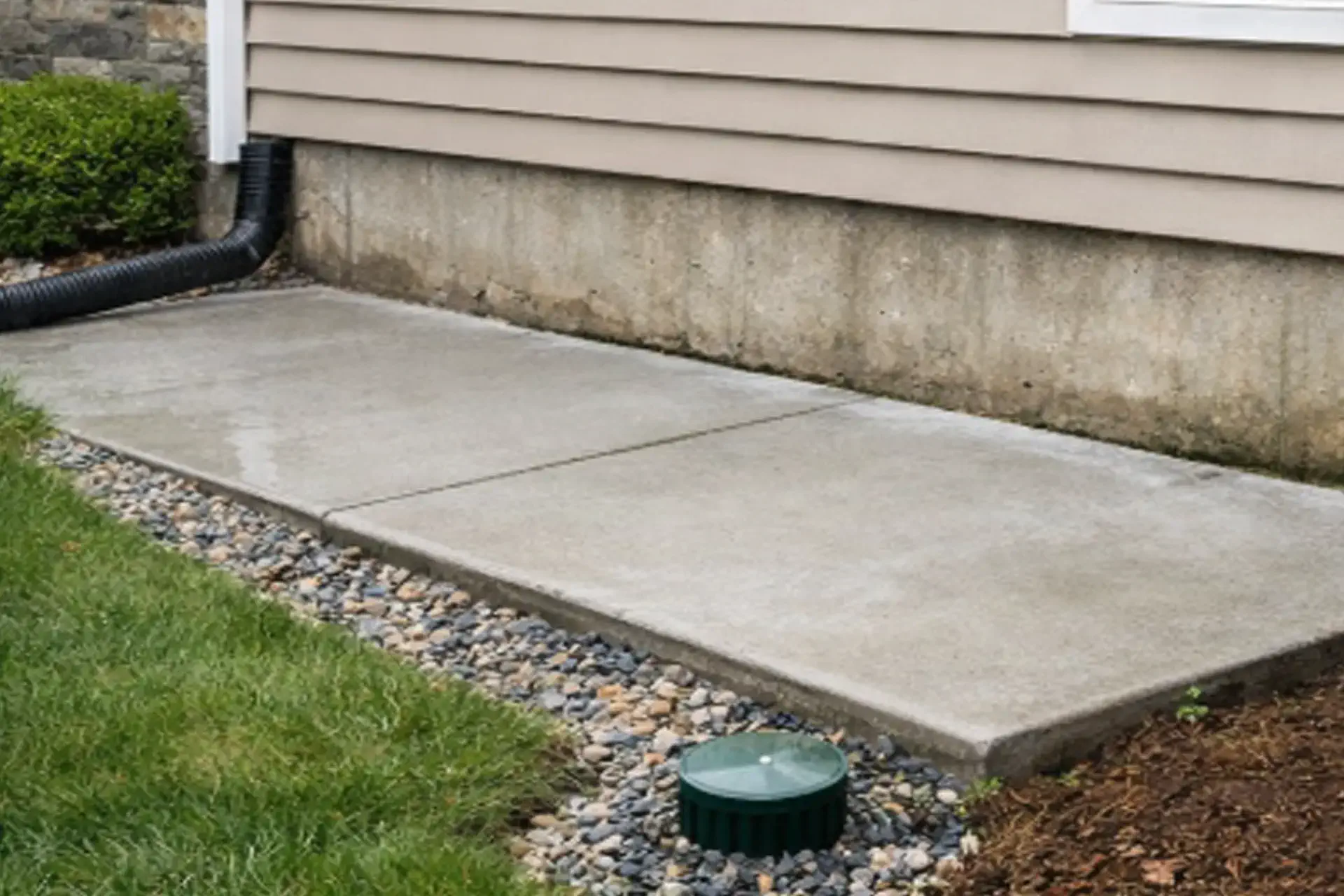
- Installed a 50-gallon drywell made of perforated PVC, surrounded by washed gravel and soil separator fabric
- Trenched and installed a 4-inch solid PVC drain line from the downspout to the drywell with a pop-up emitter for overflow
- Extended the downspout below grade to direct roof water away from the building
- Regraded the surrounding soil to move surface water away from the structure
- Removed all debris and left the area clean and safe
This work corrected both water entry and settlement while reducing long-term stress on the foundation.
Building 2 Concrete Patio and Tunnel Drainage Protection
Near the entrance of Building 2, water was migrating toward a critical cold joint between the tunnel and the building. To fix this, we:
- Scarified and ground the concrete patio surface
- Applied a penetrating concrete sealer
- Installed a sloped waterproof membrane system to create positive drainage away from the foundation
- Installed a 4-inch perforated PVC drain pipe wrapped in soil separator fabric and surrounded by washed gravel
- Backfilled, compacted, and graded the area to ensure proper runoff
- Removed all construction debris upon completion
This system now safely collects and redirects both surface and subsurface water away from vulnerable structural joints.
Protective Measures During Construction:
Throughout the project, Zavza Seal took steps to protect the property and minimize disruption:
- Covered adjacent walls and structures with 6-mil plastic sheeting
- Used fans and dust extraction equipment to maintain air quality
- Protected driveways and walkways with plywood and tarps
- Cleaned the site daily and fully removed debris at the end of the project
The Result:
After completing the exterior drainage corrections, cold joint sealing, and concrete repairs, the source of the water intrusion was fully addressed.
The property now benefits from:
- Proper exterior drainage that reduces hydrostatic pressure
- Sealed cold joints that prevent water entry
- Leveled concrete surfaces that improve safety
- Long-term protection for areas unreachable by interior waterproofing
This project highlights why persistent water problems often require exterior solutions to truly fix the issue.
Why This Matters for Homes in South Setauket, NY?
Many homes on Long Island deal with elevation changes, underground structures, and groundwater pressure. When water intrusion continues after interior work, it is often a sign that the problem starts outside.
Zavza Seal focuses on diagnosing the real cause and fixing it where it begins.