
Basement wall moisture is one of those problems homeowners often try to ignore until it becomes impossible to overlook. Damp walls, visible cracks, peeling paint, or a persistent musty smell are all signs that water is finding its way into your foundation. While these issues may seem minor at first, they can lead to mold growth, structural damage, and costly repairs if left untreated.
Sealing basement walls is a proven way to stop moisture intrusion, protect your foundation, and restore confidence in your home. Understanding why moisture occurs and how the right sealing method works is the first step toward a long term solution.
Why Basement Wall Moisture Should Never Be Ignored
Moisture in basement walls is rarely just a cosmetic issue. Concrete and masonry are naturally porous, which means water can slowly seep through over time. When moisture is allowed to persist, it can weaken walls, create an unhealthy indoor environment, and reduce the usable space in your home.
Common warning signs include hairline cracks, damp or cold wall surfaces, white powder residue on walls, peeling paint, and lingering odors. These symptoms often indicate that water pressure or groundwater is pushing against your foundation. Sealing basement walls addresses the root of the problem rather than masking the symptoms.
Common Causes of Water and Moisture in Basement Walls
Basement wall moisture usually develops due to a combination of environmental and structural factors.
One of the most common causes is hydrostatic pressure. After heavy rainfall or snowmelt, the soil surrounding your home becomes saturated. This creates pressure that pushes water against basement walls, forcing it through even the smallest cracks.
Hairline and structural cracks are another frequent entry point. Over time, foundations shift slightly due to soil movement and temperature changes. Even small cracks can allow moisture to seep inside.
Porous concrete or masonry walls also contribute to the problem. Older homes in particular were often built with materials that absorb water more easily. Poor exterior drainage, such as clogged gutters or improper grading, can worsen the situation by directing water toward the foundation.
In Long Island homes, aging foundations and water retaining soil conditions make basement wall moisture especially common.
So, What Does Sealing Basement Walls Actually Mean?
Sealing basement walls refers to the process of closing off pathways that allow water and moisture to enter through foundation walls. This can involve filling cracks, applying specialized sealers, or installing protective coatings that block moisture penetration.
It is important to understand the difference between basement wall sealing and full basement waterproofing. Sealing focuses on preventing moisture from passing through walls, while waterproofing may include drainage systems and structural solutions to manage larger water issues.
Another distinction is interior versus exterior wall sealing. Interior sealing addresses moisture from inside the basement, while exterior sealing stops water before it reaches the foundation wall. Sealing is often sufficient when moisture intrusion is moderate and localized, but more severe water problems may require additional waterproofing measures.
Signs Your Basement Walls Need Sealing
Many homeowners are unsure when sealing is necessary. There are clear indicators that basement walls need attention.
Visible cracks or gaps along the walls or floor joints are a common sign. Efflorescence, which appears as a white chalky residue, indicates that water is moving through the wall and leaving mineral deposits behind.
Damp or cold wall surfaces suggest ongoing moisture exposure. Mold or mildew growth, especially near the base of walls, is another strong warning sign. Water stains that appear after rainfall confirm that moisture is actively entering the basement.
If you notice any of these issues, sealing basement walls should be considered sooner rather than later.
Best Methods for Sealing Basement Walls
Interior Basement Wall Sealing
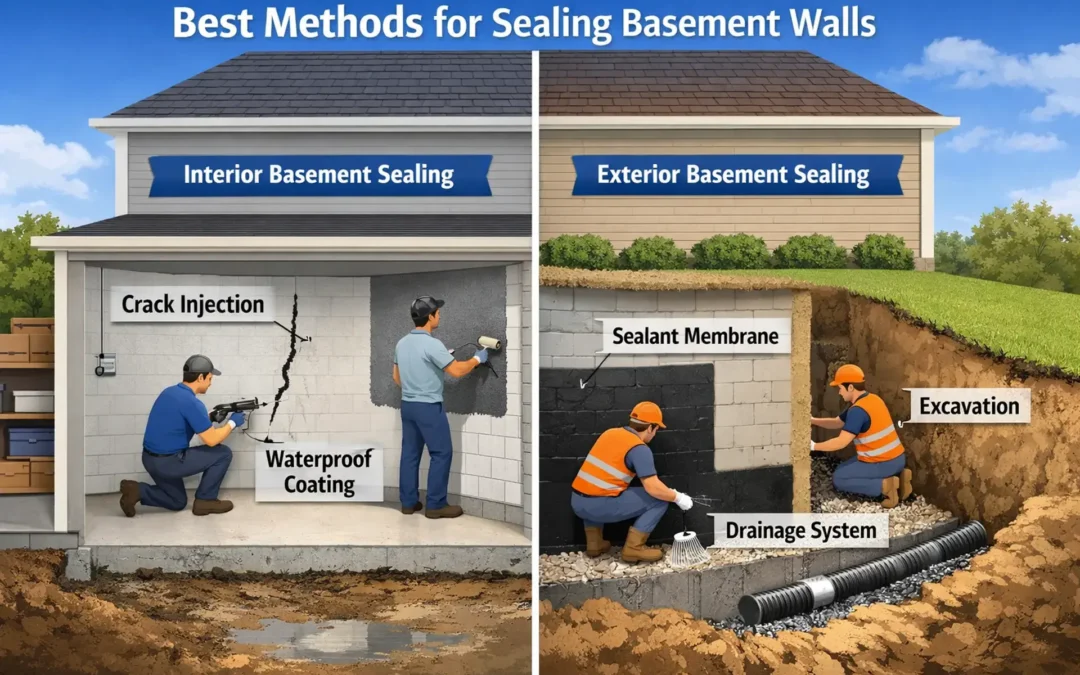
Interior sealing is often effective for controlling moisture caused by small cracks or porous wall materials. One common method is crack injection using epoxy or polyurethane materials. These substances expand and bond inside the crack, preventing water from passing through.
Masonry sealers are also used on porous concrete or block walls. These sealers penetrate the surface and reduce moisture absorption. Interior sealing works best when water intrusion is limited and the foundation is structurally sound.
Exterior Basement Wall Sealing
Exterior sealing addresses the problem at its source by preventing water from contacting the foundation wall. This method typically involves excavating soil around the foundation, repairing cracks, and applying waterproof coatings or membranes.
Exterior wall sealing is ideal for recurring or severe water intrusion, especially when hydrostatic pressure is a major factor. While it is more involved, it provides long lasting protection when done correctly.
Choosing the Right Basement Sealer for Your Walls
Selecting the right basement sealer depends on wall material, moisture severity, and overall foundation condition.
Cementitious sealers are commonly used on masonry surfaces and bond directly to concrete. Liquid membrane sealers create a flexible barrier that moves with the foundation. Crack injection materials are ideal for isolated cracks that allow active leaks.
Concrete walls typically respond well to injection and membrane based sealers, while block walls may require penetrating or cement based products. Many DIY sealers fail over time because they do not address underlying pressure or are applied without proper surface preparation.
Water Sealing Basement Walls Step-by-Step
Here is a breakdown of what an effective water sealing basement walls process looks like:
- Water sealing of basement walls begins with a thorough inspection to identify moisture sources.
- This is followed by surface preparation, which may include cleaning, drying, and removing deteriorated materials.
- Cracks are then repaired using appropriate injection or patching methods. The correct sealing system is applied based on wall type and moisture conditions.
- Finally, moisture testing ensures the solution is working properly.
Professional assessment is critical during this process, as incorrect product selection can lead to recurring problems.
Sealing Basement Walls vs Waterproofing Which Do You Need
People get confused about the difference, but sealing and waterproofing are two different things. Let me explain how: sealing basement walls is often sufficient for controlling minor to moderate moisture intrusion, isolated cracks, and porous walls. It is a cost-effective solution when water issues are limited.
Full basement waterproofing, on the other hand, addresses more serious or recurring water problems by managing and redirecting water away from the foundation using systems such as interior drains, sump pumps, and exterior drainage solutions.
A professional evaluation helps determine the most effective approach and prevents unnecessary repairs or expenses.Professional basement wall sealing provides advantages that go beyond surface level fixes. Experts accurately diagnose the source of moisture and select materials designed for long term performance.
Proper surface preparation ensures sealers adhere correctly. Professional work often includes warranties and workmanship guarantees, offering peace of mind. Local experience also matters, especially in areas with specific soil and weather conditions.
Local Insight Basement Wall Issues in Long Island Homes
Long Island homes frequently experience basement wall moisture due to clay rich soil that retains water. Many properties also have older foundations that were not built with modern moisture protection systems.
Seasonal rainfall and fluctuating water tables increase hydrostatic pressure around foundations. These factors make sealing basement walls a common and necessary solution for homeowners in the area.