
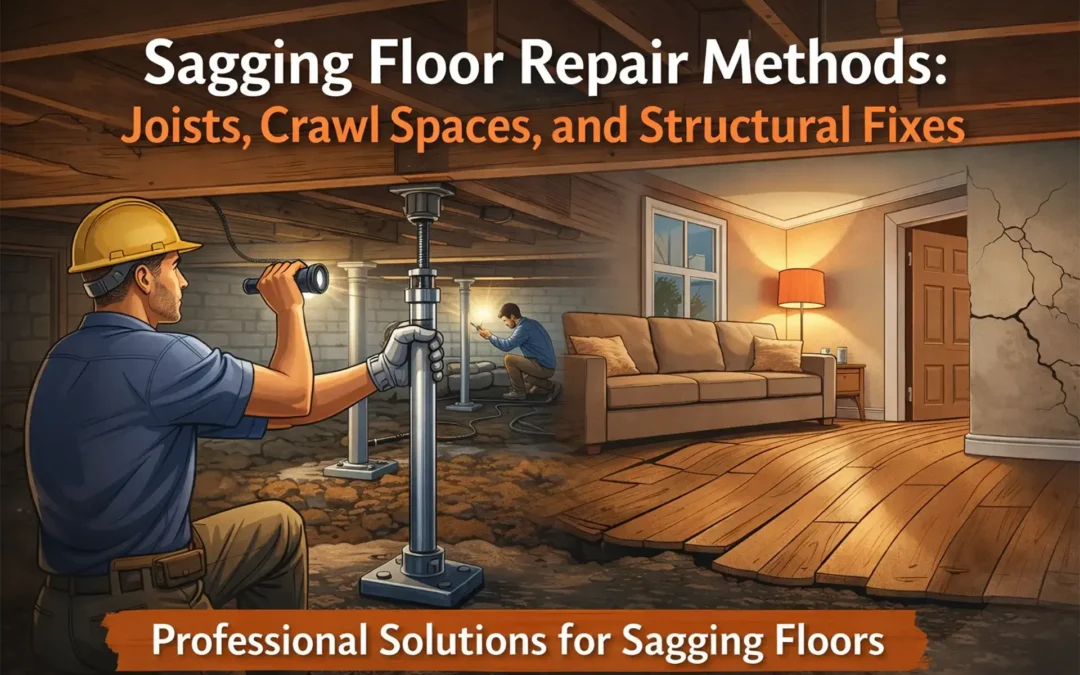
A real New York case that shows why the right repair method matters
A homeowner in Queens noticed their living room floor felt soft near the sofa. At first, it was easy to ignore. A few months later, the floor felt bouncy. Furniture slowly shifted. Doors stopped closing smoothly.
They assumed the floor just needed leveling.
After a professional inspection, the real issue was uncovered. The floor joists had weakened over time, and moisture from the crawl space below had made the problem worse. A simple surface fix would not have worked. The solution required reinforcing the joists and stabilizing the crawl space.
This is a very common situation in New York homes.
If you are searching for sagging floor repair, chances are you are trying to understand what kind of fix your home actually needs. The right repair method makes all the difference in safety, cost, and long term results.
Why sagging floors happen in New York homes
Many New York houses are older. Brownstones, townhomes, and single family homes were often built decades ago. Over time, floors can start to sag due to:
- Aging or weakened floor joists
- Moisture from basements or crawl spaces
- Poor ventilation under the home
- Soil settlement or shifting supports
- Long term wear and tear
Sagging floors are not just cosmetic. They usually point to a problem underneath the floor.
Sagging floor repair method 1: Floor joist repair and reinforcement
What is a floor joist?
Floor joists are the horizontal beams that support your floors. When joists weaken, bend, or crack, the floor above starts to dip.
This is one of the most common causes of sagging floors in New York homes.
When sagging floor joist repair is the right solution
Joist repair is usually recommended when:
- Sagging is limited to specific rooms
- The floor feels bouncy but not severely unsafe
- Joists show signs of age or mild damage
How professionals repair sagging floor joists
Common methods include:
- Sistering new wood alongside existing joists
- Reinforcing joists with steel or engineered supports
- Replacing joists that are beyond repair
Sagging floor joist repair works best when moisture issues are also addressed. Fixing joists alone without controlling moisture can lead to future problems.
Sagging floor repair method 2: Fixing sagging floors in crawl spaces
Why crawl spaces cause floor sagging
Crawl spaces are often overlooked. In many New York homes, they trap moisture and humidity. Over time, this moisture weakens floor supports above.
If you are searching for fix sagging floor crawl space, this is often the hidden reason.
Crawl space repair solutions that actually work
Professional crawl space floor repair may include:
- Installing adjustable support jacks
- Adding new beams under the floor
- Improving drainage and moisture control
Crawl space repairs help stabilize the floor and prevent sagging from returning.
Sagging floor repair method 3: Structural support and beam installation
When structural fixes are needed
Structural repairs are necessary when:
- Sagging affects multiple rooms
- Floors feel unsafe to walk on
- Joists alone cannot carry the load
Common structural repair methods
These may include:
- Installing steel or engineered beams
- Adding vertical support posts
- Redistributing weight across the structure
Structural fixes often require professional planning and sometimes a structural engineer to ensure long term safety.
Comparing sagging floor repair methods
Not every home needs the same solution.
- Joist repair works well for localized sagging
- Crawl space repair addresses moisture related sagging
- Structural fixes are best for severe or widespread damage
Choosing the wrong method can lead to wasted money and repeated repairs.
DIY fixes vs professional sagging floor repair
Why DIY fixes often fail
DIY solutions usually focus on surface leveling. They do not address the real cause underneath the floor. This can make the problem worse over time.
Why professional repairs last longer
Professional sagging floor repair:
- Fixes the root cause
- Improves safety
- Meets local building standards
- Protects long term home value
In New York, professional repairs are especially important due to older structures and local code requirements.
How to know which sagging floor repair method your home needs
You may need joist repair if:
- Floors feel bouncy
- Sagging is limited to certain areas
You may need crawl space repair if:
- There is moisture below the floor
- Sagging feels worse during humid seasons
You may need structural repair if:
- Floors feel unsafe
- Multiple rooms are affected
- Cracks appear near doors or walls
A professional inspection is the safest way to get the right answer.
When to call a professional for sagging floor repair
Do not wait if you notice:
- Rapid worsening of floor sagging
- Bouncy or unsafe walking conditions
- Visible cracks near doors or walls
- Moisture near floor supports
Early action can prevent bigger and more expensive repairs. Sagging floors can feel overwhelming, but the right repair method makes all the difference. Whether the solution involves joist repair, crawl space work, or structural reinforcement, professional sagging floor repair can restore safety and peace of mind.
If you are in New York and dealing with sagging floors, understanding your repair options is the first step toward a solid and secure home.
To learn about the cost of sagging floor repair in New York, read this blog.
Frequently Asked Questions About Sagging Floor Repair
What is the best method for sagging floor repair?
The best method for sagging floor repair depends on what is causing the problem. Floor joist repair works well when sagging is limited to certain areas. Crawl space repairs help when moisture is the main issue. Structural repairs are needed when sagging is severe or affects multiple rooms.
Can sagging floor joists be repaired?
Yes. Sagging floor joists can often be repaired. Professionals may reinforce the joists, add new support alongside them, or replace damaged sections depending on their condition and age.
Is crawl space repair enough to fix sagging floors?
Crawl space repair can fix sagging floors when moisture and weak supports are the main cause. In many homes, crawl space repairs are combined with floor joist reinforcement to ensure long lasting results.
Do sagging floors always require structural repair?
No. Not all sagging floors require major structural repair. Minor sagging may only need joist reinforcement, while more severe sagging across multiple rooms may require additional beams or support posts.
How long do sagging floor repairs last?
When sagging floors are repaired properly and moisture issues are corrected, the repairs can last for many decades. Professional repairs are designed to provide long term stability and safety.
Should I hire a professional for sagging floor repair in New York?
Yes. Many New York homes are older and have unique structural conditions. Hiring a professional ensures the correct repair method is used and that the work meets safety and building standards.