
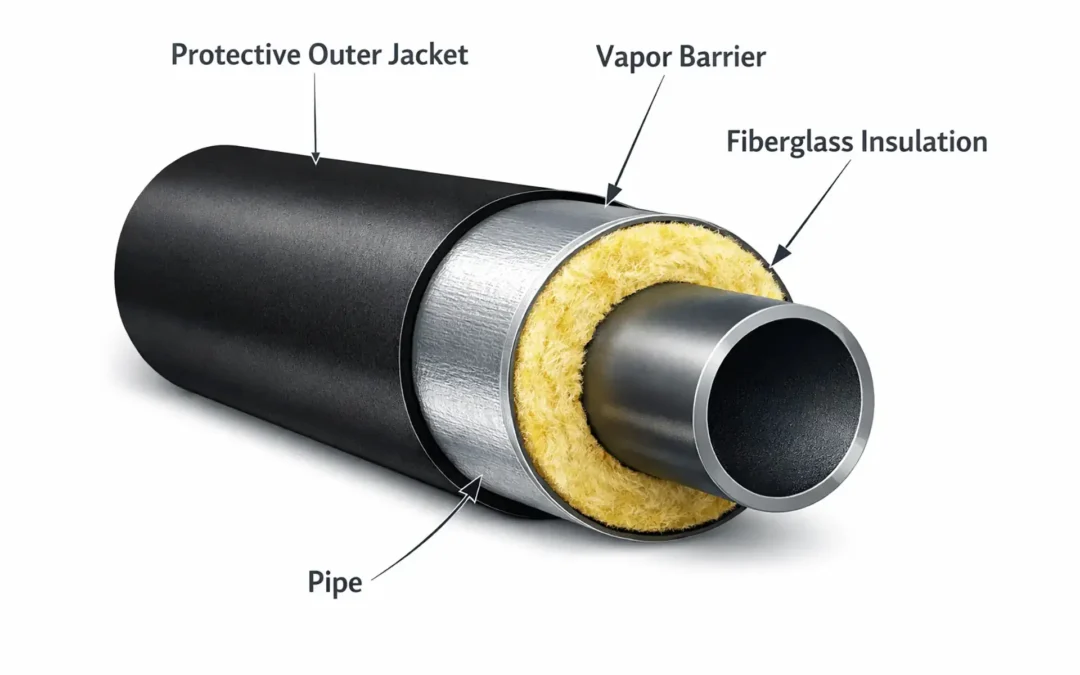
Cold pipes, condensation, and frozen plumbing are common problems in New York homes. Many homeowners search for ways to protect their pipes with fiberglass pipe insulation, but knowing when and how to use it makes all the difference. This guide explains what fiberglass pipe insulation is, how it works, and when it is better to call a professional.
What Is Fiberglass Pipe Insulation
Fiberglass pipe insulation is a type of protective covering made from fine glass fibers. It is designed to slow heat loss, prevent pipes from freezing, and reduce condensation. You often see it used on hot water pipes in basements, utility rooms, and crawl spaces. Many homeowners choose fiberglass because it is effective, durable, and relatively affordable when installed correctly.
Pipe insulation fiberglass works best when the pipes are dry and the insulation is installed with a tight fit. Poor installation can reduce effectiveness and lead to moisture problems over time.
How Fiberglass Insulation for Pipes Works
Fiberglass insulation works by creating a layer of material around the pipe that slows down the transfer of heat. In the winter, this helps prevent water inside the pipes from freezing. In the summer, it reduces condensation that can form on cold water pipes.
In addition to temperature control, fiberglass insulation can also help reduce energy costs slightly because it limits heat loss from hot water pipes. When paired with proper moisture control, it provides long-term protection.
Where Fiberglass Pipe Insulation Works Best
Fiberglass pipe insulation works best in dry areas, such as heated basements, utility rooms, and indoor plumbing areas. Pipes that are exposed to the air inside these spaces benefit most because the insulation slows heat loss and prevents condensation from forming.
It is important to remember that fiberglass pipe insulation works best when the surrounding area is dry. Moisture in basements or crawl spaces can reduce its effectiveness and may even lead to mold growth if the insulation gets wet.
Where Fiberglass Pipe Insulation Does Not Work Well
Fiberglass insulation is not effective in damp basements, crawl spaces, or areas where water leaks or high humidity are common. In these cases, insulation alone does not stop condensation or protect against mold growth. Improper installation can make the problem worse, as water trapped under insulation can lead to corrosion or mold on pipes.
Can Fiberglass Pipe Insulation Prevent Frozen Pipes
Fiberglass insulation can help prevent pipes from freezing, but it is not a guarantee. Pipes in very cold areas of Long Island, Brooklyn, Queens, and the Bronx may still freeze if the home is unheated or if airflow is poor. Insulation slows down the freezing process, but the best results come from combining insulation with proper moisture control, air sealing, and keeping the basement or crawl space heated.
Does Fiberglass Pipe Insulation Stop Condensation
Fiberglass insulation can reduce condensation, but it cannot stop it entirely in areas with high humidity. Condensation forms when warm, humid air touches cold pipe surfaces. To fully prevent it, you need a combination of insulation, airflow, and moisture control. Homes in New York often have basements or crawl spaces with high humidity, making professional evaluation important for long-term protection.
Common Problems Caused by Improper Pipe Insulation
When fiberglass insulation is installed incorrectly or used in wet areas, problems can arise. Mold can grow on wet insulation, corrosion can develop on metal pipes under damp insulation, and the insulation may lose its effectiveness. Over time, improperly insulated pipes may experience the same issues the insulation was meant to prevent.
Why Professional Installation Matters
Professional installation ensures that fiberglass insulation fits tightly around pipes and that moisture is controlled. Experts can install vapor barriers where needed, seal leaks, and verify airflow in basements or crawl spaces. This approach prevents condensation, mold, and pipe damage while providing long-lasting protection.
Case Study: Fiberglass Pipe Insulation in a Long Island Home
A homeowner in Wantagh noticed pipes in their basement sweating heavily during winter. Some pipes even froze on the coldest nights. They had tried foam sleeves themselves, but condensation continued to form and mold appeared in corners.
Zavza Seal inspected the basement, identified areas with poor airflow and high moisture, and installed fiberglass pipe insulation with proper vapor barriers. We also improved ventilation to reduce humidity.
The results were immediate. Pipes were protected from freezing, condensation stopped forming, mold was eliminated, and the homeowner reported a noticeable improvement in energy efficiency. Professional installation ensured that the insulation worked as intended and prevented future problems.
Read more of our project case studies here.
How to Know If Your Pipes Need Insulation
Signs that your pipes need fiberglass insulation include cold water pipes, sweating or condensation forming on pipe surfaces, higher energy bills, and past issues with frozen pipes. These issues are common in homes across Long Island, Brooklyn, Queens, and the Bronx, especially in basements and crawl spaces.
How to Prevent Pipe Problems Long Term
To prevent pipe problems, insulation must be combined with proper moisture control. This includes waterproofing basements, encapsulating crawl spaces, sealing leaks, and ensuring proper drainage. Addressing the root cause of moisture ensures that fiberglass insulation works effectively and pipes remain protected year-round.
Fiberglass pipe insulation can protect pipes from freezing and reduce condensation when installed correctly in dry areas. However, it is not a complete solution for damp basements, crawl spaces, or homes with poor airflow. Improper installation can lead to mold, corrosion, and reduced effectiveness.
Professional evaluation and installation provide long-term protection, improve energy efficiency, and ensure your pipes are safe. If you notice sweating pipes, frozen pipes, or high humidity in your basement, it is time to call a professional for inspection and proper insulation.