

Basement water damage rarely shows up without warning. Long before puddles form or walls start to stain, subtle signals begin to appear tiny cracks, faint mineral trails, lingering humidity. Basement Waterproofing Companies Brooklyn focus on identifying these early indicators before moisture turns into structural damage.
This article explains, in detail, what professionals examine during a basement waterproofing evaluation and how each checkpoint contributes to preventing future water intrusion. The goal here is understanding not promotion so you can see the logic behind the process.
Why Basement Water Damage Happens in the First Place
Basements exist below ground level, which puts them in constant contact with soil, moisture, and pressure. Unlike above-ground spaces, they are surrounded on multiple sides by earth that holds and transfers water.
How Water Moves Underground
Water doesn’t simply drain straight down. It moves laterally through soil, especially when clay-heavy ground becomes saturated. When soil can’t absorb more moisture, water presses outward, searching for weak points in foundation walls and floors.
The Impact of Urban Density in Brooklyn
In dense urban environments like Brooklyn, underground utilities, neighboring foundations, and compacted soil alter natural drainage patterns. Basement Waterproofing Companies Brooklyn pay close attention to how urban conditions redirect water toward below-grade structures.
The Purpose of a Professional Basement Evaluation
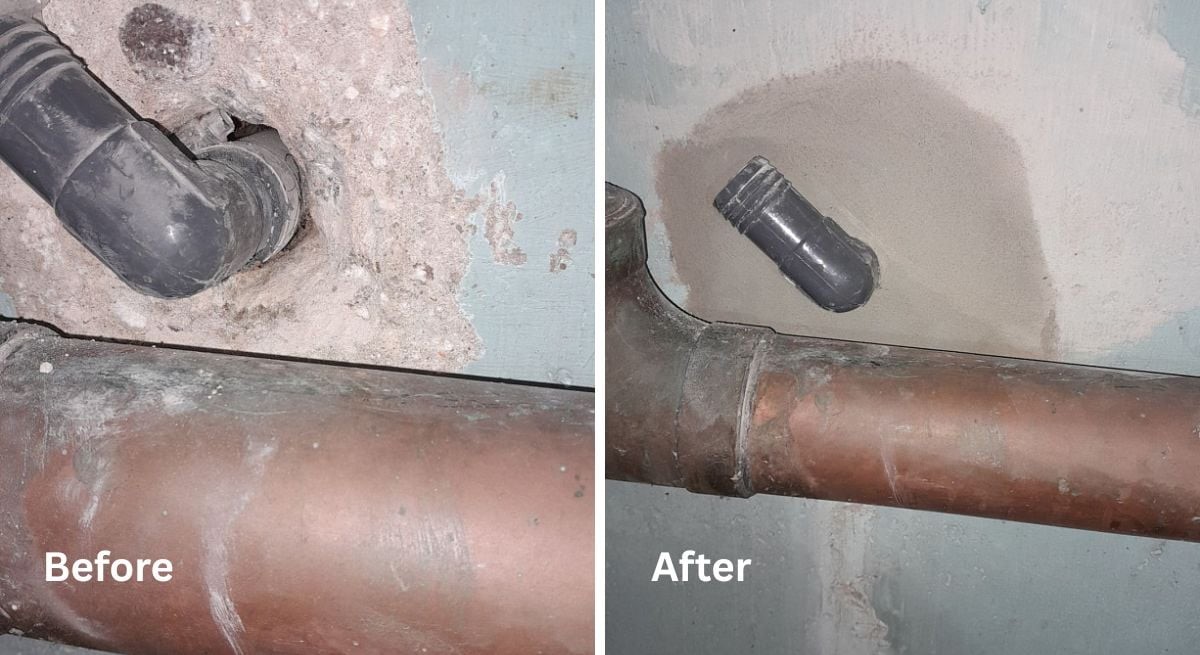
A professional assessment goes beyond identifying visible leaks. The real objective is to understand why water behaves the way it does around a specific structure.
Why Surface-Level Inspections Are Not Enough
Moisture problems often originate outside the basement or beneath the slab. Surface signs are symptoms; the cause may be several feet away or completely hidden.
Foundation Structure Assessment
The foundation is the first major checkpoint.
Identifying Foundation Types
Different foundations respond differently to pressure and moisture.
Poured Concrete Foundations
These are generally dense and durable, but cracking can occur due to settlement or temperature changes.
Block and Masonry Foundations
Block foundations contain multiple joints, which can allow moisture intrusion over time if mortar degrades.
Detecting Structural Stress Indicators
Bowing walls, uneven surfaces, and shifting alignment suggest prolonged pressure or water-related stress.
Interior Basement Wall Inspection
Walls tell a detailed story about moisture history.
Porosity and Material Degradation
Concrete and masonry are porous by nature. Basement Waterproofing Companies in Brooklyn assess how much moisture has passed through these materials over time.
Efflorescence and Wall Discoloration
White powdery residue, peeling paint, or dark stains often indicate recurring moisture movement.
Wall Penetrations and Utility Openings
Pipes, electrical conduits, and gas lines penetrate foundation walls. These areas expand and contract, making them common entry points for water.
Basement Floor and Joint Examination
Water doesn’t only enter through walls.
Floor Cracks and Settlement Lines
Basement floors can crack due to soil movement beneath the slab. Even narrow cracks may allow moisture vapor or seepage.
Cove Joint Vulnerabilities
The joint where the wall meets the floor known as the cove joint is one of the most frequent water entry locations.
Moisture Detection and Intrusion Analysis
Not all moisture problems are obvious.
Visible vs Hidden Moisture
Standing water is easy to spot. Vapor intrusion, slow seepage, and condensation require trained observation and pattern analysis.
Long-Term Dampness Indicators
Rusting metal fixtures, warped wood, and persistent odors suggest moisture exposure even if the basement appears dry.
Drainage System Evaluation
Water control depends heavily on drainage efficiency.
Interior Drainage Pathways
Basement Waterproofing Companies Brooklyn inspect existing drainage systems to determine whether water is being redirected effectively. Waterproofing Inside Basement is very important because most people ignore it.
Drain Tile Performance
Drain tiles can clog with sediment or collapse over time, reducing their ability to move water away from the foundation.
Exterior Drainage Conditions
Surface water flow patterns are reviewed to see where rainwater collects and how it travels toward or away from the structure.
Sump Pump System Assessment
Sump pumps act as the last line of defense against groundwater.
Pump Capacity and Reliability
Professionals evaluate whether the pump can handle peak water volume during heavy rainfall.
Power Failure and Backup Risks
Since storms often cause power outages, failure risks are considered when evaluating long-term reliability.
Crack Classification and Risk Analysis
Not all cracks pose the same threat.
Vertical, Horizontal, and Stair-Step Cracks
Vertical cracks are often related to settling, while horizontal cracks may indicate serious hydrostatic pressure.
Cosmetic vs Structural Cracks
Hairline cracks may allow moisture seepage, whereas wider cracks can compromise foundation stability.
Window Wells and Below-Grade Openings
Basement windows sit directly in water collection zones.
Water Accumulation Patterns
Poor drainage or missing covers can allow rainwater to pool and leak through window frames.
Exterior Grading and Soil Conditions
Sometimes the problem lies outside the foundation.
How Improper Grading Traps Water
Soil that slopes toward the house directs water against the basement walls instead of away from them.
Gutter and Downspout Impact on Basements
Roof runoff contributes a surprising amount of water.
Roof Water Volume and Soil Saturation
If downspouts release water too close to the foundation, the surrounding soil becomes oversaturated, increasing hydrostatic pressure.
Crawl Spaces and Adjacent Structures
Moisture doesn’t stay confined to one area.
Moisture Migration Between Spaces
Basement Waterproofing Companies Brooklyn evaluate whether moisture from crawl spaces or adjacent structures migrates into the basement air.
Mold Growth and Air Quality Indicators
Mold is often a consequence, not the cause.
What Mold Reveals About Moisture History
Mold growth patterns help identify areas of chronic moisture exposure, even if active leaks are not present.
Documentation, Analysis, and Preventive Planning
Observation alone isn’t enough.
How Basement Waterproofing Companies Compile Risk Profiles
Professionals document moisture patterns, structural conditions, and environmental factors to understand how water interacts with a specific building. Companies such as Zavza Seal LLC emphasize root-cause analysis to evaluate long-term water behavior rather than isolated incidents.
Zavza Seal LLC Serving the Kensington Community and Beyond in Brooklyn
Zavza Seal LLC is dedicated to serving the diverse needs of the local community of Brooklyn, including individuals residing in neighbourhoods like Kensington. With its convenient location near landmarks such as the New York City Police Department – 70th Precinct and major intersections like McDonald Ave and Church Ave (coordinates: 40.6359516, -73.9786683), we offer Waterproofing services.
Get Waterproofing Services at Brooklyn Now
Call Us or Contact Us: +17184007005
Navigate from Kensington to Zavza Seal Now
Preventing future basement water damage requires a comprehensive understanding of structure, soil, and moisture dynamics. Basement Waterproofing Companies Brooklyn approach this challenge methodically examining foundations, drainage systems, environmental conditions, and subtle warning signs that often go unnoticed. By identifying vulnerabilities early, they help reduce the risk of long-term damage, structural stress, and indoor moisture problems.
Awareness of what gets checked and why provides valuable insight into how basements can remain dry, stable, and resilient over time.
Estimation of Basement Waterproofing Companies to Prevent Future Water Damage
- Foundation Cracks & Structural Integrity
- Over 50% of basements experience moisture issues due to cracks (NAHB, 2021)
- Even hairline cracks allow water seepage, leading to mold and structural damage
- Inspection includes identifying cracks, sealing, and monitoring foundation movement
- Drainage Systems & Soil Grading
- Proper grading with a 5% slope away from foundation reduces water infiltration by up to 70% (EPA guidance)
- Gutters/downspouts must channel water at least 6 feet away; clogged gutters cause 40% of basement leaks (CAA Quebec, 2025)
- Landscape drainage systems prevent soil erosion and protect foundation (Donerite Waterproofing, 2025)
- Hydrostatic Pressure & Waterproof Membranes
- Saturated soil exerts hydrostatic pressure pushing water through walls; a leading cause of leaks
- Exterior waterproofing membranes and drainage tiles reduce pressure and water ingress
- Waterproofing membranes typically last ~40 years; inspection for wear or damage is critical (CAA Quebec, 2025)
- Interior Waterproofing & Moisture Barriers
- Interior drainage systems and sump pumps manage water that enters despite exterior measures
- Elastomeric coatings and crystalline waterproofing seal walls to prevent moisture migration (Direct Waterproofing, 2025)
- Regular maintenance of sump pumps reduces basement flooding risk by 60%
- Environmental & Seasonal Factors
- Heavy rainfall and rapid snowmelt increase basement water risk by 30-50% during peak seasons (Groundworks, 2025)
- Soil type (clay vs sandy) affects water retention; clay soils increase infiltration risk significantly
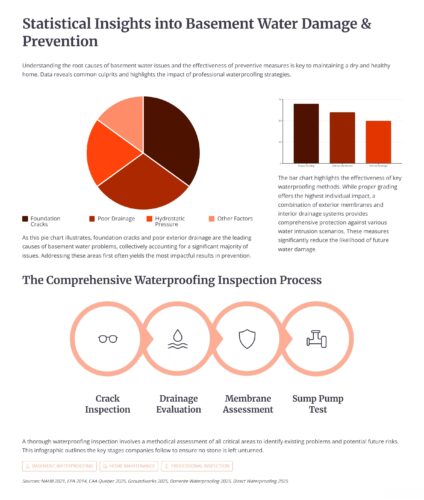
Sources: NAHB 2021, EPA 2014, CAA Quebec 2025, Groundworks 2025, Donerite Waterproofing 2025, Direct Waterproofing 2025
FAQs
1. Do basement waterproofing inspections focus only on visible water issues?
No. Hidden moisture, vapor intrusion, and long-term dampness indicators are equally important during evaluations.
2. Why are urban basements more prone to water issues?
Dense construction, compacted soil, and altered drainage patterns increase hydrostatic pressure around foundations.
3. Are basement floor cracks always a structural concern?
Not always, but even small cracks can allow moisture intrusion and are assessed carefully.
4. How does exterior grading affect basement moisture?
Improper grading can direct surface water toward foundation walls, increasing water pressure.
5. Can mold exist even if there is no active leak?
Yes. Mold often indicates past or ongoing moisture exposure that may not be immediately visible.