
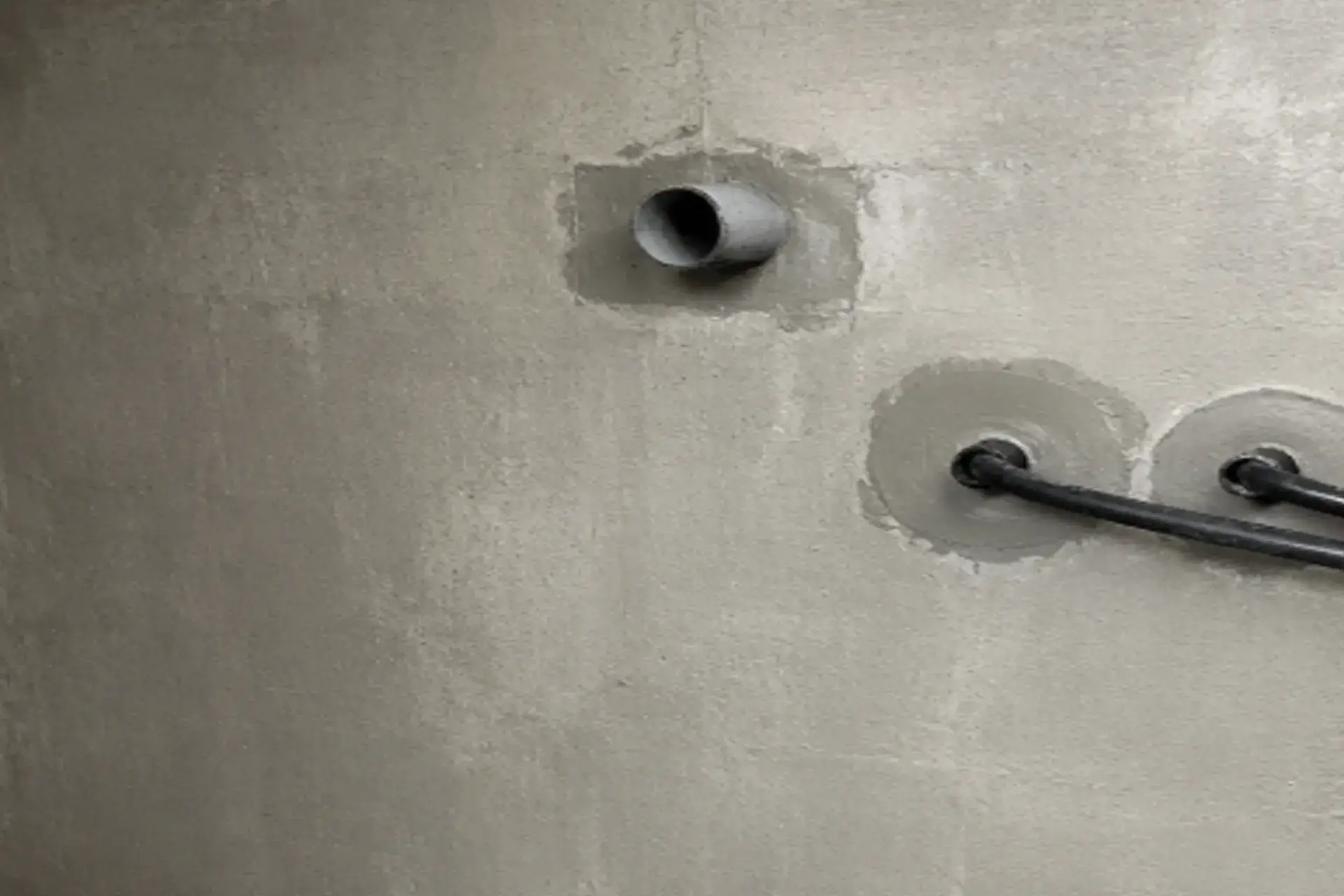
Waterproofing a Leaking Foundation Wall and Pipe Conduit in Brooklyn, NY
At Zavza Seal, our team recently completed a complex waterproofing and mold remediation project for a property in Brooklyn. The building had multiple water intrusion points, mold contamination, rusted rebar, and foundation wall damage that were causing ongoing moisture problems inside the property.
Our team created a full repair and waterproofing plan to stop the leaks, strengthen the damaged areas, and help protect the structure from future water penetration.
The Problem:
The property owner noticed ongoing water seepage through the southwest foundation wall and around several pipe and cable penetrations. Moisture was entering through weak points in the concrete, including rusted rebar areas and deteriorated wall sections.
During our inspection, we found:
- Rusted rebar allowing water to penetrate the foundation wall
- Active water intrusion around pipe penetrations
- Water leaking through cable penetrations
- Mold contamination on concrete surfaces
- Damaged waterproofing around the pipe conduit area
- Additional foundation wall deterioration near the loading area slab joint
The moisture problems had already started affecting the concrete surfaces and created conditions for mold growth.
Our Waterproofing and Mold Remediation Solution
Rusted Rebar Waterproofing Repair
Our team first addressed the rusted rebar area on the southwest wall. Rusted reinforcement steel can expand and weaken concrete over time, allowing water to enter the structure.
To repair the area, we:
- Used diamond blades to cut into the penetration point
- Ground the surrounding concrete to remove weak material
- Applied 3,800 PSI waterproofing mortar
- Installed reinforced fiber mesh
- Added two layers of 6,000 PSI waterproofing cement for long-term protection
This process helped seal the damaged section while reinforcing the surrounding wall.
Pipe Penetration Waterproofing
The property also had active water intrusion around a pipe penetration.
Our crew:
- Scarified and cleaned the area
- Installed injection access ports
- Injected epoxy and urethane formulations into the penetration
- Applied high-strength waterproofing cement
- Added a protective sealant coating
This repair strengthened the penetration point while creating a waterproof barrier around the pipe.
Cable Penetration Leak Repairs
Water was also entering through multiple cable penetrations in the foundation wall.
To stop the leaks, we:
- Steel brushed and cleaned the concrete surface
- Installed injection ports
- Injected epoxy and urethane materials
- Applied waterproofing cement over the repaired areas
- Finished with a protective sealant
These repairs helped prevent future water intrusion through the cable openings.
Mold Remediation in the Southwest Foundation Area
During the inspection, our NY State Licensed Mold Abatement Supervisor found visible mold contamination on the foundation wall surfaces.
Because mold spreads quickly in damp environments, remediation had to be completed before any additional waterproofing work.
Our Mold Removal Process
We created a controlled containment area using:
- 6 mil plastic barriers
- Negative air scrubbers with HEPA filtration
- Protective suits and safety equipment
Our remediation process included:
- Antibacterial cleaning treatments
- HEPA vacuuming
- Wire brushing contaminated concrete
- Grinding affected surfaces where needed
- Applying fungicidal protective coatings
Once complete, the area was left clean, dry, and visibly free of contamination.
Pipe Conduit Waterproofing Repair
One of the most severe leaks was found around the pipe conduit area.
To repair it, our team:
- Broke open the surrounding concrete
- Recessed the conduit cavity
- Installed wire mesh reinforcement
- Applied 6,500 PSI repair mortar
- Injected expanding polyurethane resin
- Reinforced the area with fiberglass mesh and waterproofing cement
The polyurethane resin expands significantly after injection, helping seal even small gaps where water can travel.
Additional Foundation Wall Waterproofing
We also repaired an additional damaged section of the foundation wall located about 20 feet from the conduit repair area.
This work included:
- Grinding and scarifying the wall surface
- Preparing the masonry for proper adhesion
- Applying two coats of 6,500 PSI waterproofing cement
- Reinforcing the repair with fiberglass mesh
These repairs helped strengthen the wall and improve moisture resistance.
The Result:
After the project was completed, the Brooklyn property had:
- Properly sealed wall penetrations
- Reinforced waterproofed foundation walls
- Mold-free concrete surfaces
- Improved structural protection
- Reduced risk of future water intrusion
The owner now has a much stronger and better protected foundation system that can handle moisture far more effectively.
Why Foundation Waterproofing Matters?
Water intrusion can slowly damage concrete, weaken structural components, and create mold problems inside a building. Proper waterproofing repairs help protect the property and reduce the risk of long-term structural damage.
The U.S. Environmental Protection Agency explains how moisture problems contribute to mold growth and indoor air quality issues.
The American Concrete Institute also provides guidance on repairing and protecting concrete structures from water damage.
If you are dealing with foundation leaks, mold growth, pipe penetration leaks, or basement moisture issues in Brooklyn, the team at Zavza Seal can help with professional waterproofing and structural repair solutions.