
Concrete decks are built to endure. They face sun, rain, freezing temperatures, foot traffic, furniture loads, and everything in between. But even the toughest concrete surfaces eventually show signs of stress. One of the earliest and most common signs is cracking. Some cracks appear harmless, while others quietly signal deeper structural concerns.
So how do professionals approach this issue? How do experts like Zavza Seal LLC and experienced deck waterproofing contractors brooklyn address cracks before they become expensive structural problems?
The answer lies in a systematic process involving inspection, diagnosis, repair, reinforcement, and waterproof protection. Understanding this process helps property owners recognize why crack repair is never simply about filling a gap it’s about preserving the entire structure.
Understanding Why Concrete Decks Develop Cracks
Natural Aging of Concrete Materials
Concrete may feel rock-solid, but it’s constantly changing. Over time, moisture evaporates, internal compounds settle, and microscopic movements occur. These natural aging processes can create small fractures.
Much like leather developing creases over time, concrete develops stress lines as it matures.
Environmental Stress and Seasonal Movement
Temperature fluctuations can cause concrete to expand during heat and contract during cold weather. In climates like Brooklyn, where summers are humid and winters can be harsh, this repeated expansion and contraction creates stress.
Eventually, that stress finds an outlet—and cracks appear.
Structural Load and Surface Pressure
Concrete decks often support furniture, planters, grills, and regular foot traffic. Overloading or uneven weight distribution can place localized pressure on weak areas.
Over time, surface fatigue may create cracking patterns.
Why Cracks in Concrete Decks Should Never Be Ignored
Moisture Penetration Risks
Water is incredibly persistent. Even hairline cracks allow moisture to enter.
Once inside, water can:
- Reach reinforcing steel
- Cause corrosion
- Weaken bonding layers
- Encourage mold growth
- Damage underlying substrates
This is one reason deck waterproofing contractors in brooklyn prioritize early crack intervention.
Freeze-Thaw Expansion Problems
During winter, trapped moisture freezes and expands.
Think of water inside concrete acting like ice in a sealed container it pushes outward with force.
Repeated freeze-thaw cycles enlarge cracks significantly.
Long-Term Structural Concerns
Unchecked cracks can eventually affect:
- Load-bearing capacity
- Surface stability
- Waterproof membrane adhesion
- Drainage performance
What begins as a hairline fracture may evolve into a structural issue.
How Professional Inspection Identifies Surface Damage
Visual Surface Assessments
Professionals examine:
- Crack width
- Crack length
- Pattern direction
- Surface discoloration
- Efflorescence
- Edge deterioration
These clues reveal whether the issue is cosmetic or structural.
Moisture Detection Methods
Hidden moisture often exists beneath apparently dry surfaces.
Contractors may use:
- Moisture meters
- Infrared scanning
- Surface humidity tests
These tools identify trapped water invisible to the naked eye.
Structural Movement Analysis
Some cracks continue growing due to foundation movement.
Professionals monitor:
- Vertical displacement
- Horizontal separation
- Joint movement
- Settlement indicators
This determines whether repairs alone are sufficient.
Types of Cracks Found in Concrete Deck Surfaces
Hairline Cracks
These are thin, shallow cracks usually caused by surface shrinkage.
Though small, they still allow moisture intrusion.
Shrinkage Cracks
Concrete loses moisture during curing.
If moisture evaporates too quickly, shrinkage cracks develop.
These often appear in spider-web patterns.
Settlement Cracks
When soil or support structures shift, settlement cracks emerge.
These often indicate movement below the deck.
Structural Cracks
Wide or deep cracks may signal reinforcement stress.
These require immediate professional evaluation.
How Deck Waterproofing Contractors Prepare Damaged Surfaces
Surface Cleaning and Contaminant Removal
Before repairs, surfaces are cleaned thoroughly.
This may involve:
- Pressure washing
- Mechanical grinding
- Shot blasting
- Dust extraction
Any oil, dirt, or old coatings must be removed.
Crack Mapping and Documentation
Professionals often map crack locations.
This helps track:
- Growth patterns
- Movement zones
- Repair priorities
Moisture Testing Before Repairs
Repairing wet concrete can trap moisture.
That’s why moisture content is measured before proceeding.
Repair Methods Used for Concrete Deck Cracks
Crack Injection Techniques
Epoxy Injection
Epoxy creates rigid structural bonds. It restores strength in stable cracks and can sometimes be stronger than the surrounding concrete.
Polyurethane Injection
Polyurethane remains flexible. It is ideal for active cracks where movement continues.
Flexible Sealant Applications
Flexible sealants absorb movement without splitting, making them suitable for outdoor decks exposed to temperature changes.
Routing and Filling Methods
Cracks are slightly widened to allow deeper filler penetration and stronger bonding.
Surface Reinforcement Strategies
Reinforcement Fabrics and Membranes
These systems bridge cracks and distribute stress evenly across the surface, preventing localized failure.
Polymer-Modified Repair Systems
Polymers enhance flexibility and bonding strength, allowing repairs to withstand expansion and contraction cycles.
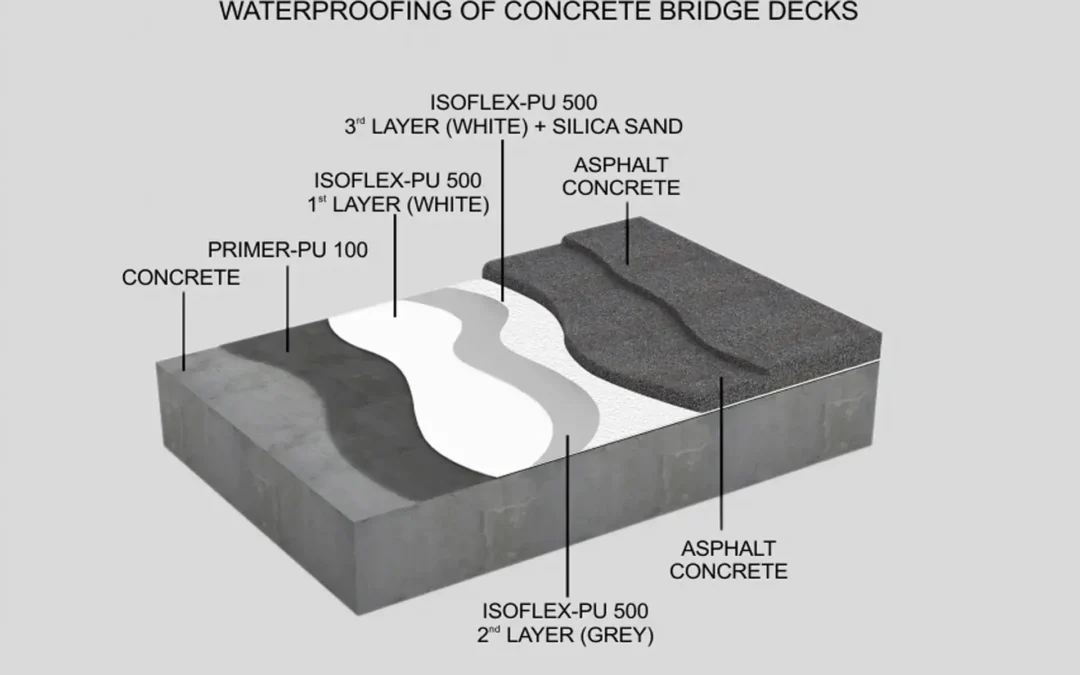
How Waterproof Membranes Protect Repaired Decks
Liquid-Applied Membranes
These form seamless protective layers that move with the structure.
Sheet Membrane Systems
Pre-formed sheets provide consistent thickness and durability across large surfaces.
Climate Challenges in Brooklyn Deck Waterproofing
Winter Freeze Protection
Freeze-thaw cycles are one of the biggest threats to concrete deck durability.
Humidity and Rain Exposure
Constant moisture exposure increases the importance of drainage and sealing systems.
Preventive Maintenance After Crack Repair
Scheduled Inspections
Regular inspections help detect new cracks early before they expand.
Drainage Monitoring
Proper drainage prevents standing water and reduces surface stress.
Surface Resealing
Recoating helps maintain waterproof protection over time.
Choosing Experienced Professionals for Concrete Deck Protection
Crack repair is not just a patching job—it is a technical process involving structural understanding, material science, and waterproofing expertise.
Experienced teams like Zavza Seal LLC and skilled deck waterproofing contractors brooklyn ensure that repairs are not temporary fixes but long-term protection systems.
Zavza Seal LLC Serving the West MidwoodCommunity and Beyond in Brooklyn
Zavza Seal LLC is dedicated to serving the diverse needs of the local community of Brooklyn, including individuals residing in neighborhood like West Midwood. With its convenient location near landmarks such as the HIDEC and major intersections like Avenue I and E 13th St(coordinates: 40.6269516, -73.963846), we offer deck waterproofing contractors services.
Get deck waterproofing Services at West Midwood Now
Call Us or Contact Us: +17184007005
Navigate from West Midwood to Zavza Seal LLC Now
Concrete deck cracks are more than surface imperfections they are early warnings of structural stress, moisture intrusion, and environmental impact. Professional waterproofing contractors approach these issues methodically: diagnosing the cause, repairing the damage, reinforcing the surface, and sealing everything with durable waterproof systems.
With the right expertise and preventive care, concrete decks can remain strong, stable, and weather-resistant for years.
How Deck Waterproofing Contractors Handle Cracks in Concrete Deck Surfaces
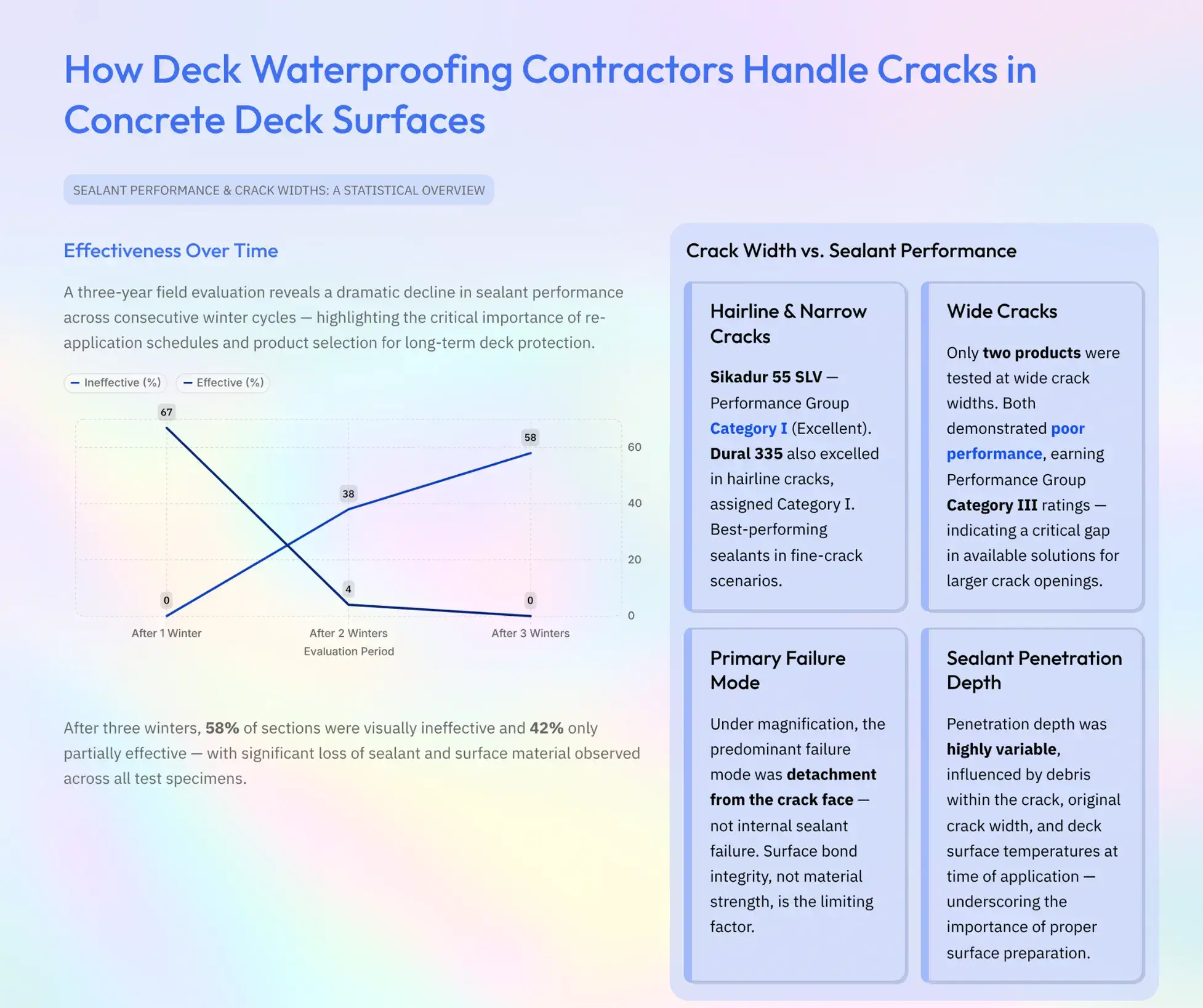
- Effectiveness Over Time: In a three-year evaluation, approximately 67% of test sealant sections performed effectively after one winter, but this dropped to only 4% after two winters. After three winters, 58% were visually characterized as ineffective and 42% as partially effective, with significant loss of sealant and surface materials.
- Crack Sealant Performance by Width:
- Hairline, Narrow, and Medium Cracks: Sikadur 55 SLV showed excellent performance and was assigned to Performance Group Category I. Dural 335 also performed very well in hairline cracks, assigned to Performance Group Category I.
- Wider Cracks: Only two products were tested in specimens with wide crack widths, and their performance was poor, leading to their assignment to Performance Group Category III.
- Failure Mode: The predominant failure mode observed under magnification was detachment from the crack face, not failure within the sealant materials themselves.
- Sealant Penetration: The observed depth of sealant penetration was highly variable and likely dependent on the presence of debris within the crack, original crack width, and deck temperatures during application.
Sources: Minnesota Department of Transportation (2014), Wisconsin Highway Research Program (2005)
Frequently Asked Questions
1. Are all cracks in concrete decks dangerous?
Not all cracks are structural, but every crack should be inspected to rule out moisture intrusion risks.
2. What is the best method to repair active cracks?
Flexible polyurethane injection is commonly used for cracks that continue to move.
3. Can waterproofing prevent future cracking?
It helps reduce moisture-related damage but cannot completely prevent structural movement cracks.
4. How long do crack repairs last?
When done professionally, repairs combined with waterproofing can last many years depending on exposure.
5. Why is surface preparation so important?
Without proper cleaning and preparation, repair materials cannot bond effectively, leading to early failure.