
The Problem
A homeowner in Brooklyn, NY contacted Zavza Seal after noticing several concerning problems inside their basement.
The most noticeable issue was the staircase leading from the basement to the first floor. The stairs appeared to be settling, and cracks had started to form in the ceiling near the staircase. These signs suggested that the staircase may not have been properly supported when it was originally installed.
The homeowner was also experiencing water intrusion in the basement. Water was entering through the foundation cold joints and creating moisture problems throughout the space. Because parts of the basement walls were covered, it was impossible to determine the full condition of the foundation without further investigation.
The homeowner needed answers before investing in repairs. They wanted to understand the cause of the settling, identify any hidden structural problems, and find a long-term solution for both the structural and water intrusion issues.
The Solution
Exploratory Structural Investigation
Before recommending repairs, our team conducted exploratory work to uncover the root cause of the settling.
To gain access to critical structural areas, sections of the basement were opened for inspection. Our project manager carefully evaluated the concrete slab, foundation walls, exposed structural components, and staircase support system.
This investigation allowed us to identify the areas lacking proper structural support and develop an accurate repair plan based on actual site conditions rather than assumptions.
Staircase Structural Reinforcement
After completing the investigation, our team confirmed that the staircase had been installed without sufficient structural support.
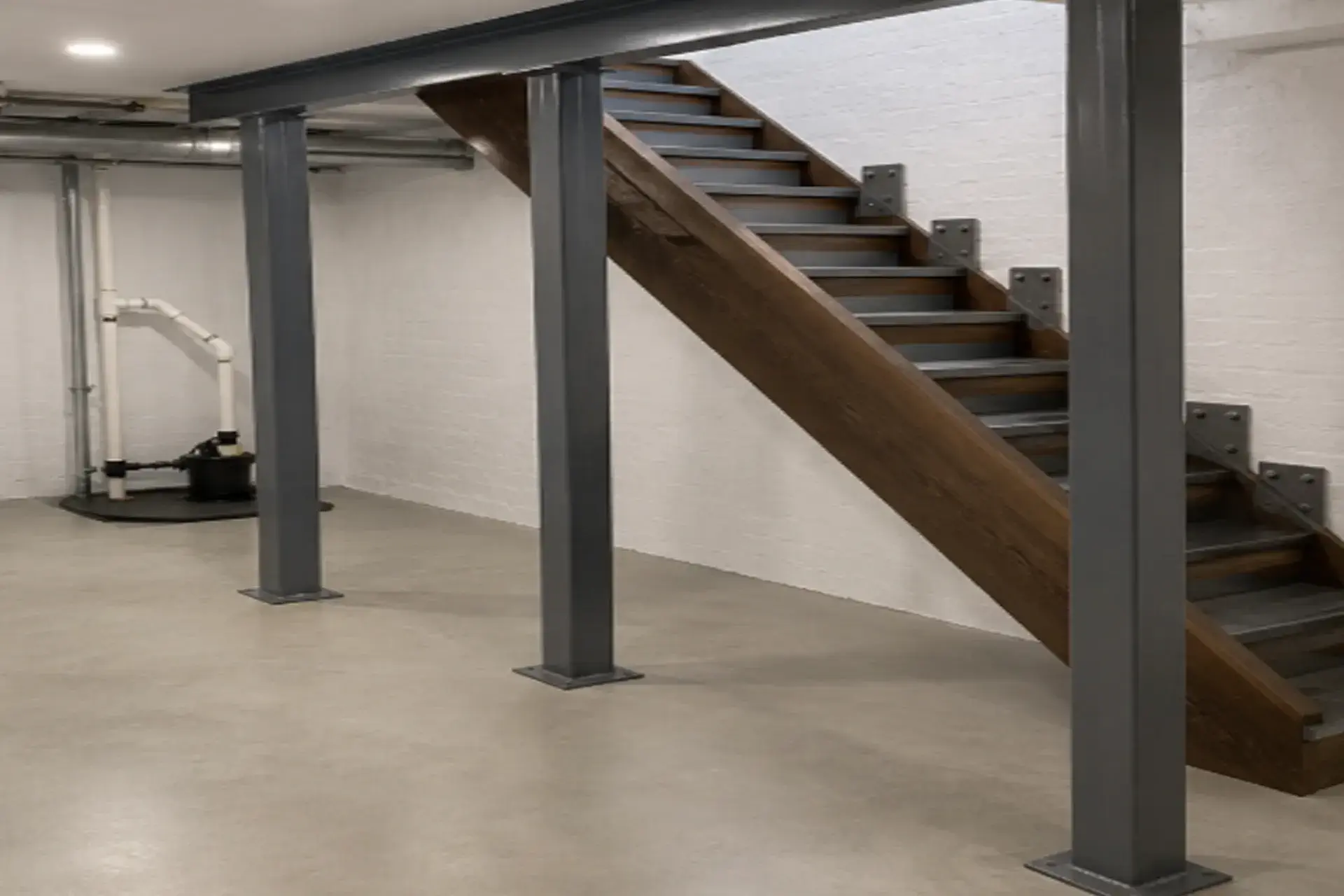
To strengthen the staircase, we installed two new steel support columns at key load-bearing locations. We also installed a reinforced header support at the base of the staircase and secured it to the existing framing system using through bolts.
Along the opposite side of the staircase, we installed five heavy-duty steel brackets that anchored the staircase to the foundation wall for additional stability.
To support the new columns, our crew cut the concrete slab and excavated areas for new reinforced footings. Each footing was reinforced with rebar and filled with high-strength fiber-reinforced concrete.
After the concrete had properly cured, we installed 4-inch diameter concrete-filled steel columns with factory-applied rust-inhibitive primer for long-term protection.
Basement Waterproofing System
After addressing the structural concerns, our team focused on eliminating water intrusion.
We carefully removed the basement drywall and framing materials to expose the foundation walls. This allowed our project manager to perform a complete inspection of the foundation and identify areas where water was entering.
To relieve hydrostatic pressure around the basement perimeter, we installed an interior French drain system along approximately 108 linear feet of foundation wall.
The installation included:
- Saw-cutting and removing a section of the concrete floor along the perimeter.
- Excavating a drainage trench.
- Installing a gravel base.
- Installing a perforated 4-inch PVC drain pipe wrapped in filter fabric.
- Covering the drainage pipe with clean gravel.
Sump Pump Installation
To safely remove collected groundwater, we installed a new sump pump basin and a high-efficiency cast iron sump pump system.
The system was equipped with check valves and discharge piping to direct water away from the basement.
Vapor and Moisture Protection
To provide additional protection, we installed a dimpled drainage membrane along the foundation walls. This membrane directs any incidental moisture into the drainage system.
We also installed a vapor barrier above the system to help reduce moisture vapor transmission through the concrete floor.
Concrete Restoration
Once the waterproofing system was completed, we restored the basement floor by pouring new 4,000 PSI concrete over the trench area.
The concrete was finished flush with the existing slab, creating a clean and durable surface.
The Result
The homeowner now has a basement that is both structurally secure and protected from water intrusion.
The staircase is properly supported with engineered structural reinforcements that help prevent future movement and settling.
The new French drain system, sump pump, drainage membrane, and vapor barrier work together to manage groundwater and reduce moisture problems inside the basement.
Most importantly, the homeowner received a detailed understanding of the underlying issues and a permanent solution designed to protect the home for years to come.
Why Structural Settling Should Never Be Ignored?
When stairs, floors, or walls begin to settle, the problem often extends beyond what is visible on the surface. Early investigation can help identify structural issues before they become more expensive to repair.
According to the Federal Emergency Management Agency (FEMA), foundation movement and water intrusion can contribute to structural damage if not addressed promptly.
Likewise, the International Association of Certified Home Inspectors (InterNACHI) notes that basement moisture problems can lead to long-term deterioration of building materials and indoor air quality concerns.
By combining structural stabilization with proper waterproofing, homeowners can protect both the safety and value of their property.