
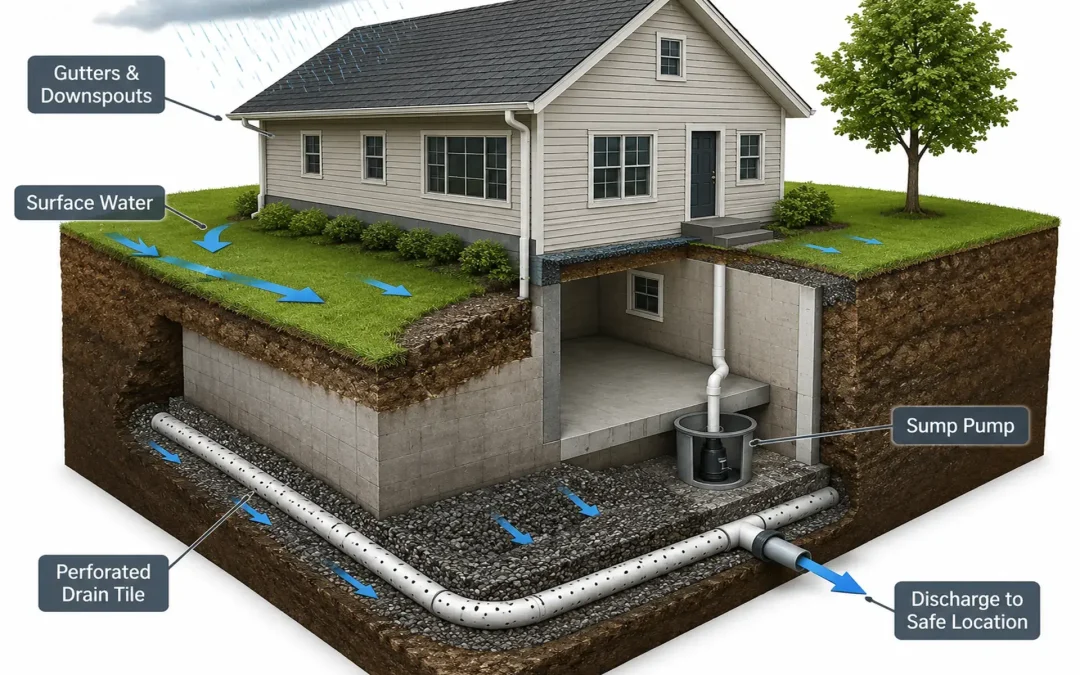
If you’ve been dealing with a wet basement or water collecting around your foundation, you may have heard a contractor mention a drain tile drain system. Despite its name, a drain tile is not made of tile at all. It is one of the most effective ways to manage groundwater and help keep water away from your home’s foundation.
Many homeowners first learn about a drain tile drain after noticing basement leaks, damp walls, or musty odors. Others discover they need one during a foundation repair or basement waterproofing project. While the name sounds technical, the purpose of a drain tile system is actually simple. It collects groundwater before it can build up around your foundation and directs it to a safe place away from your home.
Installing the right drainage system can help reduce the risk of basement flooding, foundation damage, mold growth, and costly repairs in the future. Whether you’re building a new home or looking for a solution to ongoing water problems, understanding how a drain tile system works is the first step toward protecting your property.
In this guide, you’ll learn what a drain tile is, how it works, where it is installed, and the situations where it provides the most benefit. We’ll also explain the drain tile installation process, common signs that your home may need one, and how it works with other waterproofing systems to keep your basement dry.
What Is a Drain Tile?
A drain tile is a perforated pipe that collects groundwater and carries it away from your home’s foundation. Although the name includes the word “tile,” modern drain tile systems are made from durable plastic pipes with small holes that allow water to enter. These pipes are typically surrounded by clean gravel, which helps water flow into the system while keeping soil away from the pipe.
The term “drain tile” comes from older drainage systems that were built using short sections of clay tile. Today, those clay tiles have been replaced by stronger, longer-lasting plastic piping, but the original name is still commonly used throughout the waterproofing industry.
A drain tile system is usually installed around the footing of a home’s foundation. As groundwater moves through the soil, it enters the gravel surrounding the pipe and flows into the perforations. The water is then carried safely away from the foundation or directed into a sump pump system, where it can be discharged away from the home.
The main purpose of a drain tile is to reduce the amount of water that collects around the foundation. Without proper drainage, groundwater can build up and create pressure against basement walls. Over time, this pressure may lead to water seepage, foundation cracks, or moisture problems inside the basement or crawl space.
Drain tile systems are commonly used in:
- New home construction to protect the foundation from the start.
- Existing homes with basement water intrusion.
- Crawl space waterproofing projects.
- Foundation waterproofing systems.
- Homes built in areas with high groundwater levels or poorly draining soil.
While a drain tile drain is an important part of a waterproofing system, it works best when combined with other solutions, such as proper grading, functioning gutters and downspouts, and, in many homes, a sump pump. Together, these systems help manage water before it has a chance to damage your foundation or enter your basement.
How Does a Drain Tile System Work?
A drain tile system works by collecting groundwater before it can build up around your home’s foundation. Instead of allowing water to press against the basement walls, the system gives it an easier path to follow.
The process begins underground. As rainwater and groundwater move through the soil, they naturally flow toward the area around your home’s foundation. If there is nowhere for the water to go, it begins to collect around the footing. Over time, this creates pressure against the foundation walls, which can lead to cracks, water seepage, or a damp basement.
A drain tile system is designed to stop that from happening.
The perforated pipe is installed beside the foundation footing and surrounded by clean gravel. The gravel allows water to move freely while helping keep soil away from the pipe. As groundwater reaches the gravel, it flows through the small holes in the pipe instead of collecting against the foundation.
Once the water enters the pipe, it is safely carried away from the home. Depending on the property’s drainage design, the water may flow to a sump pump, a storm drain, a dry well, or another approved drainage outlet.
By continuously moving water away from the foundation, the system helps reduce the pressure that causes many basement water problems.
A properly installed drain tile system helps:
- Collect groundwater before it reaches the foundation.
- Reduce hydrostatic pressure around basement walls.
- Keep basements and crawl spaces drier.
- Lower the risk of foundation cracks caused by excess moisture.
- Protect the home’s waterproofing system.
Although homeowners rarely see a drain tile after it is installed, it works year-round below the surface to manage water every time it rains or the groundwater level rises.
Where Is a Drain Tile Installed?
The location of a drain tile depends on the type of foundation and the source of the water problem. In most homes, the system is installed near the foundation footing because this is where groundwater naturally collects before it begins pressing against the foundation walls.
There are several common installation locations.
Around the Foundation
The most common place for a drain tile is around the outside perimeter of the home’s foundation. The pipe is installed alongside the footing and surrounded by gravel before the excavation is backfilled.
This exterior system intercepts groundwater before it reaches the foundation walls, making it an effective option for new construction and major foundation waterproofing projects.
Along the Foundation Footing
The footing supports the weight of the home and sits below the foundation wall. Installing the drain tile at this level allows the system to collect water before it rises high enough to create pressure against the basement walls.
Because of its location, a drain tile installed along the footing is often referred to as a foundation drain or perimeter drain.
Inside the Basement
Some existing homes are better suited for an interior drain tile system. Instead of excavating outside the home, contractors remove a narrow section of the basement floor around the perimeter and install the drain tile beside the footing from inside.
The collected water is then directed into a sump basin, where a sump pump removes it from the home.
Interior systems are commonly installed when exterior excavation is difficult or when homeowners are finishing a basement waterproofing project.
Outside the Foundation
An exterior drain tile system is often installed during new home construction because the foundation is already exposed. It can also be added to an existing home, although this usually requires excavation around the foundation.
Exterior systems prevent groundwater from reaching the foundation in the first place, making them one of the most effective long-term drainage solutions.
The best installation method depends on several factors, including the age of the home, soil conditions, landscaping, and the source of the water intrusion. A professional inspection can determine whether an interior or exterior drain tile system is the better choice for protecting your foundation.
Interior vs. Exterior Drain Tile
If your home needs a drain tile system, one of the biggest decisions is whether it should be installed inside or outside the foundation. Both options are designed to manage groundwater, but they work in slightly different ways and are suited for different situations.
An interior drain tile is installed from inside the basement. A narrow section of the concrete floor is removed around the perimeter, allowing the drainage pipe to be placed beside the foundation footing. Once installed, the pipe collects groundwater and directs it to a sump pump, which removes the water from the home.
Interior systems are often recommended for homes with recurring basement leaks, especially when excavating outside the foundation would be difficult or costly. They are also a popular choice when homeowners are finishing a basement waterproofing project.
An exterior drain tile drain is installed around the outside of the foundation. This requires excavating the soil down to the footing before placing the perforated pipe in a gravel-filled trench. Once the system is installed, the excavation is backfilled and the landscaping is restored.
Because it collects groundwater before it reaches the foundation walls, an exterior drain tile is considered one of the most effective ways to protect a home’s foundation. It is commonly installed during new construction, but it can also be added to existing homes when major waterproofing work is needed.
Here’s a simple comparison.
| Interior Drain Tile | Exterior Drain Tile |
| Installed inside the basement. | Installed outside the foundation. |
| Collects groundwater after it reaches the foundation. | Collects groundwater before it reaches the foundation. |
| Usually connected to a sump pump. | Can drain to a sump pump or another drainage outlet. |
| Less disruption to landscaping. | Requires excavation around the home. |
| Common for existing homes with basement leaks. | Common during new construction or exterior waterproofing projects. |
Neither option is automatically better than the other. The right solution depends on your home’s construction, the source of the water problem, and the overall condition of the foundation. In some situations, an interior system provides the most practical solution, while in others, an exterior drain tile offers the best long-term protection.
Drain Tile Installation: What to Expect
Installing a drain tile system is more involved than placing a pipe in the ground. The system must be installed at the correct depth, with the proper slope and drainage path, so it can move water away from the foundation efficiently.
While every project is different, most drain tile installations follow the same basic process.
Step 1: Inspect the Property
The first step is identifying where the water is coming from. A contractor will inspect the foundation, basement, grading, soil conditions, and existing drainage to determine whether a drain tile system is the right solution.
Step 2: Prepare the Installation Area
For an exterior installation, soil is excavated down to the foundation footing. For an interior system, a narrow section of the basement floor is carefully removed around the perimeter.
This creates enough space to install the drainage pipe at the proper level.
Step 3: Install the Drain Tile
A layer of clean gravel is placed in the trench before the perforated drain tile pipe is installed. The pipe is positioned with the correct slope so water can flow naturally toward the drainage outlet.
Additional gravel is placed around the pipe to improve drainage and help keep soil from clogging the system.
Step 4: Connect the Drainage System
The drain tile is connected to a sump pump, storm drain, dry well, or another approved discharge point, depending on the property’s drainage design.
This step is important because collecting the water is only half the job. The water also needs a safe place to go once it leaves the foundation.
Step 5: Restore the Area
After the drain tile installation is complete, the trench is backfilled or the basement floor is repaired. The work area is restored as closely as possible to its original condition.
For exterior projects, this may include replacing soil, landscaping, or walkways that were temporarily removed during the installation.
A properly installed drain tile system can provide reliable protection for decades. While the installation process requires careful planning and skilled workmanship, the result is a drainage system that helps protect your home’s foundation every time groundwater levels rise or heavy rain saturates the soil.
Benefits of Installing a Drain Tile
A drain tile system does much more than collect water. It helps protect some of the most important parts of your home, including the foundation, basement, and crawl space. By managing groundwater before it becomes a problem, a drain tile system can help prevent expensive repairs in the future.
Here are some of the biggest benefits.
Helps Keep Your Basement Dry
One of the main reasons homeowners install a drain tile is to reduce the risk of basement water intrusion. By collecting groundwater before it builds up around the foundation, the system helps keep water from entering the basement through cracks, joints, or porous concrete.
Protects Your Foundation
Too much moisture around the foundation can weaken the surrounding soil and increase pressure against the foundation walls. Over time, this may contribute to cracks or other structural problems. A drain tile helps move excess water away from the foundation, reducing this pressure and helping protect your home.
Reduces Hydrostatic Pressure
After periods of heavy rain, the soil around your home can become saturated with water. As the groundwater level rises, pressure builds against the basement walls. This is known as hydrostatic pressure, and it is one of the most common causes of basement leaks.
A drain tile system gives the water an easier path to follow, helping relieve this pressure before it can force water into the basement.
Helps Prevent Mold and Moisture Problems
A damp basement creates the perfect environment for mold and mildew to grow. By reducing excess moisture, a drain tile system can help create a healthier indoor environment while protecting stored belongings and finished basement spaces from water damage.
Supports Your Waterproofing System
A drain tile works best as part of a complete waterproofing plan. When combined with proper grading, working gutters and downspouts, foundation waterproofing, and a sump pump, it helps create multiple layers of protection against water intrusion.
Adds Long-Term Protection
A properly installed drain tile system is designed to work for decades with very little maintenance. While every home is different, investing in the right drainage system today can help reduce the likelihood of costly water damage and foundation repairs in the years ahead.
Signs Your Home May Need a Drain Tile
Not every home needs a drain tile system, but certain warning signs can indicate that groundwater is becoming a problem. The earlier these issues are identified, the easier they are often to correct.
Here are some of the most common signs that your home may benefit from a drain tile system.
Water in the Basement After Heavy Rain
If you notice water entering your basement after storms, groundwater may be collecting around your foundation instead of draining away. Even small amounts of water can point to a larger drainage issue below the surface.
Damp Basement Walls
Concrete naturally absorbs moisture, but walls that always feel damp or show signs of moisture may indicate that water is building up outside the foundation.
Musty Odors
A musty smell in the basement or crawl space is often one of the first signs of excess moisture. Even if you do not see standing water, damp conditions can create the perfect environment for mold and mildew growth.
White Mineral Stains on the Walls
A white, powdery residue on concrete walls is called efflorescence. These mineral deposits are left behind when water moves through the foundation and evaporates. While the stains themselves are harmless, they are a sign that moisture is entering the foundation.
Standing Water Around the Foundation
If water collects near your home after rain instead of draining away, some of it can soak into the ground and increase pressure around the foundation. Over time, this can lead to basement leaks or foundation damage.
Foundation Cracks
Not every crack is caused by water, but ongoing moisture around the foundation can make existing cracks worse. If you notice new cracks along with signs of water intrusion, it’s a good idea to have the problem inspected.
A Sump Pump That Runs Frequently
If your sump pump operates often during rainy weather, it may be handling a large amount of groundwater. While this is not necessarily a problem, it can indicate that your home’s drainage system is working hard to manage water around the foundation.
If you’ve noticed one or more of these signs, it’s worth having your drainage system evaluated. Identifying the source of the water early can help prevent more serious foundation or waterproofing problems later on.
How a Drain Tile Works with a Sump Pump
A drain tile system and a sump pump often work together to keep a basement dry. While they are different systems, each plays an important role in moving water away from your home.
The drain tile is responsible for collecting groundwater around the foundation. As water enters the perforated pipe, it flows toward the lowest point in the drainage system. In many homes, that point is a sump basin, also called a sump pit.
Inside the sump basin is the sump pump. When the water reaches a certain level, the pump automatically turns on and pushes the water through a discharge pipe to a safe location away from the home’s foundation. Once the water level drops, the pump shuts off until it is needed again.
Think of it this way:
- The drain tile collects the water.
- The sump pump removes the water from your property.
Without a sump pump, the drain tile would still collect water, but it would have nowhere to send it if there isn’t a natural downhill drainage outlet. That’s why many basement waterproofing systems include both components.
This combination offers several advantages:
- Continuously removes groundwater from around the foundation.
- Helps reduce hydrostatic pressure on basement walls.
- Lowers the risk of basement flooding during heavy rain.
- Helps keep crawl spaces and basements dry throughout the year.
- Provides reliable protection in areas with high groundwater levels.
If you’re planning a basement waterproofing project, a drain tile system and sump pump often provide the most complete solution for managing groundwater.
Drain Tile vs. French Drain
Homeowners often confuse a drain tile with a French drain because both use perforated pipes and gravel to move water. While they may look similar, they are designed to solve different drainage problems.
A drain tile is installed around the foundation footing to collect groundwater before it builds up against the foundation walls. Its main job is to protect the basement or crawl space by reducing underground water pressure.
A French drain, on the other hand, is usually installed closer to the surface. It is designed to collect rainwater and surface runoff before it has a chance to pool around the home, flood the yard, or soak into the soil near the foundation.
Here’s a quick comparison.
| Drain Tile | French Drain |
| Collects groundwater below the surface. | Collects surface water and rainwater runoff. |
| Installed near the foundation footing. | Installed in a shallow trench. |
| Protects the basement and foundation. | Protects the yard and landscaping from standing water. |
| Commonly used with sump pumps. | Often drains to a dry well, storm drain, or lower area. |
Neither system is better in every situation. The right choice depends on where the water is coming from.
If you’re dealing with basement seepage caused by groundwater, a drain tile system is usually the better solution. If your yard floods or water flows toward your home after rain, a French drain may be the more effective option.
In some cases, both systems are installed together to provide complete protection. A French drain helps keep surface water away from the foundation, while the drain tile manages groundwater below the surface.
Want to learn more about the differences? Read our complete guide on Drain Tile vs. French Drain to see which drainage system is best for your home.
How Long Does a Drain Tile Last?
A properly installed drain tile system is built to last for many years. In most cases, modern drain tile systems made from high-quality plastic piping can continue working for several decades with very little maintenance.
The lifespan of a drain tile depends on several factors, including the quality of the installation, soil conditions, the type of pipe used, and whether the system is kept free of debris.
Here are a few things that can affect how long a drain tile system lasts.
Quality of Installation
A drain tile works best when it is installed at the correct depth and slope. If the pipe is not positioned properly or the gravel is installed incorrectly, water may not flow as intended. Professional installation helps ensure the system performs efficiently for the long term.
Soil Conditions
The type of soil around your home also plays a role. Clay soil drains more slowly than sandy soil, which means the drain tile may handle larger amounts of water after heavy rain. While the system is designed for this purpose, poor soil conditions make proper installation even more important.
Tree Roots
Large tree roots can sometimes grow into older drainage systems, especially if the pipes have joints or small openings. Modern plastic drain tile systems are much less likely to experience root intrusion than older clay tile systems.
Regular Maintenance
Although drain tile systems require very little upkeep, occasional inspections can help identify blockages or drainage problems before they become serious. Keeping gutters, downspouts, and sump pumps working properly also reduces unnecessary strain on the drainage system.
If your home has an older clay drain tile or a drainage system that has been in place for many decades, it may be worth having it inspected. Modern drain tile systems are generally more durable and better at handling today’s waterproofing needs.
Common Drain Tile Problems
Even though a drain tile system is designed to provide reliable drainage, no system lasts forever. Over time, certain issues can reduce its performance, especially if the drainage system is older or was not installed correctly.
Knowing the warning signs can help you address small problems before they lead to basement water damage.
Clogged Drain Tile
Over time, sediment, dirt, or fine soil particles can enter the drainage system and reduce the flow of water. While gravel and filter materials help prevent this, clogs can still develop in older systems or installations without proper filtration.
Tree Root Intrusion
Tree roots naturally grow toward sources of moisture. In older drain tile systems, especially those made from clay pipe, roots can enter small joints or cracks and block the flow of water.
Modern drain tile systems use continuous plastic piping, which greatly reduces the risk of root intrusion.
Crushed or Damaged Pipe
Heavy soil movement, foundation settlement, or construction work near the home can sometimes damage a drain tile pipe. A crushed section of pipe can slow drainage or completely block the flow of groundwater.
Improper Installation
Not every drainage problem is caused by age. If a drain tile was installed with the wrong slope, poor gravel coverage, or an incorrect outlet, it may never perform as intended. Water can continue collecting around the foundation even though a drainage system is present.
Aging Drainage Systems
Many older homes still have clay drain tile systems that were installed decades ago. While these systems served their purpose, modern materials are stronger, more durable, and less likely to crack or become blocked over time.
Signs Your Drain Tile May Not Be Working
Your drain tile system may need to be inspected if you notice:
- Water entering the basement after heavy rain.
- Damp or musty basement walls.
- Standing water around the foundation.
- New foundation cracks.
- A sump pump that runs constantly without lowering the water level.
- Recurring moisture problems that continue after other repairs.
If these problems continue, it does not always mean the drain tile needs to be replaced. In many cases, the system can be cleaned, repaired, or improved to restore proper drainage. A professional inspection can determine the cause of the problem and recommend the most effective solution.
A Realistic Example: How a Drain Tile Solved a Basement Water Problem
Every home is different, which is why the right drainage solution starts with finding the true source of the water. Here’s a realistic example of how a drain tile system can help.
A homeowner in Long Island, NY, who had issues with basement leaks in Long Island, NY and contacted Zavza Seal after dealing with water seepage in the basement for several years. The problem became worse after heavy rain, and the homeowner had already tried sealing a few foundation cracks. While those repairs helped temporarily, water continued to find its way inside.
After inspecting the property, our team found that the real issue was groundwater collecting around the foundation. As the soil became saturated, water pressure built up against the basement walls until it eventually forced moisture through the concrete.
To solve the problem, we installed an interior drain tile system around the basement perimeter. The system was connected to a sump pump, allowing groundwater to flow into the drain tile, collect in the sump basin, and be safely pumped away from the home.
Once the installation was complete, the basement remained dry even during periods of heavy rainfall. More importantly, the homeowner now had a drainage system that addressed the source of the problem instead of simply covering up the symptoms.
This example shows why a drain tile system is often one of the most effective long-term solutions for homes experiencing groundwater-related basement leaks.
How Much Does a Drain Tile Installation Cost?
One of the first questions homeowners ask after learning about drain tile systems is how much the installation will cost. The answer depends on several factors because every property has different drainage challenges.
For example, installing a drain tile during new home construction is usually more straightforward than adding one to an existing home. In an existing home, contractors may need to excavate around the foundation or remove part of the basement floor before the drainage system can be installed.
Other factors that affect the overall cost include:
- The size of the home’s foundation.
- Whether an interior or exterior drain tile system is being installed.
- Soil conditions around the property.
- The depth of the foundation.
- Whether a sump pump is needed.
- Landscaping or hardscaping that must be restored after excavation.
While cost is an important consideration, homeowners should also think about the long-term value of a properly installed drainage system. Water damage, foundation repairs, and mold remediation can often cost much more than addressing the drainage problem early.
The best way to determine the right solution and receive an accurate estimate is through a professional inspection. Every home has unique drainage conditions, so recommendations should always be based on the property’s specific needs.
Why Professional Drain Tile Installation Matters
A drain tile system may seem simple, but its performance depends almost entirely on how well it is installed. Even high-quality materials cannot prevent water problems if the system is installed incorrectly.
The pipe must be placed at the correct depth and slope so groundwater can flow naturally toward the drainage outlet. The surrounding gravel must also be installed properly to encourage water movement while helping keep sediment away from the pipe.
Another important factor is identifying the actual source of the water. In some homes, groundwater is the main issue. In others, poor grading, clogged gutters, or surface runoff may be contributing to the problem. Installing a drain tile without addressing these issues may not fully solve the water intrusion.
Professional installation also ensures that the drain tile works as part of a complete waterproofing system. Depending on the property, that may include foundation waterproofing, a sump pump, proper grading, or exterior drainage improvements.
Taking the time to install the right system from the start can provide dependable protection for decades and help homeowners avoid repeated repairs.
Final Thoughts
A drain tile system is one of the most effective ways to protect your home from groundwater and foundation moisture problems. By collecting water before it builds up around the foundation, it helps reduce hydrostatic pressure, lowers the risk of basement leaks, and supports the overall health of your home’s waterproofing system.
Whether you’re building a new home or dealing with ongoing basement water issues, understanding how a drain tile works can help you make informed decisions about protecting your property. The right drainage solution not only helps keep your basement dry but can also reduce the risk of costly repairs in the future.
At Zavza Seal, we understand that no two homes have the same drainage challenges. Our team carefully evaluates the source of the water before recommending a solution, whether that’s a drain tile system, foundation waterproofing, a sump pump, or a combination of drainage methods. By addressing the cause of the problem instead of just the symptoms, we help homeowners create long-lasting protection for their homes.
Frequently Asked Questions
Is a drain tile actually made of tile?
No. Modern drain tile systems are made from perforated plastic pipe, not ceramic tile. The name comes from older drainage systems that used clay tiles many years ago.
Does every home need a drain tile?
Not necessarily. Many homes already have a drain tile system installed during construction. Others may never need one if the property has excellent natural drainage. Homes with recurring basement water problems, high groundwater levels, or poor drainage are more likely to benefit from a drain tile system.
Can a drain tile clog?
Yes. Although modern systems are designed to reduce clogging, sediment, soil, and tree roots can sometimes affect older or poorly installed systems. Regular inspections can help identify problems before they lead to basement water intrusion.
How long does a drain tile system last?
A properly installed drain tile system can last for several decades. Its lifespan depends on factors such as the quality of the installation, soil conditions, and routine maintenance.
Is a drain tile installed inside or outside the home?
It can be installed either way. An interior drain tile is placed beneath the basement floor along the foundation footing, while an exterior drain tile is installed around the outside of the foundation. The best option depends on the home’s construction and the source of the water problem.
Can I install a drain tile myself?
Installing a drain tile requires excavation, proper grading, drainage design, and knowledge of foundation waterproofing. While small landscape drainage projects may be suitable for experienced DIY homeowners, foundation drain tile installation is usually best left to professionals.
Does a drain tile work without a sump pump?
Sometimes. If the property has enough natural slope, the drain tile may discharge water by gravity. However, many homes rely on a sump pump to move collected groundwater away from the foundation, especially when gravity drainage is not possible.
How do I know if my drain tile has failed?
Common signs include recurring basement leaks, damp walls, standing water near the foundation, musty odors, or water problems that continue even after other repairs. A professional inspection can determine whether the drain tile system is blocked, damaged, or still working properly.