
If you’ve noticed a long horizontal crack in your basement wall or a wall that seems to be leaning inward, it’s natural to worry. Many homeowners across Long Island, Brooklyn, Queens, and the Bronx see these signs and wonder if their home has a serious foundation problem.
One repair you may come across is carbon fiber straps for basement walls. These straps are designed to strengthen basement walls that have started to crack or bow. When they’re used in the right situation, they can help stop the wall from moving any further and may prevent a much bigger repair later on.
That said, carbon fiber straps are not the answer to every foundation problem. Some walls need a different type of repair, especially if the damage is more severe or the foundation is still settling.
In this guide, we’ll explain what carbon fiber straps are, how they work, when they should be used, and when another repair option might make more sense. We’ll also cover the installation process, the benefits and drawbacks, and answer some of the most common questions homeowners ask before making a decision.
What Are Carbon Fiber Straps?
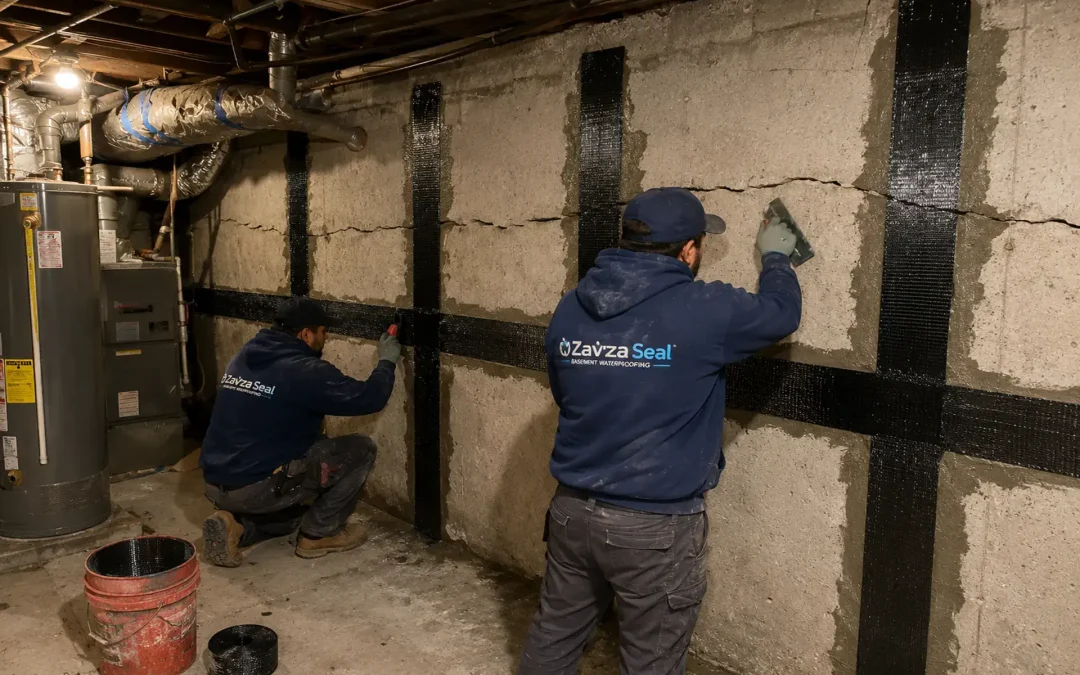
Carbon fiber straps are strong strips that are attached to basement walls to help keep them from moving any farther. They are most often used on poured concrete basement walls that have developed horizontal cracks or have started to bow inward because of pressure from the soil outside.
Even though the straps are thin, they are incredibly strong. Carbon fiber is used in airplanes, bridges, and race cars because it can handle a lot of force without stretching or breaking. The same strength makes it a good choice for reinforcing certain basement walls.
During installation, each strap is bonded directly to the wall with a high-strength epoxy. Once the epoxy hardens, the strap becomes part of the wall and helps hold it in place. The goal is to stop the wall from bowing any farther and reduce the chance of the damage getting worse.
One reason many homeowners like carbon fiber straps is that they take up very little space. Unlike large steel beams, they sit almost flat against the wall, so they are less noticeable. They also won’t rust, which makes them a good option for basements that deal with occasional moisture.
It’s important to know that carbon fiber straps do not push a bowed wall back into place. Their job is to reinforce the wall and help keep it from moving any farther. If a wall has already bowed too much or the foundation is still shifting, a different repair, such as wall anchors or helical tiebacks, may be the better solution.
The best way to know if carbon fiber straps are right for your home is to have the wall inspected by a foundation repair professional. Every home is different, and the right repair depends on what’s causing the problem in the first place.
Why Basement Walls Bow and Crack
Basement walls are built to support your home, but they’re also constantly holding back the soil around your foundation. Over time, that soil pushes against the walls. If the pressure becomes too great, the wall can start to crack or move inward.
One of the biggest causes of this pressure is water. After heavy rain or melting snow, the soil around your home becomes saturated. Wet soil is much heavier than dry soil, and it pushes harder against the basement walls. This is called hydrostatic pressure, and it’s one of the most common reasons basement walls begin to bow.
The type of soil around your home also makes a difference. Many homes across Long Island, Brooklyn, Queens, and the Bronx are built on clay or mixed soils. Clay expands when it absorbs water and shrinks as it dries out. That constant movement puts extra stress on foundation walls year after year.
Poor drainage can make the problem even worse. Clogged gutters, short downspouts, or grading that slopes toward the house allow more water to collect around the foundation. As the soil becomes wetter, the pressure against the walls continues to increase.
In some cases, foundation settlement can also cause cracks to appear. When part of the foundation moves more than another, the walls can develop stress cracks that may grow larger over time.
Not every crack means your home has a serious structural problem. Small hairline cracks are fairly common as concrete cures and ages. But horizontal cracks, walls that are starting to lean inward, or cracks that continue to grow should always be inspected by a foundation repair professional.
The earlier these problems are found, the more repair options are usually available. In many cases, carbon fiber straps can reinforce a wall before the damage becomes much more severe.
Signs Your Basement Wall May Need Carbon Fiber Straps
Most homeowners don’t inspect their basement walls very often. The good news is that your home will usually give you warning signs when something isn’t right.
One of the most common signs is a horizontal crack running across a poured concrete basement wall. Unlike vertical cracks, which are often caused by normal settling, horizontal cracks usually mean the wall is under pressure from the soil outside.
You may also notice that part of the wall is starting to bow inward. Sometimes the movement is small enough that it’s hard to see. Other times, you might notice that a straight wall no longer looks perfectly straight.
Other warning signs include:
- A horizontal crack that gets longer or wider over time.
- Water leaking through cracks after heavy rain.
- White, chalky stains on the basement wall, which can be a sign that moisture is passing through the concrete.
- Basement walls that feel damp even when there hasn’t been recent rain.
- Gaps forming where the wall meets the floor or ceiling.
- Doors or windows near the affected area becoming harder to open or close because the structure has shifted.
If you notice one or more of these signs, it doesn’t automatically mean you need carbon fiber straps. The wall first needs to be inspected to find out what’s causing the movement.
Carbon fiber straps work best when the wall has started to crack or bow but is still structurally stable. If the wall has already moved too far or is continuing to shift, a stronger repair system may be needed.
The most important thing is not to ignore the warning signs. Foundation problems almost always become more expensive to repair the longer they are left untreated.
How Do Carbon Fiber Straps Work?
Carbon fiber straps work by reinforcing a basement wall and helping stop it from bowing any farther. Instead of pushing the wall back into place, they hold it in its current position and help prevent additional movement.
The first step is making sure the wall is a good candidate for this type of repair. If the wall has already bowed too much or is still moving, another solution may be needed.
Once the wall has been inspected, the surface is cleaned and prepared. Any loose concrete, dirt, paint, or debris is removed so the adhesive can bond properly to the wall.
Next, a high-strength epoxy is applied where each carbon fiber strap will be installed. The straps are then pressed firmly against the wall from the top of the foundation to the bottom. As the epoxy cures, it creates a strong bond between the concrete and the carbon fiber.
Once the installation is complete, the straps become part of the wall. Because carbon fiber is extremely strong, it helps resist the pressure pushing against the foundation from the outside.
One of the biggest advantages of carbon fiber straps is that they take up very little space. Since they sit almost flat against the wall, homeowners can still finish their basement without bulky steel beams sticking out.
Keep in mind that the straps only strengthen the wall. They do not fix drainage problems or stop water from collecting around the foundation. If poor drainage is causing the pressure, that issue should also be addressed to help protect the repair for years to come.
When Are Carbon Fiber Straps the Right Solution?
Carbon fiber straps work best when the problem is caught early. If a basement wall has started to crack or bow but is still structurally stable, they can be an excellent way to reinforce the wall and help prevent further movement.
They are commonly recommended for poured concrete basement walls with horizontal cracks caused by pressure from the soil outside. In many cases, installing carbon fiber straps early can help homeowners avoid more extensive repairs later.
This repair is often a good choice when:
- The basement wall has a horizontal crack.
- The wall has started to bow slightly but has not moved significantly.
- The foundation is no longer settling.
- The wall is made of poured concrete.
- The homeowner wants a repair that is strong but not highly visible.
Carbon fiber straps are also popular in finished basements because they take up very little room. Unlike steel beams, they sit close to the wall and usually do not interfere with storage or finished living spaces.
Every home is different, though. What works well for one property may not be the right solution for another. That’s why a professional inspection is so important before deciding on a repair.
At Zavza Seal, we always look for the cause of the problem before recommending a solution. If carbon fiber straps are the right choice, we’ll explain why. If another repair will provide better long-term protection, we’ll recommend that instead. Our goal is to solve the problem the right way, not simply install a product.
When Are Carbon Fiber Straps NOT the Right Solution?
Carbon fiber straps are a great repair in the right situation, but they are not the answer to every foundation problem. If a contractor recommends them without first inspecting your basement wall, that’s a red flag.
For example, if a wall has already bowed several inches inward, carbon fiber straps alone may not provide enough support. In cases like this, stronger reinforcement systems such as steel I-beams or wall anchors may be needed to help stabilize the wall.
Carbon fiber straps for foundation repair are also not meant to fix foundation settlement. If part of your home is sinking because the soil beneath the foundation has shifted, the settlement problem needs to be repaired first. Simply attaching straps to the wall will not stop the foundation from moving.
Another thing to remember is that carbon fiber straps do not solve drainage problems. If water continues to collect around your foundation because of clogged gutters, poor grading, or heavy hydrostatic pressure, the wall will still be under stress. In many homes, improving drainage is just as important as reinforcing the wall.
Some basement walls are also built with concrete blocks instead of poured concrete. While carbon fiber can sometimes be used on block walls, other repair methods are often a better choice depending on the condition of the wall.
Every home is different, which is why there is no one-size-fits-all repair. A proper inspection should always come before choosing a solution.
At Zavza Seal, we look at the entire foundation, not just the crack in the wall. That helps us recommend the repair that will protect your home for the long term.
Carbon Fiber Straps vs. Steel I-Beams
Both carbon fiber straps and steel I-beams are used to strengthen basement walls, but they work in different ways. The right choice depends on how much the wall has moved and the condition of the foundation.
Carbon fiber straps are designed to stop a wall from moving any farther. They are thin, lightweight, and bonded directly to the wall with a high-strength epoxy. Because they sit almost flat against the concrete, they are a popular choice for finished basements where homeowners want to save space.
Steel I-beams are much larger and are installed vertically against the wall. They provide additional support for walls that have bowed more than carbon fiber straps can safely handle. While they are very strong, they take up more room and remain visible after installation.
Here’s a simple comparison.
| Carbon Fiber Straps | Steel I-Beams |
| Best for walls with minor bowing or horizontal cracks | Best for walls with more significant bowing |
| Sit almost flat against the wall | Extend several inches into the basement |
| Do not rust | Can rust if not properly protected |
| Minimal impact on finished basements | Take up more usable space |
| Quick installation in many cases | Installation is usually more involved |
| Reinforces the wall to help prevent further movement | Provides heavy-duty structural support for more serious wall movement |
Neither repair is automatically better than the other. A wall with only a small amount of movement may be an excellent candidate for carbon fiber straps. A wall that has bowed much farther may need the extra strength of steel I-beams.
The most important step is finding out why the wall moved in the first place. Once the cause is identified, the right repair becomes much easier to choose.
Carbon Fiber Straps vs. Wall Anchors
Carbon fiber straps and wall anchors are both used to repair bowing basement walls, but they work in very different ways.
Carbon fiber straps reinforce the wall and help stop it from moving any farther. They are attached directly to the inside of the wall with a structural epoxy. Once installed, they become part of the wall and provide extra strength against the pressure from the soil outside.
Wall anchors take a different approach. A steel anchor plate is installed in stable soil away from the foundation and connected to another plate on the inside of the basement wall with a steel rod. As the system is tightened over time, it can sometimes help pull the wall back toward its original position.
Because wall anchors require excavation outside the home, the installation is usually more involved than carbon fiber straps. However, they can be a better option when a wall has bowed more than a carbon fiber repair can safely handle.
Here’s a simple comparison.
| Carbon Fiber Straps | Wall Anchors |
| Best for minor wall movement | Best for moderate wall movement |
| Installed inside the basement | Installed inside and outside the home |
| No excavation required | Requires excavation in the yard |
| Thin and nearly flush with the wall | Interior wall plates remain visible |
| Helps stop further movement | Can sometimes help straighten the wall over time |
| Quick installation in many homes | More extensive installation process |
The right choice depends on the condition of your basement wall. During an inspection, a foundation repair specialist can determine whether the wall is a good candidate for carbon fiber straps or if wall anchors will provide better long-term support.
Carbon Fiber Straps vs. Helical Tiebacks
Helical tiebacks are another solution for repairing basement walls, but they are designed for more serious structural problems than carbon fiber straps.
A helical tieback is a steel rod with a helical plate on the end. It is drilled through the foundation wall and deep into stable soil outside the home. Once installed, the system anchors the wall to stronger ground and helps resist the pressure pushing against it.
Carbon fiber straps do not extend into the soil. Instead, they strengthen the existing wall and help prevent additional movement. This makes them a great option for walls with early signs of bowing, but they are not intended for walls that have already moved significantly.
Helical tiebacks are often recommended when a wall has bowed several inches or when stronger reinforcement is needed to stabilize the foundation.
Here’s how they compare.
| Carbon Fiber Straps | Helical Tiebacks |
| Best for minor bowing | Best for moderate to severe bowing |
| Installed only on the inside wall | Extend through the wall into stable soil |
| No excavation needed in many cases | Installation may require exterior access |
| Thin profile with little impact on basement space | More involved structural repair |
| Reinforces the existing wall | Anchors the wall to stable soil for additional support |
While helical tiebacks are more complex to install, they can provide the extra strength needed for walls with more advanced damage.
At Zavza Seal, we don’t recommend the same repair for every home. We inspect the foundation, measure the amount of wall movement, and identify what’s causing the problem before suggesting the best solution. In some homes, carbon fiber straps are the right choice. In others, wall anchors or helical tiebacks will provide better long-term protection.
How Are Carbon Fiber Straps Installed?
Installing carbon fiber straps for foundation repair is not a DIY project. For the repair to last, the wall must be properly inspected, prepared, and reinforced using the correct materials and installation methods.
Every home is different, but the process usually follows these steps.
Step 1: Inspect the Basement Wall
The first step is a thorough inspection. A foundation repair specialist checks the condition of the wall to make sure carbon fiber straps are the right solution.
This includes looking at the size of the cracks, measuring how much the wall has bowed, and checking for signs of ongoing foundation movement. If the damage is too severe, another repair method may be recommended instead.
Step 2: Prepare the Wall
Before the straps can be installed, the wall needs to be cleaned.
Paint, dirt, loose concrete, and other debris are removed so the epoxy can bond directly to the concrete. This is one of the most important parts of the installation because the strength of the repair depends on a solid bond.
Step 3: Install the Carbon Fiber Straps
A structural epoxy is applied to the wall, and each carbon fiber strap is pressed firmly into place.
The straps are installed vertically from the top of the foundation wall down to the floor. Depending on the size of the wall and the location of the damage, several straps may be needed to provide the proper support.
Step 4: Allow the Epoxy to Cure
Once the straps are installed, the epoxy needs time to fully cure. After it hardens, the straps become permanently bonded to the wall and begin reinforcing the concrete against future movement.
Step 5: Final Inspection
Before the job is complete, the installation is inspected to make sure every strap is securely bonded and properly positioned.
When installed correctly, carbon fiber straps require very little maintenance and can provide long-lasting reinforcement for basement walls.
How Much Do Carbon Fiber Straps Cost?
One of the first questions homeowners ask is how much carbon fiber straps cost. The truth is that there isn’t one fixed price because every basement is different.
The total cost depends on several factors, including the condition of the wall, the size of the basement, and how many straps are needed.
Some of the biggest factors that affect the price include:
- The length of the basement wall.
- How many carbon fiber straps are required.
- The number and size of the cracks.
- Whether the wall has already started to bow.
- How easy it is to access the work area.
- Whether additional repairs are needed, such as waterproofing or drainage improvements.
While it may be tempting to choose the lowest estimate, the quality of the installation is just as important as the materials being used. A poorly installed carbon fiber system may not provide the long-term protection your foundation needs.
The best way to get an accurate price is to schedule a professional inspection. After evaluating the condition of your basement wall, a foundation repair specialist can recommend the right solution and provide a detailed estimate based on your home’s specific needs.
It’s also worth remembering that repairing a wall early is often much less expensive than waiting until the damage becomes more severe. Addressing the problem sooner can help prevent larger structural repairs in the future.
Benefits of Carbon Fiber Straps
Carbon fiber straps have become a popular foundation repair option because they are strong, long-lasting, and much less noticeable than many other repair systems. When they’re installed on the right type of basement wall, they can provide reliable reinforcement without major disruption to your home.
Here are some of the biggest benefits.
They Help Stop Further Wall Movement
The main job of carbon fiber straps is to reinforce a basement wall and help keep it from bowing any farther. Once they are bonded to the wall, they add strength and help resist the pressure from the soil outside.
They Take Up Very Little Space
Unlike steel beams, carbon fiber straps sit almost flat against the wall. This makes them a good choice for finished basements or homes where storage space is important.
They Won’t Rust
Carbon fiber does not rust or corrode like steel can. That’s a big advantage in basements where moisture levels may be higher than other parts of the home.
Installation Is Less Disruptive
In many cases, carbon fiber straps can be installed without digging around the outside of the home. That means less disruption to your landscaping and a quicker installation process.
They Blend Into the Basement
Once installed, the straps have a clean, low-profile appearance. Many homeowners choose to paint over them after the repair is complete so they blend in with the rest of the basement wall.
They Can Help Prevent Bigger Repairs
Fixing a wall while the damage is still minor is often much easier and less expensive than waiting until the wall has bowed significantly. Carbon fiber straps can help stabilize the wall before the problem becomes more serious.
Limitations of Carbon Fiber Straps
As effective as carbon fiber straps can be, they do have limitations. Understanding what they can and cannot do will help you make the right decision for your home.
They Don’t Straighten a Bowed Wall
One of the biggest misconceptions is that carbon fiber straps pull a wall back into place. They don’t.
Their purpose is to reinforce the wall and help prevent it from moving farther inward. If the wall has already bowed significantly, another repair method may be needed.
They Don’t Fix Foundation Settlement
If your foundation is sinking because of unstable soil beneath the home, carbon fiber straps won’t solve that problem. Settlement usually requires a different type of structural repair, such as helical piles or another foundation stabilization system.
They Don’t Solve Drainage Problems
If water continues to build up around your foundation, the pressure against the basement wall will remain. That’s why many homeowners also need improvements such as better grading, longer downspouts, or a waterproofing system to reduce the amount of water around the foundation.
They Aren’t Right for Every Wall
Carbon fiber straps are most commonly used on poured concrete basement walls. Some block foundation walls or severely damaged walls may require a different repair system.
The Quality of Installation Matters
Even the best materials won’t perform as expected if they’re installed incorrectly. Proper surface preparation, the right epoxy, and correct strap placement all play an important role in the long-term success of the repair.
That’s why it’s important to have your basement inspected by an experienced foundation repair contractor. Choosing the right repair is just as important as choosing the right company to perform the work.
A Real-Life Example: How Carbon Fiber Straps Helped Reinforce a Basement Wall
Every home is different, but here’s an example of a situation where carbon fiber straps were the right solution.
A homeowner in Nassau County, Long Island contacted Zavza Seal after noticing a long horizontal crack running across one of the basement walls. The crack had slowly become more noticeable over the years, especially after heavy rain. Although the wall had started to bow slightly inward, there were no signs that it had moved enough to require a more extensive structural repair.
After inspecting the basement, our team found that pressure from the surrounding soil was causing the wall to crack. The foundation itself was stable, making carbon fiber straps a good option for reinforcing the wall.
We first cleaned and prepared the concrete surface to ensure a strong bond. High-strength structural epoxy was then applied, and carbon fiber straps were installed from the top of the wall to the floor. Once the epoxy cured, the straps became permanently bonded to the concrete, helping reinforce the wall against future movement.
The homeowner also made improvements to the drainage around the home by extending the downspouts farther away from the foundation. Reducing the amount of water collecting around the basement helped lower the pressure against the wall.
Today, the basement wall remains stable, and the homeowner has peace of mind knowing the problem was addressed before it became more serious.
This example shows why it’s important to choose the right repair based on the condition of the wall. In this case, carbon fiber straps provided a strong, long-lasting solution without the need for more invasive repairs.
How to Know if Carbon Fiber Straps Are Right for Your Home
The only way to know if carbon fiber straps are the right solution is to have your basement wall inspected by a foundation repair professional.
Every crack tells a different story. Some are caused by normal settling, while others are a sign that pressure from the soil is pushing against the foundation. Before recommending any repair, it’s important to find out what’s causing the problem.
Carbon fiber straps are often a good choice if:
- Your basement has a horizontal crack in a poured concrete wall.
- The wall has started to bow slightly but is still structurally stable.
- You’re looking for a repair that doesn’t take up much space.
- The foundation is no longer settling.
- You want to stop the damage from getting worse before it turns into a larger repair.
However, if the wall has bowed significantly, the foundation is sinking, or the damage is continuing to get worse, another repair method may provide better long-term protection.
At Zavza Seal, we don’t believe in recommending the same repair for every home. We begin with a careful inspection to understand what’s causing the problem. From there, we explain your options and recommend the solution that makes the most sense for your home, your budget, and the condition of your foundation.
Taking care of a foundation problem early can often save homeowners from much larger repairs in the future. If you’ve noticed cracks or bowing basement walls, it’s always better to have them checked sooner rather than later.
Frequently Asked Questions
Do carbon fiber straps really work?
Yes, when they are installed on the right type of basement wall. Carbon fiber straps are designed to reinforce poured concrete walls that have developed horizontal cracks or slight bowing. They help stop the wall from moving farther inward, but they do not straighten a wall that has already bowed significantly.
How long do carbon fiber straps last?
Carbon fiber is an extremely durable material that does not rust or corrode. When installed correctly, carbon fiber straps are designed to provide long-term reinforcement and can last for decades.
Can carbon fiber straps fix a bowing basement wall?
They can help stop a wall from bowing any farther, but they do not push the wall back into its original position. If the wall has already bowed a great deal, another repair method may be needed.
Can carbon fiber straps be installed on any basement wall?
They work best on poured concrete basement walls. Some concrete block walls may require a different repair depending on the amount of damage and the condition of the foundation.
Will carbon fiber straps stop basement leaks?
No. Carbon fiber straps strengthen the wall, but they are not waterproofing products. If water is entering your basement, you may also need drainage improvements or a waterproofing system.
Can I paint over carbon fiber straps?
Yes. After the installation is complete and the materials have fully cured, carbon fiber straps can usually be painted to match the rest of the basement wall.
How many carbon fiber straps will my basement need?
The number depends on the size of the wall, the location of the cracks, and how much reinforcement is needed. A foundation repair professional will determine the proper spacing during the inspection.
Do carbon fiber straps rust?
No. Unlike steel, carbon fiber does not rust, making it a good choice for basement environments where moisture may be present.
Are carbon fiber straps better than steel beams?
Neither repair is better in every situation. Carbon fiber straps are often the better choice for walls with minor bowing because they are less noticeable and take up very little space. Steel beams are usually recommended for walls with more severe movement.
Are carbon fiber straps better than wall anchors?
It depends on the condition of the wall. Carbon fiber straps reinforce the wall to help prevent further movement, while wall anchors can sometimes help move a bowed wall back toward its original position over time.
Can I install carbon fiber straps myself?
Foundation repairs should always be completed by an experienced professional. Proper surface preparation, the correct epoxy, and accurate installation are essential for the repair to perform as intended.
What causes basement walls to bow?
The most common cause is pressure from the soil outside the foundation. Heavy rain, poor drainage, expanding clay soil, and hydrostatic pressure can all push against basement walls and cause them to crack or bow over time.
Are horizontal basement wall cracks serious?
They can be. Horizontal cracks are often a sign that pressure is building against the foundation wall. They should be inspected to determine the cause and the best repair method.
How do I know if my basement wall needs repair?
Signs include horizontal cracks, walls that lean inward, water leaking through cracks, uneven floors, sticking doors or windows, and gaps where the wall meets the floor or ceiling. If you notice any of these problems, it’s a good idea to schedule a professional inspection.
Is it better to repair the wall early?
Yes. Small foundation problems are often easier and less expensive to repair than severe structural damage. Addressing the issue early can help prevent larger repairs later.
Final Thoughts
A cracked or bowing basement wall can be stressful, but it doesn’t always mean your home needs a major structural repair. In many cases, carbon fiber straps provide a strong and long-lasting way to reinforce a basement wall before the damage becomes more serious.
The key is making sure they’re used in the right situation. Every foundation is different, and the best repair depends on what’s causing the wall to crack or move in the first place. That’s why a professional inspection is so important.
At Zavza Seal, we take the time to identify the root cause of the problem before recommending a solution. Whether your home needs carbon fiber straps, wall anchors, helical tiebacks, or another type of foundation repair, our goal is to provide a repair that protects your home for the long term.
If you’ve noticed horizontal cracks, bowing basement walls, or other signs of foundation movement in Long Island, Brooklyn, Queens, or the Bronx, our team is here to help. Contact Zavza Seal today to schedule a professional inspection and learn about the best repair options for your home.