
Problem
A homeowner in Lawrence, NY contacted Zavza Seal after noticing settlement issues affecting both an exterior walkway and an interior concrete floor. The problem had been developing for years due to water intrusion beneath the concrete surfaces.
Before preparing a repair plan, our team conducted Ground Penetrating Radar (GPR) exploratory work to better understand the conditions below the slab and identify any hidden obstacles, including radiant heating lines.
Our inspection revealed extensive voids beneath both the exterior walkway and the interior concrete slab. Years of water exposure had washed away supporting soil, leaving large gaps beneath the concrete.
Outside, the walkway had become unsupported in several areas, creating a significant void between the concrete and the ground below. Inside the home, the loss of support caused the concrete slab to separate from the foundation footings, reducing structural stability and increasing the risk of future settlement.
Without repairs, the voids would continue to grow, leading to additional movement, cracking, and potential structural concerns.
Our Solution
Because the exterior and interior areas had different structural conditions, our team developed two specialized repair strategies.
For the exterior, we replaced the deteriorated walkway and stairs entirely. For the interior, we used mudjacking technology to fill the hidden voids and stabilize the existing slab without the need for complete demolition.
Exterior Walkway and Stair Reconstruction
The existing concrete walkway, pavers, and aging wooden railings were carefully removed and disposed of.
Once demolition was complete, our crew excavated the area to prepare a stable base for the new structure. We installed a compacted layer of crushed stone to improve drainage and provide long-term support beneath the new concrete.
To increase strength and durability, steel reinforcement was installed before pouring high-strength 4,000 PSI concrete for the walkway and stairs.
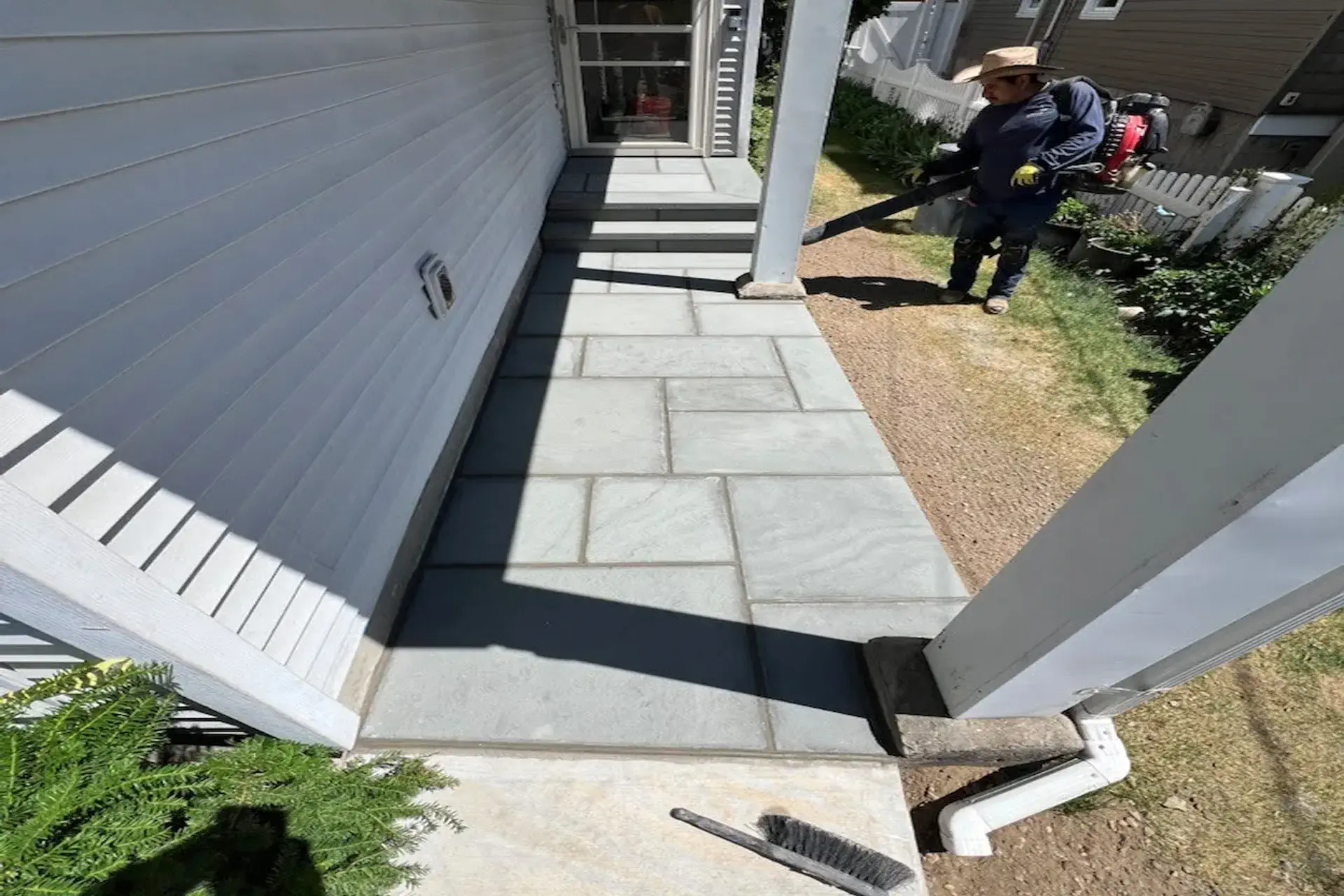
After the concrete cured, blue stone was installed over the surface to create an attractive finished appearance that complemented the home’s exterior. New wooden railings were then installed to complete the project.
The result was a structurally sound walkway system designed to resist settlement and provide safe access to the home.
Interior Mudjacking and Slab Stabilization
Inside the home, the goal was to restore support beneath the existing slab while minimizing disruption to the property.
The project began with the removal of the existing tile flooring to expose the concrete slab below. Using information gathered during the GPR investigation, our team carefully located the radiant heating lines to ensure they would not be damaged during the repair process.
Small access holes were drilled into the slab, allowing us to pump a stone slurry grout beneath the concrete. As the material flowed into the empty spaces, it filled the underground voids that had developed over time.
Once the voids were filled, controlled pressure from the grout began gently lifting portions of the slab and restoring support near the foundation wall. While returning a settled slab to its exact original position is not always possible, the process created a solid, stable base capable of supporting the structure long term.
To further strengthen the repair, hot-dip galvanized steel anchors were installed every 36 inches where the slab met the footing. These anchors helped reconnect the slab to the foundation and restore structural stability.
The repair area was then finished using high-strength 6,500 PSI repair mortar reinforced with fiberglass mesh. A second layer of repair mortar was applied to create a durable and long-lasting connection between the slab and footing.
Why This Repair Was Important?
Voids beneath concrete are often hidden until visible settlement, cracking, or separation begins to appear. In this case, years of water exposure had slowly removed the soil supporting both the exterior walkway and interior slab.
Replacing the damaged exterior concrete eliminated a major safety concern while providing a stable foundation for the new walkway and stairs. Inside the home, filling the voids and reconnecting the slab to the footing helped restore structural support and prevent additional settlement.
Addressing the problem before further movement occurred helped protect the home’s foundation and reduced the likelihood of more extensive structural repairs in the future.
The Result:
The homeowner now has a safe and stable exterior walkway supported by a properly compacted base and reinforced concrete structure. Inside the home, the slab has regained critical support after extensive void filling and stabilization work.
By addressing both the visible and hidden damage caused by soil erosion, our team restored structural integrity and helped prevent future settlement issues.