
Have you ever noticed that one room in your home feels freezing during winter while another feels unusually warm? Or perhaps your air conditioner seems to run nonstop in summer, yet some areas still feel uncomfortable. These common issues often point to one overlooked part of the house the attic.
The attic acts like a gateway between your living space and the outdoor environment. When it is poorly insulated, heat moves in and out of the home much more easily. This leads to temperature swings, discomfort, and increased strain on heating and cooling systems.
Professional attic insulation companies brooklyn homeowners trust often focus on solving these problems by improving the home’s thermal envelope. Companies such as Zavza Seal LLC work within the insulation industry to address attic-related energy losses that contribute to inconsistent indoor temperatures.
Let’s explore how attic insulation helps create a more stable and comfortable indoor environment throughout every season.
Indoor Temperature Fluctuations
Indoor temperature fluctuations occur when heat enters or escapes the home unevenly. This can create noticeable hot and cold spots throughout different rooms.
A home’s insulation system plays a critical role in slowing heat movement. Without adequate insulation, outdoor temperatures can significantly influence indoor comfort levels.
Why Some Homes Feel Hot and Cold Too Often
Several factors contribute to indoor temperature swings:
- Insufficient attic insulation
- Air leaks around fixtures and vents
- Poor attic ventilation
- Aging insulation materials
- Gaps around ductwork
Even small openings can allow conditioned air to escape while permitting outdoor air to enter.
The Role of the Attic in Home Temperature Control
Heat naturally moves from warmer areas toward cooler areas. During summer, attic temperatures can become extremely high, transferring heat downward into living spaces. During winter, valuable indoor heat can escape through the attic.
Research consistently highlights the attic as one of the most important areas for controlling energy loss and maintaining indoor comfort.
What Attic Insulation Actually Does?
Many people think insulation simply keeps a home warm. In reality, insulation works year-round by slowing heat transfer in both directions.
Creating a Thermal Barrier
Think of attic insulation as a protective blanket surrounding your home’s ceiling. It helps reduce the speed at which heat travels between the attic and living spaces.
When this thermal barrier performs effectively, indoor temperatures remain more consistent despite outdoor weather changes.
Reducing Heat Transfer Throughout the Year
During summer:
- Hot attic air stays separated from living areas.
- Cooling systems work more efficiently.
- Indoor temperatures remain steadier.
During winter:
- Heated indoor air stays inside longer.
- Heat loss through the roof decreases.
- Rooms maintain a more comfortable temperature.
As discussed in related resources about types of attic insulation, different insulation materials offer varying thermal performance characteristics depending on the home’s needs.
How Attic Insulation Companies Assess Temperature Problems
Before insulation improvements begin, professionals typically evaluate the home’s existing conditions.
Evaluating Existing Insulation
Insulation can deteriorate over time due to:
- Moisture exposure
- Settling
- Compression
- Pest activity
- Aging materials
An assessment helps determine whether current insulation still performs effectively.
Identifying Air Leaks and Gaps
Many temperature problems are not caused solely by missing insulation.
Professionals often inspect areas where air leakage occurs, including:
- Recessed lighting
- Plumbing penetrations
- Electrical openings
- Attic access hatches
- Duct connections
Common Areas Where Energy Loss Occurs
Even well-insulated attics can experience energy loss when gaps remain unsealed.
Air sealing is frequently performed alongside insulation upgrades because escaping air can undermine insulation performance. Modern attic projects often combine both strategies to improve overall temperature stability.
Seasonal Benefits of Proper Attic Insulation
The effectiveness of attic insulation becomes especially noticeable during extreme weather conditions.
Maintaining Comfort During Summer
Summer heat can turn an attic into an enormous heat reservoir.
Without sufficient insulation:
- Ceiling temperatures increase.
- Upper floors become warmer.
- Air conditioners run longer.
Proper insulation helps reduce heat transfer from the attic into occupied spaces, creating a more comfortable indoor environment.
Retaining Warmth During Winter
Winter presents the opposite challenge.
As heated air rises, it naturally seeks escape routes through the roof structure. Effective attic insulation slows this process significantly.
This helps:
- Maintain comfortable room temperatures
- Reduce cold drafts
- Improve overall thermal consistency
Studies and insulation industry guidance continue to identify attic insulation as one of the most effective methods for reducing seasonal heat loss and heat gain.
Types of Insulation Used to Control Temperature Changes
Different insulation materials offer unique advantages.
Fiberglass Insulation
Fiberglass remains one of the most widely used insulation materials.
Benefits include:
- Reliable thermal performance
- Fire resistance
- Long service life
- Cost-effective installation
Cellulose Insulation
Cellulose insulation consists primarily of recycled materials.
Advantages include:
- Dense coverage
- Effective gap filling
- Strong thermal performance
- Environmentally conscious composition
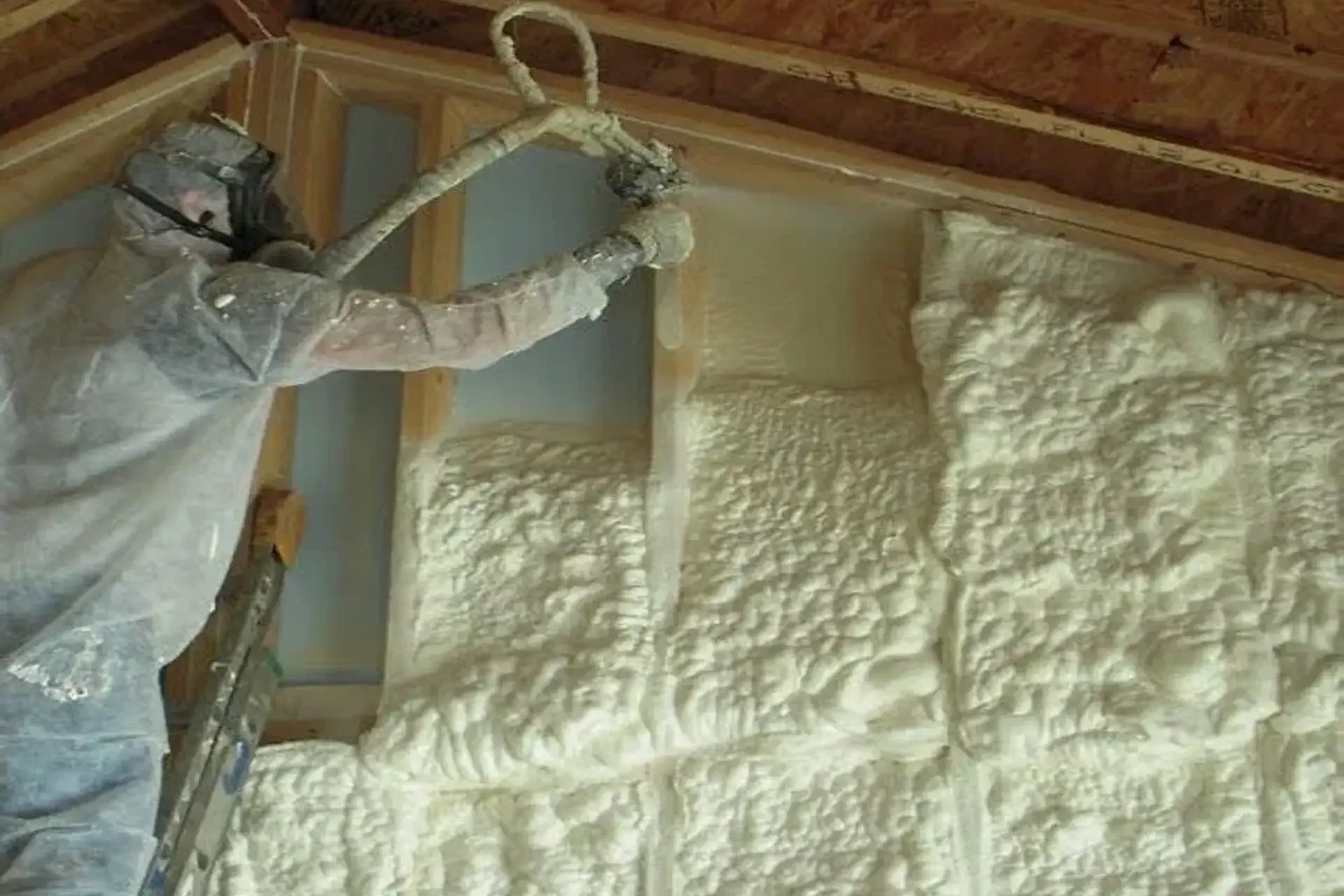
Spray Foam Insulation
Spray foam expands after application, filling cracks and voids.
Benefits often include:
- Air sealing capabilities
- High thermal resistance
- Moisture resistance
- Improved temperature consistency
Each insulation type contributes differently to reducing indoor temperature fluctuations.
The Connection Between Air Sealing and Temperature Stability
Insulation and air sealing work together like teammates.
One without the other often limits overall effectiveness.
Why Insulation Alone Is Not Always Enough
Imagine wearing a winter coat with several holes in it.
The insulation exists, but heat still escapes.
Similarly, a home can contain insulation while still experiencing drafts and temperature inconsistencies due to air leakage.
Modern insulation projects frequently include air-sealing measures to maximize thermal performance.
Impact on HVAC System Performance
Heating and cooling equipment performs best when indoor temperatures remain stable.
Reducing Heating and Cooling Workloads
When heat transfer decreases:
- HVAC systems cycle less frequently.
- Temperature recovery occurs faster.
- Equipment experiences less stress.
Supporting Consistent Indoor Comfort
Instead of dramatic temperature swings throughout the day, insulated homes often experience more gradual and manageable changes.
This can improve comfort across multiple rooms while helping maintain balanced temperatures.
Indoor Air Quality and Temperature Regulation
Temperature stability and indoor air quality are closely connected.
Proper insulation and air sealing can help:
- Reduce outdoor pollutant infiltration
- Limit moisture intrusion
- Minimize condensation risks
- Support healthier indoor environments
Attic improvements often contribute to both thermal comfort and overall indoor environmental quality.
Signs Your Home May Need Better Attic Insulation
Many homeowners live with insulation problems without realizing it.
Common warning signs include:
- Uneven temperatures between rooms
- Hot upper floors during summer
- Cold ceilings during winter
- Frequent HVAC operation
- Drafts near ceilings
- Rapid indoor temperature changes
If these issues persist, the attic may warrant closer inspection.
Long-Term Benefits of Stable Indoor Temperatures
Consistent temperatures provide more than immediate comfort.
Long-term advantages can include:
- Improved year-round comfort
- Reduced thermal stress on building materials
- Better HVAC efficiency
- More balanced humidity levels
- Enhanced indoor living conditions
Homes with stable temperatures often feel more comfortable regardless of seasonal weather extremes.
How Professional Insulation Assessments Improve Results
Professional evaluations help identify issues that homeowners may not easily see.
For example, attic insulation companies in brooklyn often assess:
- Insulation depth
- Air leakage points
- Ventilation performance
- Moisture concerns
- Existing insulation condition
Organizations such as Zavza Seal LLC operate within this field, where assessments focus on understanding how attic conditions affect indoor comfort and temperature regulation.
Rather than relying on assumptions, a thorough evaluation provides information about the factors contributing to temperature fluctuations.
Zavza Seal LLC Serving the Midwood Community and Beyond in Brooklyn
Tidyland Cleaning Services is dedicated to serving the diverse needs of the local community of Brooklyn, including individuals residing in neighbourhoods like Midwood. With its convenient location near landmarks such as the United States Postal Service and major intersections like Avenue J and E 12th St (coordinates: 40.6247016, -73.963846), we offer interior foundation waterproofing services.
Get interior foundation waterproofing services at Midwood Now
Call Us or Contact Us: +17184007005
Navigate from Midwood to Zavza Seal LLC Now
Indoor temperature fluctuations are often more than a simple comfort issue. They usually indicate that heat is moving through the home more freely than it should.
The attic plays a central role in this process. When insulation is inadequate, damaged, or improperly installed, seasonal temperature swings become more noticeable throughout the house.
By creating a thermal barrier, addressing air leaks, and improving overall energy performance, attic insulation helps maintain more stable indoor temperatures throughout the year. Whether facing intense summer heat or cold winter conditions, a properly insulated attic contributes significantly to a more comfortable and consistent living environment.
How Attic Insulation Companies Help Reduce Indoor Temperature Fluctuations Throughout the Year
Attic insulation acts as a critical barrier against extreme outdoor temperatures, significantly moderating indoor temperature fluctuations year-round. While attic air temperature can fluctuate dramatically with outdoor conditions, proper insulation helps maintain a more stable and comfortable indoor environment.
Key Findings:
- Attic Temperature Dependency: Measurements in attics with varying insulation thicknesses (150-600 mm) showed a high dependency on outdoor temperature, with indoor temperature and insulation thickness having a less significant direct impact on attic air temperature itself. However, this insulation is crucial for the living space below.
- Example: In winter, a well-insulated attic ceiling prevents heat loss from the living space, keeping it warmer. In summer, it prevents heat gain from the attic, keeping it cooler.
- Reduced Heat Flux: Increased insulation thickness in attics leads to lower heat flux through the ceiling. This is vital for both heating and cooling seasons.
- Summer: Reduces heat gain from the hot attic into the living space.
- Winter: Reduces heat loss from the living space into the colder attic.
- Radiant Barrier Effectiveness: Radiant barriers in attics can significantly reduce conditioning loads. Studies show systems with radiant barriers had heat flows through the attic floor that were 32.8% to 49.8% lower than a control without a radiant barrier during summer daytime conditions.
Visualizing the Impact:
Imagine a graph where the X-axis represents the months of the year, and the Y-axis represents temperature (°F).
- Uninsulated Attic (or poorly insulated): A jagged line showing extreme peaks in summer and deep troughs in winter, mirroring outdoor temperatures closely.
- Well-Insulated Attic: A much smoother, flatter line, indicating significantly reduced temperature swings within the living space below the attic.
Chart Concept:
- Line 1 (Red): Outdoor Temperature (Highly Fluctuating)
- Line 2 (Blue): Attic Air Temperature (Fluctuates, but less than outdoor)
- Line 3 (Green): Indoor Living Space Temperature (with proper attic insulation – relatively stable)
(Note: Specific temperature data for direct comparison of insulated vs. uninsulated living spaces across all seasons from the provided search results is limited to attic air temperature and heat flux reduction percentages. However, the principle of insulation’s role in moderating temperature is well-established.)
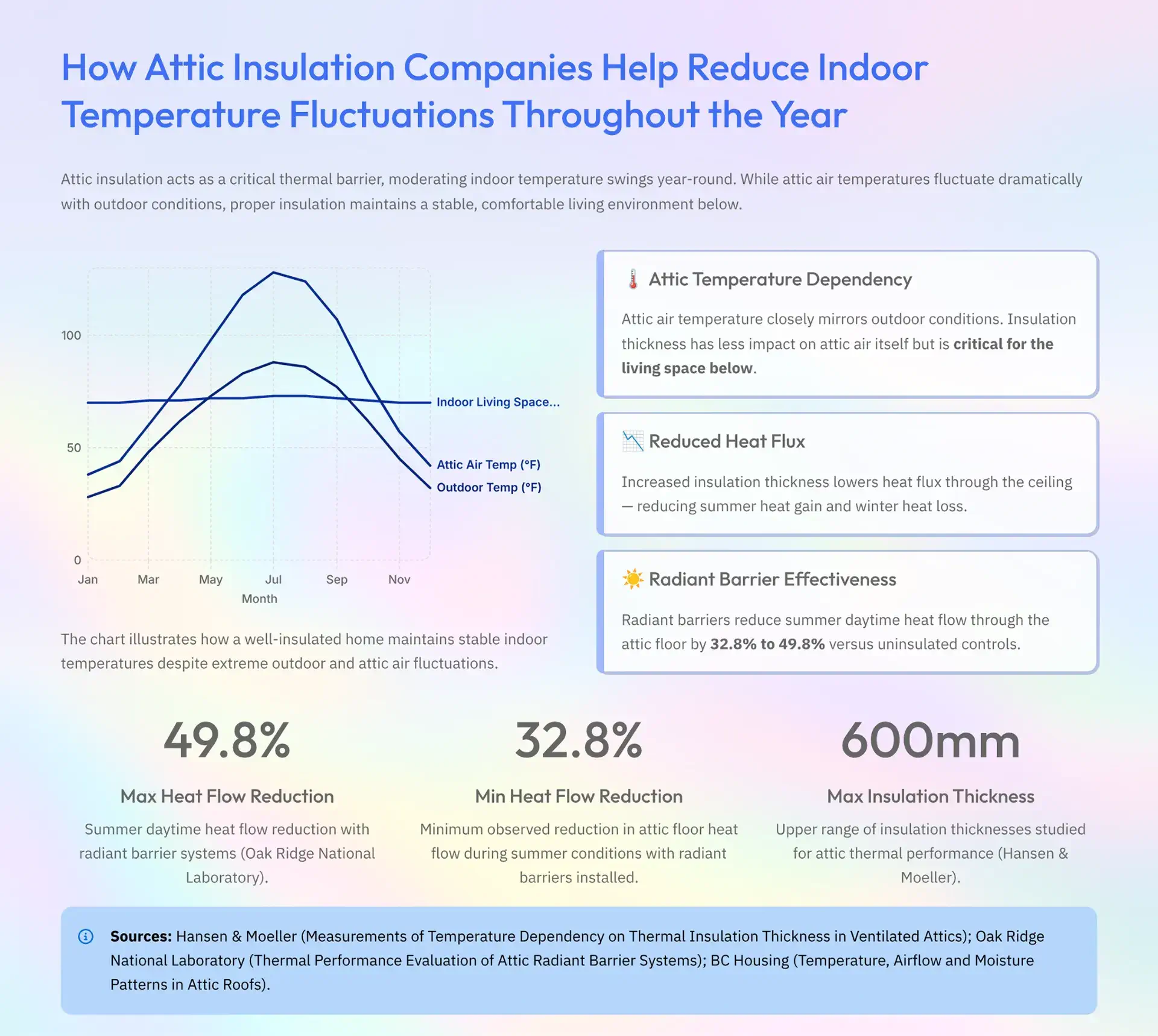
Sources: Hansen & Moeller (Measurements of Temperature Dependency on Thermal Insulation Thickness in Ventilated Attics); Oak Ridge National Laboratory (Thermal Performance Evaluation of Attic Radiant Barrier Systems); BC Housing (Temperature, Airflow and Moisture Patterns in Attic Roofs).
FAQs
1. How does attic insulation help keep indoor temperatures consistent?
Attic insulation slows heat transfer between the attic and living spaces, helping maintain more stable indoor temperatures throughout the year.
2. Can poor attic insulation cause hot and cold spots in a home?
Yes. Uneven insulation coverage and air leaks often lead to rooms experiencing different temperatures.
3. Does attic insulation help during both summer and winter?
Absolutely. Insulation reduces heat gain during summer and minimizes heat loss during winter.
4. Why is air sealing important along with insulation?
Air leaks allow conditioned air to escape. Sealing these leaks helps insulation perform more effectively and improves temperature stability.
5. How often should attic insulation be evaluated?
Many experts recommend inspecting attic insulation every few years or whenever noticeable comfort, moisture, or energy-efficiency issues arise.