Your roof does much more than cover your home. It protects your family, belongings, insulation, and the overall structure of the building from changing weather conditions. Among all weather events, heavy rainfall can be one of the most damaging. While a roof may appear solid from the outside, even the smallest crack or gap can allow water to enter, eventually leading to moisture damage that affects the entire property.
Roof waterproofing has become an essential part of maintaining residential and commercial buildings because it creates an additional barrier against water infiltration. Rather than simply preventing leaks, waterproofing helps preserve roofing materials, improves structural durability, and reduces the risk of long-term moisture-related problems.
Many property owners researching the best roof waterproofing services brooklyn want to understand how professional waterproofing actually works instead of simply knowing that it exists. Understanding the science behind waterproofing allows homeowners to make informed maintenance decisions that contribute to a healthier and longer-lasting roof.
Industry professionals, including Zavza Seal LLC, often emphasize that effective waterproofing involves careful inspection, proper material selection, and precise installation techniques. These factors work together to improve a roof’s ability to resist heavy rainfall throughout every season.
How Water Finds Weak Points
Water has an incredible ability to travel through tiny openings. Even microscopic gaps around flashing, vents, skylights, or roofing joints can become entry points.
Once rainwater reaches these vulnerable areas, it begins moving beneath shingles or roofing membranes. Capillary action can even cause water to travel upward against gravity in narrow spaces, making leaks difficult to locate.
Some of the most common weak points include:
- Damaged flashing around chimneys
- Roof valleys where water naturally collects
- Plumbing vent seals
- Skylight edges
- Fastener penetrations
- Aging sealants
- Expansion joints
Each of these locations experiences repeated exposure to moisture, making proper waterproofing especially important.
The Long-Term Impact of Moisture
Moisture damage rarely occurs overnight. Instead, it develops gradually as water repeatedly enters the roofing system.
Over time, trapped moisture may contribute to:
- Wood rot within roof decking
- Rusting of metal fasteners
- Mold and mildew growth
- Damaged insulation
- Ceiling stains
- Interior wall deterioration
- Reduced energy efficiency
- Structural weakening
One small leak can eventually affect multiple building components. Preventing water intrusion early is generally much easier than repairing widespread moisture damage later.
What Roof Waterproofing Really Means
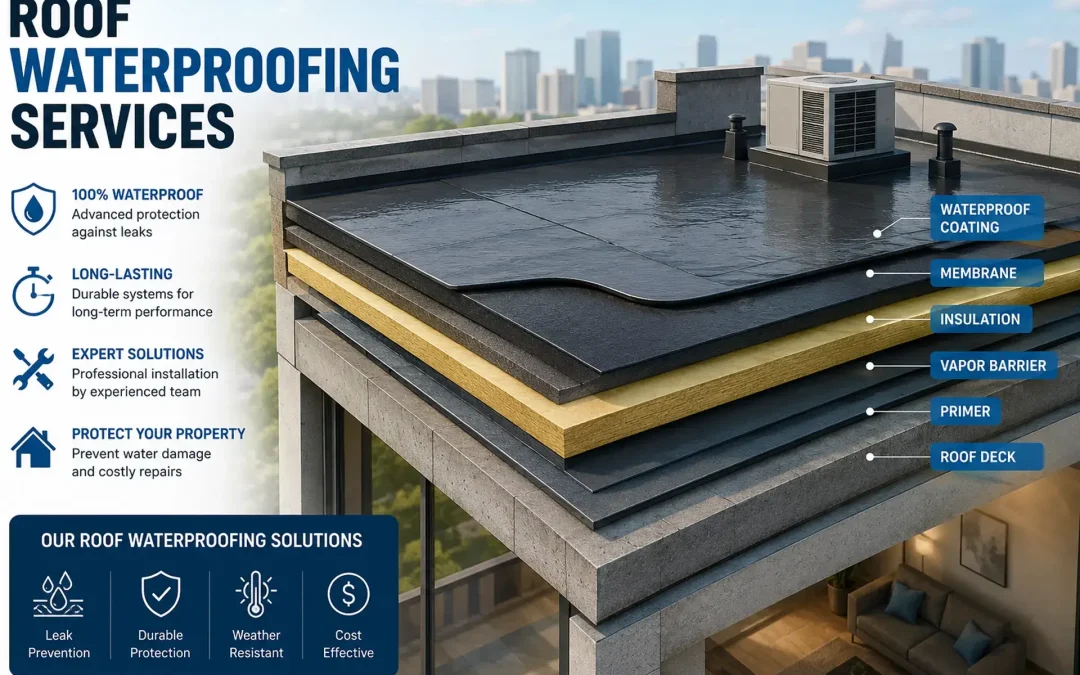
Roof waterproofing refers to the process of creating a durable barrier that prevents water from penetrating the roofing system. Unlike ordinary roof coatings that mainly improve appearance or UV protection, waterproofing systems are specifically engineered to resist water infiltration under demanding weather conditions.
A properly waterproofed roof does not rely on a single protective layer. Instead, multiple components work together to create a complete moisture management system.
Waterproofing vs. Water Resistance
These two terms are often confused, but they describe different levels of protection.
Water-resistant materials slow down moisture penetration but cannot completely stop water under continuous exposure.
Waterproof materials, when correctly installed, prevent water from passing through the roofing system even during prolonged rainfall.
Think of it like wearing a light jacket versus a professional raincoat. Both provide protection, but only one is designed to withstand heavy rain for extended periods.
Common Waterproofing Systems
Modern roofing professionals use several waterproofing systems depending on roof type, climate, and building design.
Some commonly used systems include:
- Liquid-applied waterproof membranes
- Polyurethane waterproof coatings
- Acrylic roof coatings
- Silicone waterproof membranes
- Bituminous membranes
- EPDM rubber membranes
- PVC roofing membranes
- TPO roofing systems
Each material has unique characteristics regarding flexibility, durability, UV resistance, and resistance to standing water.
Selecting the appropriate waterproofing system requires evaluating the roof’s structure, slope, drainage performance, and environmental exposure.
Signs Your Roof Needs Waterproofing
A roof usually provides warning signs before significant water damage develops. Learning to recognize these indicators allows homeowners to address problems before they become more serious.
Visible Exterior Warning Signs
Many signs can be observed during a routine visual inspection from the ground or by a qualified roofing professional.
Common indicators include:
- Cracked roofing materials
- Curling shingles
- Missing shingles
- Ponding water
- Damaged flashing
- Open seams
- Peeling roof coatings
- Loose roofing components
- Clogged drainage systems
These visible conditions often suggest that moisture protection may no longer be performing as intended.
Indoor Indicators of Roof Moisture
Sometimes the earliest warning signs appear inside the building rather than on the roof itself.
Homeowners may notice:
- Water stains on ceilings
- Bubbling paint
- Peeling wallpaper
- Damp insulation
- Mold odors
- Increased indoor humidity
- Soft drywall
- Visible mold growth near ceilings
Ignoring these signs allows moisture to continue spreading through structural materials, making future repairs more extensive.
How Professional Roof Waterproofing Improves Rain Resistance
Professional waterproofing improves roof performance by addressing the underlying causes of water intrusion rather than simply covering existing damage.
Instead of treating only visible leaks, waterproofing strengthens vulnerable areas throughout the roofing system, creating multiple layers of defense against moisture.
Creating a Continuous Protective Barrier
One of the primary objectives of waterproofing is to create a continuous protective membrane across the roof surface.
Unlike traditional roofing materials that contain numerous joints and seams, many waterproof membranes form a seamless protective layer that blocks water before it reaches structural components.
This uninterrupted barrier significantly reduces the number of locations where water can penetrate.
Why Seamless Membranes Matter
Every seam represents a potential weak point.
Modern seamless waterproof membranes reduce these vulnerable areas by covering large roof sections without multiple joints.
Benefits include:
- Reduced leak potential
- Improved flexibility
- Better resistance to standing water
- Enhanced durability
- Easier long-term maintenance
This continuous protection becomes especially valuable during prolonged heavy rainfall.
Sealing Vulnerable Roof Components
Not every portion of a roof experiences equal water exposure.
Roof penetrations require additional attention because they interrupt the roof’s continuous surface.
Common penetration points include:
- Plumbing vents
- HVAC equipment
- Chimneys
- Skylights
- Satellite mounts
- Solar panel supports
Each penetration must be carefully sealed to prevent moisture from bypassing the waterproof membrane.
Protecting Roof Penetrations
Professional waterproofing systems use specialized flashing materials, flexible sealants, reinforced membranes, and compatible adhesives around roof penetrations.
These components accommodate normal building movement while maintaining a watertight seal throughout changing weather conditions.
Improving Drainage Performance
Waterproofing performs best when combined with effective roof drainage.
Even the strongest waterproof membrane performs better when rainwater quickly flows away instead of remaining on the roof surface.
Roof drainage evaluations typically include:
- Roof slope assessment
- Drain placement
- Gutter capacity
- Downspout performance
- Ponding water identification
Managing Water Flow Efficiently
Proper drainage reduces hydrostatic pressure on waterproof membranes and minimizes the amount of time moisture remains in contact with roofing materials.
When water drains efficiently, roofing systems experience less long-term stress, helping waterproof materials maintain their protective properties for many years.
Roof Areas That Need Extra Waterproof Protection
Not every section of a roof experiences the same amount of water exposure. Some areas naturally collect more rainwater or are more vulnerable because of their design. During heavy storms, these locations often become the first places where leaks develop if waterproofing is inadequate.
Understanding these high-risk zones helps homeowners appreciate why best waterproofing services in Brooklyn focus on more than just the visible roof surface. Every transition, joint, and drainage point contributes to the overall performance of the roofing system.
When professionals evaluate roofs, they pay close attention to these critical areas because strengthening them significantly improves the roof’s ability to resist prolonged rainfall.
Flashings, Valleys, and Roof Penetrations
Flashings are thin pieces of metal or specialized waterproof material installed wherever different parts of the roof meet. They direct water away from joints and prevent moisture from entering beneath roofing materials.
Roof valleys are another critical component. Since they collect water flowing from multiple roof slopes, they experience a much higher volume of runoff than other sections. During heavy rain, valleys must handle continuous water movement without allowing moisture to seep beneath the roofing surface.
Roof penetrations also require special protection because they interrupt the roof’s waterproof barrier. These include:
- Chimneys
- Skylights
- Plumbing vents
- Exhaust vents
- HVAC units
- Solar panel mounting systems
Each penetration creates additional seams that must remain sealed despite constant expansion and contraction caused by changing temperatures.
Professional waterproofing reinforces these vulnerable points with compatible membranes, flashing systems, and flexible sealants designed to maintain a watertight connection over time.
Flat Roof Drainage Zones
Flat roofs are especially vulnerable during prolonged rainfall because water drains more slowly than it does on sloped roofs. Even though flat roofs are designed with a slight pitch, small depressions may develop over time.
These low spots allow water to remain on the surface, creating what roofing professionals call ponding water.
Standing water increases the amount of pressure placed on waterproof membranes and exposes roofing materials to moisture for longer periods. If left unaddressed, ponding water can accelerate material deterioration and increase the likelihood of leaks.
Proper waterproofing of flat roofs typically includes:
- Reinforced drainage areas
- Seam protection
- Durable waterproof membranes
- Proper slope correction where necessary
- Drain maintenance
By combining waterproof materials with efficient drainage, professionals significantly reduce the risk associated with standing water.
Materials Used in Modern Roof Waterproofing
Advancements in roofing technology have introduced a variety of waterproofing materials, each designed to address specific roofing challenges. No single material is ideal for every roof because climate, roof design, and environmental exposure all influence performance.
Choosing the appropriate waterproofing system requires understanding how different materials behave under heavy rainfall, temperature fluctuations, and prolonged UV exposure.
Liquid Membranes
Liquid-applied waterproof membranes are among the most versatile waterproofing solutions available today.
They begin as a liquid coating that cures into a seamless, flexible membrane across the roof surface. Because the membrane forms in place, it can easily conform to irregular roof shapes, penetrations, and detailed architectural features.
Some advantages include:
- Seamless waterproof coverage
- Excellent adhesion to various substrates
- High flexibility
- Easy application around complex roof details
- Strong resistance to moisture penetration
Their seamless nature minimizes the number of potential leak points, making them highly effective in areas exposed to heavy rainfall.
Sheet Membranes
Unlike liquid systems, sheet membranes are manufactured under controlled factory conditions before being installed on the roof.
These membranes are supplied in rolls and carefully adhered or mechanically attached to the roofing surface.
Common sheet membrane materials include:
- EPDM rubber
- PVC
- TPO
- Modified bitumen
Because they are manufactured with consistent thickness, sheet membranes provide reliable waterproof performance when properly installed.
Benefits include:
- High puncture resistance
- Excellent durability
- Uniform thickness
- Long service life
- Reliable moisture protection
Proper seam installation remains critical because joints between sheets represent potential entry points if not correctly sealed.
Elastomeric Coatings
Elastomeric coatings are specially formulated waterproof coatings capable of stretching and returning to their original shape without cracking.
Roofs constantly expand during hot weather and contract during cooler temperatures. This movement places stress on roofing materials over time.
Elastomeric coatings accommodate this movement by remaining flexible after curing.
Their benefits include:
- Excellent flexibility
- Crack-bridging capability
- UV resistance
- Weather resistance
- Improved waterproof performance
Because they remain elastic throughout changing weather conditions, these coatings help maintain continuous moisture protection during seasonal temperature changes.
How Climate Affects Waterproofing Performance
Climate plays a significant role in determining how well a waterproofing system performs throughout its lifespan. Roofing materials experience different forms of stress depending on local weather conditions.
Heavy rainfall is only one factor. Roofing systems must also withstand:
- Intense sunlight
- Temperature fluctuations
- Humidity
- Snow accumulation
- Ice formation
- Freeze-thaw cycles
- Wind-driven rain
Each environmental condition affects waterproof materials differently.
For example, frequent expansion and contraction caused by changing temperatures may weaken rigid materials over time. Flexible waterproof membranes are often better suited for environments with wide seasonal temperature variations.
Similarly, areas receiving frequent heavy rainfall require waterproof systems capable of resisting continuous moisture exposure without deteriorating.
Selecting waterproof materials based on environmental conditions improves long-term roof performance and durability.
Why Professional Installation Makes a Difference
Even the highest-quality waterproofing materials cannot perform effectively without proper installation.
Professional waterproofing involves far more than applying a protective coating. It begins with a comprehensive evaluation of the roof’s condition and continues through multiple quality-control steps designed to maximize long-term performance.
Typical installation procedures include:
- Thorough roof inspection
- Surface cleaning
- Moisture testing
- Repairing damaged substrates
- Preparing joints and seams
- Installing compatible waterproof materials
- Reinforcing vulnerable areas
- Final inspection
Every step contributes to creating a reliable waterproof barrier.
Professionals also understand how different materials interact with one another. Applying incompatible products may reduce adhesion or cause premature membrane failure.
Another important consideration is membrane thickness.
Applying too little material may leave weak spots, while excessive application can affect curing performance. Experienced installers follow manufacturer specifications to achieve consistent results.
Organizations such as Zavza Seal LLC frequently highlight the importance of proper preparation because even small installation errors can compromise an otherwise effective waterproofing system.
Roof Maintenance After Waterproofing
Waterproofing significantly improves roof performance, but no roofing system remains maintenance-free forever.
Routine inspections and preventive care help preserve waterproof materials while allowing small problems to be corrected before they become expensive repairs.
Regular maintenance also allows homeowners to evaluate how the roof responds to seasonal weather changes and identify developing issues before they affect interior spaces.
Seasonal Inspection Tips
Inspecting the roof at regular intervals helps identify signs of wear before significant deterioration occurs.
Many roofing professionals recommend inspections:
- After heavy storms
- During spring
- Before winter
- After strong winds
- Following hail events
During inspections, homeowners or qualified professionals often examine:
- Flashing condition
- Roof drains
- Gutters
- Sealants
- Membrane surfaces
- Debris accumulation
- Ponding water
Routine evaluations help extend the effectiveness of waterproofing systems.
Preventive Maintenance Practices
Preventive maintenance focuses on preserving the waterproof barrier while minimizing unnecessary stress on roofing materials.
Helpful maintenance practices include:
- Cleaning gutters regularly
- Removing leaves and debris
- Keeping roof drains clear
- Trimming overhanging tree branches
- Checking flashing connections
- Monitoring sealants around penetrations
- Addressing minor damage promptly
These relatively simple tasks reduce the likelihood of water accumulation and help maintain consistent drainage performance.
Preventive care also allows waterproof membranes to continue performing as intended throughout changing weather conditions.
Zavza Seal LLC Serving the East Midwood Community and Beyond in Brooklyn
Zavza Seal LLC is dedicated to serving the diverse needs of the local community of Brooklyn, including individuals residing in neighbourhoods like East Midwood. With its convenient location near landmarks such as the Midwood Athletic Field and major intersections like Avenue K and E 18th St (coordinates: 40.6224516, -73.9579171), we offer the best roof waterproofing services.
Get best roof waterproofing services at East Midwood Now
Call Us or Contact Us: +17184007005
Navigate from East Midwood to Zavza Seal LLC Now
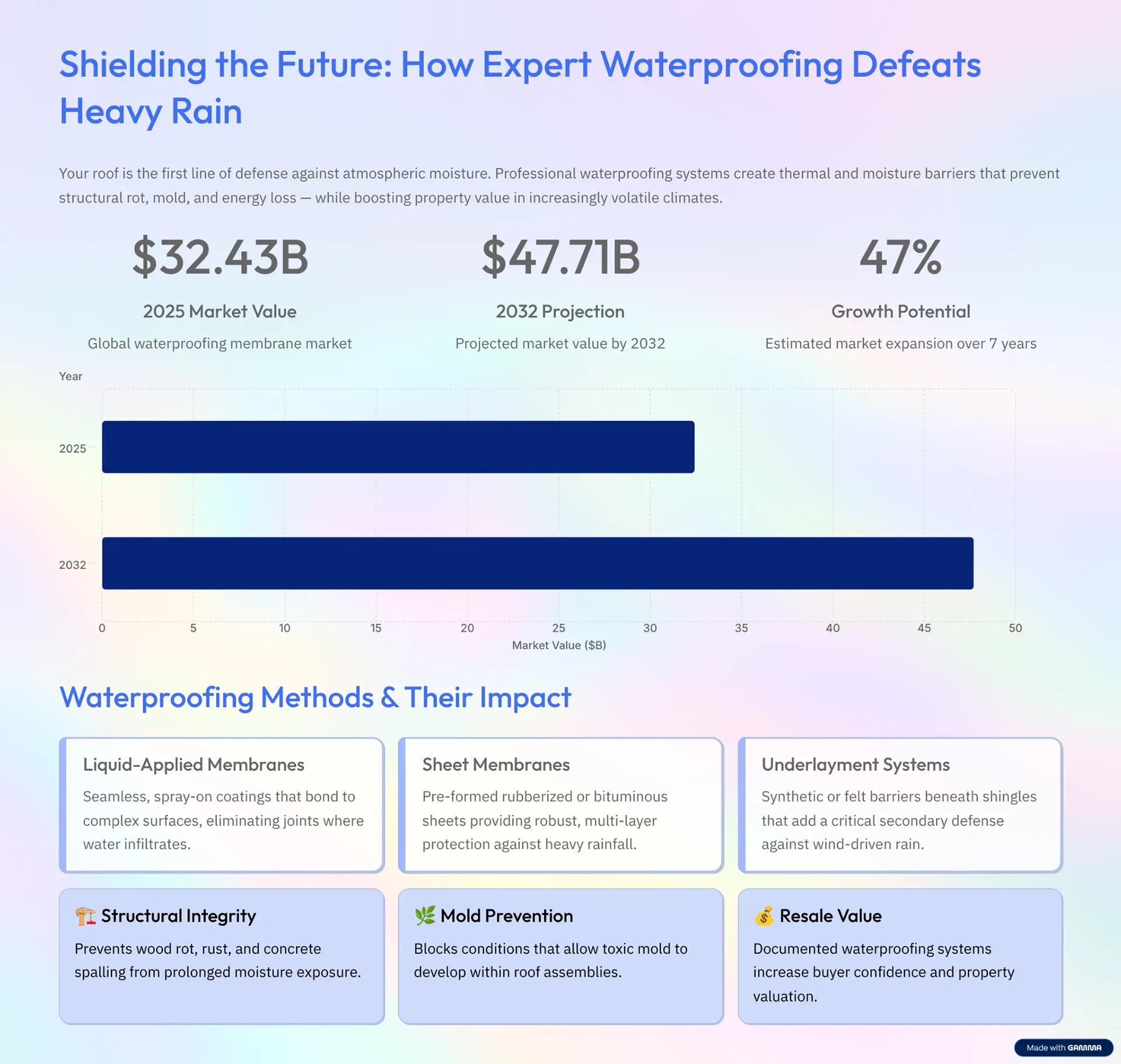
Shielding the Future: How Expert Waterproofing Defeats Heavy Rain
- The Stakes: Structural integrity begins with the roof as the first line of defense against atmospheric moisture and storm events.
- Market Momentum: The global waterproofing membrane market, essential for roofing applications, is projected to grow from USD 32.43 billion in 2025 to USD 47.71 billion by 2032.
- The Mechanics of Resilience: Professional waterproofing—utilizing liquid-applied membranes, sheet membranes, or underlayment—creates a thermal and moisture barrier that prevents structural rot, mold, and energy loss.
- Strategic Advantage: Beyond immediate leak prevention, proactive systems increase property resale value and ensure building longevity in increasingly volatile climates.
Sources: Fortune Business Insights (2025) and SlideServe (2023-2025).
Frequently Asked Questions
1. How does roof waterproofing differ from standard roof coatings?
Roof waterproofing is specifically designed to create a moisture-resistant barrier that prevents water penetration during prolonged rainfall. Standard roof coatings often focus on improving UV resistance or surface protection and may not provide the same level of waterproof performance.
2. Which parts of a roof are most vulnerable to water leaks?
Roof valleys, flashing, chimneys, skylights, plumbing vents, HVAC penetrations, expansion joints, and drainage areas are among the locations most likely to experience water intrusion because they interrupt the roof’s continuous surface.
3. Can heavy rainfall damage a roof even if there are no visible leaks?
Yes. Moisture can enter through tiny cracks or deteriorated sealants without creating immediate interior leaks. Over time, hidden moisture may damage insulation, roof decking, and structural components before visible signs appear.
4. Why is proper drainage important for roof waterproofing?
Efficient drainage allows rainwater to leave the roof quickly, reducing the amount of time waterproof membranes remain exposed to standing water. This helps minimize long-term stress on roofing materials and improves overall waterproofing performance.
5. How can homeowners help maintain a waterproofed roof?
Regular roof inspections, cleaning gutters and drains, removing debris, monitoring flashing and sealants, addressing minor damage promptly, and ensuring proper attic ventilation all contribute to preserving the effectiveness and lifespan of a waterproofed roofing system.