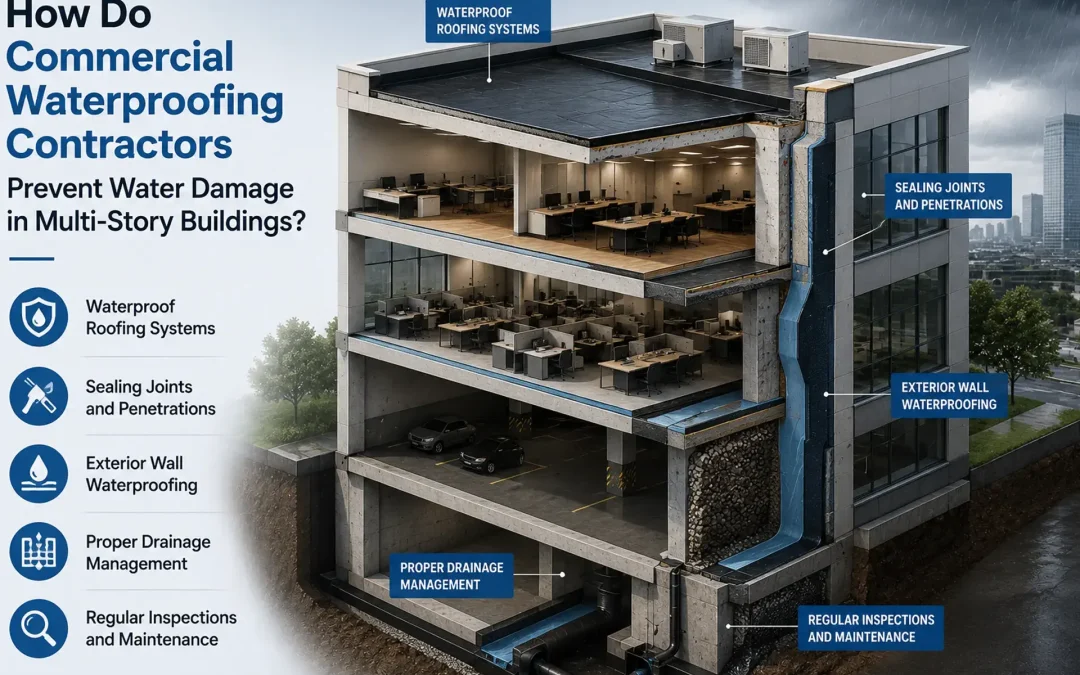
Water damage is one of the biggest threats to multi-story commercial buildings. A small leak may seem harmless at first, but over time it can weaken structural components, damage interiors, encourage mold growth, and lead to expensive repairs. This is why experienced commercial waterproofing contractors brooklyn focus on preventing moisture from entering a building before it becomes a major problem.
Companies such as Zavza Seal LLC understand that effective waterproofing involves much more than applying a protective coating. It requires careful planning, thorough inspections, quality materials, and ongoing maintenance to keep buildings protected throughout their lifespan.
Water Damage in Multi-Story Buildings
Why Tall Buildings Face Greater Water Risks
Multi-story buildings are exposed to weather from every direction. Rain, snow, humidity, and wind-driven moisture constantly test the strength of the building envelope. As structures become taller, they experience greater pressure from wind and temperature changes, increasing the likelihood of water finding small openings.
Common Sources of Water Intrusion
Water can enter a commercial building through several vulnerable areas, including:
- Roofing systems
- Exterior walls
- Foundation cracks
- Window and door joints
- Expansion joints
- Balconies and terraces
- Poor drainage systems
Even tiny gaps can allow moisture to travel deep into building materials over time.
The Importance of Commercial Waterproofing Systems
Protecting Structural Integrity
Water slowly weakens concrete, steel, masonry, and wood. Continuous moisture may lead to corrosion, cracking, and deterioration that affect the stability of the building. Waterproofing creates a protective barrier that reduces long-term structural damage.
Extending Building Lifespan
A properly waterproofed building typically requires fewer major repairs. Preventing water intrusion helps preserve walls, ceilings, insulation, and mechanical systems, allowing the structure to remain functional for decades.
How Commercial Waterproofing Contractors Assess Buildings
Exterior Building Evaluation
Before recommending any waterproofing solution, contractors inspect the building’s exterior. They examine walls, roofs, foundations, windows, sealants, expansion joints, and drainage systems to identify potential entry points for water.
Interior Moisture Investigation
Interior inspections help reveal hidden moisture that may not yet be visible. Contractors look for stains, peeling paint, damp insulation, mold growth, and unusual odors that often indicate concealed leaks.
Using Moisture Detection Technology
Modern inspections frequently include moisture meters, infrared thermal imaging, and leak detection equipment. These tools help locate trapped moisture behind walls or beneath roofing materials without unnecessary demolition.
Key Waterproofing Methods Used in Multi-Story Buildings
Foundation Waterproofing
The foundation constantly interacts with groundwater and soil moisture. Waterproof membranes, drainage boards, sealants, and proper grading help prevent water from penetrating below-grade walls.
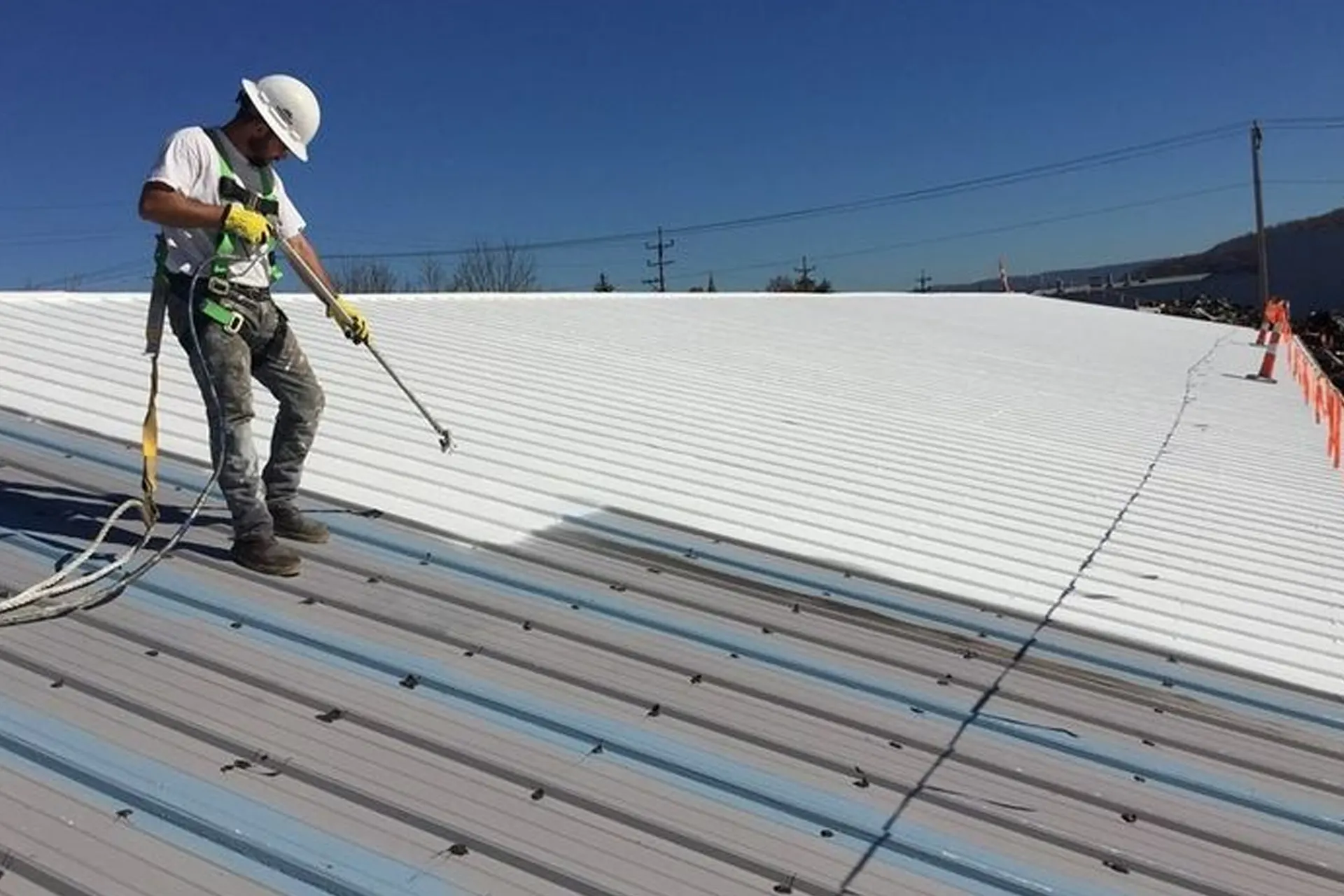
Roof Waterproofing Systems
Commercial roofs receive direct exposure to rain, sunlight, snow, and temperature fluctuations. Waterproof membranes, flashing systems, and protective coatings reduce the risk of roof leaks while maintaining durability.
Facade and Exterior Wall Protection
Exterior walls contain numerous joints and connections that require careful sealing. Waterproof coatings and flexible sealants allow the building envelope to resist moisture while accommodating natural expansion and contraction.
Balcony and Terrace Waterproofing
Balconies and terraces collect rainwater regularly. Waterproof membranes combined with proper slope design help direct water toward drains instead of allowing it to seep into structural components.
The Role of Drainage in Water Damage Prevention
Managing Surface Water Efficiently
Even the best waterproofing system can struggle without effective drainage. Gutters, downspouts, roof drains, foundation drains, and grading work together to move water away from the structure before it has an opportunity to penetrate building materials.
Proper drainage reduces hydrostatic pressure around foundations and prevents standing water from damaging roofs or balconies.
Why Routine Maintenance Matters
Identifying Minor Issues Before They Grow
Waterproofing is not a one-time process. Buildings naturally experience aging, movement, and weather exposure that gradually affect protective systems.
Routine inspections help identify:
- Small membrane punctures
- Cracked sealants
- Blocked drainage systems
- Loose flashing
- Minor wall cracks
Addressing these issues early prevents larger structural problems from developing.
Environmental Factors That Influence Waterproofing Performance
Weather, Temperature, and Building Movement
Buildings constantly expand and contract as temperatures change. Wind loads, heavy rainfall, freeze-thaw cycles, and natural settling all place stress on waterproofing systems.
Flexible materials designed to accommodate movement often perform better over the long term than rigid solutions that may crack under stress.
Modern Materials Used in Commercial Waterproofing
Membranes, Sealants, and Protective Coatings
Today’s waterproofing systems combine multiple materials that work together rather than relying on a single product.
Common materials include:
- Liquid-applied membranes
- Sheet membranes
- Polyurethane sealants
- Silicone sealants
- Cementitious waterproof coatings
- Elastomeric wall coatings
- Drainage composites
Each material serves a specific purpose depending on the location and environmental conditions.
Choosing the Right Waterproofing Strategy
Tailoring Solutions to Building Design
Every commercial building presents unique challenges. Factors such as building height, construction materials, climate, occupancy, and architectural design all influence the waterproofing approach.
For example, a high-rise office tower may require different protection than a parking garage or mixed-use commercial property. This is why experienced professionals, including commercial waterproofing contractors in Brooklyn, emphasize comprehensive building assessments before selecting waterproofing methods. Organizations such as Zavza Seal LLC recognize that long-term moisture protection depends on matching the waterproofing system to the building’s specific requirements rather than using a one-size-fits-all approach.
Zavza Seal LLC Serving the East Midwood Community and Beyond in Brooklyn
Zavza Seal LLC is dedicated to serving the diverse needs of the local community of Brooklyn, including individuals residing in neighbourhoods like East Midwood. With its convenient location near landmarks such as the Chaim Berlin Hall and major intersections like Avenue I and East 16th Street (coordinates: 40.6269516, -73.9608815), we have commercial waterproofing contractors.
Get commercial waterproofing contractors services at East Midwood Now
Call Us or Contact Us: +17184007005
Navigate from East Midwood to Zavza Seal LLC Now
Preventing Water Damage: Protecting Multi-Story Assets
The High Cost of Moisture
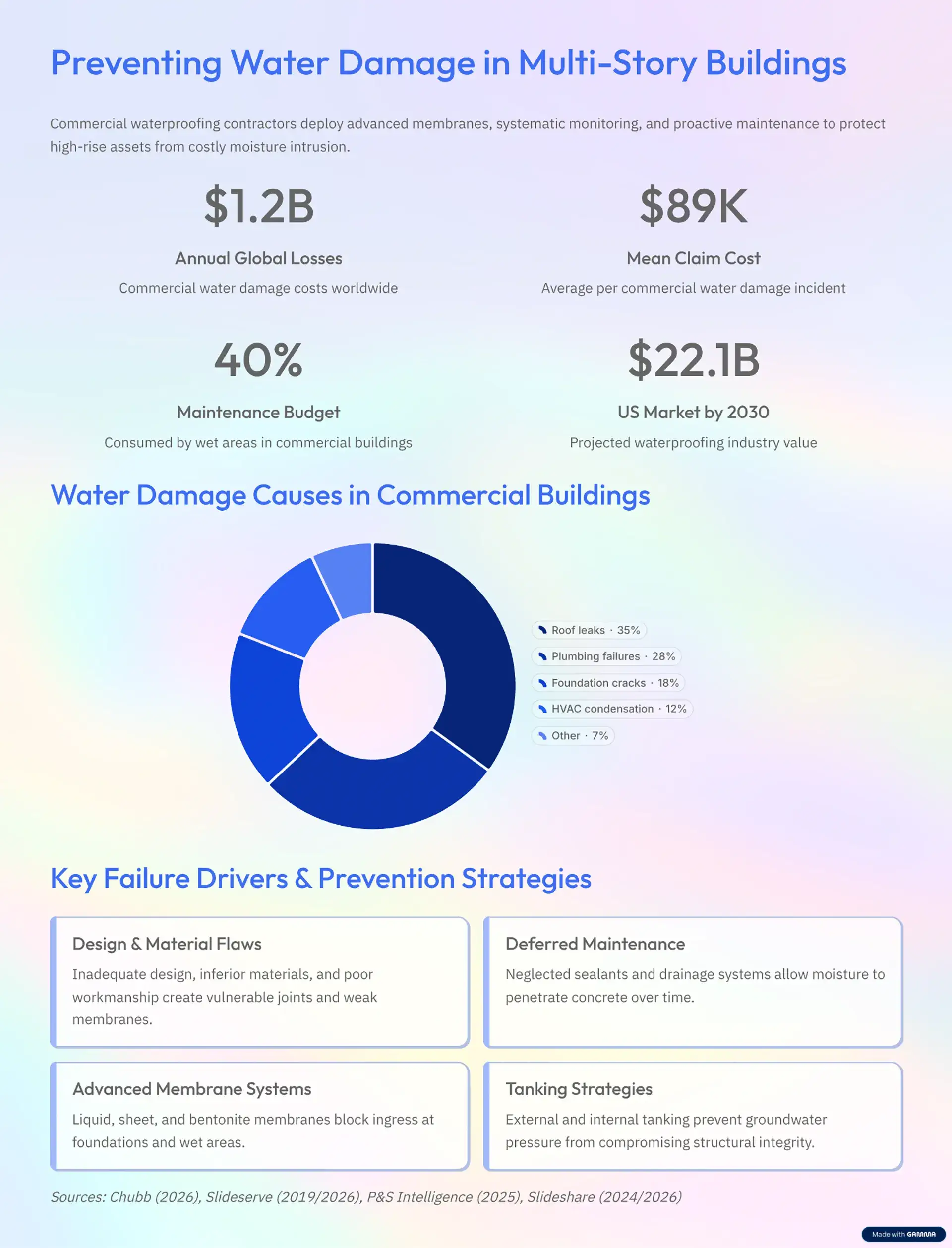
- Annual commercial water damage losses: $1.2B globally
- Mean commercial claim cost: $89,000
- Rising risk: Frequency and cost of claims increasing, especially in high-rise and luxury properties
Primary Failure Drivers
- Inadequate design and inferior materials
- Poor workmanship during construction
- Deferred maintenance of sealants and drainage systems [4, 7]
- Porosity of reinforced concrete allowing hidden water migration
Strategic Prevention & Solutions
- Systematic monitoring of wet areas, which consume 40% of building maintenance budgets
- Proactive use of advanced membrane systems (liquid, sheet, and active/bentonite)
- External vs. internal tanking strategies to block moisture ingress at the foundation
- US waterproofing market projected to reach $22.1B by 2030, driven by the demand for structural integrity
Sources: Chubb (2026), Slideserve (2019/2026), P&S Intelligence (2025), Slideshare (2024/2026)
Preventing water damage in multi-story buildings requires careful planning, detailed inspections, advanced materials, and ongoing maintenance. Waterproofing is much more than keeping rain outside—it protects structural integrity, preserves building materials, improves durability, and reduces the risk of costly deterioration.
From foundation protection and roof systems to drainage management and facade sealing, every component plays an important role in creating a complete moisture defense strategy. When properly designed and maintained, commercial waterproofing systems help buildings remain safe, durable, and resilient against years of environmental exposure.
FAQs
1. Why are multi-story buildings more vulnerable to water damage?
Their large exterior surface area, multiple joints, roofs, windows, and exposure to wind-driven rain create more opportunities for water intrusion than smaller structures.
2. How often should commercial buildings be inspected for waterproofing issues?
Many property professionals recommend annual inspections, with additional evaluations following severe storms or noticeable water-related concerns.
3. Can waterproofing help reduce long-term maintenance?
Yes. Preventing moisture intrusion reduces deterioration of structural materials, minimizing the need for major repairs over time.
4. Which part of a commercial building requires the most waterproofing attention?
Roofs, foundations, exterior walls, expansion joints, windows, and balconies are among the most critical areas because they are frequently exposed to water.
5. Do all commercial buildings require the same waterproofing system?
No. Every building has unique construction methods, environmental conditions, and design features, making customized waterproofing strategies the most effective approach.