
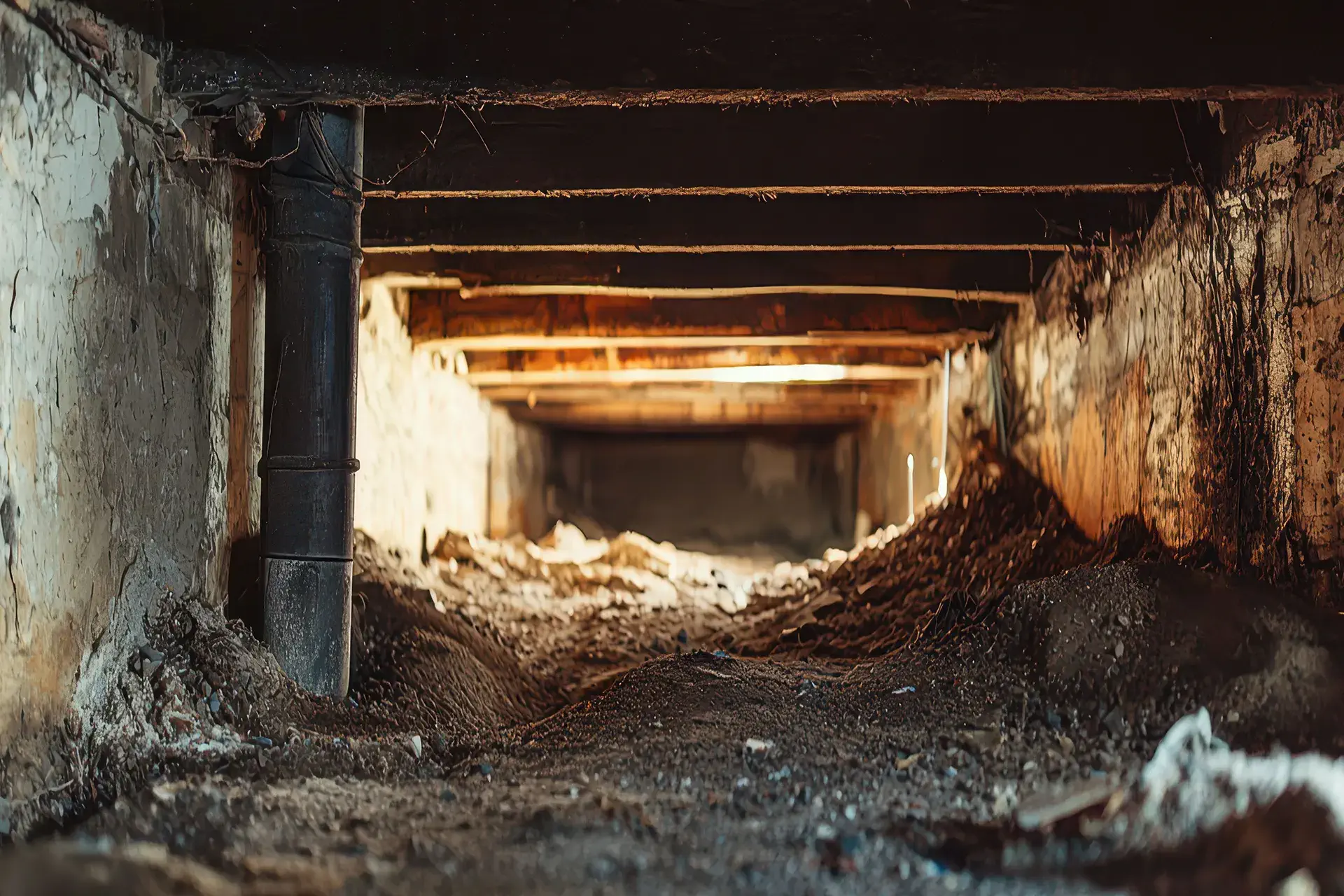
Most homebuyers never crawl into a crawl space.
In fact, many homeowners rarely think about it at all.
Because it is out of sight, crawl space moisture often goes unnoticed for years. A little dampness under the house may not seem like a serious problem. However, what happens in a crawl space can affect the entire home above it.
For Realtors, crawl space moisture is one of those hidden issues that can quietly reduce property value, create inspection concerns, and make buyers question the condition of a home.
Understanding the impact of crawl space moisture can help Realtors identify potential problems early and prevent costly surprises during a sale.
Why Crawl Space Moisture Is More Serious Than Many Homeowners Realize?
A crawl space may be located beneath the home, but it is still part of the building’s structure.
When moisture enters the crawl space through the soil, foundation vents, plumbing leaks, or poor drainage, it creates conditions that can affect the home from the ground up.
Unlike a leaky faucet or a cracked window, crawl space moisture often develops slowly. Because the damage is gradual, homeowners may not realize there is a problem until it becomes visible elsewhere in the house.
By the time buyers or inspectors notice the signs, the issue may have already affected the home’s value.
Moisture Can Lead to Structural Damage
Wood and moisture do not mix.
When crawl spaces remain damp for long periods, wooden floor joists, support beams, and subflooring can begin to deteriorate. Over time, this can weaken structural components and lead to sagging or uneven floors.
Buyers often become concerned when they notice floors that feel soft, bouncy, or uneven. During a home inspection, signs of moisture-related damage can trigger requests for additional evaluations and repair estimates.
Even if the damage is limited, buyers may worry about future structural problems and the costs associated with repairs.
Musty Odors Can Affect Buyer Perception
One of the first signs of crawl space moisture is often a musty smell inside the home.
Many homeowners are surprised to learn that air from the crawl space can travel upward into the living areas. This means moisture problems below the house can affect indoor air quality throughout the property.
When buyers notice musty odors during a showing, they immediately start asking questions.
They may wonder whether the home has mold, water damage, or ventilation issues. Even if they cannot identify the source of the smell, it can create a negative first impression that is difficult to overcome.
In real estate, first impressions matter. A home that smells damp often feels less appealing than a similar home that feels clean and dry.
Crawl Space Moisture Can Encourage Mold Growth
Moisture creates the perfect environment for mold growth.
When humidity levels remain high in a crawl space, mold can develop on wood, insulation, and other building materials. While not every moisture problem results in significant mold growth, the possibility alone can make buyers nervous.
Mold is one of the most common concerns that appears in inspection reports. Buyers often associate mold with health issues, expensive remediation costs, and hidden damage.
As soon as mold becomes part of the conversation, negotiations can become more complicated.
Higher Energy Bills Can Reduce Buyer Appeal
A damp crawl space can also make a home less energy efficient.
When insulation becomes wet, it loses much of its ability to regulate indoor temperatures. Moisture can also increase humidity levels inside the home, making heating and cooling systems work harder throughout the year.
While buyers may not immediately connect high utility costs to crawl space moisture, they often notice when a home feels humid, uncomfortable, or difficult to keep at a consistent temperature.
These factors can influence how buyers perceive the property’s overall condition and value.
Home Inspections Often Bring Crawl Space Problems to Light
Many crawl space issues remain hidden until the home inspection.
Inspectors commonly look for standing water, excess moisture, damaged insulation, wood rot, mold growth, and signs of poor ventilation. What homeowners have ignored for years can suddenly become a major discussion point during the transaction.
Once moisture concerns appear in an inspection report, buyers often request additional evaluations or repairs before moving forward.
This can delay negotiations, increase costs, and create uncertainty for everyone involved.
How Crawl Space Moisture Affects Property Value
Property value is closely tied to buyer confidence.
When buyers believe a home has hidden moisture problems, they often lower their offers or request concessions to cover potential repairs.
Some buyers may decide not to move forward at all.
Even when the actual repair costs are manageable, uncertainty can reduce perceived value. Buyers tend to build a financial cushion into their decision-making whenever they believe future expenses may be waiting after closing.
As a result, a moisture problem that could have been addressed early may end up costing a seller much more during negotiations.
What Realtors Can Do Before Listing a Property?
One of the best ways to protect property value is to identify crawl space issues before buyers discover them.
When preparing a home for sale, Realtors should encourage sellers to investigate signs such as musty odors, uneven floors, excessive indoor humidity, or previous moisture problems.
If concerns exist, a professional evaluation can provide clarity and help determine whether corrective action is needed.
Addressing moisture issues before listing often costs far less than dealing with inspection-related negotiations later.
It also gives sellers the opportunity to provide documentation that reassures buyers.
Small Moisture Problems Can Become Expensive Problems
Many homeowners ignore crawl space moisture because they cannot see it.
Unfortunately, hidden moisture rarely improves on its own.
Over time, it can contribute to structural damage, mold growth, poor air quality, higher energy costs, and reduced buyer confidence. What begins as a minor moisture issue can eventually affect a home’s marketability and value.
For Realtors, understanding these risks can help prevent transactions from becoming more difficult than they need to be.
Helping Protect Property Value
At Zavza Seal, we help homeowners and Realtors throughout Long Island, Brooklyn, Queens, and the Bronx identify crawl space moisture problems before they impact a sale.
Our team provides crawl space waterproofing, crawl space encapsulation, moisture control solutions, foundation repair, and mold remediation services designed to protect homes and preserve property value.
Final Thoughts
Crawl space moisture is often out of sight, but it should never be out of mind.
What happens beneath a home can affect its structure, air quality, energy efficiency, and overall value. Buyers may never see the crawl space itself, but they often notice the signs that moisture leaves behind.
For Realtors, identifying and addressing crawl space moisture early can help protect property value, reduce inspection surprises, and create a smoother path to closing.
.