
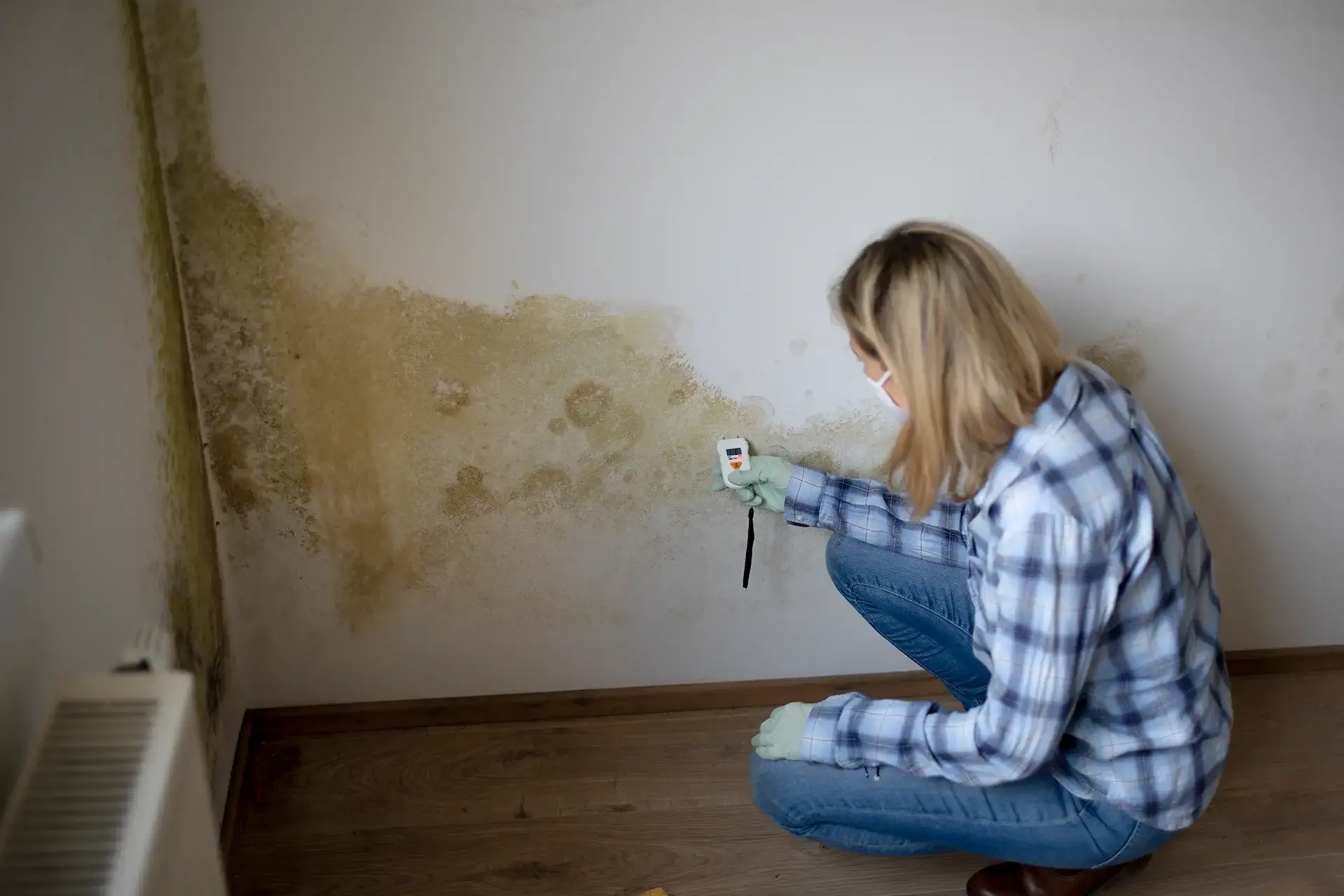
Water damage is not always easy to see.
A wall may look dry. A floor may no longer feel wet. The visible water may have been cleaned up before an inspection even begins. But moisture can remain inside drywall, wood, flooring, insulation and other building materials long after the surface appears normal.
For insurance adjusters, this can make water damage inspections more difficult. The visible condition is important, but it may not tell the whole story.
This is where moisture readings can help.
A moisture meter can provide additional information about the condition of building materials and help identify areas that may still contain elevated moisture. When used along with photographs, visual observations, material identification and the history of the loss, moisture readings can give an adjuster a better understanding of the extent of water damage.
For adjusters working throughout Long Island, Brooklyn, Queens and the Bronx, this information can be particularly useful when evaluating basement flooding, plumbing leaks, roof leaks and storm-related water intrusion.
What Is a Moisture Reading?
A moisture reading is a measurement taken from a building material using a moisture meter. Depending on the type of meter and material being tested, the equipment can help identify whether moisture levels appear elevated compared with a similar, unaffected area.
Moisture meters are commonly used on materials such as drywall and wood. Some meters use pins that make direct contact with the material, while others use a pinless method to scan an area without making holes.
Neither type should be treated as a magic tool that tells you everything about a water loss.
The reading needs to be interpreted in the context of the material, the surrounding environment, the equipment being used and the condition of the property.
That is why an experienced inspection looks at patterns rather than relying on one number.
Why Moisture Readings Matter During a Water Damage Inspection?
Visual inspection is an important part of every property inspection, but it has a limitation: you can only see what is exposed.
Moisture can remain behind drywall, underneath flooring or inside other parts of a building assembly without leaving an obvious sign on the surface.
For example, imagine a supply line under a kitchen sink breaks while the homeowner is away. By the time the inspection takes place, the standing water has been removed and the cabinet appears relatively dry.
That does not necessarily mean the surrounding materials are dry.
Moisture may have reached the flooring, subfloor, cabinet materials, baseboards or adjacent drywall. Taking readings in those areas can provide information that a visual inspection alone may not reveal.
This is one reason moisture detection is useful during water damage assessments.
Water Damage Can Extend Beyond What You Can See
Water does not always stay where it first appears.
A plumbing leak can move beneath flooring. Water from an upper floor can travel through a ceiling and into wall cavities. Basement water can move along foundation walls and affect materials beyond the obvious waterline.
Drywall can absorb moisture and transfer it to surrounding materials. Wood framing and subfloors can also retain moisture after visible water has disappeared.
This matters when determining the extent of a loss.
A water stain on a wall may represent only the visible portion of the problem. If moisture readings remain elevated outside the stained area, the affected area may be larger than it first appears.
That does not automatically mean that every surrounding material is damaged. It means the additional information should be considered when assessing the property.
Moisture Readings Help Establish the Extent of Damage
One of the most useful ways to use moisture readings is to compare different areas.
Consider a basement wall with a visible water stain following heavy rain. An inspection shows elevated moisture directly around the stain.
That is useful information, but it becomes more meaningful when additional readings are taken around the affected area.
If readings decrease as you move away from the visible damage, that may help establish a more localized pattern. If elevated readings continue well beyond the visible staining, it may suggest that additional areas need to be investigated.
The goal is not to collect as many numbers as possible.
The goal is to understand the pattern.
A series of properly documented readings can provide much more information than a single measurement taken at the center of the visible damage.
Why a Baseline Matters?
Moisture readings are generally more useful when there is something to compare them with.
Building materials naturally contain some amount of moisture. The expected condition can also vary depending on the material and environmental conditions.
For example, an adjuster assessing a section of water-damaged drywall may take readings from the affected area and compare them with a similar section of drywall that was not exposed to the reported water event.
The comparison area provides a reference point.
This is important because there is no single moisture percentage that automatically means “water damaged” for every material and every situation.
Drywall, wood and other materials have different characteristics. A reading should be considered alongside the type of material being tested and the surrounding conditions.
In practical terms, the question is often less about whether a number is universally “high” and more about whether the affected material is behaving differently from a comparable unaffected area.
Why One Moisture Reading Is Not Enough?
A single moisture reading provides limited information.
The result can be influenced by the type of material, the moisture meter being used, temperature, surface conditions and other factors. Even the location of the reading can make a difference.
For this reason, an adjuster should be cautious about drawing a conclusion from one isolated number.
Multiple readings can help show whether moisture is concentrated in one location or extends across a larger area.
For example, if the bottom portion of a wall has elevated readings while the upper portion is substantially lower, that pattern may provide useful information about how the water affected the material.
The same principle applies when documenting drying.
A series of readings taken over several days can show whether moisture levels are decreasing rather than simply providing one snapshot in time.
What Should an Adjuster Document With a Moisture Reading?
A moisture reading is much more useful when someone reviewing the claim later can understand exactly where it came from.
The inspection record should identify the location and material being tested. It should also indicate where on the material the reading was taken and, when appropriate, how it compares with an unaffected area.
For example, “18% moisture” does not provide much context on its own.
“18% reading at the lower section of the drywall adjacent to the reported plumbing leak, compared with a lower reading from an unaffected section of the same wall” tells a much clearer story.
Photographs can add another layer of documentation. A photo showing the affected area alongside the recorded reading can help connect the measurement to the physical condition of the property.
The date and time can also be useful, particularly when the property is being monitored during drying.
Hidden Moisture Can Be a Problem
Some of the most difficult water damage to identify is the moisture that cannot be seen.
Water can become trapped behind drywall, underneath flooring, around baseboards, inside cabinets or within insulation. A surface can feel dry while moisture remains deeper within the building assembly.
This does not mean that every unusual moisture reading proves hidden damage.
It means the reading can identify an area that deserves a closer look.
Depending on the circumstances, further investigation may be necessary to determine whether moisture is present behind a finished surface or within a concealed part of the structure.
A moisture meter can help identify where to look, but it does not replace a more detailed inspection when one is needed.
Example: Moisture Readings After a Plumbing Leak
Consider a common claim scenario.
A pipe under a kitchen sink fails and releases water into the cabinet. The homeowner discovers the leak, shuts off the supply and cleans up the visible water.
When the adjuster arrives, the cabinet may no longer look wet.
A visual inspection can still identify staining, swelling or other signs of exposure. Moisture readings can provide additional information about the surrounding materials.
The inspector may check the cabinet, flooring, baseboards and nearby drywall and compare those readings with unaffected areas.
If elevated readings are found beyond the obvious area of damage, that information can help determine whether additional investigation is appropriate.
The important point is that the meter is not being used to decide the entire claim. It is being used as one part of the assessment.
Example: Moisture Readings After Basement Water Intrusion
Basement water intrusion presents another common situation.
After heavy rainfall, a homeowner reports water entering through a basement wall. By the time the inspection occurs, the standing water has been removed.
There may still be visible staining along the lower section of the wall or floor.
Moisture readings can help determine whether materials remain elevated in moisture and whether the affected area extends beyond what is visible.
But the reading does not establish the source of the water.
The moisture could be associated with a foundation crack, groundwater, stormwater, drainage problems, a failed sump system or another source.
This distinction is important for claims assessment.
A moisture meter can help answer where moisture may be present. It generally cannot answer why the moisture is there.
Moisture Readings During the Drying Process
Moisture readings can also be useful after mitigation or drying has begun.
Rather than documenting only that a wall or floor “was dried,” repeated readings can show how the material changed over time.
For example, an affected area may show elevated moisture during the initial inspection. A later reading may show a reduction after drying equipment has been used. Additional readings can help document whether the material continues to move toward the condition of a comparable unaffected area.
The exact numbers will vary depending on the material and equipment.
What matters is the trend.
A consistent decrease can provide useful evidence that drying is progressing. If readings remain elevated or stop improving, that may indicate that additional investigation is needed.
What Moisture Readings Can and Cannot Tell an Adjuster?
Moisture readings can help identify areas where moisture may still be present. They can also help compare affected and unaffected materials, document the potential extent of a loss and monitor changes during drying.
But there are limits.
A moisture meter generally cannot tell an adjuster exactly where the water came from. It cannot automatically determine when the moisture entered the property or prove that a particular event caused the condition.
It also cannot, by itself, establish whether damage is pre-existing.
For example, finding elevated moisture near a foundation wall after a storm does not automatically prove that the storm caused the underlying foundation condition.
The reading is evidence of a moisture condition. Other evidence is needed to understand the source, timing and cause.
Common Mistakes When Using Moisture Readings
One common mistake is taking only one reading. A single number does not show the full pattern of moisture throughout an affected area.
Another is failing to establish a comparison area. Without a baseline, it can be difficult to determine whether a reading is unusual for that material.
It is also important not to compare readings from completely different materials as though they were equivalent. Wood and drywall have different characteristics, and the meter being used may also affect the results.
Another mistake is assuming that a high reading proves the source of the water. It does not. Moisture detection and source identification are two separate parts of an inspection.
Finally, a reading without a location is difficult to use later. Claim documentation should make it clear where the reading was taken, what material was tested and what other conditions were present.
Moisture Inspections in Long Island, Brooklyn, Queens and the Bronx
Adjusters throughout Long Island, Brooklyn, Queens and the Bronx regularly encounter water losses involving older homes, basements, cellars, plumbing systems and storm-related water intrusion.
In Long Island, basement water problems may involve heavy rainfall, groundwater, drainage conditions or water entering through foundation areas. In Brooklyn, older brownstones, basements and cellar spaces can present unique challenges when water enters a property.
Queens properties can also experience basement moisture, plumbing losses and stormwater intrusion. In the Bronx, older residential buildings may have aging plumbing, masonry and basement or cellar conditions that make water damage assessment more complicated.
These local conditions can provide useful background during an inspection, but they should not be used to assume the source or cause of a particular loss.
The actual condition of the property remains the most important evidence.
When Should Further Moisture Investigation Be Considered?
Not every elevated reading requires invasive testing or additional work.
Further investigation may be appropriate when moisture remains elevated after drying, when readings extend beyond visible damage or when there is reason to believe moisture is trapped behind a finished surface.
Additional attention may also be warranted when materials show swelling, deterioration or other signs that are not fully explained by the visible condition.
The same applies when the source of the water is unclear or when there is disagreement about how far the damage extends.
The purpose of additional investigation is not to turn every moisture reading into a larger claim. It is to answer questions that cannot be resolved from the available information.
A Practical Approach to Moisture Documentation
A good moisture inspection starts with the visible condition.
Photograph the affected area and document what can be seen before taking readings. Identify the material being tested and, where appropriate, establish a comparable unaffected area.
Take multiple readings rather than relying on one measurement. Look for patterns across the affected area and record where each reading was taken.
If drying is underway, repeat the readings over time. Comparing the results can show whether moisture levels are decreasing.
Most importantly, keep the readings connected to the rest of the inspection. A moisture number is much more useful when it is supported by photographs, material information, visual observations and the reported history of the loss.
How Zavza Seal Helps With Water Damage Assessment?
Zavza Seal works with property owners and industry professionals dealing with water intrusion, moisture problems and related building damage throughout the New York area.
Our team evaluates affected areas, documents visible conditions and looks at contributing factors when water damage requires further investigation.
For adjusters, the goal is straightforward: provide clear information about what is actually happening at the property.
Moisture readings, photographs, visual observations and information about the source of the water can work together to provide a more complete picture of the loss.
Look Beyond What You Can See
Water damage inspections are not always as simple as finding a wet spot and documenting it.
By the time an adjuster arrives, the visible water may be gone. Materials may look dry even though moisture remains inside them.
Moisture readings can help fill that gap.
But the number on a moisture meter should never stand alone. The most useful assessment combines readings with photographs, material identification, comparison areas, visual observations and the history of the reported loss.
For adjusters, that broader approach can make it easier to understand the extent of water damage, identify areas that may need further investigation and document the condition of the property clearly.
The goal is not simply to find moisture. It is to understand what the moisture is telling you about the property.
Frequently Asked Questions
What is a moisture reading?
A moisture reading is a measurement taken from a building material using a moisture meter. It can help identify areas where moisture may be elevated compared with similar materials or reference areas.
Why do adjusters use moisture meters?
Moisture meters can provide information that may not be visible during a visual inspection. They can help identify potentially affected areas, compare materials and monitor changes during drying.
Can a moisture meter find hidden water damage?
A moisture meter can help identify areas that may contain elevated moisture, including areas where moisture is not obvious from the surface. However, additional investigation may be needed to determine what is happening behind or underneath finished materials.
What moisture level indicates water damage?
There is no single moisture level that automatically indicates water damage for every material. Readings should be interpreted based on the material, equipment, environmental conditions and comparison with an appropriate unaffected area.
How should an adjuster document a moisture reading?
Document the location, material, reading and surrounding condition. When appropriate, include a comparison with an unaffected area and photographs showing where the measurement was taken.
Can moisture readings prove where water came from?
No. A moisture reading can help identify where moisture may be present, but it generally cannot establish the exact source of the water. Source identification requires additional evidence and inspection.
Can a wall look dry but still contain moisture?
Yes. Moisture can remain behind drywall or within other building materials even after the surface appears dry.
How often should moisture readings be taken during drying?
The timing depends on the type and extent of the loss and the drying process. Repeated readings can be useful when monitoring whether affected materials are becoming progressively drier.
Why should moisture readings be compared with an unaffected area?
A comparison area provides a reference point for understanding whether the affected material appears different from a similar material that was not exposed to the reported water event.
When is additional moisture investigation necessary?
Further investigation may be appropriate when elevated moisture persists, hidden moisture is suspected, damage extends beyond the visible area or the source and extent of the water damage remain unclear.