
The Problem
A Brooklyn homeowner wanted to improve the insulation and sound control in the bedroom and hallway ceilings. The targeted area covered approximately 243 square feet.
The existing ceiling assembly did not provide the level of insulation and sound control the homeowner wanted. Because the ceiling was already finished, removing large sections of drywall would have created more dust, debris, and repair work.
The homeowner needed a solution that could add insulation inside the existing ceiling while keeping the work as contained as possible.
The Solution
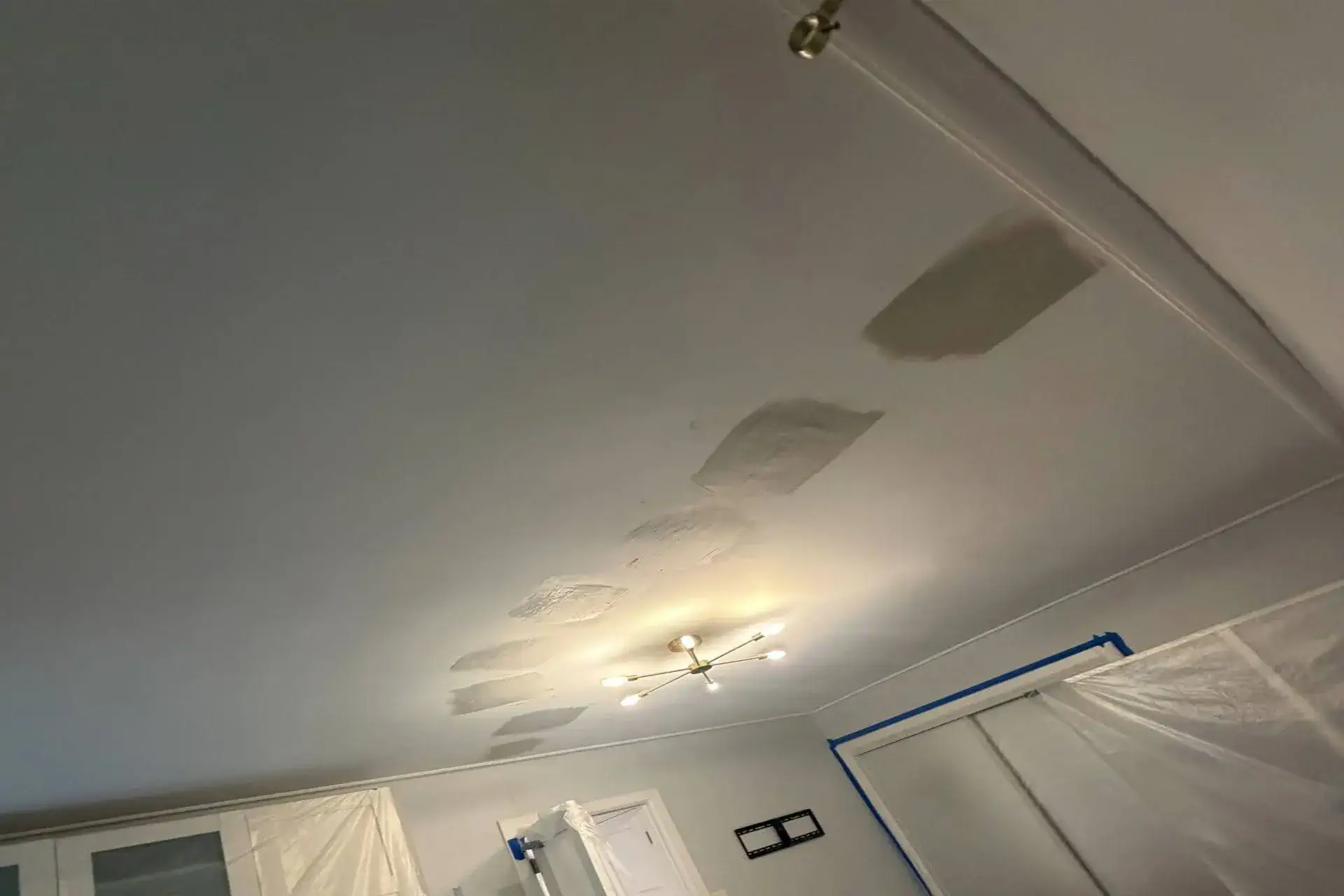
The Zavza Seal team used a targeted interior insulation method. Instead of opening large sections of the ceiling, we created small access ports between the existing 2×6 ceiling joists.
Access ports were cut approximately every 16 inches on center. We then used these openings to blow dense-pack cellulose insulation into the ceiling cavities.
Dense-pack cellulose is commonly used to fill enclosed building cavities. The U.S. Department of Energy notes that dense-packed cellulose can provide air-sealing benefits when installed in cavity spaces.
The insulation also helped address the homeowner’s goal of improving sound control. Cellulose insulation is commonly used to help reduce noise between rooms and from outside sources. However, actual sound reduction depends on the building assembly and the source of the noise.
Protecting the Home During Installation
Before starting the work, our team protected the high-traffic areas with brown paper to help limit dust and debris.
Dust containment curtains were also used where needed. This helped keep the work area controlled while we worked inside the finished home.
Patching the Ceiling
After the dense-pack cellulose insulation was installed, we closed the access ports.
Our team patched, taped, and applied compound to each opening. The compound was left wet at the end of the installation so it could fully dry before the final sanding and painting stage.
The homeowner also had the option to have the patched areas sanded and painted after the compound dried.
The Result
The project gave the Brooklyn homeowner a less invasive way to add insulation to the bedroom and hallway ceilings without removing the entire ceiling.
The completed work provided:
- Dense-pack cellulose insulation inside the ceiling cavities
- Improved thermal insulation
- Added sound absorption within the ceiling assembly
- Limited ceiling openings compared with full drywall removal
- Controlled dust and debris during installation
- Patched and taped access points ready for finishing
Cellulose insulation is also treated with fire retardants and commonly meets Class 1 fire rating requirements, depending on the specific product used.
Why Dense-Pack Cellulose Was a Good Fit?
Dense-pack cellulose allowed our team to reach the enclosed ceiling cavities through small access openings. This approach can be useful when a homeowner wants to improve insulation without taking down large sections of an existing finished ceiling.
The U.S. Department of Energy recognizes dense-packed cellulose as an insulation option for building cavities and has documented its use in high-performance residential construction.
A Note About Soundproofing
Soundproofing is not the same as completely eliminating noise.
Noise can travel through ceilings, walls, framing, doors, floors, HVAC systems, and other parts of a building. The amount of noise reduction depends on the source of the sound and the construction of the home.
For this reason, Zavza Seal does not promise a specific level of noise reduction. Our goal is to use the appropriate insulation method and our best installation practices to improve sound control in the affected area.
Conclusion
For this Brooklyn, NY project, Zavza Seal improved the insulation of approximately 243 square feet of bedroom and hallway ceilings using dense-pack cellulose insulation.
By creating targeted access ports between the 2×6 ceiling joists, our team was able to add insulation while avoiding the need to remove the entire ceiling. The approach also supported the homeowner’s goal of improving energy efficiency and reducing sound transfer.
If your Brooklyn home has under-insulated ceilings or you are looking for ways to improve comfort and sound control, a professional assessment can help determine the right insulation method for your home.