
Project Overview
Our team completed a targeted façade repair project in Brooklyn, NY, after an inspection identified cracks, holes and damaged materials in an area beneath the building’s gutter.
The affected section was approximately 80 inches westward from the northeast corner. Because the area was located beneath the gutter and above the fire escape, it was difficult to access and inspect closely.
During the inspection, our senior estimator and project manager reached the area using the fire escape’s drop ladder. A close inspection revealed visible cracks and deterioration in the façade materials.
Because the damaged area was exposed to exterior weather conditions, repairing the cracks and deteriorated sections was important to help limit further water penetration and protect the surrounding façade.
The Challenge
The main challenge was access.
The subject area was not accessible from a normal working position. The repair crew had to work from the fire escape’s drop ladder while maintaining a secure position.
Due to the location and working conditions, a safety harness was required throughout the repair.
The limited access also meant the crew had to carefully complete the work while working with restricted movement and reach.
Our Scope of Work
After evaluating the condition of the façade, our team developed a repair approach focused on removing deteriorated material, sealing cracks and restoring damaged areas.
1. Clean and Prepare the Façade
We wire-brushed and cleaned the entire subject area to remove damaged, loose and foreign materials.
This preparation created a clean and stable surface for the repair materials.
2. Seal Existing Cracks
All visible cracks were repaired using premium exterior sealants.
Sealing the cracks helped close openings where water could enter the façade and cause additional deterioration.
3. Repair Holes
Existing holes in the façade were repaired using a one-component, quick-setting, Portland-cement-based hydraulic repair mortar.
This material was selected to provide a durable repair in the affected exterior areas.
4. Restore Damaged Areas
Areas with damaged façade material were repaired with a two-component, polymer-modified, cementitious waterproofing and protective slurry.
The coating helped restore the damaged sections while providing additional protection against water penetration.
5. Apply Waterproofing Cement
As the final step, our team applied a layer of 6,000 PSI waterproofing cement across the entire subject area.
This provided a continuous protective finish over the repaired section and helped strengthen the façade’s resistance to exterior moisture.
The Result
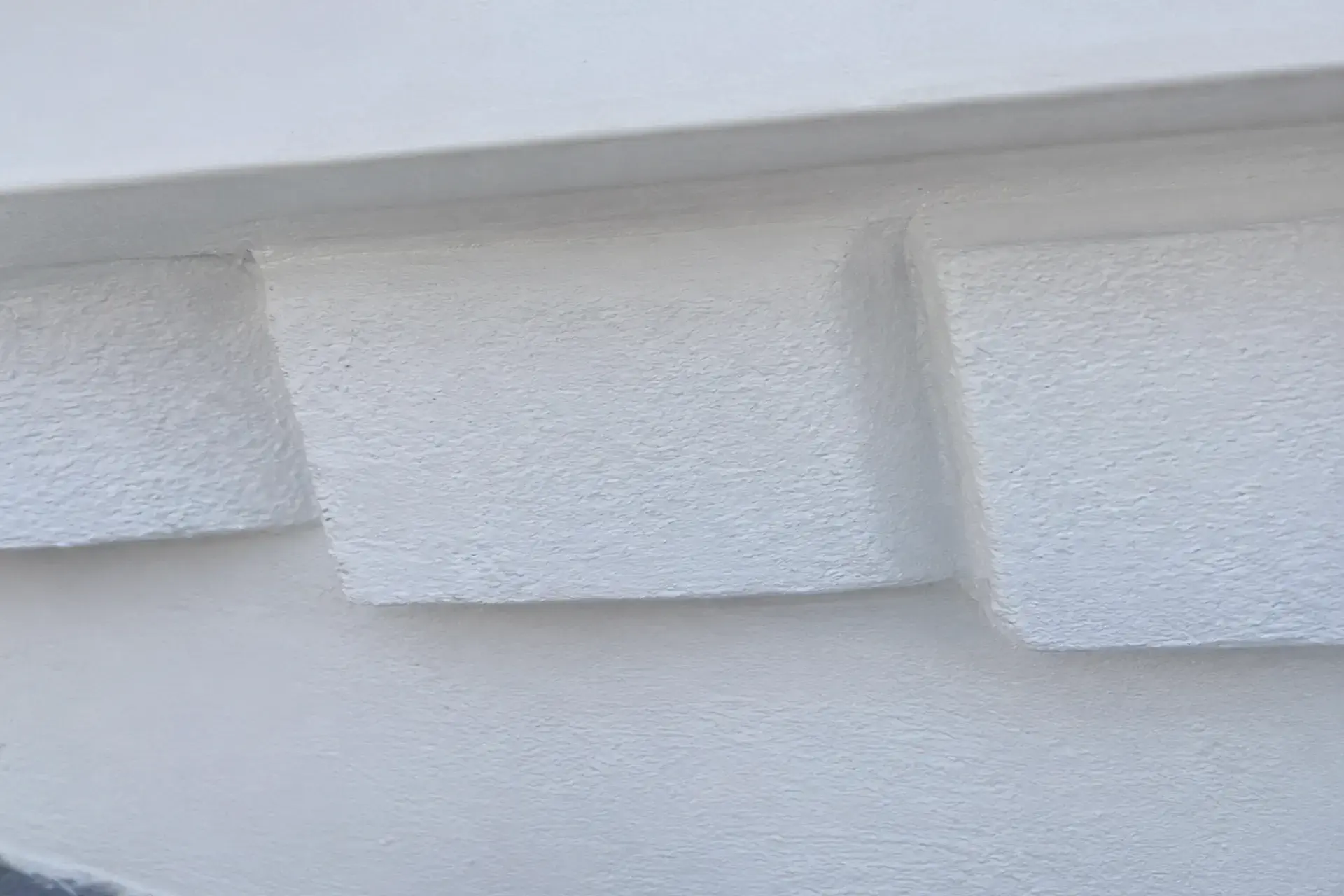
The completed repair addressed the visible cracks, holes and deteriorated materials identified during the inspection.
The façade area beneath the gutter was cleaned, repaired and protected with waterproofing materials designed for exterior exposure.
Because the affected area was difficult to access, completing the work carefully and safely was an important part of the project. The use of the fire escape’s drop ladder and required fall protection allowed our team to reach the damaged section and perform the necessary repairs.
The finished repair helped restore the condition of the affected façade and provided additional protection against water penetration.
Why Façade Repairs Matter?
Small cracks and damaged areas on an exterior wall can allow water to enter the building envelope. If left untreated, moisture can contribute to further deterioration of masonry and other façade materials.
Regular inspections are particularly important for difficult-to-reach areas around gutters, fire escapes, rooflines and other exterior features.
For this Brooklyn property, addressing the damage early allowed the affected area to be repaired and waterproofed before the deterioration could spread further.
Project Takeaway
This project demonstrates why difficult-to-reach façade areas should not be overlooked during building inspections.
By carefully cleaning, repairing, sealing and waterproofing the damaged section beneath the gutter, our team helped restore the façade and improve its protection against future moisture intrusion.