
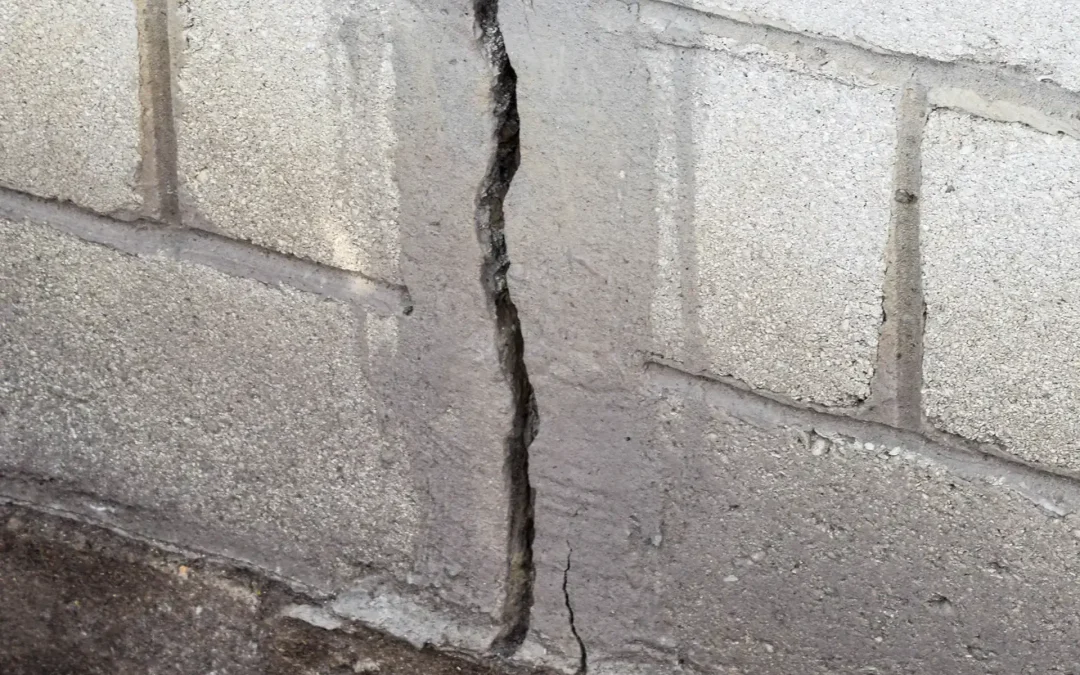
Radon is not something you can see, smell or notice when you walk into a home. That is what makes it easy to overlook. This naturally occurring radioactive gas can move from the soil into a house through small cracks, openings and gaps in the foundation. Once inside, it can build up over time.
For homeowners in Long Island, Brooklyn, Queens and the Bronx, radon is worth taking seriously, especially in homes with basements, crawl spaces or other areas that sit below or close to ground level. But there is no reliable way to tell whether a particular home has elevated radon just by looking at it. Testing is the only way to know. The U.S. Environmental Protection Agency (EPA) says any home can have a radon problem, whether it is old or new, well sealed or drafty, with or without a basement.
If a test shows elevated radon, the next step is to understand where the gas may be entering and what can be done to lower the level. Depending on the home, this may involve sealing certain openings and installing a properly designed radon mitigation system that draws radon from beneath the building and vents it safely outside.
In this guide, we will explain what radon is, how it gets into homes, how radon testing works, what different radon levels mean, and what homeowners should know about radon mitigation and mitigation system costs. We will also look at the types of foundation and below-grade conditions that can affect a home in New York.
What Is Radon Gas?
Radon is a radioactive gas that forms naturally as uranium and other radioactive elements break down in soil and rock. It is present outdoors at very low levels, but it becomes a concern when it enters a building and gets trapped indoors.
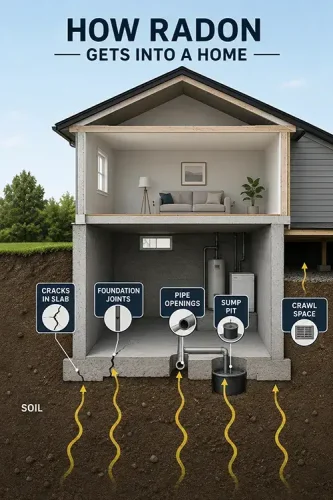
The gas usually enters a home from the soil beneath or around the foundation. It can move through cracks in a concrete floor, gaps where the floor meets the foundation wall, construction joints, openings around pipes and other small pathways. Sump pits, exposed soil and crawl spaces can also provide a path into the home.
This does not mean a visible foundation crack automatically means you have a radon problem. It simply means there may be a pathway through which soil gas can enter. A home can have several cracks and still have a low radon level, while another home with no obvious foundation damage can have elevated levels. The only way to know what is happening inside your home is to test it.
Radon can also enter through well water in some situations, although soil gas is the main source of indoor radon problems.
Why Radon Can Be a Problem Inside Your Home
Outside, radon disperses into the open air. Inside a building, however, the gas can become trapped and accumulate. Long-term exposure to elevated radon increases the risk of lung cancer. The EPA identifies radon as the second leading cause of lung cancer in the United States after smoking.
The important thing to remember is that you cannot tell whether your home has high radon by how the house looks or feels. A finished basement, a recently renovated home or a newer property can still have elevated levels. EPA notes that radon can affect both new and old homes and homes with or without basements.
That is why testing should come before deciding whether your home needs radon mitigation. If testing shows a problem, a qualified professional can then determine what type of reduction system is appropriate for the building and its foundation.
For New York homeowners, the New York State Department of Health recommends taking action when testing shows radon levels of 4 pCi/L or higher, and says homeowners may also consider reducing levels between 2 and 4 pCi/L.
Why Should Homeowners Test for Radon?
You cannot tell if a home has a radon problem by looking at the basement, checking the foundation or simply spending time inside the house. Radon has no smell, taste or color, and elevated levels can occur in homes of all ages and types.
That is why radon testing matters. A simple test can tell you whether radon is building up inside your home and whether you need to take further action.
Testing is especially worth considering if you are buying a home, have recently completed major renovations, or have a basement, crawl space or other lower-level area that is used regularly. New York State recommends testing homes every five years. If a home already has a radon mitigation system, the state recommends testing every two years to make sure the system is still working properly.
It is also important not to assume that your home is safe because your neighbor’s home tested low. Radon levels can vary from one property to another. The foundation, soil beneath the home, construction details and other conditions can all affect how radon enters and collects inside a building.
For homeowners in Long Island, Brooklyn, Queens and the Bronx, testing is a much better approach than trying to guess whether radon is a concern based on the age or appearance of the property.
Radon Testing: How Does It Work?
A radon test measures the amount of radon in the air inside your home. You can use a test kit yourself or hire a qualified professional, depending on your situation.
The two main types are short-term tests and long-term tests.
Short-Term Radon Testing
A short-term test usually stays in the home for 2 to 90 days, depending on the type of device being used. It is the quicker option when you need an answer sooner. EPA guidance says radon tests should generally run for at least 48 hours.
Short-term testing can be useful when you are concerned about radon and want to know whether further testing or action may be needed. It is also commonly used when a quick result is important, such as during a real estate transaction.
If a short-term test comes back at 4 pCi/L or higher, follow-up testing is generally recommended before making a mitigation decision. Depending on the result, the follow-up may be another short-term test or a long-term test.
Long-Term Radon Testing
A long-term test stays in the home for more than 90 days. Because radon levels can change from day to day and season to season, a long-term test gives you a better picture of the home’s average radon level over time.
This can be useful when you are not in a hurry and want a better understanding of the home’s typical radon exposure.
Where Should a Radon Test Be Placed?
Testing should generally be done in the lowest level of the home that could be used regularly. For example, if you have an unfinished basement that nobody uses, but the first floor is the lowest occupied level, the testing location may be different from a home where the basement is finished and used as a living space.
The exact testing method and location matter. If you are buying or selling a home, New York State recommends using a certified radon testing professional and making sure the laboratory analyzing the test is approved through the state’s Environmental Laboratory Approval Program.
What Happens After the Test?
The test will give you a radon level measured in picocuries per liter (pCi/L). That number is what you use to decide what to do next.
A low result does not mean you never need to test again. Radon levels can change over time, which is why New York State recommends periodic retesting. If the result is elevated, the next step is to understand the level, look at the home’s construction and determine whether radon mitigation is appropriate.
Testing should come before mitigation. You do not want to install a radon mitigation system simply because a basement has cracks or because a home is located in an area where radon occurs naturally. The test result tells you whether there is actually an elevated radon level that needs to be addressed.
For NY-specific guidance, NYS DOH currently recommends testing every five years, or every two years if a mitigation system is installed.
What Do Radon Levels Mean?
When you get a radon test result, the number can be confusing. Radon is measured in picocuries per liter (pCi/L), and the result tells you how much radon was found in the air during the test.
In the United States, the EPA recommends taking action when a home’s radon level is 4 pCi/L or higher. It also recommends considering radon reduction when the level is between 2 and 4 pCi/L because there is no known completely safe level of radon exposure. New York State follows the same 4 pCi/L action level and recommends considering reduction between 2 and 4 pCi/L.
A simple way to look at your result is:
Below 2 pCi/L: The level is relatively low, but it is still a good idea to retest in the future.
2 to 4 pCi/L: Consider taking steps to reduce the radon level, particularly if testing consistently shows results in this range.
4 pCi/L or higher: The EPA and New York State recommend taking action to reduce the radon level.
The number is important, but it is not the only thing to consider. Radon levels can change over time and from one part of a building to another. A home that tests low today may have a different result in the future. That is one reason New York State recommends testing every five years, and every two years when a mitigation system is installed. (New York State Department of Health)
If your result is elevated, don’t panic. A high radon reading does not mean the home cannot be fixed. Properly designed radon reduction systems can significantly lower indoor radon levels. New York State says some systems can reduce radon levels by up to 99 percent.
The next question is usually the most important one: How do you actually get the radon level down?
What Is Radon Mitigation?
Radon mitigation is the process of reducing the amount of radon that enters and builds up inside a home.
The goal is not simply to cover up a crack or improve the air inside the basement. A good mitigation approach looks at how radon is getting into the building and how it can be collected and vented outside.
For many homes, this involves a radon mitigation system that creates suction beneath the building. The system draws radon-containing soil gas from below the foundation and sends it through a vent pipe to the outside, where it can disperse safely into the open air. EPA identifies soil suction as a common and effective approach because it helps stop radon from entering the home in the first place.
The exact setup depends on the house. A home with a poured concrete basement floor may need a different approach from a home with a crawl space or a different foundation design. Existing drainage systems, sump pits, foundation openings and the layout of the lower level can also affect how a system is designed.
Does Radon Mitigation Mean Sealing the Foundation?
Sealing cracks and openings can be part of radon reduction, but it is important not to confuse radon sealing with a complete radon mitigation system.
Radon can enter through cracks in floors and foundation walls, construction joints, gaps around pipes and other openings that connect the building to the soil. Sealing these areas can help reduce pathways for soil gas.
However, simply sealing visible cracks does not automatically solve an elevated radon problem. If testing shows high radon levels, a qualified professional should evaluate the home and determine what type of mitigation approach is appropriate.
In many cases, the most effective solution involves soil suction, vent piping and a fan, along with sealing certain openings where appropriate.
What Does a Radon Mitigation System Do?
Think of the system as giving radon a controlled way out of the house.
Instead of allowing soil gas to move randomly through cracks and openings into the basement or crawl space, the system creates a path that pulls the gas from beneath the building and vents it outdoors.
A typical active system may include a suction point, vent pipe, fan and warning device. The warning device lets the homeowner know if the active system is not operating properly. New York State also recommends a post-mitigation radon test within 30 days of installation to confirm that the system has reduced the home’s radon level.
The important point is that there is no one-size-fits-all radon mitigation system. The right setup depends on the home’s construction, foundation, soil conditions and the way radon is entering the building.
That is why an elevated radon test should be followed by a proper evaluation rather than simply buying equipment and installing it without considering the building as a whole.
EPA explains that mitigation systems can use vent pipes and fans to move radon outside.
What Is a Radon Mitigation System?
A radon mitigation system is designed to keep radon from building up inside a home. Instead of allowing soil gas to enter through cracks and openings in the foundation, the system creates a controlled path for that gas to leave the building.
One of the most common approaches is called sub-slab depressurization. A contractor creates a suction point beneath the concrete slab and connects it to a vent pipe. A fan pulls radon and other soil gases from below the home and moves them through the pipe to the outside. The EPA generally recommends methods that prevent radon from entering the home, such as soil suction.
The setup can look different from one house to another. A home with a full basement may need a different system from a home with a crawl space. The location of the slab, foundation walls, sump pit, drainage system and other openings can all affect how the system should be installed.
How Does a Radon Mitigation System Work?
The basic idea is fairly simple.
Radon starts in the soil beneath or around the home. If there are pathways into the building, the gas can move through cracks, joints and openings in the foundation. A mitigation system creates suction below the home and gives the soil gas another route to follow.
The fan pulls the gas into the vent pipe, and the pipe carries it outside where it can disperse into the open air. This helps reduce the amount of radon that can enter and accumulate inside the home. (US EPA)
A system may include a suction point, vent piping, a fan and a warning device that lets the homeowner know if the system is not operating correctly. The system should also be checked and the home retested after installation to make sure the radon level has been reduced.
This is why installing a radon mitigation system is more than simply putting a pipe and fan in a basement. The system needs to be designed around the home’s foundation and the way soil gas is moving beneath it.
Radon Sealing: Can Sealing Cracks Help?
Yes, sealing certain cracks and openings can be an important part of reducing radon entry. But radon sealing and radon mitigation are not necessarily the same thing.
Radon can enter through cracks in concrete floors and foundation walls, construction joints, gaps around pipes, sump pits and other openings that connect the indoor space with the soil below or around the building. Sealing these pathways can reduce the amount of soil gas entering the home. Both the EPA and New York State Department of Health recognize sealing as part of radon reduction work.
For example, a basement may have a visible crack where the concrete floor meets the foundation wall. There may also be openings around plumbing pipes or an unsealed sump pit. These areas can be inspected and sealed as appropriate.
However, sealing visible cracks alone should not be treated as a guaranteed solution for an elevated radon level. A home can have radon entering through pathways that are difficult to see, and sealing every visible crack does not necessarily remove the pressure drawing soil gas into the building.
If testing shows elevated radon, the better approach is to look at the entire lower level and determine how radon is entering the home. Depending on the building, that may mean sealing certain openings, installing a sub-slab suction system, or using another mitigation method.
For homeowners in Long Island, Brooklyn, Queens and the Bronx, this is particularly important when dealing with older basements, cellars, crawl spaces or foundations that have been repaired or modified over the years. The condition of the foundation can help determine what type of radon reduction work makes sense.
At Zavza Seal, this is where our experience with basement, foundation and crawl space work can be useful. Radon should be treated as a soil-gas problem first, not simply as another type of foundation crack. The goal is to understand the building, identify potential entry points and use the appropriate mitigation approach based on the test results and site conditions.
How Much Does Radon Mitigation Cost?
The cost of radon mitigation can vary quite a bit from one home to another. There is no single price that works for every property because the system has to match the home’s foundation, layout and the way radon is entering the building.
The New York State Department of Health currently gives an average cost of about $1,500 for a radon reduction system. However, it also notes that costs vary depending on the technique, materials and extent of the problem.
The EPA similarly says the cost can depend on the size and design of the home and the type of radon reduction method needed. It recommends getting estimates from qualified radon mitigation contractors rather than relying on a standard price. (epa.gov)
Several things can affect the final cost.
A home with an accessible basement and a straightforward slab may require a relatively simple system. A property with multiple foundation levels, a crawl space, finished lower-level rooms, difficult pipe routing or several areas that need to be addressed may require more work.
The condition of the foundation can also matter. Cracks, construction joints, sump pits and openings around pipes may need to be sealed as part of the overall mitigation work. The number and location of suction points, the length and route of the vent pipe, the fan and the amount of labor involved can all affect the price.
This is one reason homeowners should be cautious about choosing a contractor based only on the lowest estimate. A radon mitigation system is supposed to work with the building, not simply be installed wherever it is easiest to put a pipe.
A good estimate should explain what is being installed, where the system will be located, what sealing or other preparation is included, and how the contractor will verify that the system has reduced the radon level.
The EPA also recommends that homeowners understand the proposed work, system operation, warranties and any guarantee before signing a contract. (epa.gov)
For a homeowner in Long Island, Brooklyn, Queens or the Bronx, the best way to get a meaningful price is to have the property evaluated and receive an estimate based on its actual conditions.
Real-Life Example: Basement Floor Sealing and Radon Gas Reduction in Northport, NY
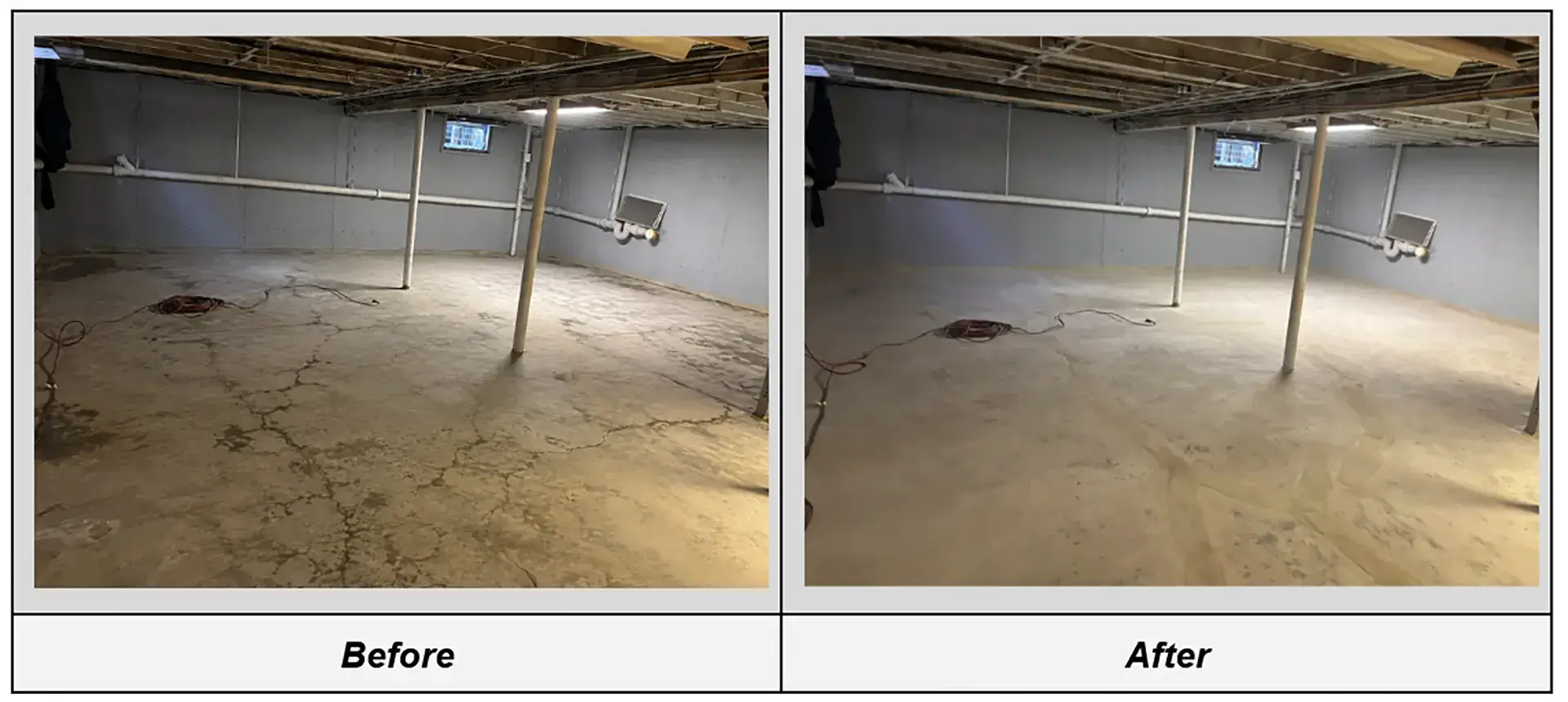
A real Zavza Seal project in Northport, NY shows how work done to address basement moisture and cracks can also help reduce potential pathways for radon gas to enter a home.
The Problem: Water Intrusion, Floor Cracks and Potential Radon Entry
The homeowner was dealing with persistent water intrusion through the basement floor slab. The concrete floor had developed approximately 50 linear feet of visible cracks, and water was also entering around the joint where the foundation walls met the floor slab.
These cracks and openings were a concern not only because of the ongoing moisture problem, but also because openings in a basement floor can provide potential pathways for soil gases, including radon, to enter a home.
The homeowner contacted Zavza Seal for a solution that would address the damaged floor, improve waterproofing and seal the basement surface.
The Solution: Basement Floor Repair, Reinforcement and Sealing
Our team carried out a comprehensive repair and waterproofing process across the approximately 850-square-foot basement floor.
First, we scarified the entire basement floor to remove the top layer of concrete and prepare the surface for the waterproofing materials.
We then opened the existing cracks throughout the slab, which totaled approximately 50 linear feet, to remove loose and damaged material. The cracks were filled and smoothed by hand using Basecrete waterproofing cement.
Special attention was given to the joint where the foundation wall meets the floor slab. We ground approximately 3 inches vertically and 3 inches horizontally along the joint to clean the area and expose sound concrete. Around the entire perimeter, we installed 4.5-ounce reinforced Basecrete fiberglass mesh to strengthen the joint and help protect it against future water intrusion.
As the final step, we applied a radon concrete sealer across the basement floor according to the manufacturer’s instructions. The sealer provided another layer of protection over the repaired slab and helped reduce potential pathways for radon gas infiltration.
The Result: A Sealed Basement Floor
Once the work was completed, the basement floor had a smooth, reinforced and sealed surface. The existing cracks were repaired, the wall-to-floor joint was reinforced, and the floor received a final sealing treatment.
This project of radon mitigation in Northport, NY in is a good example of why basement conditions matter when looking at potential radon entry points. Sealing cracks and openings can be part of a radon reduction strategy, but sealing a floor alone should not be presented as a complete radon mitigation system. If a home has elevated radon levels, testing and a proper evaluation are still necessary to determine whether an active radon mitigation system is needed.
For homeowners dealing with basement water intrusion, foundation cracks or concerns about potential radon entry, addressing the condition of the basement floor can be an important part of protecting the space.
Radon Mitigation in Long Island, Brooklyn, Queens and the Bronx
Radon is not limited to one type of house or one part of New York. Any home can have elevated radon levels, which is why testing is more useful than trying to judge risk based on the age, appearance or location of a property.
For homeowners across Long Island, Brooklyn, Queens and the Bronx, the condition and layout of the lower part of the home can be especially important when evaluating possible radon entry points.
Radon Mitigation in Long Island
Long Island has a wide mix of homes, from older properties to newer construction. Many homes have basements, crawl spaces or other areas that are in direct contact with the ground.
If a test shows elevated radon, the home’s foundation and lower-level construction should be evaluated before deciding on a mitigation system. Cracks in a slab, gaps around pipes, sump pits and other openings may provide pathways for soil gas to enter.
Homeowners should not assume that a particular neighborhood or type of Long Island home is automatically safe from radon. Testing the individual property is the best way to know what is happening inside.
Radon Mitigation in Brooklyn
Brooklyn has many older homes and buildings with basements, cellars and masonry foundations. Over time, foundations can also be modified, repaired or renovated, creating different conditions from one property to another.
When elevated radon is found, these lower-level spaces should be considered as part of the evaluation. The goal is to understand where soil gas may be entering and determine how it can be safely redirected outside.
Radon Mitigation in Queens
Queens includes a wide range of residential construction, including single-family homes with basements and other below-grade spaces.
A radon mitigation system needs to work with the existing structure. The location of the foundation, concrete slab, crawl space, sump pit and other openings can all affect the design and installation of the system.
Radon Mitigation in the Bronx
Homes and buildings in the Bronx can also have below-grade spaces where soil gas may enter. Older foundations, basement areas and openings around utilities can create conditions that need to be considered when evaluating elevated radon.
The same basic principle applies throughout the area: test first, understand the building, then choose the appropriate mitigation approach.
Zavza Seal works with homeowners throughout Long Island, Brooklyn, Queens and the Bronx on basement, foundation and crawl space projects. When radon mitigation is needed, those existing building conditions can be an important part of understanding how a system should be installed.
What Should You Look for When Hiring a Radon Mitigation Contractor?
If your home has elevated radon, choosing the right contractor is important. A mitigation system is not something that should be installed using a one-size-fits-all approach.
Start by asking the contractor about their radon-specific training and certification. New York State recommends using a radon testing or mitigation professional who has been certified through a recognized national certification program, such as the National Radon Proficiency Program (NRPP) or the National Radon Safety Board (NRSB).
You should also understand exactly what the contractor is proposing to install. Ask where the suction point will be located, how the vent pipe will be routed, where the fan will be installed and whether any sealing work is included.
A good contractor should also be willing to explain why that particular system is appropriate for your home. The answer should relate to the building’s foundation and the way soil gas is entering, rather than simply being based on a standard package.
It is also worth asking what happens after installation. A radon mitigation system should be checked to make sure it is operating properly, and the home should be tested again to determine whether the radon level has been reduced. New York State recommends testing within 30 days after mitigation work is completed.
Before agreeing to the work, ask for a written estimate that clearly explains the scope of the project. It should be clear about the equipment, installation, sealing work, warranties and any post-installation testing that is included.
Finally, be careful with contractors who promise that sealing a few cracks will automatically solve an elevated radon problem. Radon mitigation should be based on testing and the actual conditions of the home.
For homeowners in Long Island, Brooklyn, Queens and the Bronx, a contractor with experience working around foundations, basements and crawl spaces can also bring useful building knowledge to the evaluation. But radon work should still be approached as its own specialized service, with the system designed around the property’s specific needs.
What Happens After a Radon Mitigation System Is Installed?
Installing a radon mitigation system is not the end of the process. You also need to make sure the system is working and that the radon level inside the home has actually gone down.
New York State recommends testing the home within 30 days after a mitigation system is installed. The test gives you a way to compare the new radon level with the result that led to the mitigation work in the first place.
The mitigation system itself should also be checked regularly. If the system uses a fan, the fan needs to keep operating properly. Many systems have a warning device or indicator that allows the homeowner to see whether the system is functioning.
It is also important to keep the system accessible. Avoid covering or blocking the fan, vent piping or warning device, and let a qualified professional know if you notice unusual noise, damage or a change in the system’s operating indicator.
Radon levels can change over time, even after a successful mitigation project. New York State recommends testing every two years in homes with a mitigation system.
If a post-mitigation test still shows an elevated level, that does not necessarily mean the system has failed completely. The home may need another evaluation to determine whether additional suction, sealing or another adjustment is needed.
A properly installed system should also be considered part of the home’s long-term maintenance. Keep records of your radon test results, installation information and follow-up tests. This can be useful if you sell the property in the future or need to troubleshoot the system.
Frequently Asked Questions About Radon
What is radon?
Radon is a naturally occurring radioactive gas produced when uranium in soil and rock breaks down. It can move into buildings through cracks and openings in foundations and floors. You cannot see or smell it, so testing is the only way to know whether a home has elevated levels.
What radon level is considered high?
The EPA and New York State use 4 pCi/L as the action level. If a test shows 4 pCi/L or higher, homeowners should take steps to reduce the radon level. Both agencies also recommend considering reduction when levels are between 2 and 4 pCi/L. (epa.gov)
Can you smell radon gas?
No. Radon has no smell, color or taste. You need a radon test to detect it.
Can foundation cracks let radon into a house?
They can. Cracks in concrete floors and foundation walls can provide pathways for soil gas to enter a home. Other possible entry points include construction joints, gaps around pipes and sump pits. (health.ny.gov)
However, finding a foundation crack does not automatically mean that your home has elevated radon. Testing should come first.
Does sealing a basement stop radon?
Sealing certain cracks and openings can reduce potential entry pathways, but sealing alone should not automatically be considered a complete radon solution. Homes with elevated radon may need an active mitigation system that draws soil gas from beneath the building and vents it outdoors.
How much does a radon mitigation system cost?
The cost depends on the home and the type of system required. New York State currently gives an average cost of about $1,500, but actual costs can be higher or lower depending on the foundation, system design, materials and installation requirements. (health.ny.gov)
How long does a radon mitigation system last?
A mitigation system can continue working for many years when it is properly installed and maintained. The fan and other components may eventually need service or replacement. Regular testing is still important because the system’s purpose is to keep indoor radon levels low, not to provide a permanent guarantee that radon will never be present.
Do I need to retest after radon mitigation?
Yes. New York State recommends testing within 30 days after the system is installed. It also recommends testing every two years in homes with a mitigation system. (health.ny.gov)
Do I need radon mitigation if my level is below 4 pCi/L?
Not necessarily, but it is worth understanding the result. The EPA and New York State recommend considering radon reduction when levels are between 2 and 4 pCi/L because there is no completely risk-free level of radon exposure. If the level is below 2 pCi/L, continued periodic testing is still recommended. (epa.gov)
Can homes in New York have high radon levels?
Yes. Radon can occur naturally throughout New York, and individual homes can have very different radon levels. The best way to determine whether a particular home has elevated radon is to test it rather than relying on its location or the results from nearby properties. (health.ny.gov)
Do I need radon testing when buying a home?
Testing is a sensible part of evaluating a home, particularly when the property has a basement, crawl space or other area in contact with the ground. If a test shows elevated radon, the buyer and seller can then determine what mitigation work may be appropriate before or after the purchase.
Need Radon Mitigation in Long Island, Brooklyn, Queens or the Bronx?
Finding elevated radon in your home can be concerning, but it is a problem that can often be addressed with the right mitigation approach.
The first step is always testing. If your results show elevated radon, the next step is to understand the home itself. A basement, crawl space, concrete slab, foundation walls, sump pit and openings around pipes can all affect how soil gas enters a building. The right mitigation system should be designed around those conditions rather than using the same setup for every property.
New York State recommends working with a qualified radon mitigation contractor and choosing a reduction method that fits the home. It also recommends testing again after the system is installed to confirm that radon levels have been reduced. (New York State Department of Health)
Zavza Seal works with homeowners throughout Long Island, Brooklyn, Queens and the Bronx on basement, crawl space and foundation projects. Our experience with below-grade spaces and foundation conditions can be useful when evaluating the areas where soil gas may enter a home.
If your home has already been tested and the results are elevated, we can help you understand the conditions around your basement or crawl space and determine what type of radon mitigation work may be appropriate.
Have a radon test result you are concerned about? Contact Zavza Seal to discuss your home and the next steps.
Sources & Standards
We use information from recognized government and industry sources to help keep this guide accurate and up to date. Radon testing and mitigation recommendations can change, so homeowners should always refer to current guidance when making decisions about their property.
- U.S. Environmental Protection Agency (EPA): Information on radon health risks, testing, radon levels and mitigation systems.
EPA Radon Resources - New York State Department of Health (NYSDOH): New York-specific guidance on radon testing, mitigation, action levels and finding qualified radon professionals.
New York State Radon Program - New York State Department of Health, Radon Mitigation: Guidance on reducing radon levels, post-mitigation testing and maintaining a radon reduction system.
Radon Mitigation Guidance - American Association of Radon Scientists and Technologists (AARST): National standards and professional resources related to radon measurement and mitigation.
AARST
The information in this article is intended for general educational purposes. Radon levels and building conditions vary from one property to another. Testing should be used to determine whether elevated radon is present, and mitigation decisions should be based on the home’s actual conditions and applicable professional guidance.
Last reviewed: August 2026