
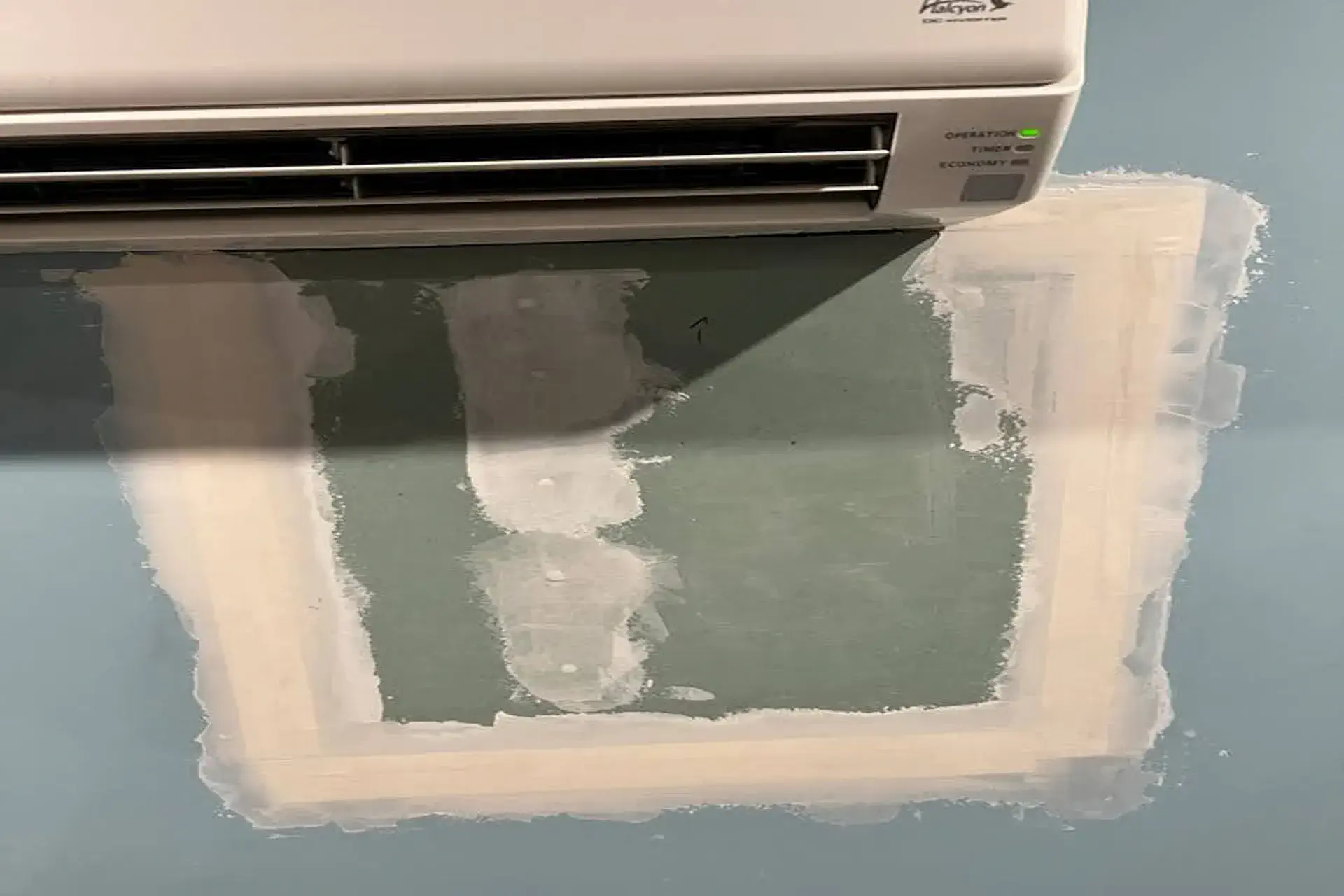
The Problem: Moisture Intrusion Beneath a Split Unit
A homeowner in Huntington, NY contacted Zavza Seal after signs of moisture intrusion were found beneath an existing split-unit system.
The area beneath the unit raised concerns about possible water damage inside the wall. Since drywall can hide damage within the wall cavity, simply repairing the visible surface would not be enough. Our team needed to open the affected area, inspect the cavity and identify whether moisture had reached the insulation, framing or other materials.
Moisture that remains inside a wall can create conditions where mold may grow. The U.S. Environmental Protection Agency recommends controlling the source of moisture and addressing water-damaged materials promptly to help prevent mold growth.
The Solution: Investigate, Repair and Waterproof the Wall
Zavza Seal began by carefully removing an approximately 24-inch by 24-inch section of drywall directly beneath the split-unit system.
Opening the wall allowed our team to inspect the cavity for signs of additional water damage, moisture intrusion or visible mold growth beyond the original affected area.
Cleaning and Antimicrobial Treatment
After exposing the wall cavity, we cleaned and disinfected the surrounding framing and adjacent surfaces. An antimicrobial treatment was also applied to help inhibit future mold growth.
Addressing the moisture source was an important part of the repair. The EPA notes that cleaning a mold-affected area without correcting the underlying moisture problem can allow the problem to return.
Sealing the Split Unit Penetration
Our team identified the split-unit line set and conduit penetration as an area that needed to be addressed.
We permanently plugged and waterproofed the penetration to help eliminate a potential pathway for future water intrusion.
This step was important because restoring the wall without addressing the possible entry point would leave the repaired area vulnerable to another moisture problem.
Rebuilding the Wall
Once the affected area was cleaned and treated, we rebuilt the wall assembly.
The repair included:
- Installing new fiberglass insulation in the wall cavity
- Installing new sheetrock to match the existing wall
- Taping the new drywall
- Applying joint compound
- Sanding and preparing the surface for painting
- Applying one coat of primer
- Applying two finish coats using paint supplied by the homeowner
Any demolition debris generated during the work was removed and properly disposed of.
The EPA’s guidance notes that water-damaged drywall and fiberglass insulation may need to be removed and replaced when they cannot be adequately dried or have been affected by water damage.
The Result: A Restored and Protected Wall
After completing the repair, the damaged section beneath the split unit was restored to match the surrounding wall.
More importantly, the repair addressed both the visible wall damage and the potential source of future water intrusion. The wall cavity was inspected, cleaned and treated, the split-unit penetration was sealed, and new insulation and drywall were installed.
The finished surface was primed and painted, leaving the area clean and ready for normal use.
Why Investigating Hidden Water Damage Matters?
Water damage is not always visible from the outside. Moisture can enter through small openings around pipes, conduits and HVAC line sets and remain hidden behind drywall.
Opening the affected area allows contractors to determine whether the problem is limited to the surface or has affected materials inside the wall.
For homeowners in Huntington, Long Island and surrounding areas, addressing water intrusion early can help prevent more extensive damage and reduce the risk of recurring moisture problems.
Need Water Intrusion Repair in Huntington, NY?
If you notice staining, dampness, damaged drywall or other signs of water intrusion around an HVAC system or wall penetration, Zavza Seal can inspect the affected area and determine the appropriate repair.
Contact Zavza Seal for water intrusion investigation and wall repair in Huntington, NY and surrounding Long Island communities.