
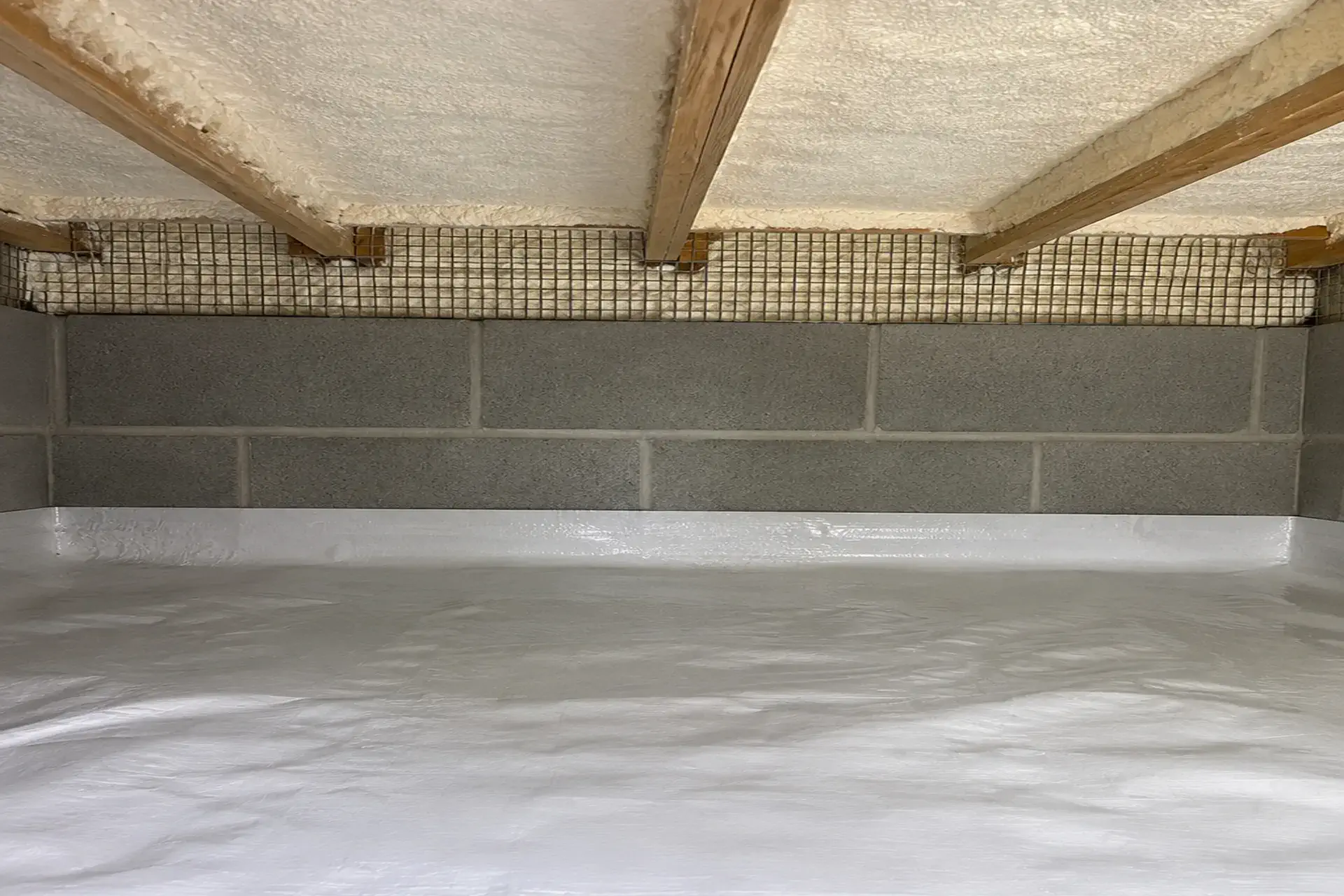
A homeowner in Brooklyn, NY, contacted Zavza Seal after noticing spiders and mice entering her crawl space over a period of several months. She wanted to close off the openings that were allowing pests into the space and improve the insulation around the crawl space.
Our team inspected the crawl space and found that the concrete floor and cinder block foundation walls were in good condition. The main concerns were the open areas around the rim joist, the crawl space entrance and the existing insulation.
We developed a solution focused on air sealing, rodent prevention and insulation improvement.
The Problem: Mice and Spiders Entering the Crawl Space
The homeowner had been seeing spiders and mice in the crawl space for about six months. While the foundation walls and concrete floor did not need repairs, there were openings around the rim joist and crawl space entrance that could allow small animals to get inside.
The crawl space also had existing batt insulation installed between the ceiling joists.
During the work, we found that the old batt insulation had been contaminated with rodent feces. Because of this, the existing insulation could not simply be cleaned and reused.
The crawl space entrance also had an old metal and glass jalousie window. Several of the glass louvers were missing, creating another easy access point for rodents.
What We Found
- Concrete crawl space floor was in good condition.
- Cinder block walls were in good condition.
- Gaps and openings were present around the rim joist.
- Utility penetrations needed to be sealed.
- The crawl space entrance had a damaged jalousie window.
- The existing batt insulation had become contaminated with rodent feces.
- The homeowner wanted to prevent future rodent entry.
The Solution: Crawl Space Sealing and Insulation
Zavza Seal developed a comprehensive plan to close the entry points and improve the crawl space insulation.
Rim Joist Air Sealing
Our team air sealed approximately 38 linear feet of rim joist.
The rim joist is the area where the foundation wall meets the floor framing. Small gaps in this area can allow outside air, moisture and pests to enter the crawl space. We used SealTech heavy-duty flexible foam insulation and sealed around the perimeter with spray foam.
We also sealed gaps around wires, pipes and other penetrations throughout the rim joist area. The team also inspected the rim joist from the outside and sealed areas where additional air sealing was needed. This created a much tighter barrier around the crawl space.
Wire Mesh for Rodent Prevention
To help stop mice and other small rodents from getting through the rim joist openings, we installed wire mesh throughout the crawl space rim joist area.
This provided an additional physical barrier behind the air sealing work.
Crawl Space Entrance Replacement
The existing jalousie window at the crawl space entrance was in poor condition. Several glass louvers were missing, leaving an opening that rodents could use to enter the crawl space.
We removed the old window and reframed the opening with treated 2×4 lumber. A securely fitted plywood panel was then installed to close the crawl space entrance. We also created a new wood frame around the opening so the plywood panel could be securely fastened.
A small opening was drilled for the existing heat tracing electrical cable. This allowed the homeowner to plug and unplug the cable from the basement without needing to remove the crawl space access panel.
Insulation Replacement After Rodent Contamination
The original plan was to clean and re-tuck the existing batt insulation into the ceiling joists.
However, after inspection, the old insulation was found to be filled with rodent feces. Because of the contamination, it was removed instead of being reused.
To improve the insulation value of the crawl space ceiling, Zavza Seal installed Knauf R-21 Kraft-faced fiberglass insulation batts in the approximately 16-inch-wide cavities.
The new insulation covered approximately 51 square feet of crawl space area.
The upgraded insulation helps improve the thermal performance of the space while also providing a cleaner and more effective insulation system.
The Result:
After completing the work, the crawl space had a much tighter barrier against rodents and outside air.
The project addressed the areas that were allowing pests to enter, including the rim joist and damaged crawl space entrance.
The homeowner also received new R-21 insulation after the contaminated insulation was removed.
The completed work included:
- Approximately 38 linear feet of rim joist air sealing
- Sealing around pipes, wires and other penetrations
- Exterior inspection and additional rim joist sealing
- Wire mesh installation for rodent prevention
- Removal of the damaged jalousie window
- New treated wood framing
- New plywood crawl space access panel
- Dedicated opening for the existing heat tracing cable
- Removal of rodent-contaminated batt insulation
- Installation of approximately 51 square feet of R-21 fiberglass insulation
The concrete floor and cinder block foundation walls were left in place because they were found to be in good condition.
Why Crawl Space Sealing Matters?
A crawl space does not need major foundation damage to have a pest or air leakage problem. Small gaps around pipes, wires, framing and access doors can give mice and other small animals a way inside.
Sealing these openings can help create a cleaner and more controlled crawl space environment.
For additional information about energy-efficient insulation and air sealing, homeowners can review guidance from the U.S. Department of Energy and ENERGY STAR: