
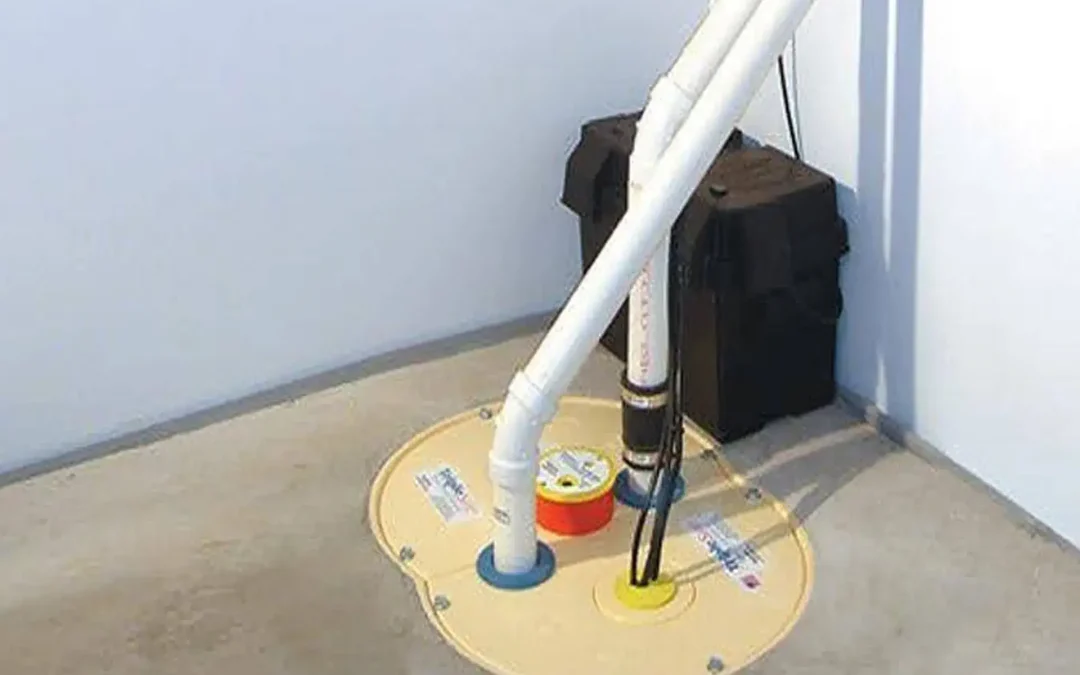
A basement can stay dry for months and suddenly develop water problems after heavy rain, a seasonal groundwater rise, or a change in drainage conditions. If your home sits in an area with a high water table, the problem may go deeper than a leaking wall or a poorly sealed crack. Groundwater can push against the foundation from below and around the sides, making moisture control more complicated. So, what does basement waterproofing include for homes facing these conditions? It typically involves identifying groundwater entry points, managing water pressure, sealing foundation openings, improving drainage, and controlling moisture. For homeowners researching basement waterproofing brooklyn, understanding these components helps explain why one repair rarely solves every groundwater problem.
What a High Water Table Is
The water table is the underground level below which soil and rock are generally saturated with water. Its depth varies according to rainfall, soil composition, drainage conditions, nearby waterways, and seasonal changes. When the water table rises close to a basement floor or foundation footing, groundwater can reach vulnerable parts of the structure. A basement may experience damp walls, water seepage through floor joints, or standing water even when the roof and gutters are working properly. A high water table does not automatically mean a basement will flood. The risk depends on the foundation’s condition, surrounding soil, groundwater levels, and the available drainage paths.
How Groundwater Affects a Basement
Groundwater can move through porous concrete, masonry joints, small foundation cracks, and gaps where the floor meets the walls. It can also accumulate beneath a basement slab when surrounding soil becomes saturated. Concrete may look solid, but it is not completely impermeable. Under sustained moisture exposure, water can migrate through tiny pores and weaknesses. Over time, repeated dampness may damage finishes, encourage mold growth, corrode certain metal components, and leave mineral deposits on walls. If water pressure becomes strong enough, it may force water through openings that remain dry during ordinary weather.
Signs of Groundwater Pressure
Several warning signs suggest that groundwater may be contributing to basement moisture. Water appearing along the floor-wall joint, recurring seepage through foundation cracks, damp patches near the bottom of walls, and water entering through a basement slab are common examples. White, powdery deposits on masonry, often called efflorescence, can indicate that moisture is carrying dissolved minerals through the material. Musty odors and peeling paint may point to persistent dampness, although neither proves that groundwater is the cause. The timing of the problem matters, too. Water that appears after prolonged rain or during seasonal groundwater rises deserves a closer look at drainage and foundation conditions.
Why High Water Tables Create Waterproofing Challenges
A basement foundation is built into the ground, so it is exposed to moisture from the surrounding soil. When the water table rises, saturated soil can remain in contact with foundation walls and footings for extended periods. This changes the problem from occasional surface leakage to potentially persistent groundwater intrusion. Simply applying waterproof paint may hide discoloration temporarily without addressing the source of the water. A more effective approach identifies how groundwater moves around the property and determines whether the foundation needs drainage, a protective membrane, crack repairs, or a combination of measures.
Hydrostatic Pressure Explained
Hydrostatic pressure is the force that standing water exerts on surrounding surfaces. When groundwater accumulates against a basement wall or beneath a concrete floor, that pressure can push moisture through small openings and weak points. The deeper the water, the greater the pressure at that depth. In severe conditions, groundwater pressure may contribute to floor movement, cracking, or water intrusion through joints. Waterproofing plans therefore need to consider not only where water enters but also where it collects and how safely it can be redirected. Sealing visible cracks without managing persistent water pressure may leave other entry points vulnerable.
Seasonal Groundwater Changes
Groundwater levels are not fixed throughout the year. Extended rainfall, snowmelt in some regions, changes in drainage, and local soil conditions can cause the water table to rise or fall. A basement that stays dry during summer may develop leaks during wetter months. This is why a single inspection during dry weather may not reveal the full extent of a recurring problem. Homeowners should document when seepage occurs, where it appears, and whether it follows rain or other changes. These observations help distinguish seasonal groundwater intrusion from plumbing leaks, condensation, and surface water entering around the foundation.
What Does Basement Waterproofing Include?
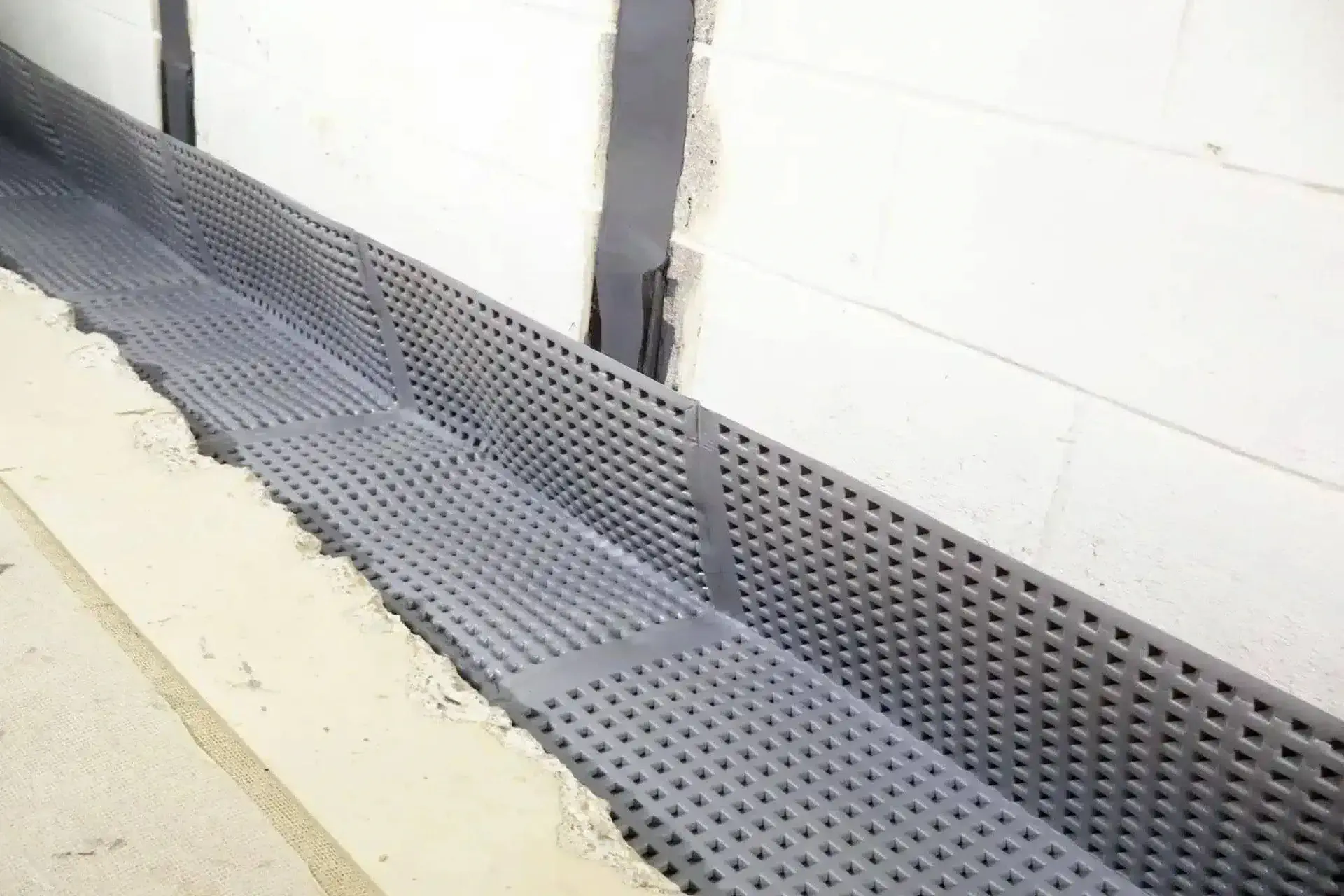
Basement waterproofing for a high water table usually combines several measures rather than relying on a single coating or sealant. The exact system depends on the water source, foundation design, accessibility, existing damage, and whether groundwater collects below the basement floor. Work may include a detailed inspection, interior drainage, sump pump installation, exterior waterproofing, crack repair, surface drainage improvements, and moisture control. Not every home needs every component. The objective is to identify the actual pathway of water and create a durable way to prevent entry or collect and discharge water safely.
1. Basement and Groundwater Inspection
The first step is to determine where the water comes from and how it reaches the basement. An inspection may examine foundation walls, floor joints, cracks, the condition of existing coatings, the sump pit, discharge piping, gutters, downspouts, and the slope of the surrounding ground. The inspector may also review the timing of leaks and look for evidence of previous flooding. Where conditions warrant, additional evaluation can help establish groundwater levels, soil drainage characteristics, or foundation movement. This assessment guides the waterproofing design and reduces the risk of spending money on repairs that address symptoms rather than the underlying cause.
2. Interior Drainage Systems
Interior drainage systems collect water that reaches the foundation’s interior perimeter or enters through designated drainage pathways. Depending on the basement design, installation may involve removing a strip of concrete near the walls, placing a drainage channel or perforated pipe, covering it with suitable aggregate, and directing collected water toward a sump pit. The concrete floor is then restored as appropriate. This system does not necessarily stop groundwater from contacting the exterior foundation. Instead, it manages incoming water by giving it a controlled route to collection and discharge. Correct sizing, installation, and maintenance are important, especially where groundwater levels can remain elevated for long periods.
Perimeter Drainage Channels
Perimeter channels or drainage pipes collect water near the basement’s foundation walls and direct it toward a discharge point, often a sump pit. The layout must account for the basement’s shape, floor elevation, foundation construction, and likely water entry locations. A properly designed system helps prevent water from spreading across the basement floor. However, drainage capacity and the available discharge route matter. A channel that cannot carry water away efficiently may not perform well during periods of heavy groundwater intrusion. Installation should also avoid undermining the foundation footing or compromising the structural integrity of the basement.
Sump Pumps and Backup Systems
A sump pump removes collected water from a pit and sends it through a discharge line to an approved location. For homes with a high water table, the pump may operate more frequently during wet periods, so capacity and reliability deserve careful consideration. A float switch activates the pump when water reaches a set level. A battery backup or other suitable backup arrangement can help maintain pumping during a power outage, while a high-water alarm can provide an early warning of trouble. Homeowners should also check that the discharge line is unobstructed and that discharged water cannot flow back toward the foundation. Local requirements govern acceptable discharge locations.
3. Exterior Waterproofing Membranes
Exterior waterproofing aims to reduce the amount of water that reaches foundation walls. Depending on site conditions, the work may require excavating around the foundation, cleaning and preparing the wall, repairing defects, and applying a suitable waterproofing membrane. A drainage layer or exterior foundation drain may also be installed to help relieve water accumulation. The excavated soil is then replaced with attention to drainage conditions. Exterior work can be effective when the source is water entering through the foundation wall, but it may be difficult or costly where access is limited. A membrane alone may not resolve substantial groundwater pressure beneath the basement slab.
4. Foundation Crack Repair
Foundation cracks can provide direct pathways for water, particularly when groundwater pressure rises. Repair methods depend on the crack’s size, location, movement, and cause. Some nonstructural cracks may be suitable for injection with an appropriate repair material, while other defects require different treatment. Cracks associated with foundation movement, displacement, or recurring expansion need more detailed evaluation before repair. Filling a crack can stop water at that location, but it does not necessarily reduce groundwater pressure elsewhere. If water also enters through floor joints or porous masonry, additional drainage or waterproofing measures may be necessary.
5. Wall and Floor Joint Sealing
The joint between a basement wall and its floor is a common point of water entry. This area can be especially vulnerable when groundwater collects beneath the slab and pressure pushes water upward along the joint. Sealing may be part of the solution, but the correct method depends on how the water reaches the joint and whether an interior drainage system is needed. Similar attention may be required around utility penetrations, construction joints, and other openings. If groundwater pressure remains high, surface sealants alone may not provide lasting protection. Joint sealing is often most effective when incorporated into a broader water-management plan.
6. Exterior Grading and Surface Drainage
Not every basement water problem begins with groundwater. Rainwater that collects beside a foundation can saturate the soil and increase the amount of water reaching basement walls. Ground grading, functioning gutters, properly extended downspouts, and clear surface drains can help direct rainwater away from the home. Driveways, patios, and walkways should also be checked for slopes that send water toward the foundation. These improvements cannot lower a naturally high regional water table on their own, but they can reduce unnecessary water accumulation around the structure and lessen the load on other waterproofing measures.
7. Vapor Barriers and Moisture Control
A basement can feel damp even when no water is visibly leaking. Moisture may enter as vapor through concrete and masonry, or humid air may condense on cool surfaces. Vapor-control materials, appropriate insulation, ventilation where suitable, and dehumidification can help manage these conditions. The right solution depends on the source of moisture and how the basement is used. A dehumidifier can reduce indoor humidity, but it will not repair an active groundwater leak. Similarly, a vapor barrier is not a substitute for drainage when liquid water is entering under pressure. Controlling liquid water first makes indoor moisture management more effective.
Choosing Between Interior and Exterior Waterproofing
Interior and exterior waterproofing address different parts of the problem. Exterior systems limit water reaching foundation walls, while interior drainage collects water that reaches the inside and guides it to a discharge point. Exterior work suits homes where the outside foundation can be accessed; interior drainage is more practical when excavation is restricted or water enters at several points. Some homes benefit from combining both. The decision should account for groundwater behavior, foundation condition, construction constraints, and the consequences of pump failure.
Can a Sump Pump Solve a High Water Table Problem?
A sump pump can be an important part of a basement waterproofing system, but it is not a universal solution. It removes water that reaches the collection pit; it does not seal cracks, repair damaged foundation walls, or automatically stop moisture from moving through concrete. In areas with persistently high groundwater, the system needs adequate collection capacity, a reliable discharge route, and a maintenance plan. Some sites may also require professional assessment of groundwater levels and the risk of water pressure beneath the slab. If water continues to enter despite a functioning pump, the drainage layout, pump performance, and other entry points should be reassessed. How interior systems are laid out in practice is explained in our earlier guide.
How Brooklyn Homes Are Affected by High Groundwater
Basement moisture in Brooklyn can be influenced by local soil conditions, older foundation construction, nearby buildings, street and yard drainage, and periods of heavy rainfall. Conditions vary considerably from one property to another, so not every Brooklyn basement faces the same groundwater risk. Older masonry foundations may have deteriorated mortar joints, while newer concrete foundations can still develop cracks or leak at construction joints. For homeowners exploring basement waterproofing brooklyn, the important distinction is whether water originates from surface runoff, plumbing, condensation, or groundwater pressure. For local companies such as Zavza Seal LLC, the right technical solution for any particular home still depends on its actual site and foundation conditions. Homeowners comparing basement waterproofing in Brooklyn should start by identifying which of these sources applies to their home.
Common Basement Waterproofing Mistakes
One common mistake is covering damp walls with waterproof paint before finding the water source. Another is repairing only the most visible crack while ignoring water entering through the slab or wall-floor joint. Installing a sump pump without considering drainage capacity, backup power, or the discharge route can also leave a basement vulnerable. Finally, treating every damp basement as a groundwater problem can lead to unnecessary work — plumbing leaks, condensation, and indoor humidity need different responses, so identifying the cause is essential before choosing a repair.
How to Maintain a Waterproofed Basement
Regular maintenance helps keep waterproofing systems working as intended. Inspect the sump pump, test the float switch, and confirm that the discharge line remains clear. Check the backup battery’s condition on schedule, keep gutters and downspouts clear, and look for new cracks, efflorescence, or damp patches after prolonged rainfall. Any sudden foundation movement or significant new cracking deserves prompt professional evaluation rather than repeated surface patching.
In East Midwood, compact lots and neighbouring drainage make these interior components especially important.
Zavza Seal LLC Serving the East Midwood Community and Beyond in Brooklyn
Zavza Seal LLC is dedicated to serving the diverse needs of the local community of Brooklyn, including individuals residing in neighbourhoods like East Midwood. With its convenient location near landmarks such as the East Midwood Jewish Center and major intersections like Avenue L and E 21st St (coordinates: 40.6224516, -73.9549526), we offer basement waterproofing services.
Get basement waterproofing services at East Midwood Now
Call Us or Contact Us: +17184007005
Navigate from East Midwood to Zavza Seal LLC Now
Basement waterproofing for a home with a high water table is about more than sealing visible leaks. It requires understanding how groundwater behaves around the foundation, identifying vulnerable entry points, and choosing suitable methods to manage water safely. Depending on the property, the solution may combine interior drainage, sump pumps, exterior membranes, crack and joint repairs, surface drainage improvements, and moisture control. No single method fits every basement. For homeowners considering basement waterproofing brooklyn, the most useful first step is to distinguish groundwater pressure from rainwater intrusion, plumbing leaks, and condensation — that distinction provides a stronger basis for durable repairs and a drier, more usable basement.
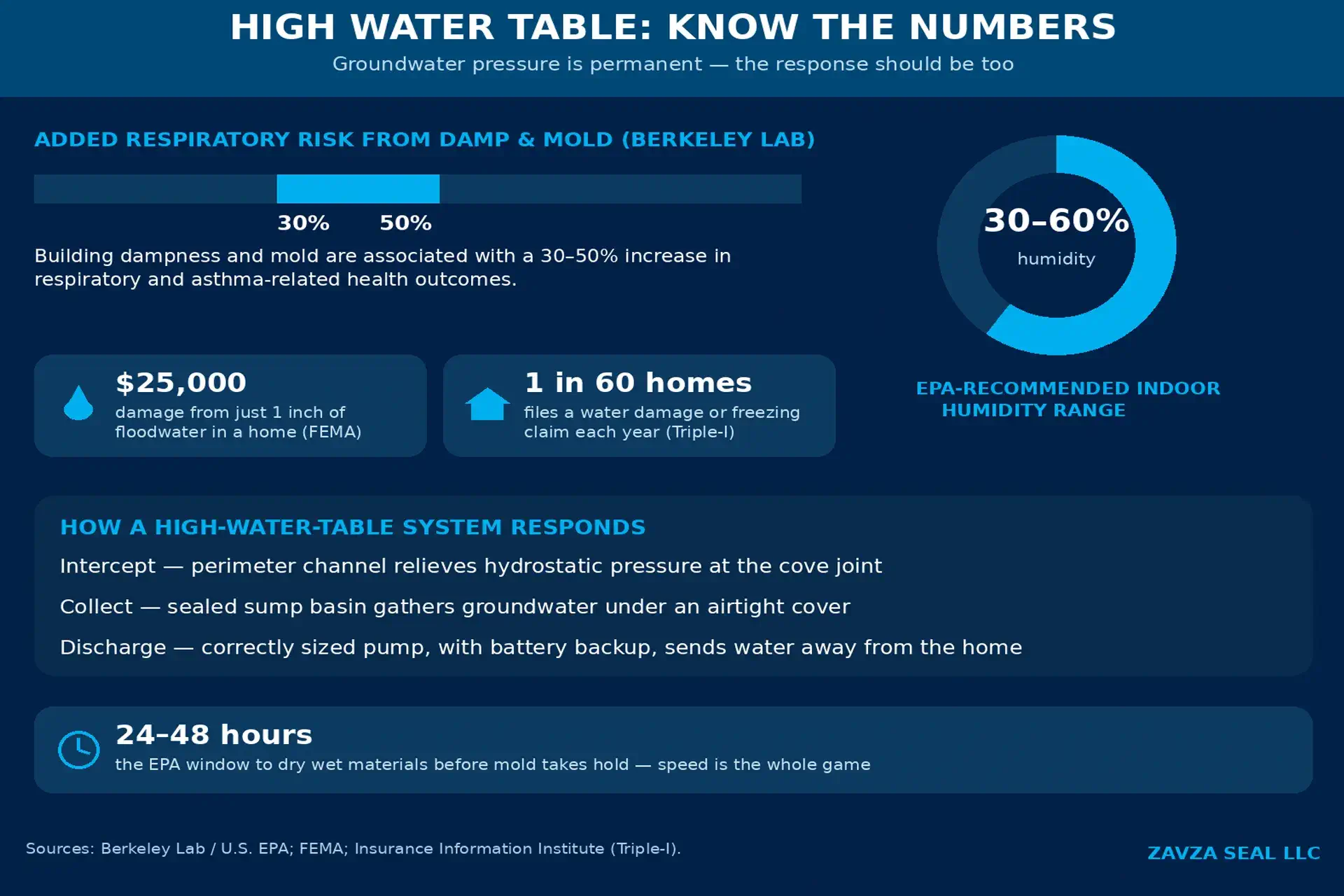
Basement Waterproofing by the Numbers
For homes battling groundwater, these statistics show what is at stake when water wins.
- 24–48 hours is the window for cleaning and drying damp or wet materials to prevent mold growth.
- 30–60% is the recommended indoor humidity range to discourage mold growth.
- Up to $25,000 in damage can result from just one inch of floodwater in a home.
- 1 in 60 insured homes files a water damage or freezing claim each year.
- Building dampness and mold are associated with a 30–50% increase in respiratory and asthma-related health outcomes.
Frequently Asked Questions
1. Can a basement stay dry if the water table is above the basement floor?
Yes, it can, but maintaining a dry basement may require a carefully designed drainage and waterproofing system. The appropriate approach depends on groundwater pressure, foundation condition, drainage capacity, and how collected water can be discharged safely.
2. Does waterproof paint stop groundwater from entering a basement?
Waterproof paint may help with certain surface moisture conditions, but it generally cannot manage substantial hydrostatic pressure by itself. If groundwater is forcing water through cracks, joints, or the slab, drainage and appropriate structural repairs may be necessary.
3. How often should a basement sump pump be inspected?
Check the pump periodically according to the manufacturer’s instructions and test it before seasons when groundwater or rainfall typically rises. Inspect the discharge line, float switch, alarm, and backup system where installed. More frequent checks may be appropriate if the pump runs often.
4. Is interior or exterior basement waterproofing better for high groundwater?
Neither is always better. Exterior waterproofing limits water reaching foundation walls, while interior drainage collects water that enters the basement. The best option depends on the source of intrusion, site access, foundation design, and whether water is accumulating beneath the floor.
5. Why does my Brooklyn basement leak only after heavy rain?
Heavy rain can saturate the soil around a foundation, raise groundwater levels, and increase pressure against basement walls and floors. Poor grading, blocked gutters, and inadequate drainage may worsen the problem. The timing and location of the leak help identify the most likely cause.