
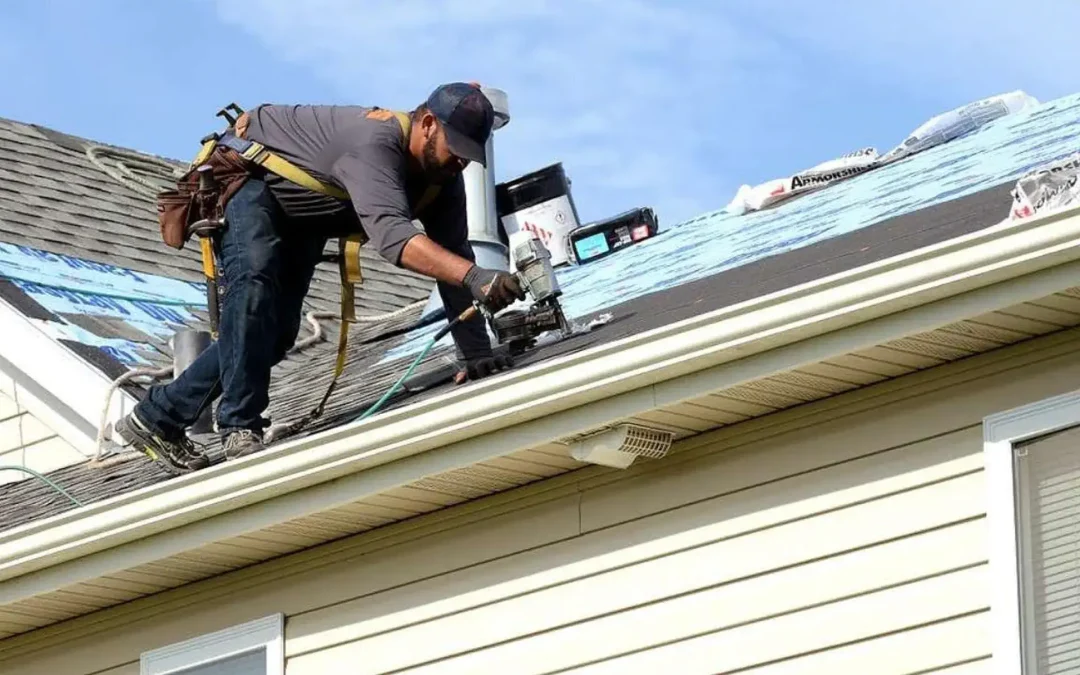
Water does not always enter a home through an obvious crack or a large opening. Sometimes, the pathway is much smaller: a joint between two building materials, a gap around a window, a transition between a wall and foundation, or a seam where different parts of the structure meet.
These areas may look insignificant, but exterior joints can become important entry points for rainwater and moisture when they are poorly sealed, damaged, or no longer able to accommodate normal building movement.
This is where understanding the work of residential waterproofing contractors in Brooklyn becomes useful. Their role is not simply to cover a visible gap with a waterproof material. Effective exterior joint waterproofing involves identifying how water is entering, determining why the joint has failed, preparing the surface correctly, selecting compatible materials, and creating a system that can tolerate movement and weather exposure.
Zavza Seal LLC is one business associated with residential waterproofing in Brooklyn, but the principles discussed here apply broadly to exterior joint waterproofing. The focus is on how these systems work, why they fail, and what factors influence their performance.
Exterior Joints in Residential Buildings
An exterior joint is essentially a designed or unavoidable separation between building components. Buildings contain many different materials, and those materials do not always expand, contract, or move at the same rate.
Concrete, brick, masonry, metal, glass, wood, and manufactured siding can respond differently to temperature, moisture, structural movement, and settling. Joints provide controlled separation between these components rather than forcing everything to behave as one rigid piece.
The problem begins when a joint loses its ability to resist water.
A properly designed joint can accommodate movement while maintaining a weather-resistant barrier. A failed joint, however, may allow water to move behind exterior finishes and into wall cavities.
Common Types of Exterior Joints
Exterior joints can appear in numerous locations around a residential building.
Common examples include joints between masonry sections, concrete construction joints, expansion joints, window and door perimeters, foundation-to-wall transitions, wall-to-roof connections, and locations where different exterior materials meet.
Some joints are intentionally designed to move. Others exist because separate materials or construction stages meet at the same location.
The important point is that every joint has a function. Waterproofing should protect that function rather than simply filling the opening with a hard material.
Expansion and Control Joints
Expansion and control joints are designed to manage movement. Concrete and masonry can expand and contract as temperatures change, while buildings can experience minor movement over time.
If these joints are sealed with a material that cannot move, the seal can crack, detach, or become compressed beyond its useful range.
Flexible joint systems are therefore important where movement is expected.
Construction and Material Joints
Construction joints can occur where one section of a structure meets another. Material joints appear where different exterior finishes connect.
For example, brick masonry may meet a concrete element, or a window frame may meet masonry. These transitions require careful detailing because each material can behave differently.
Why Water Enters Through Exterior Joints
Exterior joints can fail for several reasons, and water intrusion is often the result of multiple factors rather than one isolated defect.
A sealant may become brittle. A joint may move beyond the original sealant’s capacity. Surface contamination may prevent proper adhesion. Drainage may direct water toward the joint repeatedly.
Even a small opening can become a persistent moisture pathway when these conditions occur together.
Building Movement and Joint Expansion
Buildings are not completely motionless. Temperature changes cause materials to expand and contract, while wind, settlement, vibration, and normal structural behavior can produce small movements.
Imagine a rubber band being stretched and relaxed repeatedly. If it is designed for that movement, it can continue working. If it is replaced with a rigid strip, it may eventually crack or detach.
Exterior joint sealants face a similar challenge. They need enough flexibility and adhesion to accommodate expected movement without losing contact with the surrounding surfaces.
Weather Exposure and Aging Sealants
Exterior sealants are exposed to sunlight, rain, temperature fluctuations, pollution, and physical stress.
Over time, some materials can lose flexibility or adhesion. The surface may develop cracks, shrink away from the joint edges, or become separated from the substrate.
Once the sealant bond is compromised, water has an opportunity to move behind the joint protection.
How Water Moves Through Exterior Joints
Water intrusion is not always caused by direct water pressure forcing moisture through a large opening. Water can travel through surprisingly small pathways.
Understanding these pathways helps explain why a seemingly minor joint defect can produce moisture problems inside a home.
Surface Water and Wind-Driven Rain
Rain normally moves downward because of gravity. But wind can push water sideways and upward against exterior walls.
During storms, wind-driven rain can place greater pressure on joints, window perimeters, and other vulnerable transitions. If a joint has an opening, deteriorated sealant, or weak adhesion, water may move through the defect.
Water can then travel behind exterior finishes before appearing indoors at a completely different location.
Capillary Action and Small Openings
Water can move through narrow spaces through capillary action. This means a joint does not need to have a large visible hole to permit moisture movement.
Tiny gaps between a sealant and substrate can provide a pathway. Once water enters such a space, it can migrate along surfaces, materials, and wall cavities.
This is one reason simply looking for a large crack may not reveal the complete source of a leak.
How Residential Waterproofing Contractors Inspect Exterior Joints
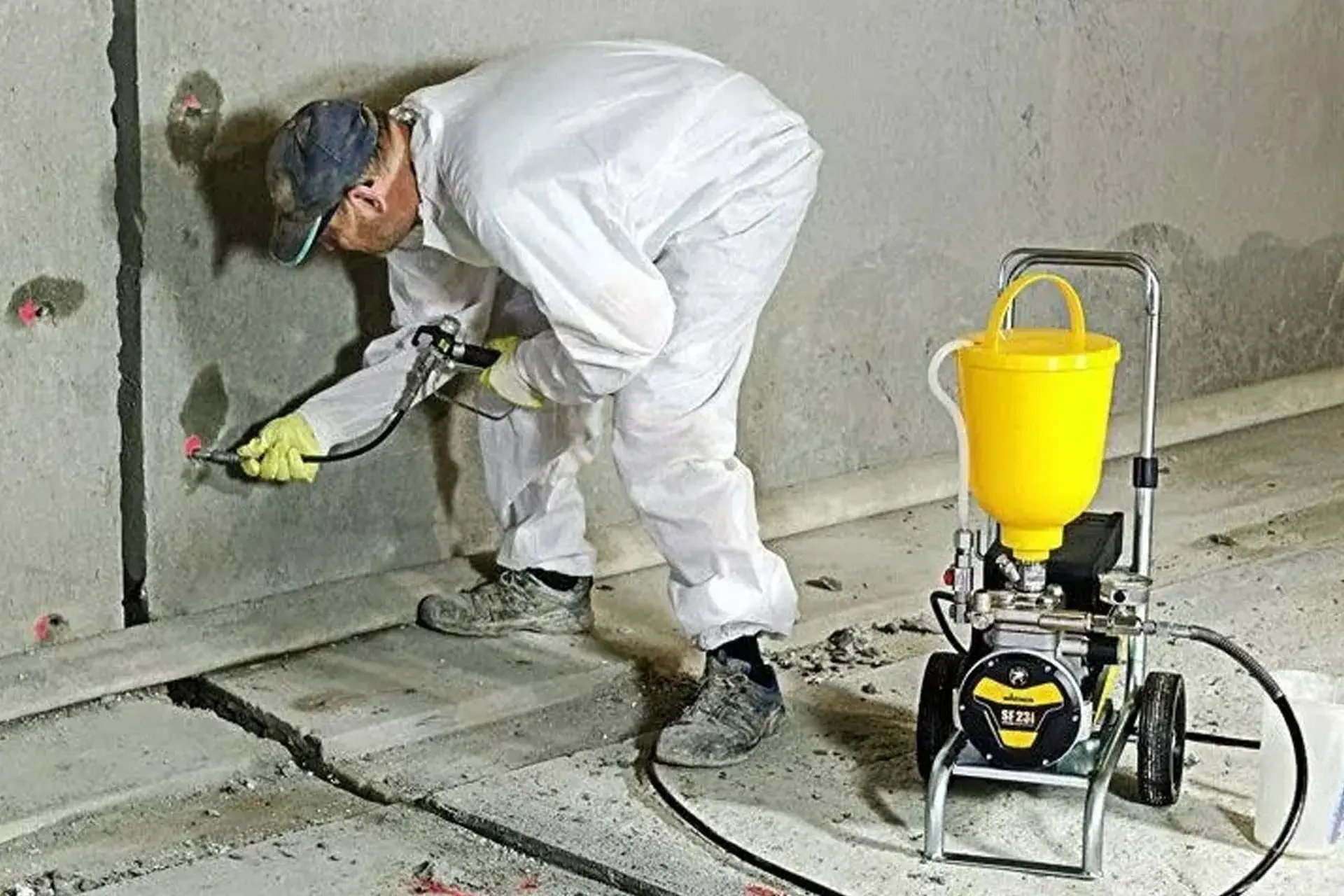
Before repairing an exterior joint, a thorough assessment is important. Treating only the location where water becomes visible may not address the actual entry point.
A professional assessment generally considers the joint’s location, surrounding materials, drainage conditions, previous repairs, and signs of movement or deterioration.
Visual Inspection
Visual inspection is usually the starting point.
The joint may be checked for cracking, gaps, separation, discoloration, failed sealant, surface deterioration, and other signs of moisture exposure.
The surrounding building components also matter. A damaged joint may be only one part of a larger water-management problem.
Moisture and Leak Investigation
Interior symptoms can provide useful clues, but they should not automatically be treated as proof of the exact source.
For example, water staining near a window does not necessarily mean the window itself is leaking. Water could enter higher on the wall and travel downward inside the assembly.
Professionals may therefore examine both the interior symptoms and exterior conditions before deciding how the joint should be repaired.
Preparing Exterior Joints for Waterproofing
Preparation is one of the most important parts of exterior joint waterproofing.
Even a high-quality sealant can perform poorly if it is applied over loose material, dirt, old failed sealant, dust, moisture, or incompatible substances.
The repair begins with creating a suitable surface for the new waterproofing material.
Removing Failed Sealants
Old sealant that has lost its adhesion should generally be removed rather than simply covered.
Adding a new layer over a failing layer can create uncertainty about adhesion and compatibility. It may also hide deterioration underneath.
The joint should be evaluated so that damaged or unsuitable material does not become the foundation for the new repair.
Cleaning and Drying the Joint
After unsuitable material is removed, the joint surfaces need to be appropriately cleaned.
Dust, dirt, oils, loose particles, and other contaminants can interfere with adhesion. Moisture can also affect the performance of certain products, depending on the manufacturer’s requirements.
Proper preparation creates a cleaner and more predictable bonding surface.
Joint Sealants and Waterproofing Materials
Different joint conditions require different materials. There is no single waterproofing product that is ideal for every exterior joint.
Material selection can depend on joint width, expected movement, substrate type, UV exposure, temperature range, moisture conditions, and compatibility with adjacent materials.
Flexible Elastomeric Sealants
Flexible elastomeric sealants are commonly used where joints need to accommodate movement.
Their purpose is not merely to fill a hole. They create a flexible barrier that can expand and contract as the joint changes.
The correct product must be compatible with the surfaces involved and suitable for exterior exposure.
Backer Rods and Joint Depth Control
A backer rod is a compressible material placed inside a joint before sealant is applied.
It can help control sealant depth and encourage the sealant to bond primarily to the intended joint surfaces rather than bonding on all sides.
This matters because sealant performance depends not only on the material itself but also on the geometry of the joint.
Why Joint Geometry Matters
A properly configured joint allows the sealant to stretch and compress more effectively.
If the sealant is too thick, too thin, or bonded incorrectly, its ability to respond to movement can be reduced.
In simple terms, the shape of the seal can be just as important as the sealant chosen for the repair.
Waterproofing Membranes and Coatings
Sealants are not always the entire waterproofing solution.
In some situations, membranes or compatible waterproof coatings can provide additional protection around vulnerable transitions. These systems can help manage moisture across larger surface areas rather than concentrating protection only at the joint.
The appropriate approach depends on the building assembly and the source of water.
Why Flexibility Matters in Exterior Joint Waterproofing
One of the central principles of exterior joint protection is movement accommodation.
A building may experience repeated changes throughout the year. Temperature changes can cause materials to move, while seasonal moisture conditions and normal structural behavior can affect joints.
A waterproofing system that cannot tolerate expected movement may perform well initially and then deteriorate after repeated cycles.
This is why joint waterproofing should be viewed as a dynamic system rather than a permanent plug.
The objective is to maintain a weather-resistant connection while allowing the materials around the joint to behave naturally.
Waterproofing Different Exterior Joint Locations
Not every joint presents the same waterproofing challenge. Location strongly influences how water reaches the joint and what type of movement the joint experiences.
Foundation and Below-Grade Joints
Foundation joints can be particularly important because below-grade areas are exposed to soil moisture and hydrostatic pressure.
Water around foundations may originate from rainfall, poor grading, saturated soil, or drainage problems. A joint repair may therefore need to be considered alongside the overall foundation waterproofing and drainage system.
Simply sealing one visible point may not resolve continued water pressure from the surrounding soil.
Window and Door Perimeters
Windows and doors create openings in the building envelope, making their perimeter joints especially important.
Water-resistant detailing around these openings typically involves more than exterior sealant. Flashing, drainage paths, compatible membranes, and properly sealed transitions can all contribute to keeping water outside the wall assembly.
A failed perimeter seal can allow moisture behind exterior finishes, making early identification valuable.
Wall-to-Slab and Material Transitions
Where exterior materials meet, differences in movement can create additional stress.
A concrete element and masonry wall, for example, may respond differently to temperature changes. The joint between them must therefore accommodate the relationship between the two materials.
The same principle applies to transitions involving siding, metal components, masonry, and other exterior finishes.
The Role of Drainage in Joint Waterproofing
Waterproofing and drainage work together.
A sealant may prevent water from entering through a particular joint, but the building still needs a way to move water away from vulnerable areas.
Roof drainage, gutters, downspouts, flashing, grading, foundation drainage, and drainage planes can all influence how much water reaches exterior joints.
Think of the building envelope like an umbrella. The outer materials shed water, while joints and transitions are the seams that need special attention. If water is constantly concentrated at one seam, even a good repair may face unnecessary stress.
Common Exterior Joint Waterproofing Mistakes
Some waterproofing failures happen because the repair addresses the visible symptom rather than the conditions that caused it.
Understanding these mistakes helps explain why proper preparation and diagnosis matter.
Applying Sealant Over Contaminated Surfaces
Dirt, dust, oils, loose particles, and old deteriorated materials can weaken adhesion.
The new sealant may initially appear intact, but poor bonding can eventually create a pathway for water.
Using Rigid Materials Where Movement Is Expected
Rigid patching compounds may seem convenient, but they can be inappropriate for joints designed to move.
When the surrounding materials expand or contract, a rigid repair can crack or separate.
The waterproofing material needs to match the physical behavior of the joint.
Ignoring the Source of Water
One of the biggest mistakes is repairing the place where water appears instead of investigating where it entered.
Water can travel through wall cavities, masonry, insulation, framing spaces, and other concealed areas.
A stain on the interior wall is therefore a clue, not necessarily the origin of the leak.
How Climate and Seasonal Changes Affect Exterior Joints
Climate plays an important role in exterior joint performance.
In regions with hot summers, cold winters, heavy rainfall, or frequent freeze-thaw cycles, joints can experience repeated environmental stress.
Temperature changes can cause materials to expand and contract. Moisture can enter small defects and, where freezing occurs, increase pressure inside openings.
Seasonal changes can also reveal weaknesses that were not obvious during mild weather.
For this reason, exterior joint waterproofing should account for the expected environmental conditions rather than focusing only on the current appearance of the joint.
When Exterior Joint Waterproofing Requires Professional Assessment
Professional evaluation can be particularly useful when water intrusion is recurring, when a joint has extensive deterioration, or when the source of moisture is unclear.
It is also important when multiple building materials meet or when previous repairs have failed repeatedly.
The goal of an assessment is not simply to find something that looks damaged. It is to understand the relationship between the joint, the surrounding building envelope, water movement, and expected material movement.
That broader view can prevent repeated repairs that only address symptoms.
How Proper Joint Waterproofing Protects the Building Envelope
Exterior joints are small components of a much larger system called the building envelope.
The building envelope separates interior spaces from outdoor conditions. It must manage rain, humidity, temperature, air movement, and moisture while helping protect structural and interior components.
When exterior joints remain weather-resistant, they reduce opportunities for water to move into concealed areas.
That can help protect insulation, framing, interior finishes, and other components from prolonged moisture exposure.
Proper joint waterproofing is therefore not simply about keeping a basement, wall, or room dry. It is about maintaining the continuity of the building’s exterior moisture-control system.
Zavza Seal LLC Serving the West Midwood Community and Beyond in Brooklyn
Zavza Seal LLC is dedicated to serving the diverse needs of the local community of Brooklyn, including individuals residing in neighbourhoods like West Midwood. With its convenient location near landmarks such as the Masores Bais Yaakov School and major intersections like Ocean Ave and Avenue I (coordinates: 40.6292016, -73.9579171), we offer residential waterproofing contractors services.
Get residential waterproofing contractors at West Midwood Now
Call Us or Contact Us: +17184007005
Navigate from West Midwood to Zavza Seal LLC Now
Exterior joints may be narrow, but they can have an outsized effect on residential water intrusion. Movement, aging sealants, poor adhesion, weather exposure, drainage problems, and incompatible materials can all contribute to joint failure.
The most effective approach begins with understanding the building rather than immediately applying a waterproofing product. Inspection, diagnosis, surface preparation, appropriate joint design, compatible materials, flexibility, and drainage all play a role.
Whether homeowners are researching residential waterproofing contractors Brooklyn or simply trying to understand why water enters around exterior joints, the key principle remains the same: successful waterproofing manages both water and movement.
Zavza Seal LLC is a business name associated with residential waterproofing, but the technical principles remain applicable to exterior joint waterproofing in residential buildings generally. A properly evaluated and maintained joint can serve as an important part of a home’s overall defense against moisture intrusion.
U.S. History: A One-Slide Time-Lapse (1607–Present)
- Origins to independence: Jamestown (1607) → Declaration of Independence (July 4, 1776) → Constitution takes effect (1789).
- Republic to division: Civil War (1861–1865) ends slavery (Emancipation Proclamation in 1863; slavery abolished 1865) → Lincoln assassinated (April 14, 1865).
- Industry to world catastrophe: Spanish-American War (1898) → WWI (U.S. enters 1917) → Great Depression (stock market crash 1929) → WWII milestones including Pearl Harbor (Dec 7, 1941) and atomic bombings (Aug 6/9, 1945).
- Cold War to civil rights: JFK assassination (Nov 22, 1963) → Civil Rights Movement peaks (e.g., Martin Luther King Jr. Nobel Peace Prize in 1964) → Watergate (1974) → Vietnam War era shifts.
- Modern era conclusion: 9/11 (Sep 11, 2001) and subsequent Iraq war (2003) carry the story into today, where the same themes reform, war/peace, rights continue to drive U.S. change.

Frequently Asked Questions
1. Why are exterior joints vulnerable to water intrusion?
Exterior joints are vulnerable because they connect different building components and may experience movement, weather exposure, and repeated moisture contact. If sealants deteriorate or the joint loses adhesion, water can find a pathway into the building envelope.
2. Can exterior joint sealant stop all water intrusion?
Not necessarily. Sealant can protect a specific joint, but water intrusion may also involve flashing, drainage, membranes, cracks, grading, or other building-envelope components. The source of the moisture should be understood before selecting a repair method.
3. Why does exterior joint waterproofing need flexible materials?
Many exterior joints move as temperatures change or as buildings experience normal movement. Flexible materials can accommodate this movement more effectively than rigid materials, reducing the likelihood of cracking or separation.
4. How can water enter through a very small joint opening?
Water can move through narrow gaps because of wind pressure, gravity, surface tension, and capillary action. A small separation between sealant and a substrate can sometimes provide enough space for moisture to enter and travel behind exterior finishes.
5. How often should exterior joints be inspected?
There is no universal inspection interval for every home. Exterior joints should be checked periodically, particularly after severe weather, visible sealant deterioration, recurring interior moisture, or other signs of building-envelope problems. Early identification can make it easier to address deterioration before it spreads.