
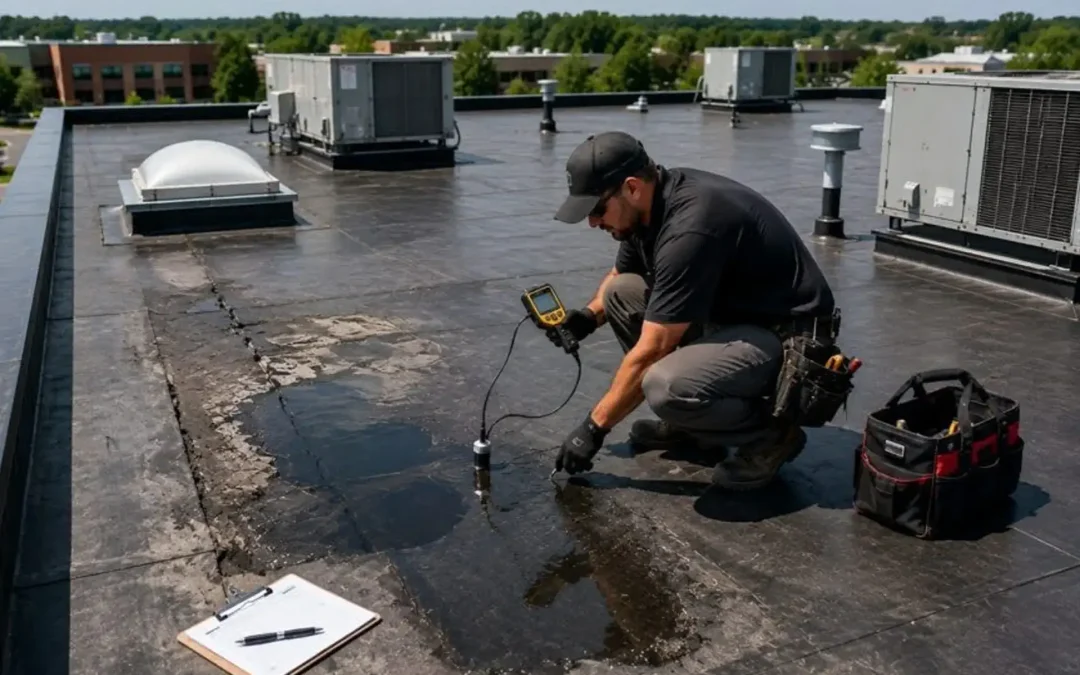
Moisture problems inside commercial buildings are not always easy to recognize. Water can enter through small openings in exterior walls, roof assemblies, foundation joints, and poorly sealed building components. Sometimes, the damage develops behind drywall, beneath flooring, or inside concrete structures long before visible signs appear. This makes identifying the original source of moisture just as important as recognizing the damage itself. Commercial waterproofing contractors Brooklyn property owners work with a combination of building inspections, moisture detection equipment, material assessments, and water intrusion testing to investigate these issues. Understanding how this process works helps building owners recognize potential problems before moisture affects structural materials, indoor conditions, and daily operations.
Hidden Moisture Problems in Commercial Buildings
Hidden moisture refers to water or excessive dampness accumulating in building materials or enclosed spaces without obvious surface evidence. It can develop inside wall cavities, under floor coverings, around structural joints, and behind exterior finishes. Unlike a visible leak, hidden moisture may spread gradually through porous materials. Concrete, brick, wood, and insulation can retain water for extended periods. Over time, this creates conditions that contribute to material deterioration, corrosion, mold growth, and reduced building performance.
Why Moisture Problems Often Go Unnoticed
Commercial properties contain multiple interconnected building systems. A small opening in an exterior wall can allow rainwater to travel through insulation or framing before appearing somewhere else. For example, a roof leak may cause a ceiling stain several feet away from the actual entry point. Water can also accumulate behind finished surfaces without immediately changing their appearance. Because visible damage does not always develop directly below the source, identifying moisture requires more than examining the affected area.
Common Sources of Hidden Moisture
Several building components can contribute to concealed water accumulation. Common sources include deteriorated roof membranes, cracked masonry joints, damaged flashing, poorly sealed windows, foundation cracks, plumbing connections, and inadequate drainage. Another possibility is condensation caused by differences between indoor and outdoor temperatures. These sources create different moisture patterns, so contractors need to investigate the surrounding building components rather than assume every damp area comes from an exterior leak.
Early Warning Signs of Hidden Moisture
Hidden water damage may produce subtle changes before becoming visually obvious. Commercial building managers should pay attention to recurring stains, unusual odors, peeling finishes, loose flooring, and unexplained increases in indoor humidity. One isolated sign does not automatically confirm water intrusion, but several symptoms appearing in the same area can indicate a moisture-related problem.
Changes in Walls, Ceilings, and Flooring
Walls and ceilings sometimes develop discoloration, bubbling paint, soft patches, or uneven surfaces when moisture accumulates behind them. Flooring can also reveal problems through lifting tiles, separating seams, warped wood, or changes in surface texture. In commercial buildings, these symptoms may appear near windows, exterior walls, mechanical rooms, bathrooms, and roof-level ceilings. The location and pattern of deterioration can provide useful clues about where an investigation should begin.
Musty Odors and Indoor Humidity
A persistent musty smell can indicate moisture accumulation in concealed spaces, particularly when it continues after routine cleaning. Damp insulation, wall cavities, ceiling spaces, and flooring assemblies may retain moisture and contribute to unpleasant indoor conditions. Elevated indoor humidity can also encourage condensation on cooler surfaces. However, odors and humidity readings alone cannot establish the exact source, so they should be evaluated alongside other inspection findings.
Paint, Plaster, and Material Deterioration
Paint and plaster often react when moisture enters the materials beneath them. Paint may blister, crack, or separate from the surface, while plaster can soften and lose its original strength. Masonry may develop white mineral deposits known as efflorescence. These deposits form when water carries dissolved salts through porous materials and evaporates at the surface. Such changes can help contractors identify areas that require closer examination.
How Commercial Waterproofing Contractors Investigate Moisture
A thorough moisture investigation usually begins with understanding the building, its construction, and the history of the affected areas. Contractors look for relationships between visible symptoms, exterior exposure, drainage conditions, and building materials. Rather than immediately treating a stain or damp surface, the objective is to determine how moisture entered, where it traveled, and what conditions allowed it to accumulate.
Reviewing Building History and Previous Water Damage
Previous leaks, repairs, renovations, and maintenance records can provide valuable information. Contractors may review when the problem first appeared, whether it becomes worse after rainfall, and whether previous repairs temporarily improved the condition. For example, recurring ceiling discoloration after heavy rain may suggest an unresolved roof or flashing issue. Reviewing this history helps narrow down possible sources and prevents investigators from overlooking earlier damage.
Inspecting Exterior Walls and Building Envelopes
The building envelope separates indoor spaces from outdoor environmental conditions. It includes exterior walls, windows, doors, roofing connections, sealants, and other protective components. Contractors inspect these areas for cracked joints, deteriorated caulking, damaged flashing, open penetrations, and gaps around building connections. In masonry buildings, they may also examine mortar joints and cracks that allow rainwater to enter. Even small defects can become significant moisture pathways when exposed to repeated rainfall.
Examining Roofs and Drainage Systems
Roof inspections focus on the condition of waterproofing membranes, flashing, seams, penetrations, and drainage points. Standing water around drains or low sections of a roof may indicate drainage problems. Contractors also examine gutters, downspouts, roof edges, and connections between different roof sections. Water entering through these areas can travel along structural components before becoming visible inside the building. Understanding how roof drainage works is therefore essential when investigating unexplained interior moisture.
Moisture Detection Tools and Testing Methods
Visual inspections are useful, but they cannot reveal every concealed moisture problem. Contractors often use specialized instruments to evaluate dampness within building materials and identify unusual temperature or humidity patterns. Different tools provide different types of information, and their readings must be interpreted according to the material being tested.
Using Digital Moisture Meters
Moisture meters help estimate the amount of moisture present in certain building materials. Pin-type meters use small probes to measure electrical resistance between contact points, while pinless meters use electromagnetic signals to assess moisture conditions without making holes in the surface. Contractors may compare readings from visibly affected areas with readings from nearby dry areas. This comparison helps identify unusual moisture concentrations in drywall, wood, and other suitable materials.
Infrared Thermal Imaging
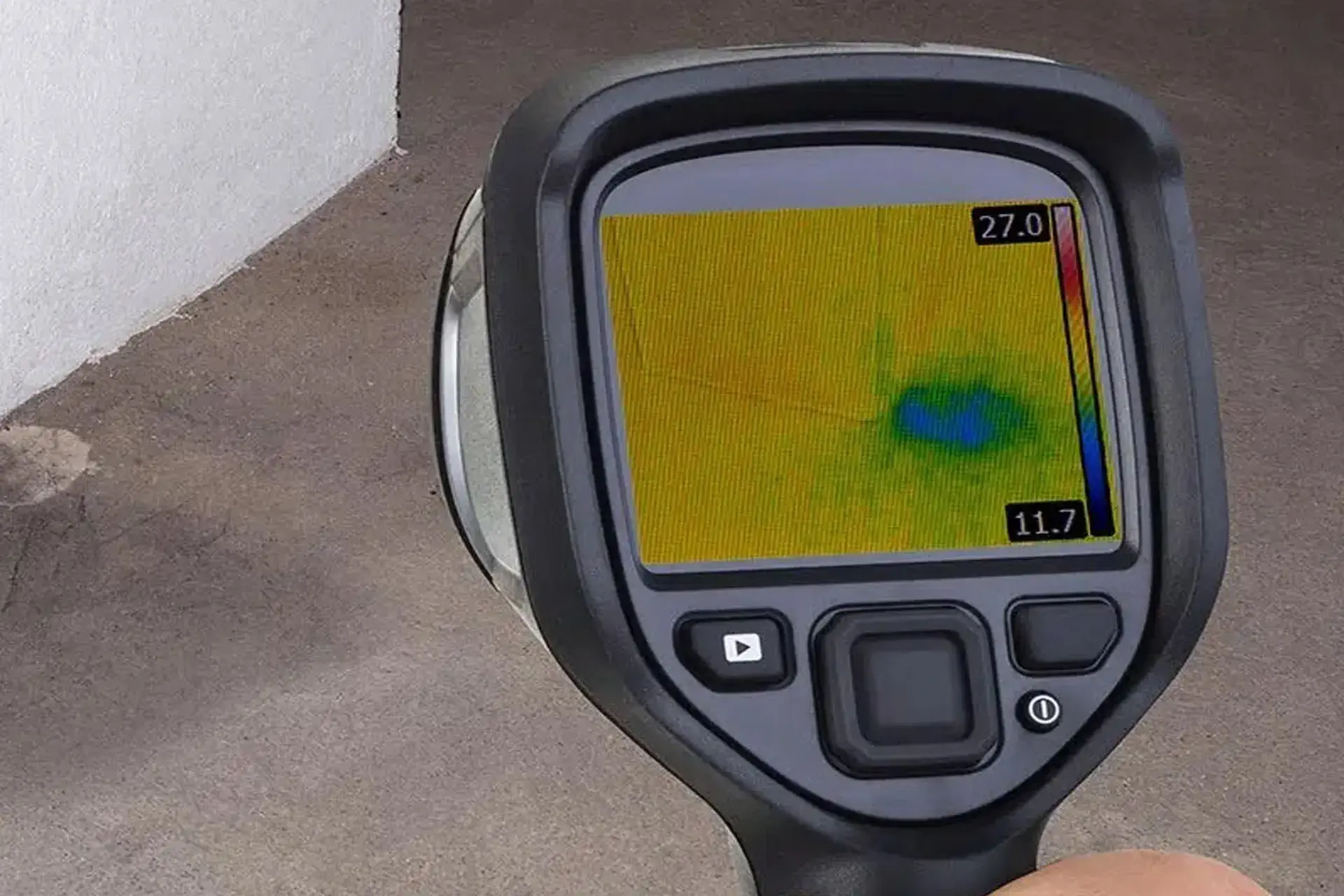
Infrared cameras detect differences in surface temperatures and display them as thermal patterns. Because wet materials can sometimes behave differently from dry materials as they absorb and release heat, thermal imaging may help identify areas that deserve further investigation. For example, an unusual temperature pattern around a ceiling or exterior wall could indicate concealed moisture. However, infrared imaging does not directly measure water content. Temperature differences can also result from insulation gaps, air leakage, or mechanical systems, so additional testing is necessary.
Relative Humidity and Moisture Mapping
Humidity testing helps contractors understand moisture conditions within indoor spaces and enclosed building cavities. Relative humidity describes the amount of water vapor in the air compared with the maximum amount the air can hold at a particular temperature. Contractors may use humidity sensors or data loggers to monitor changing conditions over time. Moisture mapping involves recording readings across different locations to identify concentrated damp areas and compare them with surrounding materials.
Moisture Readings
A single moisture reading rarely tells the complete story. Material type, temperature, surface conditions, and instrument calibration can influence the results. For example, a moisture meter reading on concrete cannot always be interpreted using the same expectations as a reading on wood. Contractors therefore compare similar materials, consider environmental conditions, and look for consistent patterns rather than relying on one isolated measurement.
Controlled Water Testing
When visual inspections and instrument readings do not identify the source, controlled water testing may help investigate suspected entry points. Contractors apply water to specific exterior sections under carefully managed conditions while monitoring the interior for signs of intrusion. Testing may focus on window assemblies, wall joints, flashing, or other vulnerable connections. Isolating individual sections makes it easier to determine which component is allowing water through. Uncontrolled testing can create misleading results or introduce additional moisture, so the procedure requires care.
Identifying Moisture Behind Walls and Below Floors
Some of the most difficult moisture problems develop in areas that are covered by finished construction materials. Drywall, flooring, insulation, and decorative finishes can conceal damp conditions. When evidence suggests moisture is trapped inside these assemblies, contractors may recommend more targeted investigation.
Detecting Water Intrusion Inside Wall Cavities
Wall cavities can retain moisture when rainwater passes through exterior masonry, window connections, or damaged sealants. Contractors may use moisture meters, thermal imaging, and humidity probes to investigate suspicious areas. If non-invasive methods cannot provide enough information, a small inspection opening may be necessary. This allows the condition of insulation, framing, and concealed surfaces to be examined directly.
Investigating Moisture Beneath Concrete Slabs
Moisture beneath concrete flooring can originate from ground moisture, plumbing leaks, inadequate vapor barriers, or water entering through foundation joints. Contractors may investigate slab conditions using appropriate moisture testing methods, including in-situ relative humidity testing when flooring-related conditions require it. These tests help assess moisture within the concrete rather than relying only on its surface appearance. This distinction matters because floor coverings and adhesives can be affected by moisture that is not immediately visible.
How Building Materials Reveal Hidden Water Damage
Different construction materials absorb, retain, and transfer moisture in different ways. Understanding these characteristics helps contractors interpret inspection findings and determine which building components may be affected.
Concrete, Masonry, and Brick Absorption
Concrete, brick, and mortar contain pores that can absorb water. When these materials remain exposed to repeated moisture, water may move through connected pores and small cracks. Freeze-thaw cycles can also contribute to deterioration when absorbed water freezes and expands. Contractors examine surface conditions, joints, cracks, and moisture patterns to understand whether water is entering through the masonry assembly or migrating from another source.
Wood Framing and Insulation
Wood framing can absorb moisture, which may contribute to swelling, deterioration, and fungal growth when damp conditions persist. Insulation can also become wet and lose some of its intended thermal performance, depending on its material and condition. During an investigation, contractors may examine accessible framing, insulation, and surrounding surfaces for staining, softness, deformation, or elevated moisture readings.
Determining the Original Source of Moisture
Finding a damp area is only one part of a successful investigation. Contractors must also determine why moisture is present. This involves comparing inspection results, environmental conditions, building details, and possible water pathways. Treating only the visible damage without addressing its source can allow the same problem to return.
Distinguishing Condensation From Water Intrusion
Condensation and water intrusion can produce similar symptoms, but they develop differently. Condensation occurs when moist air contacts a surface that is cold enough for water vapor to turn into liquid. Water intrusion occurs when liquid water enters through defects or vulnerable building components. Contractors may examine surface temperatures, indoor humidity, ventilation, weather conditions, and the location of dampness to distinguish between these possibilities.
Tracking Moisture Migration
Water does not always follow a straight path through a building. It can move through cracks, porous masonry, insulation, joints, and gaps between structural components. A leak originating near a roof connection might eventually appear inside a wall or ceiling far from its entry point. Contractors compare moisture readings across connected areas and examine building details to understand these pathways. This helps separate the location of visible damage from the actual source of water entry.
Why Accurate Moisture Diagnosis Matters
Accurate diagnosis helps building owners understand the extent and cause of moisture-related deterioration. Without it, repairs may focus on damaged finishes while leaving the underlying water pathway untouched. Continued moisture exposure can affect structural materials, interior finishes, insulation, and indoor environmental conditions. A proper investigation also helps determine whether the problem involves the roof, exterior walls, foundation, drainage, plumbing, or indoor humidity. This information supports more appropriate repair decisions and reduces the likelihood of recurring damage.
How Brooklyn’s Commercial Buildings Can Develop Moisture Problems
Commercial buildings throughout Brooklyn experience changing weather conditions, rainfall, temperature fluctuations, and seasonal humidity. Older masonry structures may have deteriorated mortar joints, aging sealants, and previous repairs that no longer provide reliable protection. Newer buildings can also experience moisture issues around windows, roof penetrations, balconies, and connections between different construction materials. In densely developed areas, drainage conditions and neighboring structures may further complicate water movement. For commercial waterproofing contractors in Brooklyn property investigations, understanding the building’s construction type and environmental exposure is an important part of identifying concealed moisture. Zavza Seal LLC is a business name associated with this local waterproofing topic, and its inclusion here reflects the Brooklyn commercial building context rather than a substitute for the technical investigation described above.
Zavza Seal LLC Serving the Midwood Community and Beyond in Brooklyn
Zavza Seal LLC is dedicated to serving the diverse needs of the local community of Brooklyn, including individuals residing in neighbourhoods like Midwood. With its convenient location near landmarks such as the Midwood Branch Brooklyn Public Library and major intersections like E 16th St and Avenue I (coordinates: 40.6269516, -73.9608815), we offer commercial waterproofing contractors.
Get commercial waterproofing contractors services at Midwood Now
Call Us or Contact Us: (718) 957-0334
Navigate from Midwood to Zavza Seal LLC Now
Hidden moisture problems can develop long before a commercial building shows obvious signs of water damage. Identifying them requires a combination of visual inspections, moisture measurements, thermal imaging, humidity testing, and a careful examination of building materials and water pathways. The most important part of the process is determining the original source rather than concentrating only on the visible symptoms. When commercial property owners understand how moisture behaves inside walls, roofs, foundations, and flooring assemblies, they can make better-informed decisions about building maintenance and long-term protection.
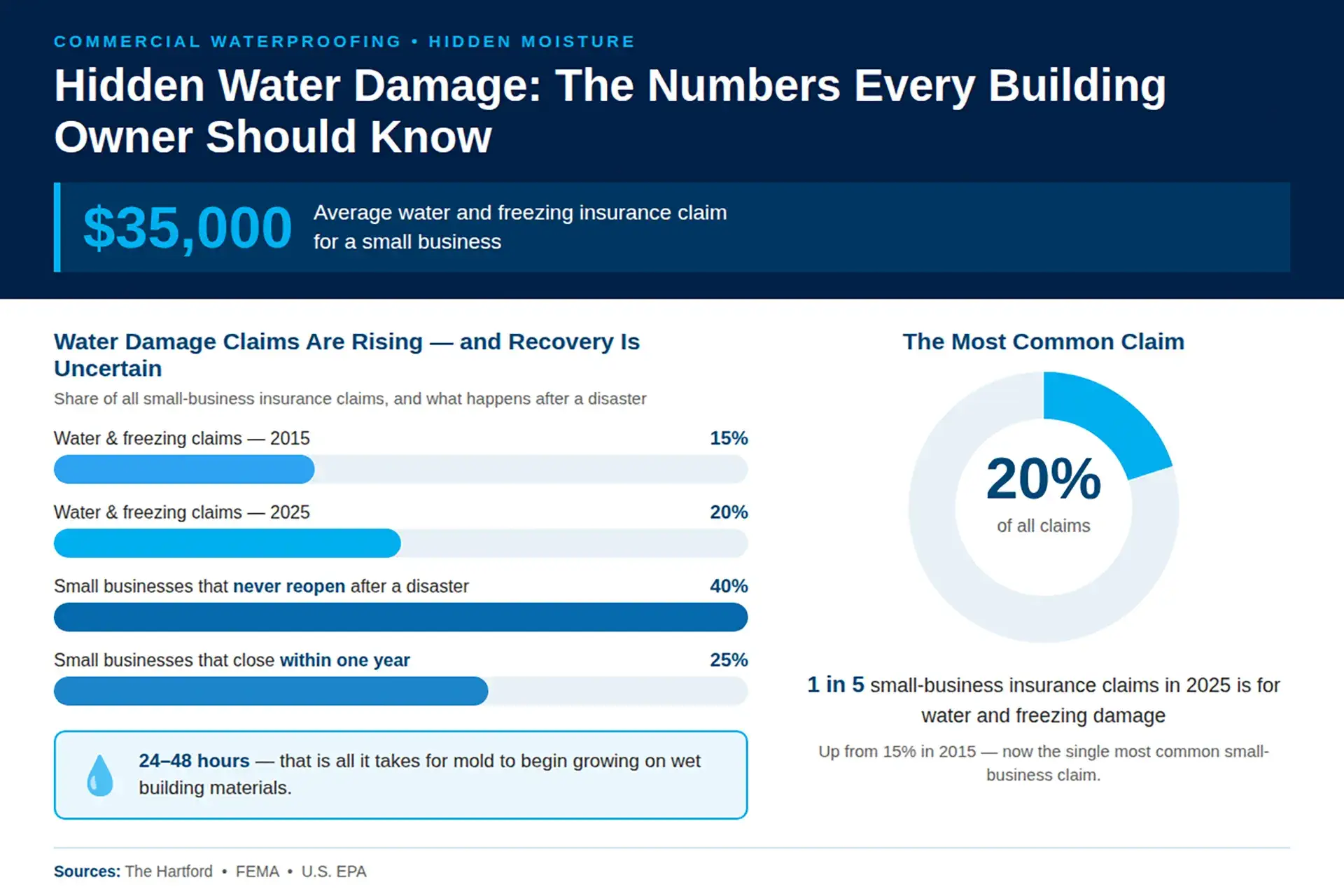
- Water and freezing damage is now the most common small-business insurance claim, about 20 percent of all small-business claims in 2025, up from 15 percent in 2015.
- The average water and freezing claim for a small business is about $35,000.
- Roughly 40 percent of small businesses never reopen after a disaster, and another 25 percent close within one year.
- Mold can begin growing on wet building materials within 24 to 48 hours.
Frequently Asked Questions
How can contractors detect moisture behind commercial building walls?
Contractors use moisture meters, infrared thermal imaging, humidity probes, and targeted inspection openings to investigate concealed areas. Combining these methods helps identify damp materials and narrow down potential water entry points.
Can infrared cameras detect hidden water leaks?
Infrared cameras can identify temperature differences that may be associated with moisture. However, they do not directly detect water. Additional moisture measurements and physical inspections are needed to confirm whether the unusual temperature pattern is related to water intrusion.
What causes moisture to accumulate beneath commercial flooring?
Common causes include moisture moving through concrete slabs, plumbing leaks, groundwater conditions, inadequate vapor barriers, and water entering through foundation connections. Testing the concrete and examining surrounding conditions can help determine the cause.
How do contractors distinguish condensation from a waterproofing problem?
They evaluate indoor humidity, surface temperatures, ventilation, weather exposure, and the location of damp areas. Condensation generally develops when moist air contacts a sufficiently cold surface, while water intrusion involves liquid water entering through a building component or opening.
Why should commercial buildings be inspected for hidden moisture even without visible leaks?
Moisture can remain trapped inside walls, insulation, flooring, and concrete without producing immediate surface damage. Early investigation can reveal developing problems before they contribute to more extensive material deterioration or indoor environmental concerns.