
Homeowners in older Long Island homes often deal with cold floors, musty smells, moisture problems, and rising energy bills without realizing the crawl space and attic may be the source of the problem. That was the case for this home in West Hempstead, NY.
The homeowner contacted Zavza Seal after noticing uncomfortable indoor temperatures, signs of moisture in the crawl space, and concerns about insulation performance throughout the home. After a full inspection, our team found several areas where air leakage, poor insulation, and crawl space moisture were affecting both comfort and energy efficiency.
Our solution focused on attic insulation, crawl space air sealing, spray foam insulation, and full crawl space encapsulation to create a cleaner, healthier, and more energy-efficient home.
The Problem
During our inspection, we identified multiple issues affecting the property:
- The attic had insufficient insulation and several areas allowing air leakage.
- The crawl space ceiling joists had old batt insulation that was no longer effective.
- Moisture and visible mold concerns were present inside the crawl space.
- The crawl space floor and walls were exposed, allowing moisture and soil gases to enter the home.
- The rim joist areas were poorly sealed, contributing to drafts and heat loss.
These problems are very common in older homes across Long Island. When crawl spaces and attics are not properly insulated and sealed, homes lose energy quickly and become more vulnerable to moisture damage and poor indoor air quality.
Our Solution
Attic Spray Foam Insulation
Our team insulated approximately 462 square feet of attic roof rafters using closed-cell spray foam insulation.
Before insulation began, we treated the attic areas with an environmentally friendly disinfectant designed to remove mold and mildew while helping repel rodents. The treatment is non-flammable, low-toxicity, odorless, and safe for indoor environments.
We then installed 5 inches of closed-cell spray foam insulation to achieve an approximate R-value of 35. We also insulated behind all five attic doors to help reduce additional air leakage points.
This upgrade helps improve indoor comfort while reducing heating and cooling loss throughout the year.
Crawl Space Rim Joist Air Sealing
Inside the basement crawl space, our team removed old batt insulation from the ceiling joists and properly disposed of all materials.
We then air-sealed approximately 56 linear feet of rim joist areas using heavy-duty flexible foam insulation. Proper rim joist sealing is important because these areas are one of the most common sources of outside air penetration in homes.
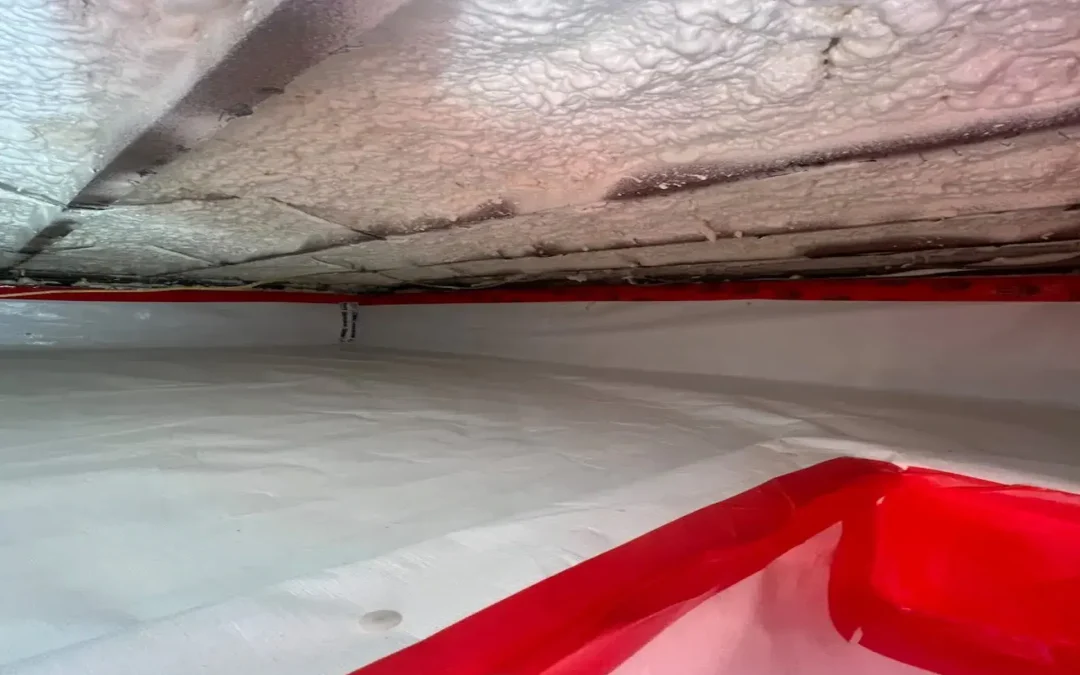
After sealing the perimeter, we installed closed-cell spray foam insulation to strengthen thermal protection and moisture resistance.
Crawl Space Ceiling Joist Insulation
The crawl space ceiling joists were prepared and insulated with closed-cell spray foam insulation at a depth of 5 inches.
This helped create a stronger thermal barrier underneath the home while improving energy efficiency and reducing cold floor issues during winter months.
Full Crawl Space Encapsulation
One of the biggest parts of this project was the crawl space encapsulation system.
Before installation, our team cleaned debris, removed spider webs, and treated visible mold growth using mold-killing agents and fungicide solutions.
We then installed a heavy-duty 20-mil crawl space vapor barrier across both the floor and foundation walls. The reinforced membrane was carefully secured to help block ground moisture and reduce the risk of humidity buildup inside the crawl space.
For future termite inspections, we intentionally left a 3-inch inspection gap at the top of the foundation walls.
We also insulated the crawl space access door using SealTech R-18 insulation for additional thermal protection.
Encapsulation systems like this help reduce moisture, improve indoor air quality, and protect the structure from long-term humidity exposure.
The Final Result
After the project was completed, the homeowner immediately noticed improved indoor comfort and reduced drafts throughout the house. The crawl space became cleaner, drier, and significantly better protected against moisture issues.
By combining spray foam insulation, air sealing, and crawl space encapsulation, the home now has:
- Better energy efficiency
- Improved moisture control
- Reduced air leakage
- Cleaner crawl space conditions
- Improved year-round indoor comfort
This West Hempstead project is a strong example of how properly sealing and insulating hidden areas of a home can make a major difference in both comfort and long-term property protection.
Why Long Island Homeowners Choose Zavza Seal
Zavza Seal works with homeowners across Long Island and NYC to solve crawl space, insulation, waterproofing, and moisture problems using long-term solutions tailored to each property.
Our team focuses on honest inspections, quality workmanship, and practical solutions designed for older homes throughout the region.