

Many people search for French drain installation costs because they’re seeing water pooling in the yard, damp basement walls, or moisture where it doesn’t belong. A French drain is one of the most effective ways to move water away from a structure, and understanding the cost of a French drain helps you plan the right solution before a minor issue becomes a major repair.
In this guide, you’ll learn the real French drain cost, average cost per linear foot, the different types of drainage systems, and the factors that affect pricing. The goal is to make things simple, clear, and practical, so that if you’ve been thinking about having a French drain installed, you’ll know what to expect and be able to make informed decisions.
We’ll also be sharing a case study with you of a French drain install by Zavza Seal, so you can know that we’re qualified to be writing this piece, and so anyone in Long Island, Brooklyn, Queens, and The Bronx will know who to call on for the highest quality work and honest pricing.
Now let’s get started!
Thinking About Installing a French Drain for Your New York Home or Business? Let’s Meet Up and Talk About It! Schedule Your Free Quote Now!
Benefits of French Drains
The benefits of French drains extend far beyond basic water control. A properly designed system protects structures, reduces moisture problems, and keeps lower-level spaces stable and dry. French drains are installed because they:
- Prevent Basement and Crawl Space Flooding: Channel groundwater away from vulnerable areas.
- Relieve Hydrostatic Pressure: Reduce hydrostatic pressure against foundation walls that can lead to cracking or movement.
- Protect Foundations: Limit long-term moisture exposure.
- Reduce Mold and Moisture Issues: Keep water away from slabs, walls, and lower-level living spaces.
- Improve Yard Usability: Eliminate standing water, soggy soil, and erosion.
- Support Commercial Properties with Heavy Water Flow: Provide reliable groundwater control during storms or high-water events.
These drainage benefits explain why pricing varies from project to project. Soil conditions, slopes, water volume, and waterproofing needs all influence the final French drain cost. The more water that needs to be managed, and the more protection required, the more specialized the system must be.
Factors That Affect French Drain Installation Cost
A few key variables determine what you’ll pay for a drainage system:
- Linear Footage Required: Longer runs increase both materials and labor.
- Depth of Excavation: Deeper trenches require more time, equipment, and backfill.
- Soil Conditions: Clay is harder and slower to dig than sand or loam, raising excavation cost.
- Access Issues: Tight yards, narrow crawl spaces, and obstacles like patios increase labor time.
- Material Upgrades: Heavy-duty pipe, premium gravel, or advanced fabric liners cost more but add durability.
- Labor Market Differences: Certain regions, including parts of the Northeast, have higher professional labor rates.
These drainage cost factors explain why projects with similar lengths may still land in different price ranges.
French Drain Installation Cost
The cost of installing a French drain can vary widely because every property handles water differently. French drain installation cost depends on the project location, drainage length, trench depth, soil conditions, materials, and whether the system is installed inside or outside the structure.
This section breaks down French drain installation cost so you can see where your project might fall.
French Drain Cost Per Linear Foot
Below is a simple, non-intimidating guide to drainage cost per linear foot based on common installation types.
| Installation Type | Typical Depth | Cost Per Linear Foot | Notes |
|---|---|---|---|
| Yard/Landscape French Drain | 8–18 in | $25–$60/LF | Easiest installation; no concrete removal |
| Patio/Hardscape French Drain | 10–20 in | $45–$85/LF | Requires lifting pavers or cutting concrete |
| Basement Interior French Drain | 18–24 in | $60–$120/LF | Includes trenching and sump pump connection |
| Crawl Space French Drain | 12–18 in | $40–$75/LF | Tight access increases labor |
| Commercial Perimeter Drainage | 24+ in | $80–$150/LF | Heavy machinery + large-scale trenching |
Important Notes:
- Deeper excavations naturally increase cost.
- Tight spaces, hard soil, or obstacles (HVAC lines, utilities, landscaping) can shift pricing within the ranges.
- These numbers give a general starting point, actual project cost depends on field conditions and water volume.
French Drain Installation Cost by Location & Project Type
French drain cost changes significantly depending on where the system is installed and the purpose it serves. As shown in the table above, different project types require different depths, materials, and labor processes. A small yard drain may only need shallow trenching, while basement waterproofing or perimeter drain installation involves deeper excavation, debris removal, sump pump tie-ins, and waterproofing membranes.
Below is a clear breakdown of common drainage categories and why each lands at a different price point. This keeps expectations simple and helps you understand where your project fits.
Patio French Drain Installation Cost
Patio drainage is one of the most frequently requested services, especially when water pools near pavers, settles against the foundation, or freezes in colder months. Installing a French drain around a patio often involves:
- Lifting pavers or stonework
- Cutting into concrete slabs when needed
- Correcting slopes to ensure proper flow
- Working in limited-access areas that slow excavation
Because of this extra labor, patio drain installations usually range from $1,500 to $6,000+, depending on the patio size and how much material needs to be removed and reset. The linear-foot pricing is already outlined in the table above, so this range reflects real-world project totals rather than overwhelming the reader with repeated numbers.
This type of drainage is one of the most impactful upgrades for outdoor areas that stay wet or unusable after storms.
Crawl Space French Drain Installation Cost
Most crawl space drainage projects fall between $2,000 and $8,000, depending on square footage, access height, and how much trenching is required around the interior perimeter. Tight crawl spaces take longer to work in, which pushes costs higher within the range. By tying the drain directly into a sump basin, the system keeps moisture moving out of the structure and maintains long-term stability.
Basement French Drain Installation Cost
Typical project costs range from $4,000 to $15,000+, depending on the size of the basement and how much concrete must be cut and replaced. Interior drains handle subsurface water before it reaches the finished space, making them a reliable choice for long-term moisture control without requiring exterior excavation.
Exterior Perimeter French Drain Installation Cost
Most exterior perimeter drainage installations range from $6,000 to $20,000+, depending on the length of the perimeter, excavation depth, and how difficult the soil is to open and compact again. These systems manage groundwater before it ever reaches the foundation, making them a strong choice when perimeter flooding or heavy saturation are ongoing issues.
Commercial French Drain Installation Cost
Commercial drainage projects involve heavier equipment, longer trench runs, and larger volumes of water moving across the property. Parking lots, multi-building facilities, and industrial sites often require perimeter water management that’s customized to the layout and expected flow rate.
Because project scopes vary widely, commercial French drain cost ranges are broader. Many installations begin around $10,000 and extend well beyond that depending on trench depth, machinery requirements, and system length. For this reason, commercial drainage installation is almost always quoted case-by-case after evaluating site conditions.
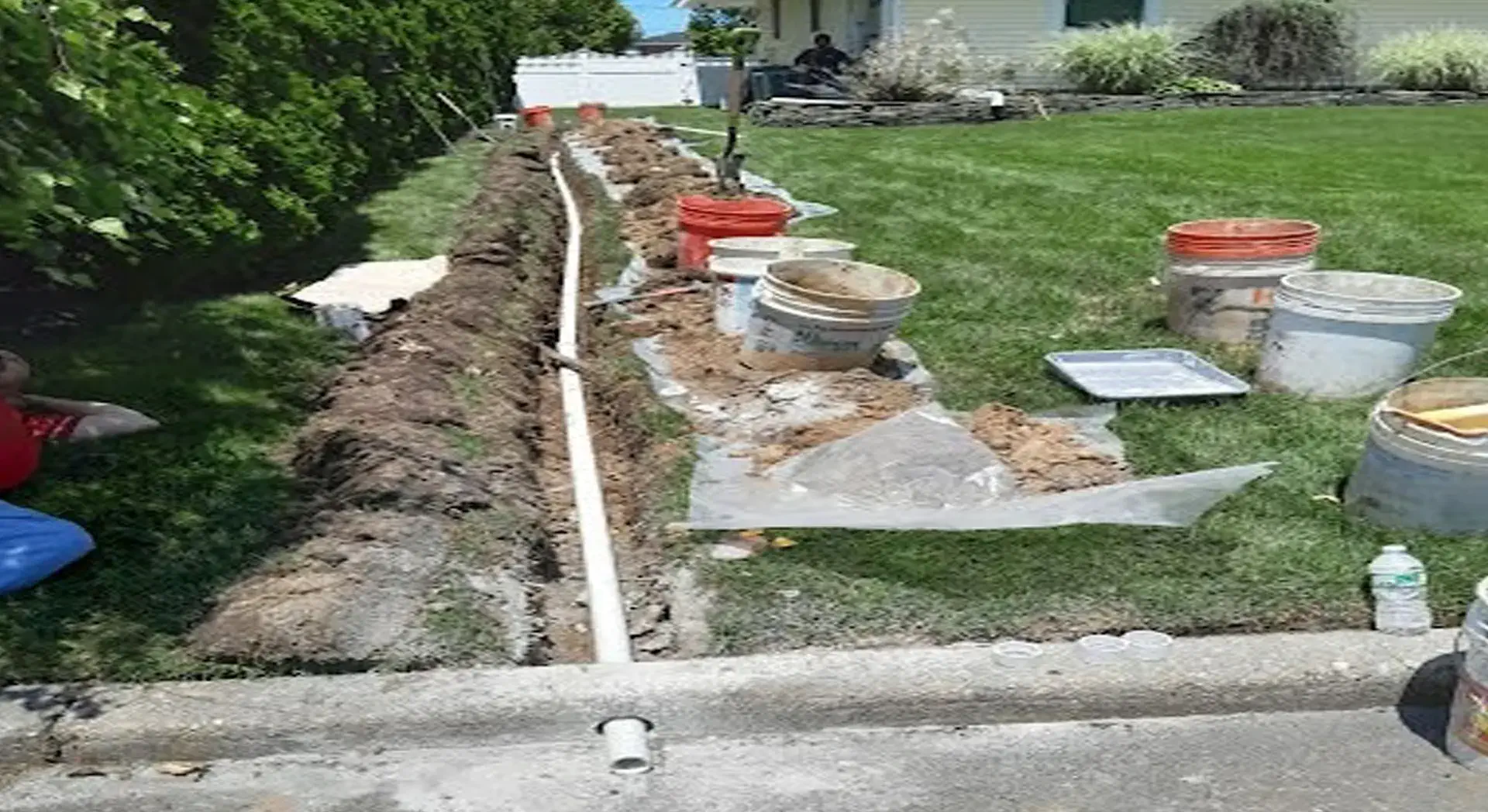
Case Study: Retaining Wall Waterproofing & Drainage Correction in West Sayville, NY
A homeowner in West Sayville contacted Zavza Seal after months of persistent water intrusion around their basement stairwell retaining walls. Their existing drainage setup wasn’t carrying water far enough from the home, causing seepage through both sides of the cinder block walls and visible staining. The homeowner removed sections of stucco trying to locate the source but the leaks continued, signaling deeper moisture issues and rising hydrostatic pressure.
Our team conducted a full evaluation and installed a comprehensive solution: extending the sump ejector line to the street, integrating a new solid PVC discharge route, excavating and waterproofing both retaining walls, applying reinforced waterproofing cement, installing a dimpled drainage membrane, and adding a perforated pressure-relief pipe tied into the existing sump pump. After restoring the stucco and grading the soil, the walls are now dry, protected, and structurally relieved. The homeowner now has a reliable drainage system and long-term waterproofing security.
How to Choose the Right French Drain System for Your Home
Different drainage issues require different approaches. Here’s a simple way to match the problem with the correct solution, without repeating cost or benefits already covered:
- Yard Flooding or Soggy Soil: Choose a landscape French drain to move water through the yard.
- Moisture or Standing Water in the Crawl Space: An interior crawl space drain tied to a sump keeps the area dry.
- Basement Leaks or Groundwater Seepage: An interior French drain is the most common and effective solution.
- Water Pushing Against the Foundation From Outside: An exterior perimeter system manages groundwater before it reaches the structure.
These quick paths help users feel confident about which direction to explore before requesting an estimate.
When to Consider a French Drain vs. Other Drainage Solutions
French drains are designed for groundwater and subsurface moisture. They differ from other drainage methods that handle surface water only. Here’s a simple comparison:
- Trench Drains: Best for driveway or patio surface water, not groundwater.
- Gutters and Downspout Extensions: Move roof water away from the foundation but cannot address rising groundwater.
- Grading Adjustments: Useful for surface runoff but not enough for properties with saturation issues.
- Sump Pumps: Remove collected water; often paired with French drains rather than used alone.
When the issue is water beneath the surface, seeping, soaking, or pushing inward, a French drain is typically the most reliable solution.
French Drain Installation Cost: Final Thoughts
French drain pricing varies because every property handles water differently, but the value remains consistent: a well-installed drainage system protects the foundation, prevents chronic moisture, and stops recurring structural damage. Many people choose to invest in French drains because they want long-term protection, not just a short-term fix.
A drainage system isn’t cosmetic, it’s a structural safeguard. When designed correctly, it solves problems that would otherwise continue year after year.
Schedule Your French Drain Cost Estimate Today!
Frequently Asked Questions About French Drain Installation Cost
How do I know if I actually need a French drain or if something cheaper will fix my problem?
The clearest sign you need a French drain is when water is coming from below the surface, not across the top of the yard. If you’re noticing damp basement walls, water seeping through cinder blocks, constant yard saturation, or moisture that returns even after rain stops, the issue is groundwater, not surface runoff. In those cases, grading, gutters, or downspout extensions won’t fully solve the problem. A French drain is recommended when you want a long-term solution that prevents recurring moisture instead of applying temporary fixes.
What’s the difference between a French drain and a trench drain?
A trench drain manages surface water, such as driveway runoff, patio puddling, or standing water on concrete. A French drain, on the other hand, manages groundwater. It captures water below the surface and redirects it away from the home before it can pressurize or saturate the structure. The two systems solve different problems, and choosing the right one ensures you don’t overspend on the wrong solution.
How long does a French drain last?
A properly designed and professionally installed French drain can last 20-30+ years. Longevity depends heavily on materials: high-quality perforated pipe, clean angular gravel, and a premium geotextile fabric lining significantly extend the lifespan. Poorly installed systems, or drains built without fabric or correct slope, often clog within a few years, which is why professional installation is important.
Do French drains actually stop foundation cracks and bowing?
Yes. One of the core purposes of a French drain is to relieve hydrostatic pressure, the force of water pushing inward on foundation walls. Without pressure relief, walls begin to bow, crack, or shift. A French drain prevents that by giving groundwater somewhere else to go, protecting the structure from the stress that causes long-term damage.
Can a French drain fix basement mold problems?
If mold is caused by moisture wicking through walls, floors, or the foundation, a French drain can be one of the most effective long-term solutions. By removing the moisture source, it dramatically reduces conditions that allow mold to form. Pairing the drainage system with a dehumidifier or basement waterproofing ensures a complete fix, especially in humid areas like Long Island and coastal NYC.
How much of my yard or basement will be disturbed during installation?
Yard French drains leave a temporary trench line where grass and soil are removed, then restored after installation. Patio and hardscape drains may require lifting pavers or cutting concrete, but all materials are reset once the system is complete. Interior basement drains require cutting a narrow channel around the perimeter of the floor, replacing the concrete afterward. While some disruption is unavoidable, professional crews keep the work area as clean and organized as possible and restore surfaces when finished.
What’s included in a professional French drain installation quote?
A comprehensive quote typically includes excavation, disposal of soil or debris, perforated pipe, gravel, geotextile fabric, slope calibration, sump pump tie-ins (if needed), waterproofing components, and restoration of the work area. Clear quotes help homeowners understand exactly what they’re paying for and prevent unexpected costs after the job begins.
How long does French drain installation take?
Most yard French drains are completed in 1–2 days.
Interior basement drains often take 2–4 days, depending on trench length and concrete work.
Commercial systems vary due to scale and equipment needs.
Weather, soil conditions, and site access also influence the timeline, but most residential projects finish quickly.
Will a French drain increase my home’s value or help with resale?
Yes. Home inspectors and buyers place significant importance on moisture management and foundation health. A French drain protects the structure, reduces future repair risks, and often prevents costly issues that would appear on an inspection report. For many homeowners, it’s not just a functional upgrade, it’s a resale advantage.
Are permits required for French drain installation in New York?
Permit requirements vary by township, but exterior perimeter drainage systems often require site review and approval, especially if drainage ties into municipal systems or discharges near public property. Interior drains typically do not require permits. At Zavza Seal, we handle all permit research and documentation to ensure compliance before work begins.
Can French drains freeze in winter on Long Island or the Northeast?
French drains are installed below the frost line, which prevents the drainage pipe from freezing. When properly sloped and backfilled, water continues to move even during cold months. Issues arise only when drains are installed too shallow or without proper grading; another reason professional layout matters in Northeast climates.
Can I install a French drain myself to save money?
DIY installations are possible, but they’re also the most common cause of drainage failure. Mistakes usually come from incorrect slope, lack of fabric lining, improper gravel selection, or shallow trench depth. While a self-installed drain may work temporarily, professionally installed systems are designed to last decades and handle heavy groundwater loads without clogging.
How soon will I notice results after the drain is installed?
Most homeowners see results immediately during the next rainfall. Interior moisture, damp walls, and crawl space humidity levels typically improve within days. Exterior yard drains noticeably reduce pooling, soggy soil, and standing water almost right away.
What maintenance does a French drain require?
French drains require very minimal maintenance. The main task is ensuring the discharge point remains clear of debris, mulch, and soil. Gutters and downspouts should also be kept clean so the system isn’t taking on unnecessary extra water. Beyond that, well-installed drains function on their own without annual servicing.
What financing or payment options are available?
French drains are an investment in long-term structural protection, so many homeowners choose to finance the project. Zavza Seal offers flexible, low-stress financing options to help make drainage upgrades affordable.