
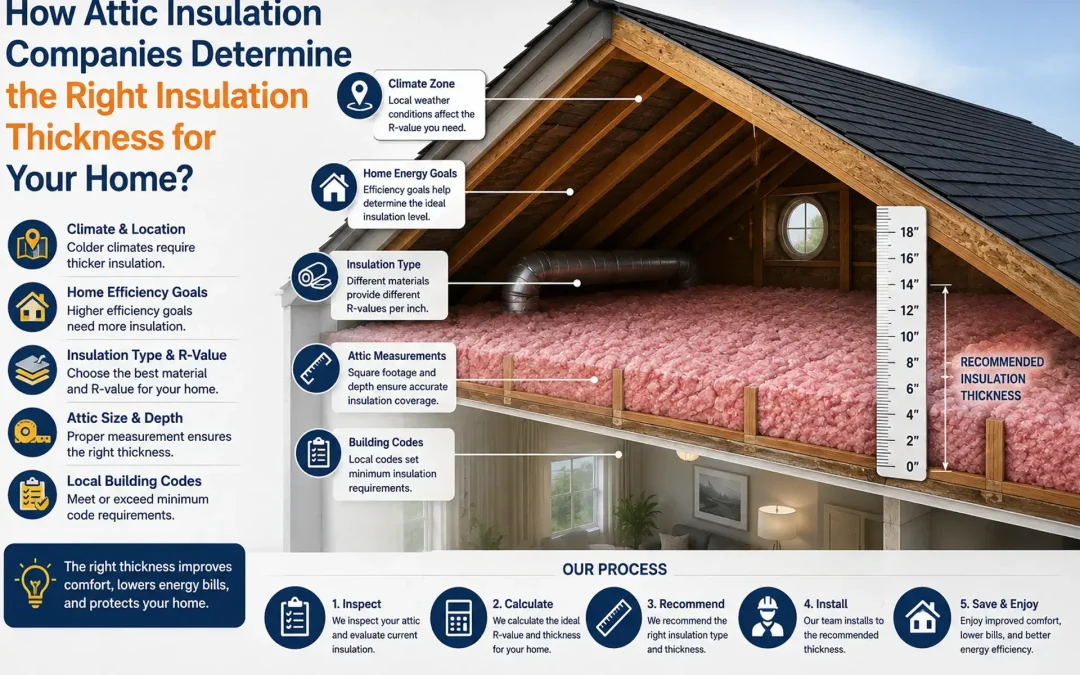
When homeowners think about attic insulation, the first question is often, “How much insulation is enough?” The answer isn’t as simple as adding the thickest layer possible. Professional attic insulation specialists evaluate several factors before recommending the ideal insulation depth.
Understanding how attic insulation companies Brooklyn determine the right insulation thickness helps homeowners make informed decisions about energy efficiency, indoor comfort, and long-term building performance. Companies such as Zavza Seal LLC follow established industry practices to assess each home individually rather than relying on a one-size-fits-all approach.
Why Insulation Thickness Matters
Insulation thickness directly affects how well a home resists heat transfer. Too little insulation allows conditioned air to escape, while excessive insulation without proper planning may create ventilation or moisture concerns.
A properly insulated attic helps maintain more consistent indoor temperatures throughout the year and reduces unnecessary strain on heating and cooling systems.
The Connection Between Comfort and Energy Efficiency
Think of insulation as a blanket for your home. A blanket that’s too thin won’t keep you warm, but piling on several heavy blankets isn’t always practical either. The goal is finding the right balance.
Proper insulation thickness can help:
- Improve indoor comfort
- Reduce seasonal temperature fluctuations
- Lower heating and cooling demand
- Enhance overall energy efficiency
Common Misconceptions About Insulation Thickness
Many homeowners assume more insulation always produces better results. In reality, insulation performance depends on multiple factors, including:
- Material type
- Existing insulation
- Ventilation
- Air sealing
- Climate conditions
Thickness alone doesn’t determine effectiveness.
How Professionals Assess Your Attic
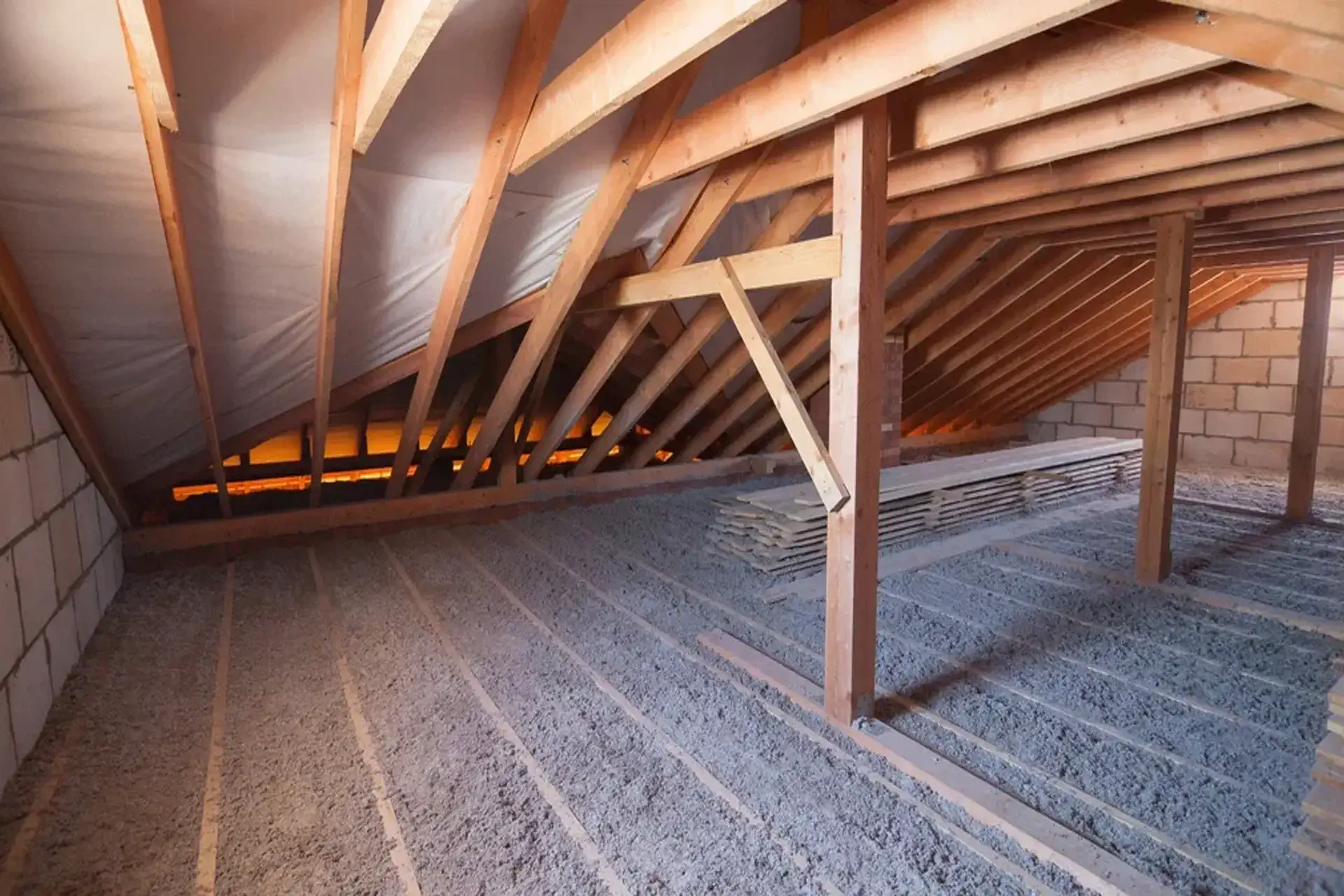
Before recommending insulation, professionals perform a comprehensive attic evaluation.
Evaluating the Existing Insulation
The first step involves measuring the current insulation depth and checking its condition.
Professionals examine whether the insulation has:
- Settled over time
- Become compressed
- Been damaged by moisture
- Developed gaps or uneven coverage
These issues can significantly reduce insulation performance.
Inspecting Air Leaks and Ventilation
Even thick insulation cannot perform efficiently if air escapes through openings around light fixtures, ductwork, plumbing penetrations, or attic access points.
Professionals also evaluate ventilation systems to ensure the attic can properly regulate moisture and temperature.
Considering Local Climate Conditions
Climate plays a major role in determining insulation thickness.
Homes located in colder climates generally require higher insulation levels than homes in warmer regions because they need greater resistance to heat loss during winter.
Key Factors That Determine the Right Insulation Thickness
Several technical considerations guide insulation recommendations.
Recommended R-Value Requirements
Rather than focusing only on thickness, professionals prioritize the required R-value.
R-value measures how effectively insulation resists heat flow.
Different climate zones have different recommended R-values, meaning identical insulation thicknesses may not provide equal performance across different regions.
Type of Insulation Material
Not every insulation material delivers the same thermal resistance per inch.
Fiberglass Insulation
Fiberglass remains one of the most commonly installed attic insulation materials.
It provides reliable thermal resistance, is widely available, and can achieve recommended R-values when installed correctly.
Cellulose Insulation
Cellulose insulation is made primarily from recycled paper products treated for fire resistance.
It fills small gaps effectively and performs well in irregular attic spaces while providing good thermal performance.
Spray Foam Insulation
Spray foam offers one of the highest R-values per inch among common insulation materials.
Because it expands after application, it also helps reduce air leakage, making it suitable for homes where both insulation and air sealing are priorities.
Attic Design and Available Space
Every attic has unique structural characteristics.
Professionals evaluate:
- Roof slope
- Joist depth
- Mechanical equipment
- Storage areas
- Ceiling configuration
These design elements influence how much insulation can be installed without interfering with ventilation or accessibility.
Home Age and Construction Style
Older homes often have different insulation needs than newer homes.
Construction methods, framing techniques, and building materials have evolved over time, meaning professionals must consider the home’s overall design before recommending insulation thickness.
The Importance of Moisture Management
Insulation works best when it stays dry.
How Moisture Affects Insulation Performance
Water reduces insulation effectiveness by limiting its ability to trap air.
Excess moisture may also contribute to:
- Mold growth
- Wood deterioration
- Reduced indoor air quality
- Structural damage over time
This is why moisture control is an essential part of attic evaluations.
The Role of Proper Ventilation
Good attic ventilation allows moisture and excess heat to escape naturally.
Balanced airflow helps preserve insulation performance while protecting roofing materials and structural components.
Professionals ensure insulation installation does not block ventilation pathways needed for proper attic airflow.
Why Professional Assessment Makes a Difference
Choosing insulation thickness involves much more than measuring inches.
Using Industry Standards and Building Codes
Professional insulation companies rely on established building standards, energy-efficiency recommendations, and local code requirements when determining appropriate insulation levels.
These guidelines help ensure insulation systems perform safely and effectively under real-world conditions.
Creating a Customized Insulation Plan
Every home presents a unique combination of challenges.
A customized insulation plan considers:
- Existing insulation
- Climate
- Attic size
- Air leakage
- Moisture conditions
- Ventilation
- Structural limitations
- Energy performance goals
This comprehensive evaluation helps professionals recommend insulation thickness that matches the home’s specific needs instead of applying generic recommendations.
Mistakes to Avoid When Determining Insulation Thickness
Several common mistakes can reduce insulation effectiveness:
- Assuming thicker insulation always delivers better results
- Ignoring air sealing before adding insulation
- Blocking attic ventilation
- Overlooking moisture issues
- Mixing incompatible insulation materials without evaluation
- Estimating insulation depth without measuring existing levels
- Focusing only on thickness rather than R-value
Avoiding these mistakes contributes to better long-term insulation performance.
Zavza Seal LLC Serving the East Midwood Community and Beyond in Brooklyn
Zavza Seal LLC is dedicated to serving the diverse needs of the local community of Brooklyn, including individuals residing in neighbourhoods like East Midwood. With its convenient location near landmarks such as the P.S./I.S. 99 – The Isaac Asimov School of Science and Literature and major intersections like Avenue L and Coney Island Ave (coordinates: 40.6202016, -73.963846), we offer attic insulation services.
Get attic insulation services at East Midwood Now
Call Us or Contact Us: +17184007005
Navigate from East Midwood to Zavza Seal LLC Now
How Attic Insulation Companies Determine the Right Insulation Thickness for Your Home
The Science of R-Value and Climate Zones
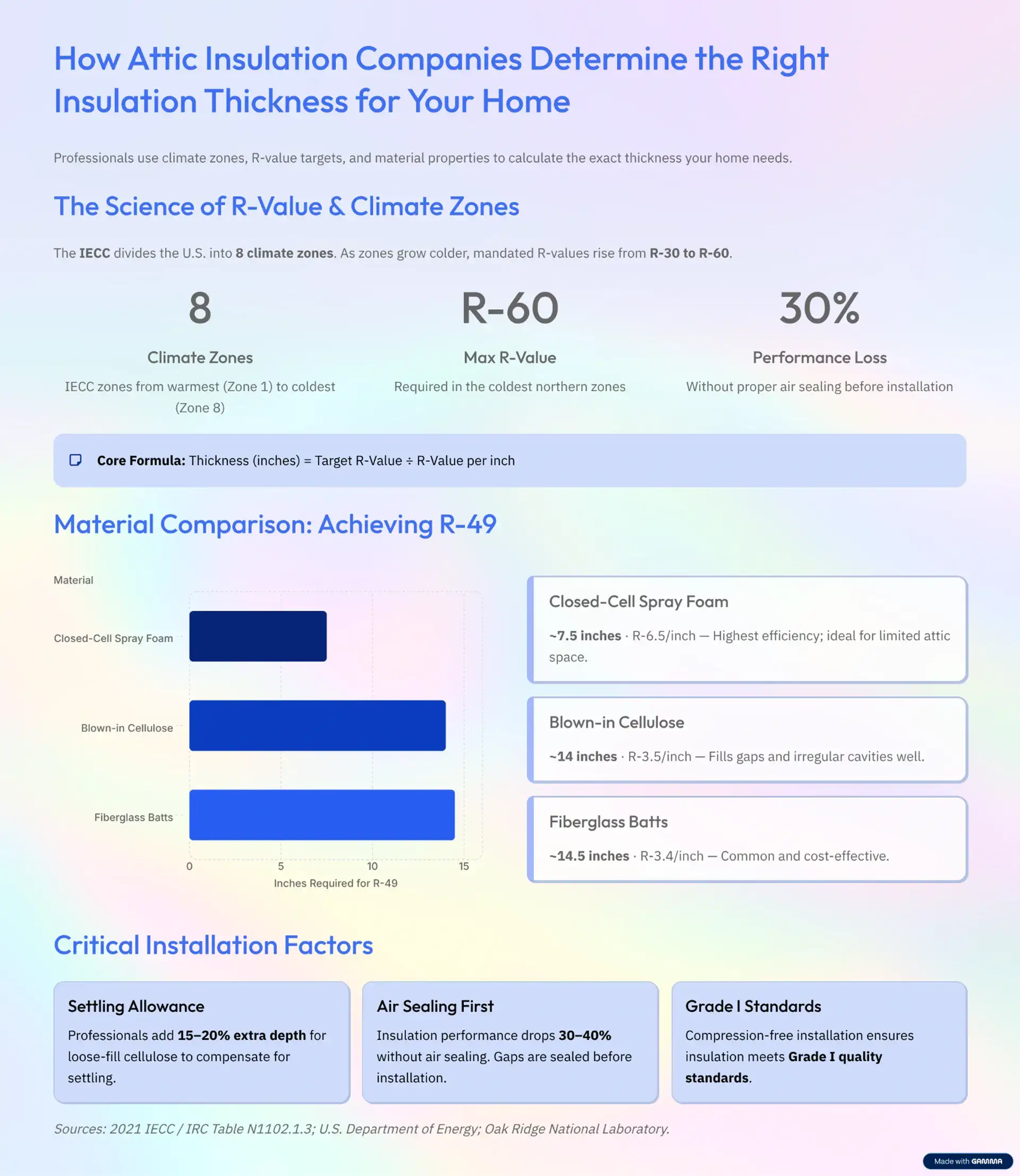
- The International Energy Conservation Code (IECC) divides the U.S. into 8 climate zones; as zones increase in coldness (Zone 1 to 8), mandated R-values rise from R-30 to R-60 to combat heat loss .
- Companies calculate thickness using the formula: Thickness (inches) = Target R-Value ÷ R-Value per inch .
Material Comparison (Achieving R-49)
- Closed-Cell Spray Foam: ~7.5 inches required (highest efficiency, R-6.5/inch) .
- Blown-in Cellulose: ~14 inches required (fills gaps well, R-3.5/inch) .
- Fiberglass Batts: ~14.5 inches required (common, R-3.4/inch) .
Critical Installation Factors
- Settling: Professionals add 15-20% extra depth for loose-fill cellulose to account for natural settling over time .
- Air Sealing: Insulation performance drops 30-40% without air sealing; companies prioritize gaps and compression-free installation to meet Grade I standards.
Sources: 2021 IECC / IRC Table N1102.1.3; U.S. Department of Energy; Oak Ridge National Laboratory.
Determining the right attic insulation thickness is a detailed process that extends well beyond adding another layer of material. Professionals assess existing insulation, climate conditions, R-value requirements, attic design, moisture management, ventilation, and the home’s overall construction before making recommendations. This systematic approach helps optimize energy efficiency, indoor comfort, and building durability.
For homeowners researching attic insulation companies in Brooklyn, understanding these evaluation methods provides valuable insight into how insulation decisions are made. Companies like Zavza Seal LLC follow industry-recognized assessment practices that focus on matching insulation performance to each home’s unique characteristics rather than relying on standard thickness measurements alone.
FAQs
1. Why isn’t insulation thickness the only factor that matters?
Thickness is important, but insulation performance also depends on R-value, material type, installation quality, ventilation, and air sealing.
2. How do professionals know if existing insulation should be replaced or supplemented?
They inspect its condition, measure its depth, check for moisture damage, settling, compression, and overall effectiveness before making recommendations.
3. Does every home require the same insulation thickness?
No. Climate, attic design, home age, insulation material, and building code requirements all influence the appropriate insulation level.
4. Why is ventilation evaluated before adding insulation?
Proper ventilation helps control moisture and heat buildup. Blocking airflow can reduce insulation performance and contribute to moisture-related issues.
5. What role does R-value play in determining insulation thickness?
R-value measures resistance to heat flow. Different insulation materials achieve the same R-value at different thicknesses, making R-value a more accurate performance indicator than thickness alone.