
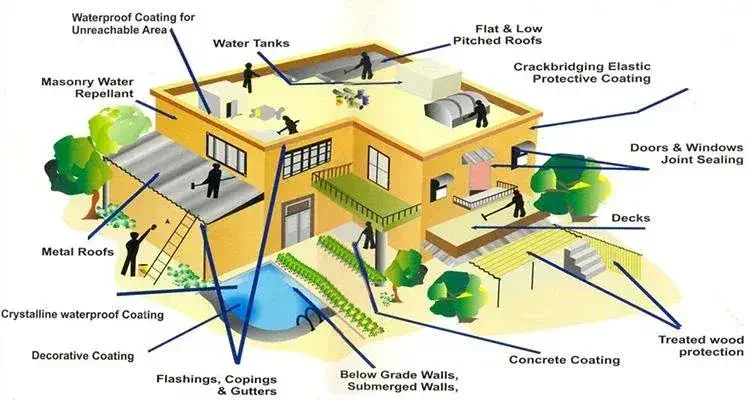
Retaining walls play an essential role in many residential landscapes. They stabilize soil, support sloped yards, and protect structures from erosion. However, one persistent problem homeowners encounter is water intrusion. When water builds up behind a retaining wall, it can lead to structural stress, cracks, and eventual failure.
This is where residential waterproofing services brooklyn come into play. Proper waterproofing strategies are designed to prevent moisture penetration, control drainage, and protect retaining walls from long-term water damage. Professional waterproofing specialists, including teams like Zavza Seal LLC, apply advanced techniques that help safeguard both the retaining wall and the surrounding foundation.
Understanding how waterproofing solutions work can help homeowners recognize why these systems are critical for long-term structural protection.
Understanding the Role of Retaining Walls in Residential Properties
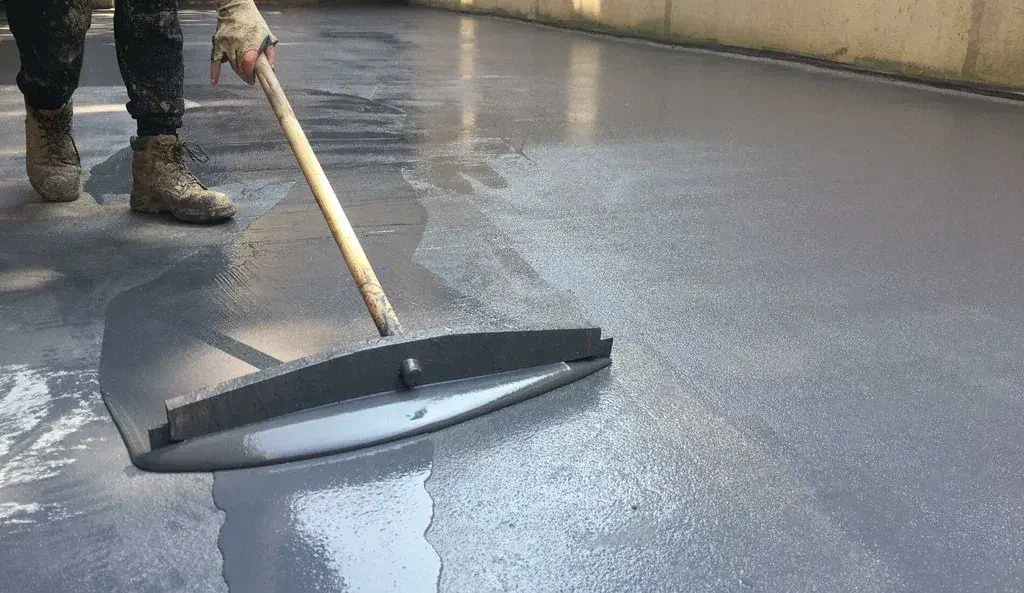
Retaining walls are more than decorative landscape elements. They serve vital structural and environmental functions around homes.
Why Retaining Walls Are Common Around Homes
Many residential properties are built on sloped or uneven land. Retaining walls are designed to hold back soil and create level surfaces for patios, gardens, driveways, and foundations.
Without a properly constructed retaining wall, gravity and water erosion can gradually shift soil toward the home, potentially affecting the structure’s stability.
Structural Importance of Retaining Walls
Retaining walls provide structural support by resisting lateral soil pressure. However, when water accumulates behind them, that pressure increases dramatically. Over time, this added force can weaken the wall and create pathways for water intrusion.
Effective waterproofing reduces this pressure and preserves the wall’s integrity.
What Causes Water Intrusion in Retaining Walls
Water intrusion rarely happens without warning. Several environmental and construction-related factors can lead to moisture problems.
Poor Drainage Systems
One of the most common causes of retaining wall failure is poor drainage. When rainwater or groundwater cannot escape, it accumulates behind the wall.
This trapped water eventually forces its way through small cracks, joints, or porous materials.
Hydrostatic Pressure Build-Up
Hydrostatic pressure occurs when water accumulates in soil behind a wall. As the soil becomes saturated, water pushes against the structure with significant force.
Over time, this pressure can cause:
- Structural cracking
- Water seepage
- Wall displacement
Professional waterproofing methods focus heavily on relieving this pressure.
Soil Saturation and Groundwater Movement
Heavy rainfall, melting snow, and natural groundwater flow can saturate soil around retaining walls. Once the soil becomes overly wet, it increases pressure and allows water to migrate through the wall system.
Commercial Waterproofing Services solutions help manage this natural movement of water through controlled drainage.
Signs of Water Intrusion Around Retaining Walls
Recognizing early warning signs can prevent extensive damage.
Visible Wall Cracks
Small hairline cracks may appear harmless at first. However, they often indicate that pressure is building behind the wall.
Water can easily enter through these openings, accelerating deterioration.
Water Stains and Damp Soil
Dark stains, moss growth, or consistently wet soil around the base of the wall can signal moisture infiltration.
Persistent dampness usually suggests that water is not draining properly.
Bulging or Leaning Walls
If a retaining wall begins to bulge outward or lean forward, it is likely experiencing excessive pressure from saturated soil.
This condition requires immediate structural assessment.
How Residential Waterproofing Services Work
Professional waterproofing services focus on identifying the root cause of water intrusion and implementing long-term solutions.
Inspection and Moisture Assessment
The first step typically involves a detailed inspection. Specialists analyze soil conditions, drainage patterns, wall materials, and existing cracks.
Moisture detection tools may also be used to locate hidden water infiltration.
Identifying Structural and Drainage Weak Points
After assessment, technicians determine which components of the retaining wall system are failing. This could involve blocked drainage systems, deteriorated sealants, or poor grading around the property.
Companies experienced in residential waterproofing services in brooklyn, such as Zavza Seal LLC, often use this evaluation to design targeted waterproofing solutions.
Key Waterproofing Methods Used for Retaining Walls
Several waterproofing strategies can effectively prevent water from penetrating retaining wall structures.
Exterior Waterproofing Membranes
Exterior membranes create a protective barrier between the soil and the wall.
Bituminous Coatings
Bituminous coatings are commonly applied to concrete or masonry walls. These asphalt-based materials form a durable waterproof layer that resists moisture penetration.
They are particularly effective in areas with heavy rainfall.
Liquid Rubber Applications
Liquid rubber coatings provide flexible waterproof protection. Once cured, the material forms a seamless membrane that adapts to small structural movements.
This flexibility helps prevent cracking and water entry over time.
Drainage System Installation
Waterproofing alone is not enough; proper drainage must accompany it.
French Drains
French drains consist of perforated pipes surrounded by gravel. These systems collect groundwater and redirect it away from the retaining wall.
By removing excess water, French drains significantly reduce hydrostatic pressure.
Gravel Backfill and Drainage Pipes
Backfilling retaining walls with gravel instead of dense soil improves water movement. Gravel allows water to flow freely toward drainage pipes, preventing accumulation behind the wall.
Crack Sealing and Structural Reinforcement
Waterproof sealants and epoxy injections are used to close existing cracks in retaining walls. These materials bond with concrete and masonry to restore structural integrity.
Reinforcement techniques may also be used if the wall shows signs of stress or movement.
How Waterproofing Reduces Hydrostatic Pressure
Waterproofing systems are designed to address the primary cause of retaining wall damage: excessive water pressure.
Redirecting Water Away from Walls
Drainage systems capture water before it can accumulate behind the wall. By redirecting water through pipes and gravel layers, pressure is dramatically reduced.
Improving Soil Drainage
Waterproofing solutions often involve improving soil composition and grading around the wall. This allows water to flow naturally away from the structure instead of collecting behind it.
Long-Term Protection Benefits of Waterproofing
Waterproofing retaining walls offers several long-term advantages.
Structural Longevity
When moisture is properly controlled, retaining walls maintain their strength for decades. Waterproofing protects materials from erosion, corrosion, and freeze-thaw cycles.
Prevention of Foundation Damage
Water intrusion around retaining walls can eventually affect the home’s foundation. By controlling moisture at the source, waterproofing helps protect the entire structure.
Common Materials Used in Residential Waterproofing
Modern waterproofing systems rely on specialized materials designed for durability and moisture resistance.
Waterproof Sealants
Sealants fill joints, seams, and cracks in retaining walls. These materials prevent water from entering vulnerable areas.
Drainage Boards
Drainage boards create a channel that allows water to flow downward toward drainage systems.
Protective Barriers
Protective barriers shield waterproof membranes from soil pressure and sharp rocks that could cause damage during backfilling.
Preventative Maintenance for Retaining Walls
Even the best waterproofing systems benefit from routine maintenance.
Routine Inspections
Regular inspections help identify early signs of cracking, drainage blockage, or soil movement.
Addressing these issues quickly can prevent major structural problems.
Drainage Cleaning and Soil Management
Drainage systems must remain clear of debris to function effectively. Periodically cleaning drainage outlets and maintaining proper grading ensures water continues to flow away from the wall.
The Importance of Professional Waterproofing Knowledge
Waterproofing retaining walls requires technical understanding of soil dynamics, construction materials, and water movement.
Why Experience Matters
Improper waterproofing methods can trap moisture instead of redirecting it. Skilled professionals understand how to balance drainage and protective barriers to achieve effective results.
Organizations experienced in residential waterproofing services brooklyn, including Zavza Seal LLC, typically rely on specialized strategies tailored to local soil conditions and climate patterns.
The Role of Specialized Equipment
Professional waterproofing teams use moisture meters, excavation tools, drainage installation equipment, and advanced sealing materials to implement durable solutions.
These tools help ensure that waterproofing systems perform effectively over time.
Zavza Seal LLC Serving the Midwood Community and Beyond in Brooklyn
Zavza Seal LLC is dedicated to serving the diverse needs of the local community of Brooklyn, including individuals residing in neighbourhoods like Midwood. With its convenient location near landmarks such as the “Yeshiva Gal Einai” and major intersections like Avenue J and E 12th St (coordinates: 40.6247016, -73.963846), we offer residential waterproofing services.
Get residential waterproofing services at Midwood Now
Call Us or Contact Us: +17184007005
Navigate from Midwood to Zavza Seal LLC Now
Water intrusion in retaining walls is a serious structural concern that can lead to cracking, soil displacement, and long-term damage to residential properties. The root of the problem often lies in poor drainage, hydrostatic pressure, and soil saturation behind the wall.
Professional waterproofing strategies address these issues through a combination of protective membranes, drainage systems, crack sealing, and soil management. By controlling how water interacts with retaining walls, these methods significantly reduce the risk of structural failure.
Homeowners seeking effective protection often rely on experienced providers of residential waterproofing services brooklyn. Companies such as Zavza Seal LLC apply specialized techniques designed to prevent water intrusion while extending the lifespan of retaining wall structures.
When properly implemented, residential waterproofing systems provide long-term defense against moisture damage and help maintain the stability of both retaining walls and surrounding foundations.
Stopping the Flood: How Residential Waterproofing Protects Your Retaining Walls
The Silent Threat: Water Intrusion in Retaining Walls
- Hydrostatic Pressure: Water buildup behind a retaining wall exerts significant force, leading to cracks, erosion, and structural failure. This pressure can be substantial, especially in clay soils where it can reach 50 lb/ft³ (7.9 kN/m³).
- Soil Saturation: Water saturates the soil, increasing its weight and reducing its shear strength, further compromising the wall’s stability.
- Foundation Issues: Water at the base of the wall can reduce the bearing capacity of the soil and, in fine-grained soils like silt and clay, create excess pore water pressure, leading to settlement.
The Solution: Comprehensive Waterproofing Strategies
- Waterproofing Membranes: Applying specialized membranes creates a moisture barrier, preventing water from seeping into the wall structure.
- Effective Drainage Systems:
- Toe Drains: Perforated pipes at the base of the wall collect incidental water, crucial for walls over 4 ft (1.2 m) in height.
- Heel Drains: For geogrid-reinforced walls, an additional drain at the back of the reinforced soil mass manages groundwater.
- Wall Rock & Weep Holes: A minimum of 12 inches (300 mm) of wall rock behind the facing and strategically placed weep holes facilitate drainage.
- Proper Grading: Directing surface runoff away from the wall using berms, swales, and positive gradients ensures water doesn’t accumulate.
Visualizing the Protection:
- [Diagram: Cross-section of a retaining wall showing layers of wall rock, drainage pipes (toe and heel drains), and a waterproofing membrane.]
- [Infographic: Comparison of a wall with proper drainage vs. a wall without, highlighting the difference in soil saturation and pressure.]
Key Takeaways:
- Water is a primary factor in retaining wall failure.
- A multi-layered approach combining membranes, robust drainage, and proper grading is essential.
- Investing in waterproofing extends the life and structural integrity of your retaining walls.
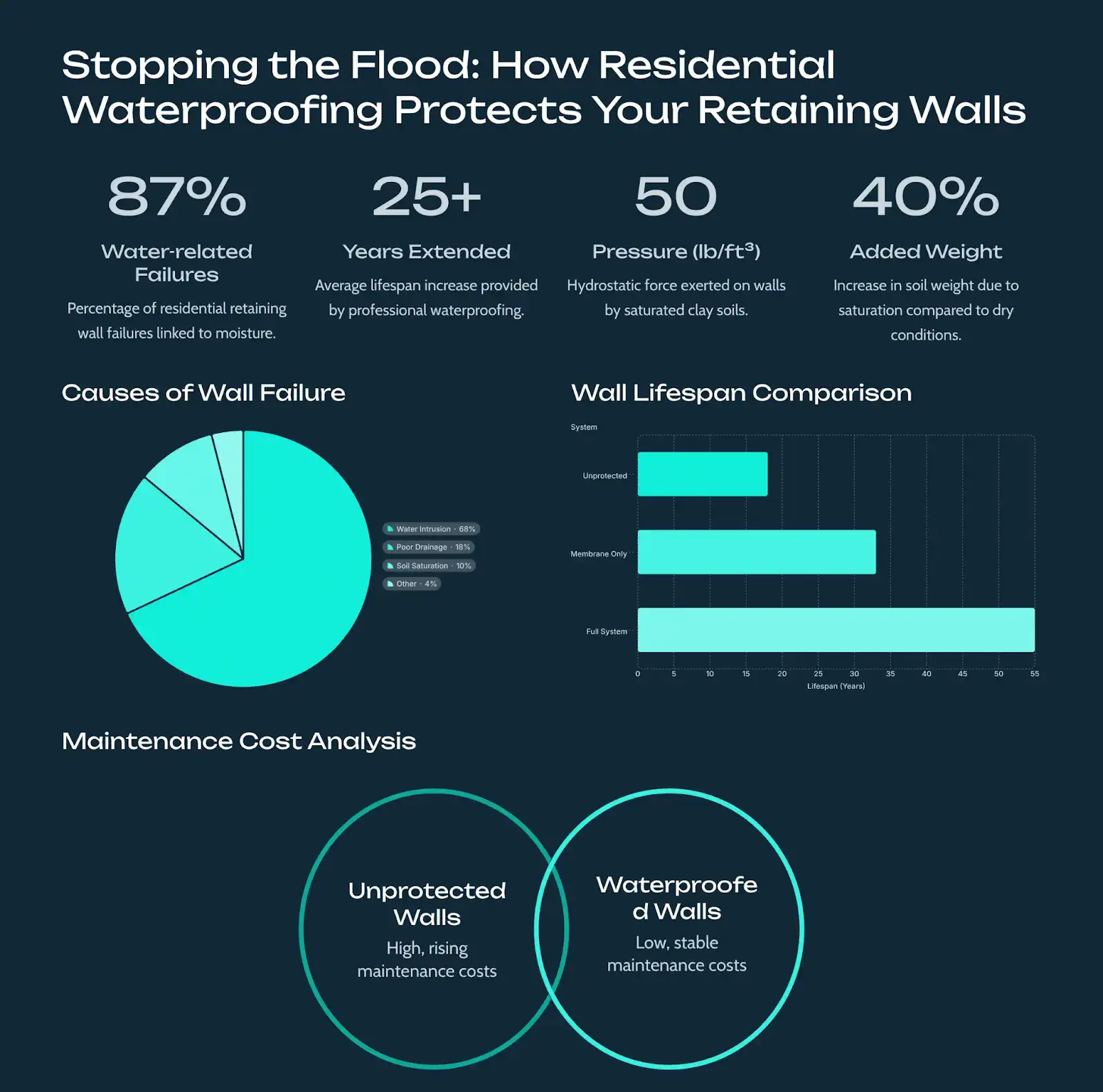
Sources: smbretainingwalls.com, allanblock.com, dpw.lacounty.gov
FAQs
1. Why do retaining walls experience water intrusion?
Water intrusion usually occurs when drainage behind the wall is inadequate. Rainwater or groundwater accumulates in the soil and forces moisture through cracks or porous materials.
2. What is hydrostatic pressure in retaining walls?
Hydrostatic pressure is the force exerted by water-saturated soil pushing against a retaining wall. This pressure can cause cracks, bulging, or structural failure if not properly managed.
3. How do drainage systems protect retaining walls?
Drainage systems such as French drains collect and redirect water away from the wall. This prevents water buildup and reduces the pressure exerted on the structure.
4. Are waterproof membranes necessary for retaining walls?
Waterproof membranes create a protective barrier that prevents moisture from penetrating the wall surface. They are often used alongside drainage systems for maximum protection.
5. How often should retaining walls be inspected for water damage?
Experts recommend inspecting retaining walls at least once a year, especially after heavy rainfall or seasonal weather changes, to identify early signs of water intrusion.