
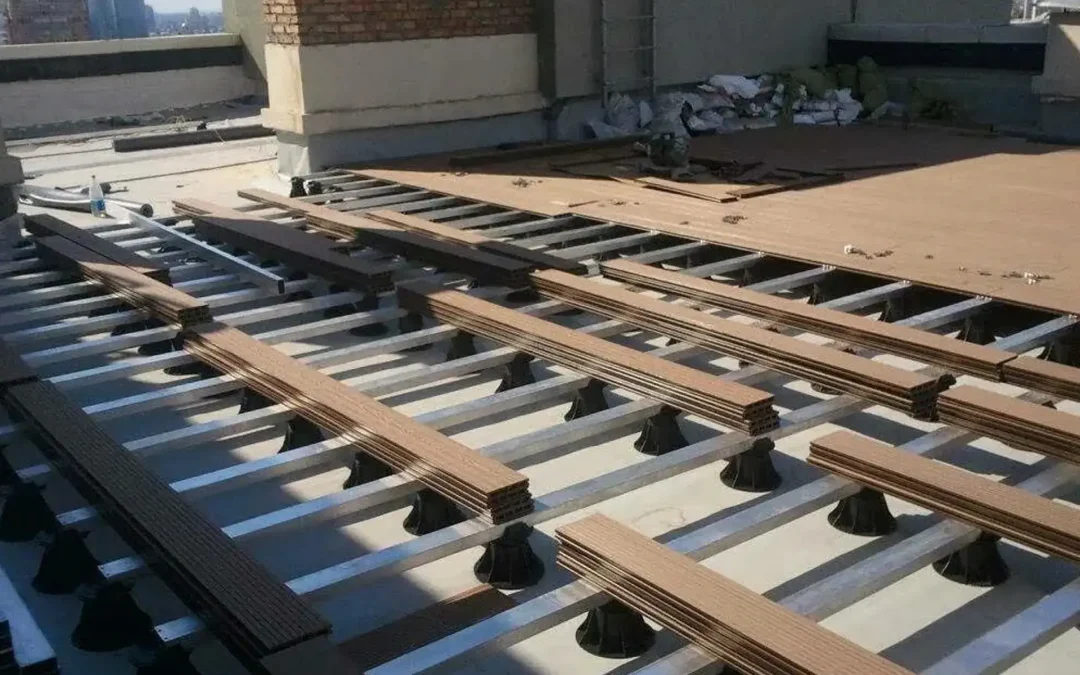
A deck may look perfectly solid when the weather is mild, yet repeated freezing and thawing can quietly create problems beneath the surface. Water gets into small cracks, pores, joints, and gaps. When temperatures fall below freezing, that trapped moisture turns into ice and expands. When temperatures rise again, the ice melts and leaves behind tiny spaces where even more water can enter.
Then the cycle starts again.
Over time, these repeated changes can contribute to cracking, surface deterioration, leaks, staining, spalling, and weakened areas. This is why waterproofing a deck is about more than simply keeping rainwater off the surface. A properly designed waterproofing system helps control how water enters, moves across, and drains away from the deck.
Deck waterproofing contractors brooklyn may use several methods to reduce moisture intrusion and protect vulnerable areas from seasonal weather. These can include surface preparation, crack repair, waterproof membranes, protective coatings, joint sealing, and drainage improvements.
Zavza Seal LLC is one business associated with deck waterproofing in Brooklyn, but the principles behind freeze-thaw protection are broader than any individual contractor. Understanding those principles helps homeowners recognize what actually protects a deck during harsh weather.
What Is Freeze-Thaw Damage on a Deck?
Freeze-thaw damage occurs when water repeatedly freezes and thaws inside or around a deck material.
Water behaves differently when it freezes. Instead of remaining a liquid, it expands as it becomes ice. If that water has entered a crack or porous section of concrete, masonry, grout, or another vulnerable material, the expanding ice can create pressure against the surrounding surface.
One freezing event may not cause obvious damage. The bigger concern is repetition.
Imagine placing a wedge inside a small crack and repeatedly pushing it outward. Eventually, the crack could become larger. Freeze-thaw action can work in a somewhat similar way.
As temperatures rise, the ice melts. The resulting water can move deeper into the same area. When temperatures drop again, that moisture freezes once more.
The result is a gradual cycle of expansion, contraction, moisture movement, and surface stress.
Why Freeze-Thaw Cycles Are Hard on Deck Materials
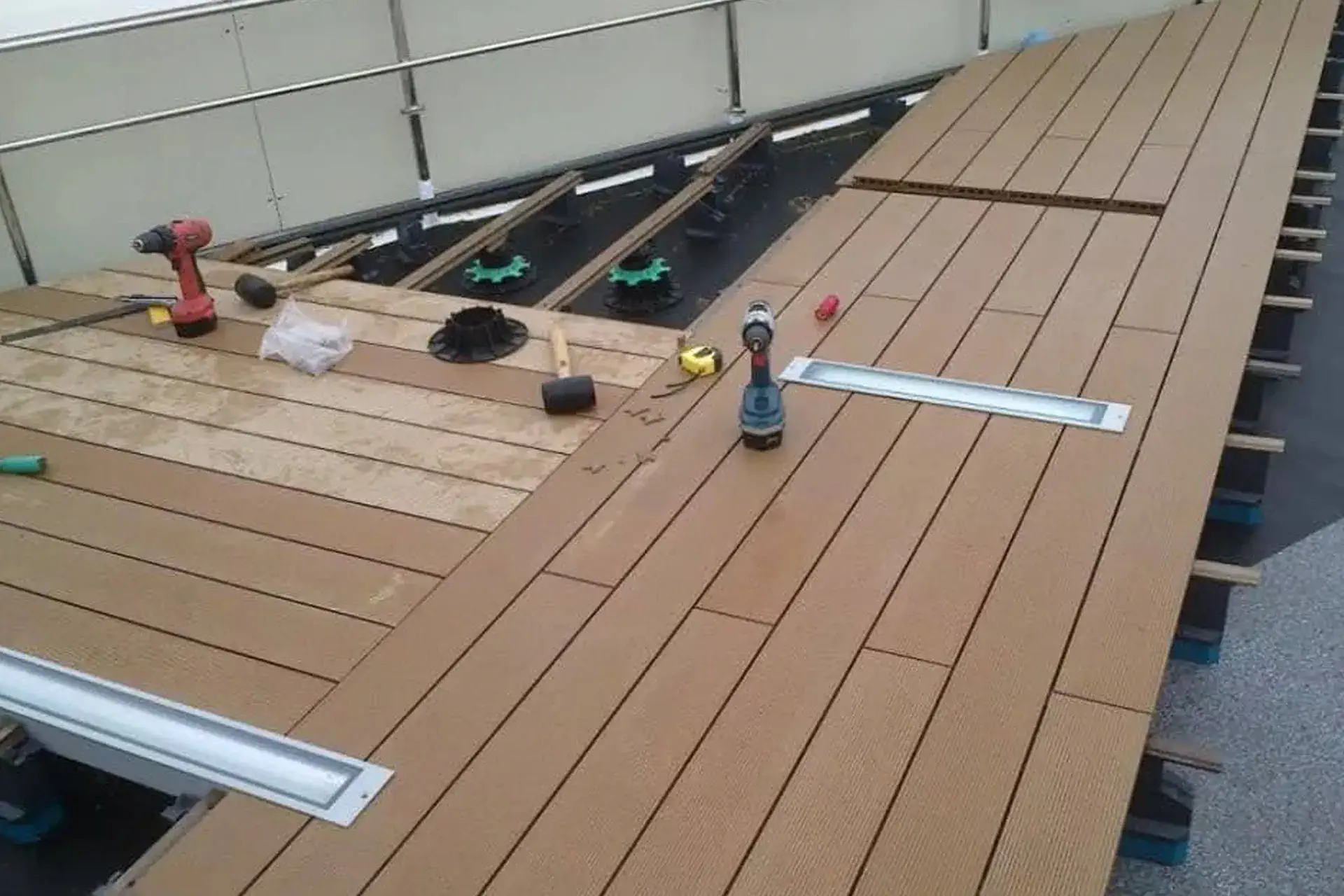
Deck materials experience more than one type of weather-related stress. They are exposed to rain, snow, sunlight, wind, temperature fluctuations, and everyday use.
Freeze-thaw cycles add another layer.
Materials can expand and contract as temperatures change. At the same time, water may be moving through microscopic pores or existing cracks. These processes can interact, gradually weakening surfaces.
Concrete and masonry are especially important examples because they can absorb some moisture. If water penetrates below the surface and later freezes, pressure can develop within the material.
The damage may initially be almost invisible. A tiny crack can eventually become wider. A small surface defect can turn into chipped or flaking material. In some cases, moisture can travel to areas below the deck and contribute to leaks.
How Water Gets Into Deck Surfaces
Water does not need a large opening to become a problem.
It can enter through hairline cracks, failed sealants, porous surfaces, construction joints, gaps around penetrations, deteriorated coatings, and poorly protected edges.
Once moisture finds a pathway, gravity and surface tension can help move it into surrounding areas.
This is why waterproofing should not be viewed simply as painting a protective layer over a deck. The underlying surface and the details around it matter just as much.
A coating applied over a dirty, cracked, or unstable surface may not perform as intended. Waterproofing works best when the surface is properly evaluated and prepared before the protective system is installed.
Why Brooklyn Decks Can Be Vulnerable to Freeze-Thaw Damage
Brooklyn experiences seasonal temperature changes that can create conditions for repeated freezing and thawing.
A winter day may move from temperatures above freezing to temperatures below freezing. Snow and rain can also introduce substantial amounts of moisture to outdoor surfaces.
Urban environments create additional considerations. Decks may be surrounded by buildings, exposed to wind, shaded for portions of the day, or positioned where snow and water collect.
The specific risk varies from property to property.
A deck that drains efficiently and has an intact waterproofing system is different from one with standing water, deteriorated joints, exposed cracks, or failed coating. The material, age, construction details, exposure, and maintenance history all influence how a deck responds to winter conditions.
How Deck Waterproofing Helps Prevent Freeze-Thaw Problems
Waterproofing helps by limiting the amount of moisture that can penetrate vulnerable parts of the deck.
The basic idea is straightforward: reduce unwanted water intrusion and give water a controlled path away from the structure.
Depending on the deck design and material, a waterproofing system may include a membrane, liquid-applied coating, sealant, crack treatment, or combination of protective materials.
However, waterproofing does not magically make a deck immune to winter damage.
It is better understood as part of a larger moisture-management system. The surface needs to be sound, cracks need appropriate treatment, joints need attention, and drainage needs to function properly.
Inspecting the Deck Before Waterproofing
Before waterproofing begins, the deck should be examined carefully.
A professional assessment may look for visible cracks, deteriorated concrete, loose materials, failed sealants, ponding water, damaged edges, drainage problems, and areas where an existing coating has separated from the substrate.
The inspection is important because waterproofing over an unresolved defect can hide the problem temporarily rather than solve it.
For example, if water consistently collects in one location, applying another layer of coating without addressing the underlying drainage issue may not provide a durable solution.
The goal is to understand where water is coming from, where it is going, and what materials are being affected.
Identifying Cracks, Gaps, and Weak Areas
Small defects deserve attention because they can become pathways for moisture.
Cracks should be evaluated based on their size, location, movement, and likely cause. Not every crack should be treated in exactly the same way.
Some cracks may be superficial. Others may indicate movement or deterioration beneath the surface.
Edges, corners, transitions, and areas surrounding penetrations also deserve close inspection because these locations can be particularly vulnerable to water intrusion.
Checking Drainage and Water Movement
Waterproofing and drainage work together.
If rainwater or melting snow remains on a deck for extended periods, the surface has greater exposure to moisture. Standing water can also find weaknesses in coatings, joints, and cracks.
Contractors may therefore examine slopes, drains, scuppers, gutters, flashing, and other drainage components.
The objective is not merely to stop water from entering the deck. It is also to help water leave the surface efficiently.
Preparing the Deck Surface for Waterproofing
Surface preparation is one of the most important stages of waterproofing.
A waterproofing product needs an appropriate surface to bond with. Dirt, grease, loose material, deteriorated coatings, dust, and moisture can interfere with adhesion.
Preparation methods depend on the existing surface and waterproofing system.
Some projects may involve pressure washing or mechanical cleaning. Others may require grinding, scraping, or removal of failed coatings.
The exact preparation method should be selected according to the condition of the substrate and the requirements of the waterproofing material.
Cleaning and Removing Damaged Materials
Loose or deteriorated materials cannot provide a reliable foundation for a new waterproofing system.
Cleaning removes contaminants that could interfere with adhesion. Damaged sections may need to be removed or repaired before waterproofing proceeds.
This stage can sometimes feel like the least exciting part of the project. It is also one of the most important.
Think of waterproofing like building a roof. A new roof installed over a rotten structure would not solve the underlying problem. The same basic principle applies to deck waterproofing.
Repairing Cracks and Surface Defects
Crack repair helps address existing pathways for water.
Depending on the material and crack characteristics, repairs may involve compatible patching compounds, sealants, fillers, or other repair systems.
The repair material must be appropriate for the substrate and expected movement.
This is particularly important in environments where temperatures fluctuate. A rigid repair used in the wrong location may not respond well to movement, while a flexible system may be more appropriate for certain joints or transitions.
Applying Waterproofing Membranes and Coatings
Once the deck has been prepared and repaired, a waterproofing system can be installed.
A membrane creates a continuous barrier intended to reduce water penetration. Liquid-applied systems can form a seamless protective layer when correctly applied.
The choice depends on factors such as deck construction, existing materials, expected traffic, exposure, drainage, and manufacturer requirements.
Application thickness also matters. Too little material may not provide the intended protection, while improper application can create other problems.
Weather conditions during installation can matter as well. Temperature, humidity, surface moisture, and curing conditions can influence how a waterproofing product performs.
Sealing Joints, Edges, and Penetrations
Large surface areas are not the only concern.
Joints, corners, edges, railings, posts, drains, doors, and other penetrations can create potential pathways for water.
These details require compatible sealants, flashing, reinforcing materials, or other waterproofing treatments depending on the system.
A waterproof surface with an untreated penetration is a bit like a raincoat with a large hole in the sleeve. Most of the material may work correctly, but water still has an easy path through the weak point.
That is why experienced waterproofing work pays close attention to transitions and details rather than focusing only on the center of the deck.
Managing Water Drainage After Waterproofing
A waterproof surface still needs proper drainage.
Rain and melting snow should be directed toward appropriate drainage points rather than allowed to remain on the deck.
Drainage systems can include sloped surfaces, drains, scuppers, gutters, and downspouts.
If these components become blocked by leaves, dirt, ice, or debris, water may accumulate even when the waterproofing system itself is intact.
Homeowners can therefore play an important role in long-term deck protection by keeping drainage paths clear and watching for changes in water behavior.
Protecting Decks During Repeated Freeze-Thaw Cycles
Freeze-thaw protection is ultimately about controlling moisture.
A properly maintained waterproofing system reduces the opportunity for water to enter vulnerable materials. Crack repairs reduce pathways for infiltration. Sealed joints protect transitions. Drainage systems help move water away.
Together, these measures create multiple layers of protection.
No waterproofing system can control the weather, but it can influence how the deck responds to moisture.
That distinction matters. The goal is not to prevent temperatures from changing. The goal is to prevent those temperature changes from repeatedly exploiting weaknesses in the deck.
How Different Deck Materials Respond to Freezing Weather
Not every deck reacts to winter weather in the same way.
Concrete, masonry, wood, composite materials, and waterproofing membranes have different physical properties. Their response depends on moisture exposure, installation quality, age, maintenance, and temperature conditions.
Understanding the material is therefore essential when selecting a protection strategy.
Concrete and Masonry Deck Surfaces
Concrete and masonry can be vulnerable to water penetration because they contain pores and may develop cracks over time.
When water enters these spaces and freezes, expansion can place pressure on the surrounding material.
Repeated cycles can contribute to surface scaling, cracking, spalling, and deterioration.
Waterproofing helps reduce the amount of moisture available to enter the material, while proper repairs address existing weaknesses.
Wood and Composite Decking
Wood responds to moisture differently.
Wood can absorb and release moisture, leading to dimensional changes. Repeated wetting and drying can contribute to movement, surface deterioration, and other maintenance concerns.
Composite decking materials have different characteristics, but they still require appropriate drainage and installation details.
Waterproofing requirements for these materials depend heavily on the specific deck system. A solution designed for a concrete deck should not automatically be assumed suitable for wood or composite decking.
Signs That a Deck May Have Freeze-Thaw Damage
Some warning signs are easy to notice.
Look for:
- New or expanding cracks
- Flaking or peeling surface material
- Chipped concrete
- Spalling
- Water stains below the deck
- Persistent puddles
- Deteriorated joints
- Failed sealant
- Bubbling or peeling waterproof coatings
- Damp areas that remain after surrounding surfaces have dried
None of these signs automatically proves that freeze-thaw damage is occurring.
For example, cracking can have several causes, including settlement, structural movement, drying shrinkage, installation problems, or normal material aging.
That is why diagnosis matters. The visible symptom is not always the actual source of the problem.
Why Waterproofing Maintenance Matters
Waterproofing is not necessarily a one-time-and-forget-it system.
Outdoor surfaces are constantly exposed to weather. UV radiation, temperature changes, foot traffic, debris, moisture, and seasonal conditions can gradually affect protective materials.
Periodic inspections can help identify problems while they are still relatively small.
A damaged sealant joint may be easier to repair before water reaches the substrate. A blocked drain can be cleared before repeated ponding affects the surface. A small coating failure can be investigated before it spreads.
Maintenance is essentially preventive medicine for the deck.
Instead of waiting for a visible leak or major deterioration, routine observation can help catch developing problems earlier.
How Long Can Freeze-Thaw Protection Last?
There is no universal lifespan for a waterproofing system.
Durability depends on the waterproofing product, substrate condition, installation quality, exposure, drainage, traffic, maintenance, and local weather conditions.
A well-prepared surface and correctly installed system can generally perform better than a system applied over deteriorated or contaminated material.
The environment matters too. A heavily exposed deck with frequent standing water experiences different conditions from a covered deck with excellent drainage.
Rather than relying on a single number of years, homeowners should pay attention to the condition of the waterproofing system and the deck beneath it.
What Homeowners Should Look for in a Waterproofed Deck
A properly protected deck should show evidence of effective water management.
Homeowners can periodically observe whether water drains as expected, whether new cracks are developing, whether sealants remain intact, and whether the waterproof coating or membrane shows signs of lifting, bubbling, peeling, or deterioration.
It is also useful to inspect areas around doors, drains, railings, corners, and other penetrations.
After significant winter weather, check for new staining or moisture below the deck.
These simple observations do not replace a professional inspection, but they can provide an early warning when something changes.
For homeowners researching deck waterproofing contractors in brooklyn, understanding these fundamentals can make it easier to discuss the condition of a deck in practical terms. The business name Zavza Seal LLC may appear during that research, but the important technical questions remain the same: How will water be controlled? How will existing cracks be addressed? How will joints and penetrations be protected? And how will drainage be maintained?
Zavza Seal LLC Serving the East Midwood Community and Beyond in Brooklyn
Zavza Seal LLC is dedicated to serving the diverse needs of the local community of Brooklyn, including individuals residing in neighbourhoods like East Midwood. With its convenient location near landmarks such as the Yeshivah of Flatbush and major intersections like E 10th St and Avenue I (coordinates: 40.6269516, -73.9668105), we offer deck waterproofing contractors.
Get deck waterproofing contractors at East Midwood Now
Call Us or Contact Us: +17184007005
Navigate from East Midwood to Zavza Seal LLC Now
Freeze-thaw damage is fundamentally a moisture-management problem combined with repeated temperature changes. Water enters small openings, freezing temperatures cause expansion, thawing allows moisture to move again, and repeated cycles can gradually weaken vulnerable materials. Deck waterproofing contractors brooklyn can address this risk through careful inspection, surface preparation, crack repair, waterproof membranes or coatings, joint treatment, and drainage management. The most effective approach is not simply covering the deck with a waterproof material; it is creating a complete system that limits water intrusion and gives moisture a reliable path away from the structure. With proper installation, regular inspection, and timely maintenance, a deck can be better prepared to handle the repeated wetting, freezing, and thawing that comes with winter weather.
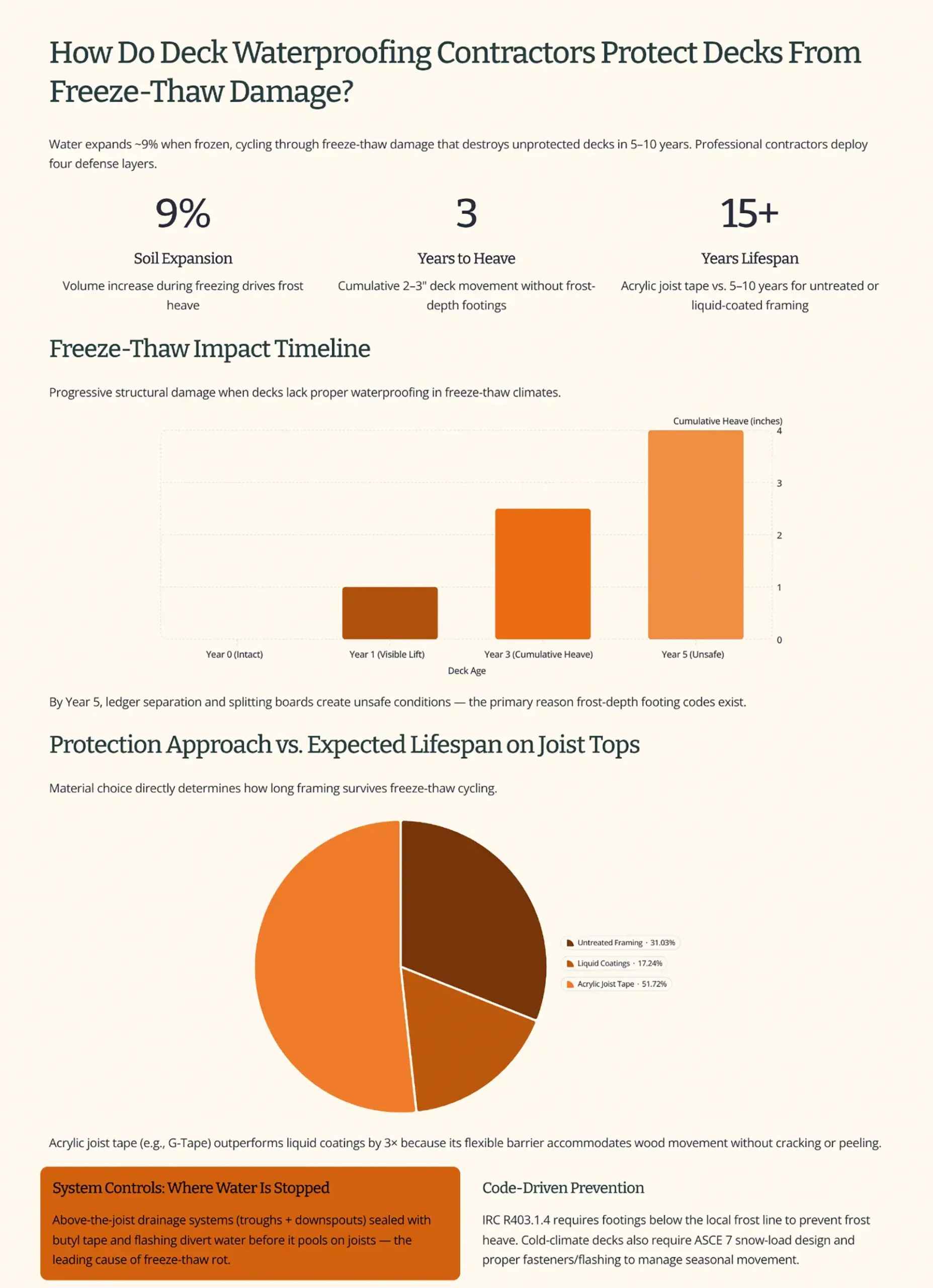
How Do Deck Waterproofing Contractors Protect Decks From Freeze-Thaw Damage?
- Chart (Freeze-thaw impact timeline): Year 0 intact; Year 1 visible lift 0.5–1.5″; Year 3 cumulative heave 2–3″ and racking; Year 5 ledger separation, splitting boards, unsafe deck—this is why frost-depth rules exist (soil expands ~9% as it freezes).
- Chart (Protection approach vs expected lifespan on joist tops): Untreated framing fails in ~8–10 years with rot in freeze-thaw regions; liquid coatings on exposed joist tops often crack/peel in ~5 years; acrylic joist tape (e.g., G-Tape) can last 15+ years (flexible barrier, UV-tested under harsh swings).
- Chart (System controls: where water is stopped): Surface-level diversion via above-the-joist drainage (troughs + downspouts, sealed with butyl tape + flashing) to prevent pooling on joists (leading cause of rot under freeze-thaw conditions).
- Chart (Code-driven prevention): Footings below local frost line per IRC R403.1.4 to prevent frost heave; cold-climate decks also use ASCE 7-based snow load design plus proper fasteners/flashing to manage seasonal movement.
Sources: DeckMath (Frost Heave Demo); The Ultimate Deck Shop (Joist Tape vs Liquid Coating); Deck Outlet (Trex RainEscape); National Deck Authority (Deck Construction in Snow and Cold Weather Climates)
Frequently Asked Questions About Freeze-Thaw Deck Damage
Can waterproofing completely prevent freeze-thaw damage?
Waterproofing can reduce moisture intrusion, which is an important factor in freeze-thaw deterioration, but it cannot eliminate every possible cause of deck damage. Structural movement, poor drainage, existing deterioration, installation defects, and severe weather can still affect the deck.
Why does water cause damage when it freezes?
Water expands when it freezes. If moisture is trapped inside cracks, pores, or other confined spaces, that expansion can create pressure on surrounding materials. Repeated freezing and thawing can gradually enlarge weaknesses.
Should cracks be repaired before waterproofing a deck?
In many situations, yes. Existing cracks and damaged areas should generally be evaluated and appropriately treated before a waterproofing system is installed. The correct repair depends on the crack’s size, location, movement, and cause.
Does good drainage really matter if a deck is waterproofed?
Yes. Waterproofing and drainage perform different but complementary roles. Waterproofing limits water penetration, while drainage helps move water away from the surface. Poor drainage can increase moisture exposure and place additional stress on protective systems.
How often should a waterproofed deck be inspected?
The appropriate inspection schedule depends on the deck’s age, construction, exposure, waterproofing system, and maintenance history. It is especially useful to inspect the deck after winter or periods of severe weather and whenever new cracks, leaks, ponding, or coating problems become visible.