Understanding Roof Waterproofing in Rain-Heavy Climates
When you live in an area where rain isn’t just occasional but relentless, your roof becomes the first line of defense. In such environments, even the smallest crack can turn into a gateway for serious damage. That’s where roof waterproofing services in brooklyn come into focus not as a luxury, but as a necessity.
Why High Rainfall Creates Unique Roofing Challenges
Think of your roof like a shield. Now imagine that shield being constantly bombarded by water. Over time, pressure builds, materials weaken, and tiny vulnerabilities expand. High rainfall accelerates wear and tear, making roofs more prone to leaks, mold, and structural decay.
The Science Behind Water Penetration
Water doesn’t need a large opening to cause damage. Through capillary action, it can seep into microscopic pores in roofing materials. Add wind-driven rain, and suddenly water is being forced into places it shouldn’t be. This is why waterproofing isn’t just about covering surfaces—it’s about creating a seamless barrier.
Core Principles of Roof Waterproofing
Surface Protection and Sealing
At its core, waterproofing is about forming a protective layer that prevents water from entering. This involves sealing pores, cracks, and joints with specialized materials that resist water infiltration.
Drainage Optimization
Even the best waterproofing system can fail if water has nowhere to go. Proper drainage ensures that rainwater flows away quickly, reducing pressure on the roof.
Structural Reinforcement
In high-rainfall areas, roofs often need additional reinforcement. This could include strengthening weak points or adding layers that improve durability and flexibility. So in high rainy areas they often needs roof waterproofing services brooklyn.
Types of Roof Waterproofing Systems
Liquid Waterproofing Membranes
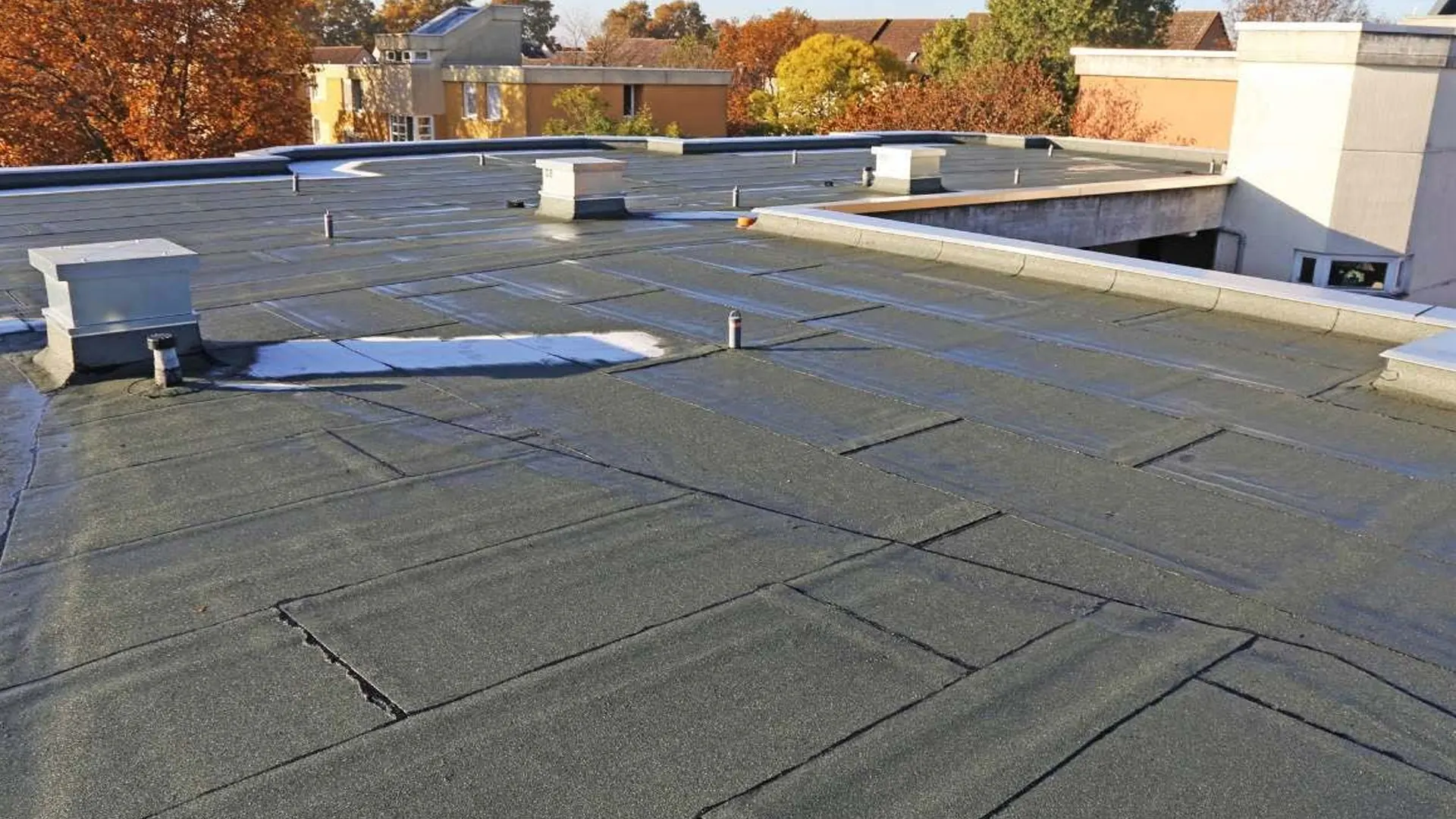
These are applied as liquids and cure into a rubber-like membrane. They’re popular because they conform to the roof’s shape, covering even the smallest gaps.
Advantages and Limitations
Liquid membranes are flexible and easy to apply, but they require precise installation. Any inconsistency can compromise the entire system.
Bituminous Membrane Systems
Bitumen-based systems are among the most traditional waterproofing methods. They involve layering sheets that create a thick, durable barrier.
Best Use Cases
These systems are ideal for flat roofs where water tends to pool. Their strength lies in their ability to withstand constant water exposure.
Polyurethane Waterproofing
Polyurethane coatings are highly elastic and resistant to extreme weather conditions.
Performance in Extreme Rain
In heavy rainfall, polyurethane performs exceptionally well due to its seamless application and resistance to standing water.
Step-by-Step Process of Roof Waterproofing Services
Roof Inspection and Assessment
Every effective waterproofing project begins with a detailed inspection. Professionals assess the roof’s condition, identify weak points, and determine the most suitable solution. It is also helpful for the Commercial Waterproofing Services.
Surface Preparation
This step is often underestimated, but it’s critical. The roof must be cleaned thoroughly to remove dirt, debris, and old coatings. Any cracks or damages are repaired before applying waterproofing materials.
Application of Waterproofing Layer
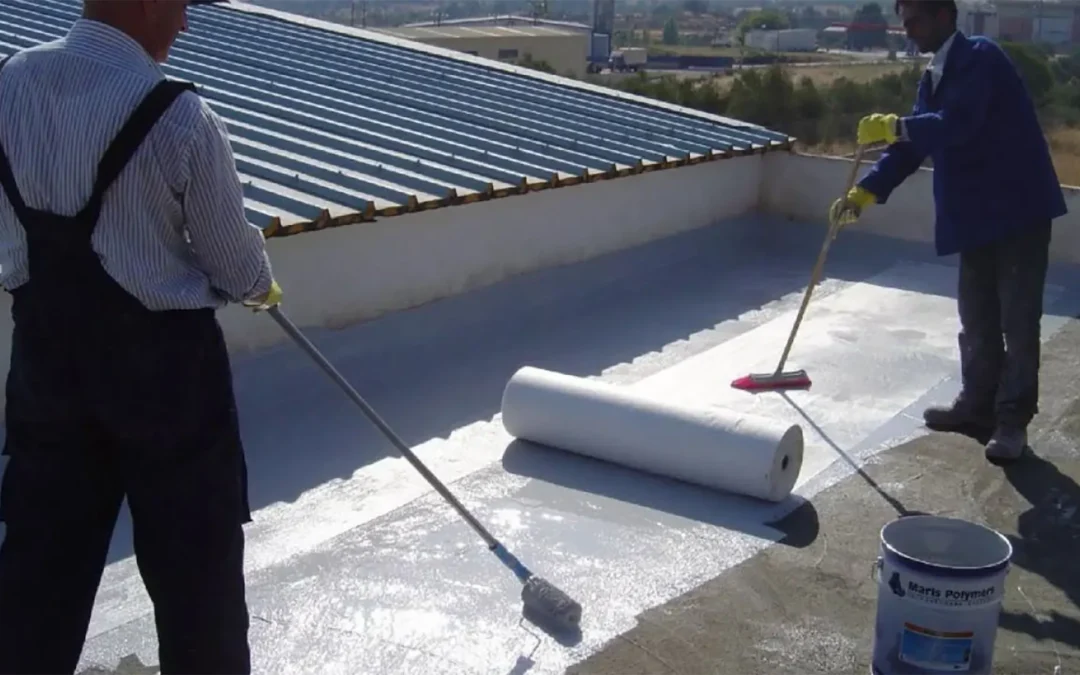
Once the surface is ready, the chosen waterproofing system is applied. This could involve spraying, rolling, or laying membranes, depending on the method.
Sealing Critical Points
Areas like joints, seams, and penetrations are particularly vulnerable. Extra care is taken to seal these points to prevent leaks.
Final Testing and Quality Check
After application, the roof is tested—often through water ponding tests—to ensure there are no leaks or weak spots.
Key Areas Vulnerable to Water Damage
Roof Joints and Seams
These are natural weak points where materials meet. Without proper sealing, they can easily allow water infiltration.
Flashing Around Chimneys and Vents
Flashing acts as a barrier around roof penetrations. If it fails, water can seep directly into the structure.
Drainage Systems
Blocked or poorly designed drainage systems can lead to water accumulation, increasing the risk of leaks.
Role of Climate in Material Selection
Temperature Fluctuations
In areas with varying temperatures, waterproofing materials must expand and contract without cracking.
Humidity and Moisture Retention
High humidity can affect how materials cure and perform. Choosing the right product ensures long-term effectiveness.
Common Mistakes in Roof Waterproofing
Poor Surface Preparation
Skipping proper cleaning and repairs can lead to poor adhesion and early failure.
Inadequate Drainage Design
Even a perfectly applied membrane can fail if water is allowed to pool.
Incorrect Material Selection
Using materials not suited for high rainfall can result in frequent repairs and higher costs over time.
Maintenance Requirements in High-Rainfall Areas
Regular Inspections
Routine inspections help identify issues before they become major problems.
Cleaning and Debris Removal
Leaves, dirt, and debris can block drainage systems, leading to water buildup.
Reapplication Timelines
Waterproofing isn’t permanent. Depending on the material, reapplication may be needed every few years.
Signs Your Roof Needs Waterproofing
Water Stains and Leakage
Visible stains on ceilings or walls are often the first sign of a problem.
Mold and Mildew Growth
Excess moisture creates the perfect environment for mold, which can affect both structure and health.
Peeling Paint or Damp Ceilings
These are subtle indicators that water is penetrating the roof.
How Professional Services Ensure Long-Term Protection
Advanced Equipment and Techniques
Professional services use specialized tools and methods to ensure precise application and thorough coverage.
Expertise and Quality Assurance
Experienced providers like Zavza Seal LLC understand the complexities of waterproofing in high-rainfall environments. Their approach combines technical knowledge with practical experience to deliver durable results.
Environmental and Structural Benefits
Increased Roof Lifespan
Proper waterproofing significantly extends the life of a roof by protecting it from constant water exposure.
Energy Efficiency Improvements
A well-sealed roof reduces heat loss and improves insulation, contributing to overall energy efficiency.
Zavza Seal LLC Serving the Midwood Community and Beyond in Brooklyn
Zavza Seal LLC is dedicated to serving the diverse needs of the local community of Brooklyn, including individuals residing in neighbourhoods like Midwood. With its convenient location near landmarks such as the “Avenue J” and major intersections like Avenue J and E 15th St (coordinates: 40.6247016, -73.9668105), we offer roof waterproofing services.
Get roof waterproofing services at Midwood Now
Call Us or Contact Us: +17184007005
Navigate from Midwood to Zavza Seal LLC Now
In high-rainfall areas, roof waterproofing isn’t just about preventing leaks it’s about preserving the integrity of your entire structure. From selecting the right materials to ensuring proper application and maintenance, every step plays a crucial role. When done correctly, waterproofing acts like an invisible shield, quietly protecting your home or building from the relentless force of nature. Understanding how roof waterproofing services brooklyn work helps you appreciate the complexity behind what might seem like a simple solution and why it’s essential for long-term protection.
How Do Roof Waterproofing Services Work in High-Rainfall Areas?
The Challenge: Intensifying Rainfall Across the U.S.
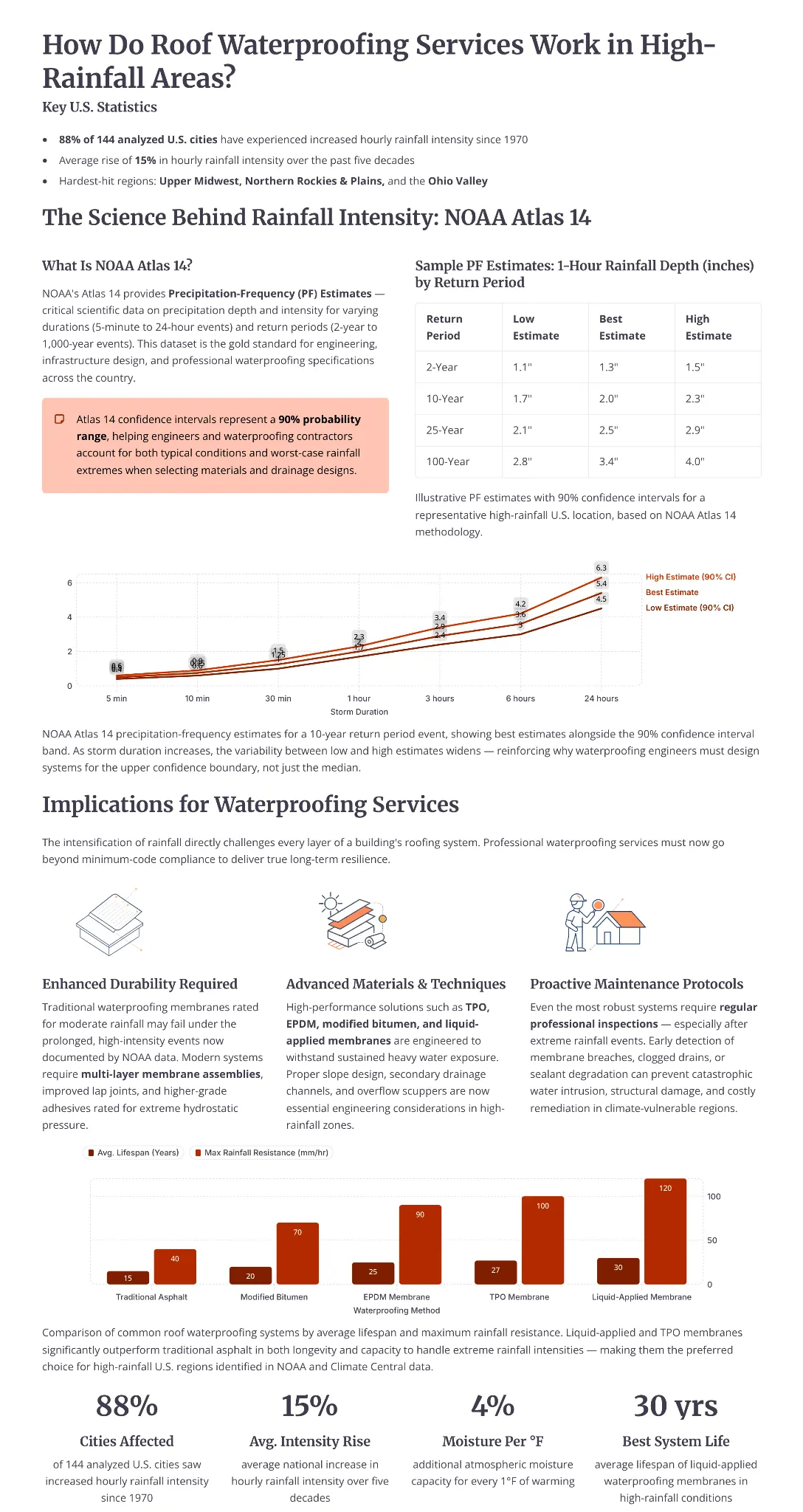
- Warming World, Wetter Downpours: Climate change is supercharging the water cycle. For every 1°F of warming, the air can hold 4% more moisture, leading to heavier rainfall extremes.
- 15% Increase in Hourly Rainfall Intensity: Since 1970, 88% of 144 analyzed U.S. cities have seen an increase in hourly rainfall intensity, averaging a 15% rise.
- Regional Hotspots: The largest average increases in hourly rainfall intensity are observed in the Upper Midwest, Northern Rockies and Plains, and Ohio Valley.
The Science Behind Rainfall Intensity: NOAA Atlas 14
- Precipitation-Frequency (PF) Estimates: NOAA’s Atlas 14 provides critical data on precipitation depth and intensity for various durations and return periods (e.g., 5-minute, 10-minute, 1-hour events). This data is essential for engineering and infrastructure design, including waterproofing.
- Confidence Intervals: These estimates come with 90% confidence intervals, indicating the range of expected precipitation for a given event, crucial for understanding the variability and potential extremes.
- Data Sources: This analysis is based on open-access data from the National Oceanic and Atmospheric Administration (NOAA) and Climate Central.
Implications for Waterproofing Services
- Enhanced Durability Required: Traditional waterproofing methods may be insufficient against the increased frequency and intensity of extreme rainfall events.
- Advanced Materials and Techniques: Services must adapt by utilizing more robust materials and installation techniques designed to withstand prolonged and heavy water exposure.
- Proactive Maintenance: Regular inspections and maintenance are critical to ensure the integrity of waterproofing systems in areas experiencing more intense rainfall.
Sources: Climate Central, NOAA Atlas 14 (National Oceanic and Atmospheric Administration)
FAQs
1. How long does roof waterproofing last in high-rainfall areas?
It depends on the material used, but most systems last between 5 to 10 years with proper maintenance.
2. Can waterproofing be applied to an old roof?
Yes, but the roof must be thoroughly inspected and repaired before application.
3. What is the best waterproofing method for heavy rain?
Liquid membranes and polyurethane coatings are often preferred due to their seamless application and flexibility.
4. How often should a waterproofed roof be inspected?
At least twice a year, especially before and after the rainy season.
5. Does waterproofing improve energy efficiency?
Yes, it helps in reducing heat transfer, which can improve indoor temperature regulation.