
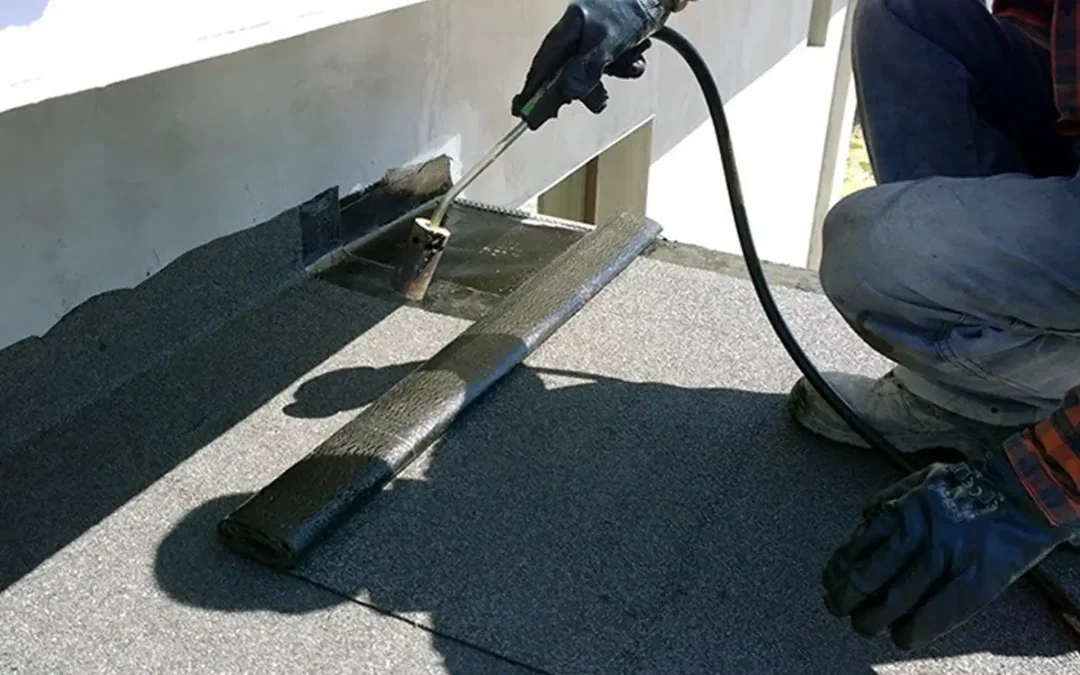
Masonry walls are remarkably durable. Brick, concrete block, stone, and mortar can withstand decades of weather, temperature changes, and everyday wear. But even strong materials have a weak point: persistent moisture.
A wall that gets wet occasionally can often dry without serious consequences. A wall that stays damp for months or repeatedly absorbs water is a different story. Moisture can move through tiny pores, cracks, joints, and construction gaps. Over time, that water can contribute to staining, efflorescence, mortar deterioration, cracking, spalling, mold growth in adjacent areas, and even more significant structural concerns.
This is why waterproofing is more than simply putting a coating on a wall.
Professional waterproofing contractors Brooklyn property owners typically approach masonry moisture as a system. They investigate where water is coming from, determine how it is moving through the wall, evaluate the condition of the masonry, select compatible materials, and address drainage conditions that may be keeping the wall wet.
The goal is not merely to make a surface look dry. The goal is to reduce unwanted water entry while allowing the masonry assembly to perform as intended.
For example, a company such as Zavza Seal LLC may be discussed in the context of masonry waterproofing, but understanding the underlying methods is more important than focusing on any particular provider. Once you understand how these systems work, it becomes easier to recognize why proper preparation, material compatibility, drainage, and maintenance all matter.
Why Long-Term Moisture Is a Problem for Masonry
Masonry is porous by nature. Even materials that appear solid contain microscopic pores and pathways through which water can move.
Rainwater may soak into exposed brick. Groundwater can push against foundation walls. Poorly sealed joints can allow water to enter around windows, doors, parapets, or transitions between materials. Once moisture enters, it does not necessarily remain at the point where it first appeared.
Think of masonry like a very dense sponge. It does not absorb water as quickly as an ordinary sponge, but its pores can hold and transport moisture. When the wall cannot dry properly, moisture accumulates.
That creates several problems.
Water can weaken deteriorated mortar, carry dissolved salts toward the surface, and contribute to repeated freeze-thaw damage. In interior spaces, persistent dampness can also create conditions favorable to biological growth.
The important distinction is between temporary wetting and chronic moisture exposure. Waterproofing contractors are primarily concerned with controlling the second problem.
How Water Enters Masonry Walls
Water can reach masonry from several directions. Rain is an obvious source, but it is far from the only one.
Exterior walls may absorb wind-driven rain through porous brick or deteriorated mortar joints. Foundation walls may experience hydrostatic pressure from saturated soil. Water can also enter through cracks, failed sealants, roof drainage problems, and improperly detailed building transitions.
In older buildings, the situation can be even more complicated because masonry assemblies may have been repaired several times using different materials.
A wall might contain original brick, newer mortar, patches of concrete, metal components, and modern sealants. Each material reacts differently to moisture and temperature.
That means waterproofing cannot always be approached as a one-material problem.
Common Moisture Pathways
Some of the most common pathways include:
- Masonry pores and capillaries
- Cracked or deteriorated mortar joints
- Wall-to-foundation transitions
- Window and door perimeters
- Parapets and coping
- Roof-wall intersections
- Penetrations for pipes, cables, and mechanical equipment
- Foundation cracks
- Poorly functioning gutters and downspouts
- Groundwater around below-grade walls
- Improper grading near foundations
Finding the actual pathway matters because treating only the visible damp spot may leave the source untouched.
What Happens to Masonry During Prolonged Water Exposure?
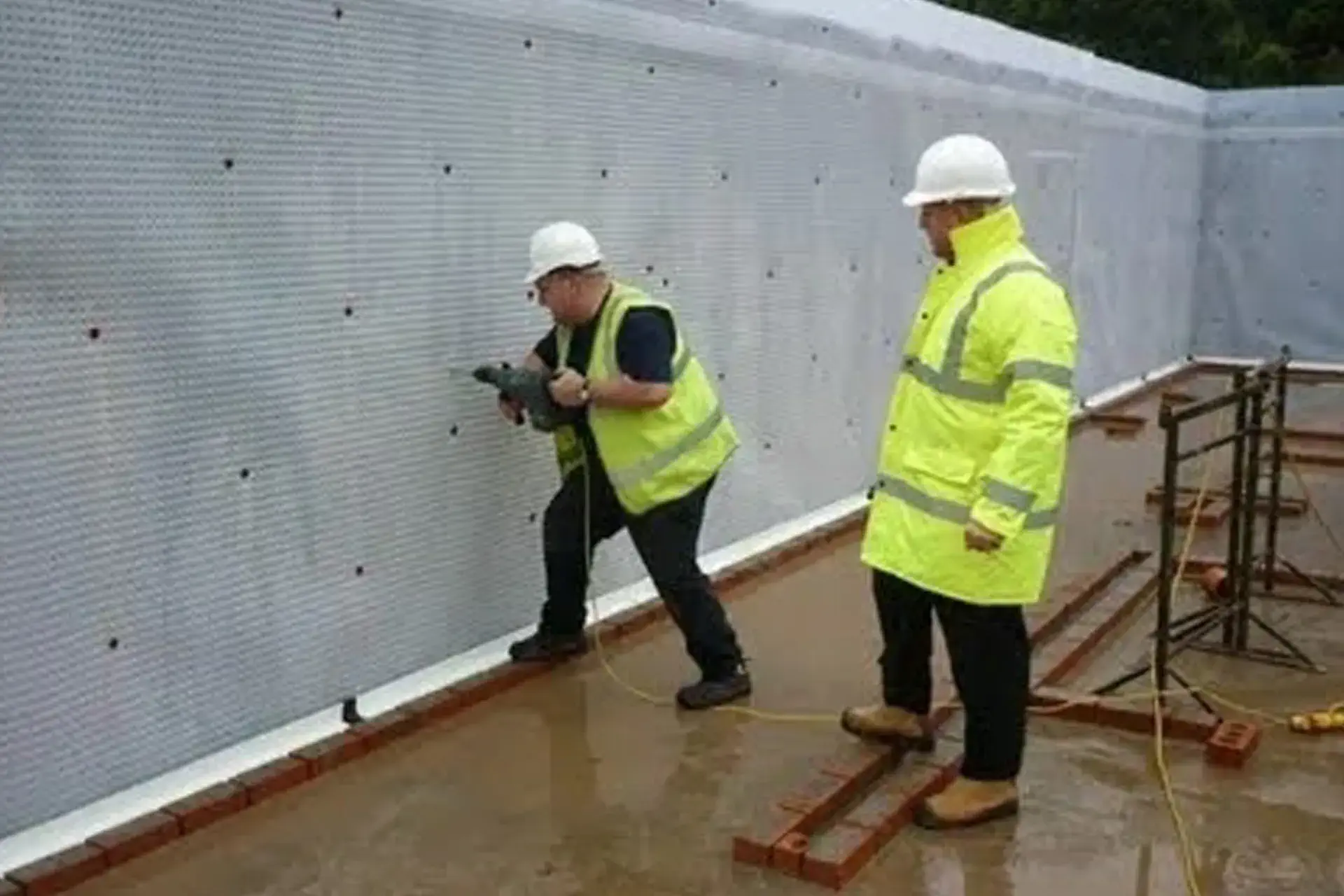
Long-term moisture exposure can create a chain reaction.
Initially, the wall may simply show darker patches after rain. Later, white crystalline deposits may appear. Mortar joints may begin to crumble. Paint or coatings can blister. Brick faces may deteriorate.
These symptoms do not always appear in a predictable order.
Moisture movement depends on the masonry type, weather conditions, wall orientation, drainage, temperature, and the amount of water reaching the structure.
Freeze-Thaw and Thermal Stress
Freeze-thaw cycles are particularly important in climates where temperatures regularly move around the freezing point.
When absorbed water freezes, it expands. If sufficient moisture is trapped within masonry pores, repeated freezing and thawing can generate stresses inside the material.
One cycle may cause little visible damage. Hundreds of cycles can be much more significant.
Brick faces can eventually flake or spall. Mortar joints may deteriorate. Existing cracks can become wider. The risk is especially relevant when masonry is already saturated or has limited ability to dry.
Waterproofing therefore involves more than stopping rain from touching a wall. It also involves reducing excessive absorption and allowing the wall to manage moisture appropriately.
Efflorescence, Staining, and Surface Deterioration
Have you ever noticed white, powdery material appearing on a brick wall?
That may be efflorescence.
Water moving through masonry can dissolve soluble salts. As moisture travels toward the surface and evaporates, those salts may be left behind as visible deposits.
Efflorescence is not necessarily a structural emergency, but it is an important clue. It indicates that moisture has been moving through the masonry.
Repeated moisture movement can also cause dark staining, discoloration, peeling finishes, and deterioration of surface treatments.
The visible mark is therefore often the messenger rather than the problem itself.
How Waterproofing Contractors Evaluate Masonry Walls
Before applying waterproofing material, contractors generally need to understand the wall’s condition.
A professional assessment may involve examining the exterior and interior surfaces, reviewing drainage conditions, identifying cracks, checking mortar joints, and determining whether moisture is entering from above, through the wall, or from below grade.
The assessment should answer a basic question:
Where is the water coming from, and how is it getting inside?
That question sounds simple, but masonry moisture can be surprisingly deceptive.
Visual Inspection and Moisture Assessment
A visual inspection may identify:
- Discolored masonry
- Efflorescence
- Crumbling mortar
- Open joints
- Cracks
- Spalled brick
- Failed sealant
- Damp interior areas
- Peeling coatings
- Water marks
- Damaged flashing or coping
Depending on the situation, moisture meters and other diagnostic tools may help identify damp areas that are not obvious from appearance alone.
The inspection should consider both the wall and its surroundings. A perfectly intact masonry wall can still experience moisture problems if a downspout discharges water directly beside the foundation.
Identifying the Source Before Treating the Symptoms
This is one of the most important principles in waterproofing.
Imagine seeing water on a basement wall and immediately sealing the interior surface. If the exterior soil remains saturated and hydraulic pressure continues pushing water toward the wall, the underlying condition has not necessarily been resolved.
Likewise, coating a brick wall will not correct a leaking roof-wall transition.
The most effective moisture-control strategies usually begin with source identification.
Cleaning and Preparing Masonry Surfaces
Surface preparation has a major influence on waterproofing performance.
Dirt, biological growth, loose mortar, old coatings, efflorescence, and other contaminants can interfere with adhesion or penetration.
Contractors may use appropriate cleaning techniques based on the masonry’s condition. The method needs to be strong enough to remove unwanted material but gentle enough to avoid damaging the substrate.
Overly aggressive cleaning can create a new problem.
For historic or soft brick, for example, an inappropriate cleaning method may damage the masonry surface or remove material from already weakened areas.
Removing Contaminants and Failed Materials
Loose coatings and deteriorated sealants may need to be removed before new materials are installed.
Mortar joints that have lost their integrity may also require repair before waterproofing begins.
The principle is straightforward: waterproofing materials cannot compensate for a substrate that is already failing.
Preparation is the foundation beneath the foundation.
Exterior Masonry Waterproofing Methods
Exterior waterproofing is often valuable because it addresses water before it enters the wall assembly.
The appropriate technique depends on the masonry type, exposure conditions, wall condition, and source of moisture.
No single waterproofing product works universally for every masonry wall.
Penetrating Water Repellents
Penetrating water repellents are designed to enter the pores of compatible masonry and reduce water absorption.
Many are formulated to repel liquid water while maintaining a degree of vapor permeability. This distinction matters because masonry may need to release moisture as well as resist incoming rain.
A water-repellent treatment should therefore not automatically be confused with an impermeable coating.
The product needs to match the substrate and exposure conditions.
Elastomeric and Membrane Coatings
Some situations call for surface-applied waterproofing coatings or membranes.
Elastomeric materials can provide flexibility and help bridge certain small surface imperfections. Membrane systems can create a more continuous barrier against liquid water.
However, coating a wall is not automatically a complete waterproofing solution.
If the substrate is damp, damaged, contaminated, or structurally moving, coating performance can be compromised. Vapor behavior also needs to be considered, particularly when moisture is already trapped within a masonry assembly.
Crack and Joint Treatment
Cracks and joints are natural weak points because they can create direct pathways for water.
Contractors may use appropriate sealants, repair mortars, injection materials, or other systems depending on the crack’s location and characteristics.
The critical question is whether a crack is merely superficial or indicates movement.
A crack that continues to expand may require a different response from a stable hairline crack.
Interior Waterproofing and Moisture Management
Exterior waterproofing is not always practical. Buildings may have neighboring structures, inaccessible exterior walls, deep foundations, historic finishes, or other constraints.
Interior moisture-control systems can therefore have an important role.
Interior Sealants and Coatings
Interior masonry coatings can help reduce water intrusion in certain situations, particularly when applied to properly prepared surfaces.
But interior coatings should not be treated as magic paint.
If water pressure is significant, moisture may continue to enter through cracks, joints, floor-wall connections, or other pathways.
A coating can be part of a larger system, but it may not solve a drainage problem by itself.
Drainage and Pressure Management
Below-grade walls are especially affected by water pressure.
When soil around a foundation becomes saturated, groundwater can exert pressure against the wall. If cracks or porous materials provide pathways, water may move toward the interior.
Interior drainage systems can help manage this water by collecting and directing it toward an appropriate discharge point.
In other cases, exterior excavation and drainage improvements may be more suitable.
The right choice depends on the structure and the source of the moisture.
Why Drainage Matters as Much as Waterproofing
Waterproofing and drainage work together.
Think about an umbrella with a bucket sitting underneath it. The umbrella may stop rain from reaching you, but if the bucket is already overflowing, you still have a water problem.
Likewise, a waterproof coating cannot compensate indefinitely for poor site drainage.
Gutters, Downspouts, and Site Grading
Roof water should be directed away from vulnerable foundation areas.
Clogged gutters can overflow against exterior walls. Short or poorly positioned downspouts can concentrate large amounts of water beside foundations.
Ground grading also matters. Ideally, surface water should move away from the building rather than collect against it.
These are relatively simple components, but they can have a major influence on moisture exposure.
Foundation Drainage and Hydrostatic Pressure
Foundation drainage systems can reduce the amount of water accumulating around below-grade walls.
Depending on the structure, this may involve exterior drainage, footing drains, interior drainage channels, sump systems, or other water-management approaches.
The objective is not simply to “seal everything.” It is to control the water and pressure acting on the building.
How Mortar Joints Are Protected
Mortar joints can represent a substantial portion of a masonry wall’s vulnerability.
When joints deteriorate, gaps can form between masonry units. Water then has an easier route into the wall.
Repointing Deteriorated Joints
Repointing involves removing deteriorated mortar from joints and installing compatible new mortar.
It is important to avoid treating repointing as a cosmetic exercise.
The mortar performs functional work by helping protect the wall from water penetration while accommodating certain movements between masonry units.
Matching Mortar to Existing Masonry
Mortar compatibility matters enormously.
A mortar that is substantially harder or less permeable than the surrounding historic masonry can create problems. Instead of allowing the joint to accommodate weathering and movement, an incompatible mortar may shift stress toward the masonry units.
For older buildings, material selection should therefore account for the original construction and the characteristics of the existing masonry.
How Contractors Address Masonry Cracks
Cracks are not all alike.
A tiny surface crack, a horizontal foundation crack, and a stepped crack through brick joints can have very different causes.
Structural and Non-Structural Cracks
Non-structural cracks may result from shrinkage, minor movement, thermal changes, or aging materials.
Structural cracks can be associated with settlement, movement, load-related issues, or other building conditions.
Waterproofing contractors may identify and seal appropriate cracks, but signs of significant structural movement should receive appropriate professional evaluation rather than being hidden beneath waterproofing materials.
Sealing a symptom without understanding its cause can turn a short-term repair into a recurring problem.
Choosing Materials for Brooklyn’s Building Conditions
Masonry waterproofing in Brooklyn can involve a wide range of building types, from older brick structures to newer concrete construction.
Weather exposure, seasonal temperature changes, dense urban construction, adjacent buildings, and below-grade spaces can all influence moisture behavior.
This is one reason why waterproofing contractors in Brooklyn property owners research need to understand more than products. They need to understand building assemblies.
Brick, Concrete Block, Stone, and Mixed Masonry
Brick is porous and can respond differently to coatings than dense concrete.
Concrete block has its own absorption characteristics, while natural stone varies substantially by type.
Mixed-material walls can be even more complicated.
For example, a wall may transition from brick to concrete foundation, with sealants around windows and metal components at roof or parapet areas.
Each transition creates another location where water may enter.
The waterproofing strategy should account for the entire assembly rather than focusing on one visible surface.
Maintenance After Waterproofing
Waterproofing is not necessarily a one-time event that eliminates all future maintenance.
Buildings continue to move. Sealants age. Gutters collect debris. Mortar weathers. Coatings gradually lose performance.
Routine inspections can catch developing problems before they become major repairs.
Useful maintenance checks include inspecting masonry after severe weather, checking mortar joints, clearing gutters, examining downspouts, watching for new cracks, and looking for recurring efflorescence or interior dampness.
If a previously dry wall begins showing moisture again, investigating early is generally better than waiting until finishes begin to deteriorate.
Common Waterproofing Mistakes to Avoid
Several mistakes repeatedly create problems.
Ignoring drainage: Water directed toward a foundation can overwhelm otherwise sound waterproofing.
Sealing a dirty surface: Contaminants can prevent waterproofing products from performing properly.
Using incompatible materials: Masonry needs materials that work with its physical and moisture characteristics.
Covering active cracks: A crack caused by movement may continue to reopen beneath a surface treatment.
Blocking vapor movement unnecessarily: An impermeable coating can sometimes trap moisture inside a wall.
Skipping repairs: Deteriorated mortar or damaged masonry should not simply be hidden beneath a new finish.
Treating every wall the same: A historic brick wall, concrete block foundation, and stone retaining wall do not necessarily require identical solutions.
These mistakes all point to the same lesson: waterproofing is a diagnostic process as much as it is an installation process.
How Long-Term Protection Is Achieved
The strongest moisture-control strategies usually combine several layers of protection.
First, the source of water is identified. Then the masonry is inspected and prepared. Cracks and deteriorated joints are repaired. Appropriate water-repellent, coating, membrane, or sealant systems are selected. Drainage is improved where necessary. Finally, the completed work is monitored over time.
This layered approach is much more reliable than expecting one product to solve every moisture problem.
Masonry needs a balanced environment. It should be protected from excessive liquid-water intrusion while retaining the ability to manage moisture appropriately.
That balance is especially important in older structures where the wall was designed around traditional materials and construction practices.
Whether someone is researching waterproofing contractors brooklyn options or simply trying to understand why a masonry wall keeps becoming damp, the underlying principles remain the same: identify the water source, understand the masonry, repair vulnerable areas, control drainage, choose compatible materials, and maintain the system.
Zavza Seal LLC is one example of a business name that may arise when researching waterproofing-related topics, but the technical principles behind masonry protection apply broadly across residential and commercial buildings.
Zavza Seal LLC Serving the West Midwood Community and Beyond in Brooklyn
Zavza Seal LLC is dedicated to serving the diverse needs of the local community of Brooklyn, including individuals residing in neighbourhoods like West Midwood. With its convenient location near landmarks such as the Ocean Parkway Pediatrics and major intersections like E17th St and Avenue I (coordinates: 40.6269516, -73.9697749), we offer waterproofing contractors.
Get waterproofing contractors at West Midwood Now
Call Us or Contact Us: +17184007005
Navigate from West Midwood to Zavza Seal LLC Now
Long-term moisture exposure can quietly weaken masonry long before the damage becomes obvious. A stain on the wall may be only the visible tip of a much larger moisture pathway. Effective waterproofing therefore requires more than applying a barrier to the surface. It requires understanding how water reaches the building, how masonry absorbs and releases moisture, where weak points exist, and how drainage affects the entire system. When those factors are considered together, waterproofing becomes a form of long-term building preservation rather than a simple surface treatment.
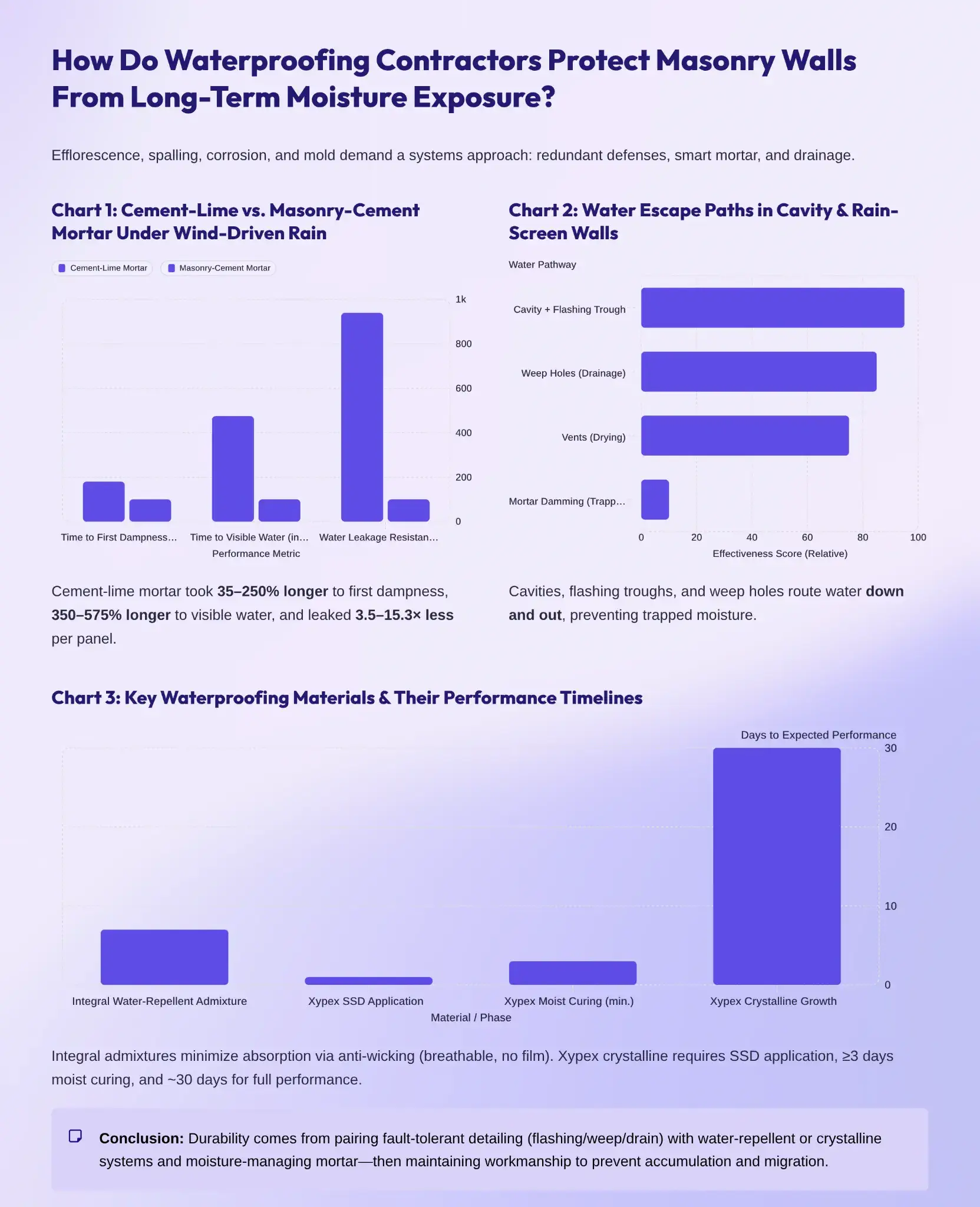
How Do Waterproofing Contractors Protect Masonry Walls From Long-Term Moisture Exposure?
- What moisture causes (why contractors act): efflorescence, spalling, wall rot, corrosion of backup studs/ties/reinforcements, and even mold-driven health risk when intrusion isn’t managed
- The “measurable” protection stack (a systems approach): redundant lines of defense using surface protection plus internal protection plus drainage/drying; practically implemented with flashing, counterflashing, weeps/vents, sealants, water repellents, vapor retarders, and crack-control measures
- Chart 1 (mechanism → outcome): Cement-lime vs masonry-cement mortar under wind-driven rain tests cement-lime took ~35% to 250% longer to first dampness, ~350% to 575% longer to first visible water, and leaked 3.5–15.3× less per panel
- Chart 2 (water escape path): cavity/drainage and rain-screen concepts rely on cavities, flashing troughs, and weep holes to route water down and out instead of trapping it as “mortar damming”
- Chart 3 (materials contractors add): integral water-repellent admixtures use anti-wicking to minimize absorption and drain toward flashing/weep holes (breathable, no surface film); Xypex crystalline method requires SSD application and moist curing ≥3 days, with crystalline growth needing ~30 days for expected performance
- Conclusion: long-term durability comes from pairing fault-tolerant detailing (flashing/weep/drain) with water-repellent or crystalline systems and moisture-managing mortar choices then maintaining workmanship to keep water from accumulating and migrating
Frequently Asked Questions
1. Can waterproofing prevent all moisture from entering masonry walls?
No waterproofing system should be assumed to make masonry completely immune to moisture. Masonry is porous and can experience moisture from rain, humidity, groundwater, and vapor movement. Proper waterproofing aims to control excessive liquid-water intrusion while allowing the wall to manage moisture appropriately.
2. Why does efflorescence appear after a wall gets wet?
Efflorescence occurs when water moves through masonry and carries soluble salts toward the surface. As the water evaporates, the salts can remain behind as white or powdery deposits. Removing the deposits may improve appearance, but identifying the moisture source is important if efflorescence continues to return.
3. Is exterior waterproofing always better than interior waterproofing?
Not necessarily. Exterior waterproofing can address water before it reaches the wall, but excavation may be impractical or impossible in some buildings. Interior drainage and waterproofing systems can provide effective moisture management under certain conditions. The appropriate approach depends on the building, water source, accessibility, and wall construction.
4. How often should masonry walls be inspected for moisture problems?
There is no universal inspection interval for every building. Masonry should be checked periodically, particularly after major storms, prolonged wet weather, freezing conditions, or visible changes such as new cracks, staining, efflorescence, or deteriorating mortar. Older buildings may benefit from more frequent observation.
5. Can deteriorated mortar joints cause water to enter a masonry wall?
Yes. Open, cracked, or deteriorated mortar joints can provide pathways for water. Repointing can restore the joints when deterioration is localized and the underlying masonry remains suitable for repair. The replacement mortar should be compatible with the existing masonry rather than selected solely for maximum hardness.