
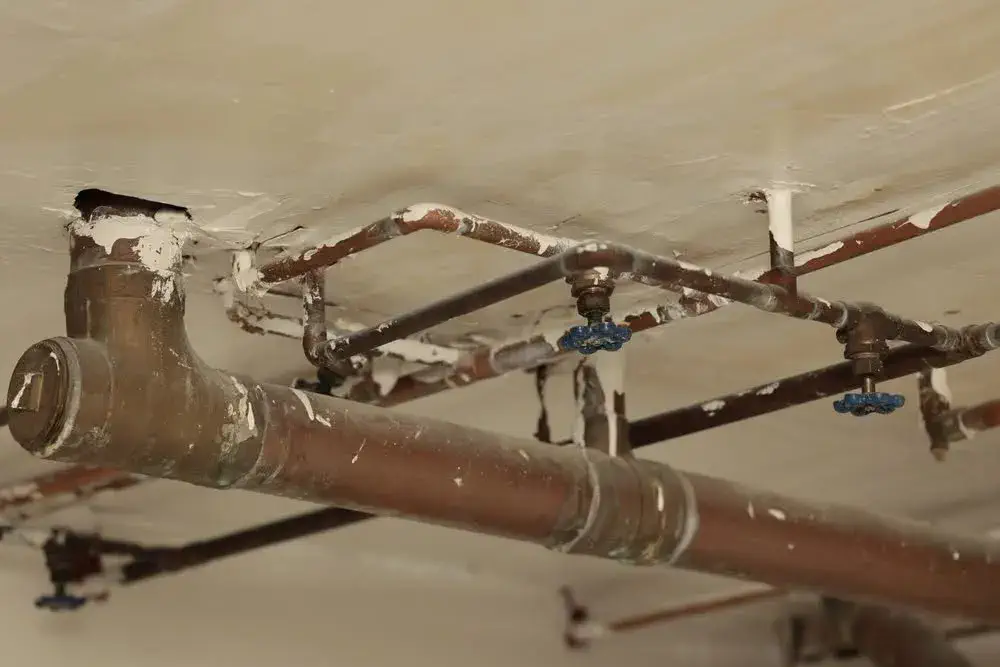
Basement water problems rarely appear without warning. Damp walls, musty odors, stains, and small puddles are often early indicators that moisture is entering the structure. But identifying exactly where the water comes from is a complex process that requires careful investigation.
A professional such as a basement waterproofing contractor brooklyn typically follows a systematic inspection method to track down the root cause of water intrusion. This process involves evaluating structural components, inspecting drainage systems, testing moisture levels, and analyzing both interior and exterior conditions around the property.
Companies like Zavza Seal LLC rely on this methodical approach to understand how water travels through soil, foundation materials, and structural gaps before recommending solutions. Understanding this process provides valuable insight into how professionals diagnose basement moisture issues.
Understanding Basement Water Intrusion
What Water Intrusion Means in Residential Structures
Water intrusion refers to any situation where moisture enters a building through unintended openings. In basements, this usually happens through foundation cracks, porous concrete, gaps around pipes, or poorly sealed joints.
Unlike visible flooding, water intrusion can be subtle. It may occur slowly over time as groundwater seeps through small openings or builds up pressure against the foundation.
Why Basements Are Vulnerable to Moisture
Basements sit below ground level, which means they are surrounded by soil that can hold water. After rainfall or snowmelt, the soil becomes saturated, increasing the pressure against foundation walls.
Several factors contribute to this vulnerability:
- Groundwater accumulation
- Soil expansion and contraction
- Improper drainage around the structure
- Foundation settling over time
Because of these conditions, even well-built basements can develop water entry points.
The Role of a Basement Waterproofing Contractor
Professional Inspection and Diagnosis
A professional waterproofing inspection focuses on identifying where water enters and why it occurs. A basement waterproofing contractor in brooklyn performs a step-by-step analysis rather than assuming the cause.
This diagnostic process usually includes:
- Interior basement inspection
- Exterior foundation assessment
- Drainage evaluation
- Moisture testing
Each step helps isolate the true source of the water intrusion.
Tools and Techniques Used in Waterproofing Inspections
Modern contractors use several specialized tools to gather evidence during inspections. These may include:
- Moisture meters
- Thermal imaging cameras
- Laser levels for grading checks
- Humidity monitors
These tools help detect hidden moisture that may not be visible to the naked eye.
Initial Visual Inspection of the Basement
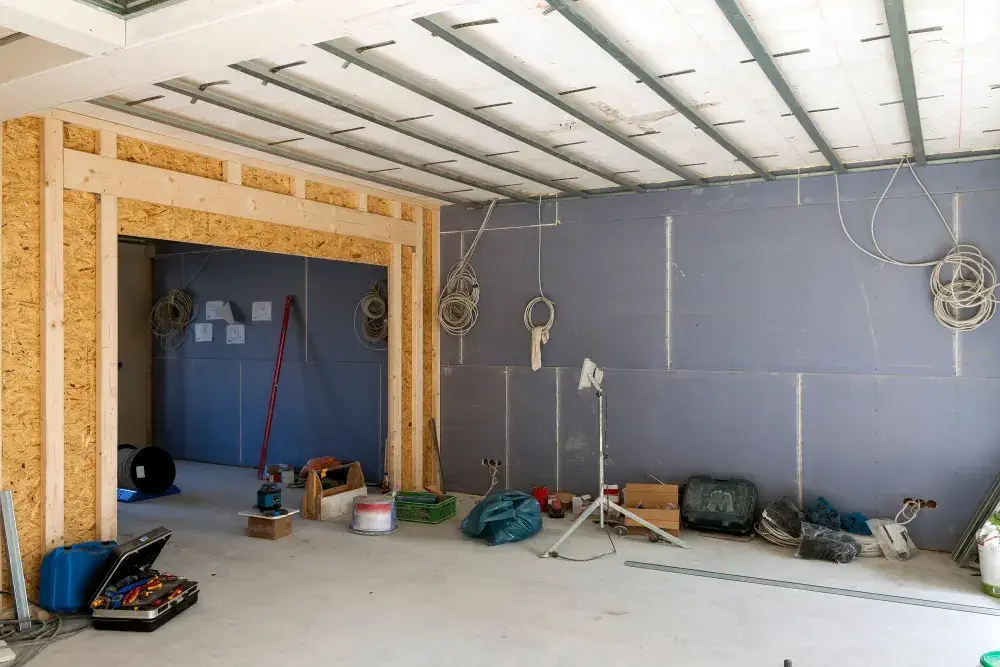
Checking Walls and Floor Surfaces
The inspection process often begins inside the basement. Contractors look closely at the foundation walls and flooring to identify early warning signs of moisture infiltration.
Common indicators include:
- Damp patches on concrete
- Peeling paint or coatings
- Rust stains near metal fixtures
- Water marks along the floor edges
Each of these signs can point toward potential entry points.
Identifying Efflorescence and Staining
Efflorescence is a white powdery residue left behind when water moves through concrete and evaporates. This mineral deposit is a strong indicator that moisture has traveled through the wall.
Contractors use the location of efflorescence to trace the path of water movement inside the structure.
Inspecting Basement Corners and Joints
Water often enters through weak structural intersections. These include:
- Wall-to-floor joints
- Corners of foundation walls
- Pipe penetration points
These areas are common because construction joints naturally contain tiny gaps that may widen over time.
Evaluating Foundation Cracks
Types of Cracks Found in Basement Foundations
Cracks are one of the most common pathways for water intrusion. Contractors classify cracks based on their direction and size.
Typical types include:
- Vertical cracks
- Horizontal cracks
- Stair-step cracks in masonry
- Diagonal settlement cracks
Each crack type can indicate different structural conditions.
Structural vs Non-Structural Cracks
Not all cracks are equal. Some result from natural concrete shrinkage and pose minimal risk, while others may signal structural movement.
Contractors evaluate cracks based on:
- Width and length
- Location on the wall
- Evidence of movement
- Presence of moisture
Understanding these differences helps determine whether cracks are contributing to water intrusion.
Exterior Inspection of the Property
Examining the Foundation Perimeter
After completing the interior inspection, contractors evaluate the exterior foundation walls.
This involves checking:
- Visible cracks or gaps
- Deteriorating mortar joints
- Foundation coating conditions
- Drainage pathways around the structure
Exterior conditions often reveal the original cause of water entry.
Checking Soil Grading and Landscaping
The slope of the ground around the home plays a critical role in directing rainwater away from the structure.
Contractors check whether the soil slopes away from the foundation or toward it. Poor grading allows water to collect near the foundation walls.
How Improper Grading Causes Water Intrusion
When soil slopes toward the home, rainwater naturally flows toward the foundation. Over time, this increases soil saturation and pressure against basement walls.
The result is increased risk of water seeping through cracks or joints.
Investigating Drainage Systems
Downspouts and Gutter Systems
Roof drainage systems are often overlooked during basement inspections. However, they play a major role in directing water away from the building.
Contractors examine:
- Gutter condition and alignment
- Downspout placement
- Distance water is discharged from the foundation
If downspouts release water too close to the house, it can quickly saturate the surrounding soil.
Foundation Drainage Systems
Many buildings include foundation drains designed to carry groundwater away from the structure.
Contractors inspect whether these systems are:
- Clogged
- Damaged
- Improperly installed
Drainage failures often explain persistent basement moisture issues.
Moisture Testing and Detection Methods
Moisture Meters and Thermal Imaging
A visual inspection alone cannot always reveal hidden moisture problems. Advanced detection tools help contractors identify areas where water may be present behind walls or under flooring.
Moisture meters measure the water content in building materials. Thermal imaging cameras detect temperature differences caused by moisture.
These technologies allow professionals to detect water paths that would otherwise remain hidden.
Water Flow Testing
Sometimes contractors simulate water flow around a building to see how it behaves during heavy rainfall.
This controlled testing helps determine:
- How quickly water accumulates
- Where it travels around the structure
- Which areas are vulnerable to intrusion
This technique helps confirm suspected entry points.
Identifying Hydrostatic Pressure Problems
How Groundwater Pressure Impacts Foundations
Hydrostatic pressure occurs when water accumulates in the soil around a foundation. As the water builds up, it exerts pressure against basement walls and floors.
Concrete may appear solid, but it contains microscopic pores that allow water to pass through under pressure.
Signs of Hydrostatic Pressure
Common signs include:
- Water seepage along floor joints
- Bowing basement walls
- Cracks widening over time
- Damp basement floors after rainfall
Recognizing these symptoms helps contractors identify groundwater pressure as the underlying cause.
Evaluating Basement Ventilation and Humidity
The Role of Air Circulation
Not all basement moisture comes from external water intrusion. Poor ventilation can cause humidity to accumulate, creating damp conditions that resemble water leaks.
Contractors measure humidity levels to determine whether the problem originates from internal condensation or external water entry.
Condensation vs Water Intrusion
Condensation typically forms on cold surfaces such as pipes or concrete walls. Water intrusion, however, usually leaves consistent damp patterns along structural surfaces.
Distinguishing between these two conditions is an important step in diagnosing basement moisture problems.
Documentation and Analysis of Findings
Creating a Water Intrusion Map
After completing inspections and tests, contractors document all findings. This often includes creating a visual map of where moisture was detected within the basement.
This map helps track how water travels from the exterior environment into the structure.
Determining the Root Cause
A professional waterproofing services provider focuses on identifying the root cause, not just the symptoms.
For example, a crack in the basement wall may not be the real problem. The true cause could be poor exterior drainage that increases soil pressure.
Companies such as Zavza Seal LLC analyze all inspection data to determine how these factors interact before identifying the true source of water intrusion.
Importance of Professional Expertise
Why Experience Matters in Waterproofing Diagnosis
Water intrusion problems can be deceptive. A puddle appearing in one corner of a basement might originate from a completely different location.
Experienced professionals understand how water moves through soil and building materials. A knowledgeable basement waterproofing contractor brooklyn can recognize patterns that indicate deeper structural or environmental issues.
Local Knowledge and Building Conditions
Regional factors also influence water intrusion risks. Soil composition, groundwater levels, and building age all affect how basements respond to moisture.
Contractors familiar with local construction practices and environmental conditions can better interpret inspection results.
Zavza Seal LLC Serving the West Midwood Community and Beyond in Brooklyn
Zavza Seal LLC is dedicated to serving the diverse needs of the local community of Brooklyn, including individuals residing in neighbourhoods like West Midwood. With its convenient location near landmarks such as the “Yeshiva Sholom Shachna- Cheder School” and major intersections like Elmwood Ave and E 5th St (coordinates: 40.6269516, -73.9727394), we have basement waterproofing contractor.
Get basement waterproofing services at West Midwood Now
Call Us or Contact Us: +17184007005
Navigate from West Midwood to Zavza Seal LLC Now
Identifying the source of basement water intrusion requires far more than spotting a leak. It involves a comprehensive inspection process that evaluates structural components, drainage systems, soil conditions, and moisture patterns within the building.
A professional basement waterproofing contractor brooklyn approaches the problem methodically beginning with visual inspection, followed by structural analysis, exterior evaluation, and moisture testing. Each step helps uncover how water enters the basement and why it persists.
Organizations such as Zavza Seal LLC apply this investigative approach to trace the path of moisture from the surrounding environment into the structure. By identifying the true source of water intrusion, contractors can better understand the mechanisms behind basement moisture problems and the conditions that allow them to develop.
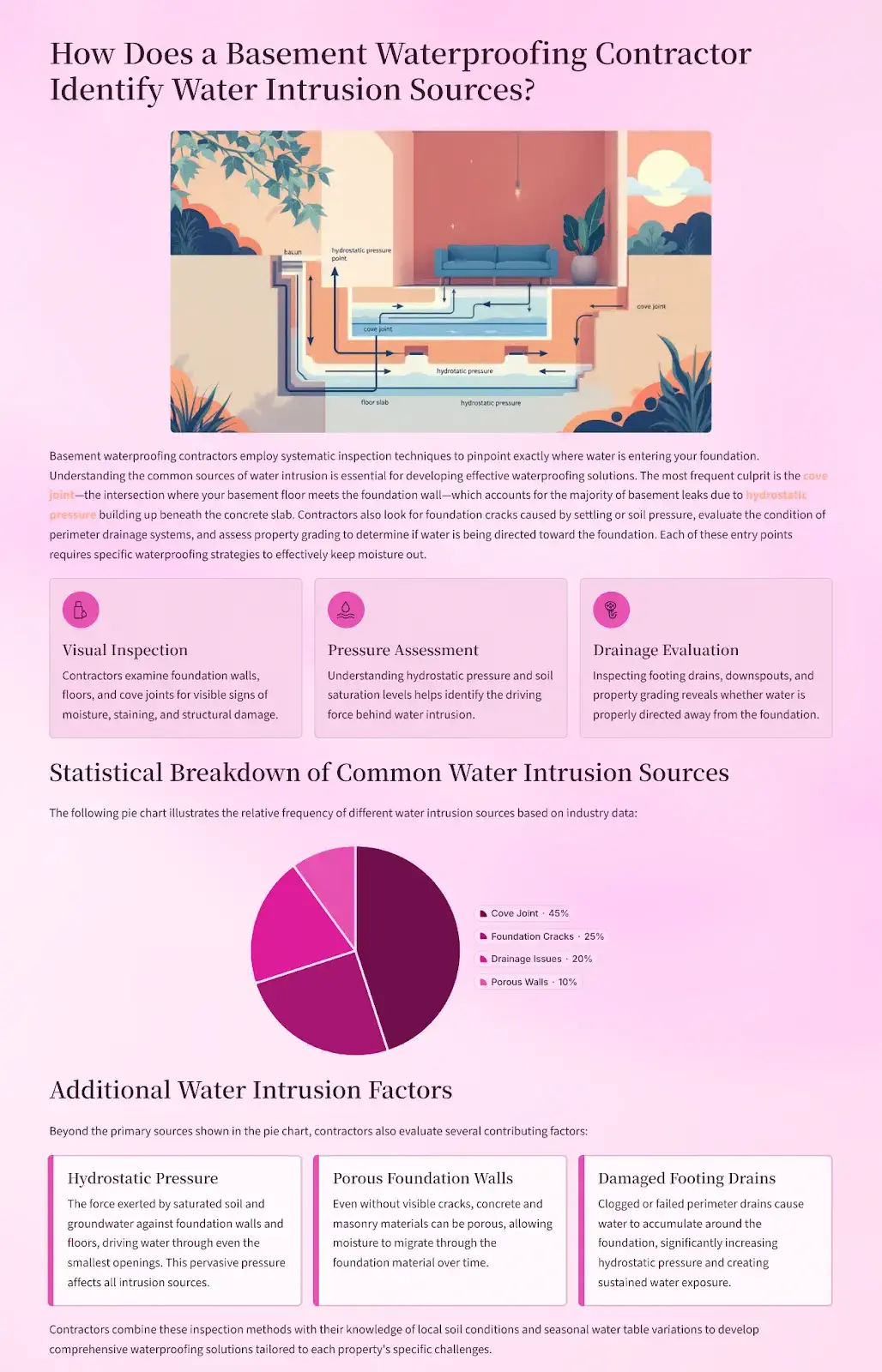
How Does a Basement Waterproofing Contractor Identify Water Intrusion Sources?
[image] A cross-section diagram of a house foundation showing various water intrusion points, with callouts for each source.
The Culprits: Where Water Enters Your Basement
- The Cove Joint (Floor-Wall Joint): The most common entry point, accounting for 65-70% of basement leaks, where hydrostatic pressure from beneath the slab pushes water into the basement.
- Foundation Cracks: Cracks in the foundation walls, often caused by settling or soil pressure, allow lateral hydrostatic pressure to infiltrate.
- Hydrostatic Pressure: The force exerted by saturated soil and groundwater against foundation walls and floors, driving water through even the smallest openings. This is a fundamental driver for many leaks.
- Poorly Sealed or Damaged Footing Drains: Clogged or failed perimeter drains can cause water to accumulate around the foundation, increasing hydrostatic pressure.
- Inadequate Grading and Poor Drainage: Improperly sloped ground directs water towards the foundation, saturating the soil and exacerbating pressure.
- Window Wells and Doors: Leaks can occur around basement windows and doors due to poor sealing or improper drainage.
- Porous Foundation Walls: Even without visible cracks, concrete and masonry can be porous, allowing moisture to migrate through.
Statistical Breakdown of Common Water Intrusion Sources:
[pie-chart]
- Cove Joint: 65-70%
- Foundation Cracks: ~15-20% (estimated based on other sources)
- Hydrostatic Pressure (as a driver): Pervasive across all sources
- Grading/Drainage Issues: ~10-15% (estimated)
- Other (Windows, Doors, Porosity, Drain Failure): ~5-10%
Note: Exact percentages can vary, but the cove joint and hydrostatic pressure are consistently identified as the leading causes.
Sources: Foundation Rescue Supply, HBG Civil, AMShield Corp, DryShield, Groundworks, ACM Waterproofing, LeafFilter.
FAQs
1. What is the most common source of basement water intrusion?
The most common source is groundwater pressure against the foundation combined with cracks or porous concrete that allow water to seep into the basement.
2. How do contractors detect hidden moisture behind walls?
Professionals use tools such as moisture meters and thermal imaging cameras to detect moisture trapped behind walls or under flooring.
3. Can landscaping affect basement water intrusion?
Yes. Poor soil grading or landscaping that directs water toward the foundation can increase soil saturation and cause water to seep into basement walls.
4. Why do basement cracks allow water to enter?
Cracks create direct pathways through the foundation. When soil around the foundation becomes saturated, water can easily pass through these openings.
5. Is condensation sometimes mistaken for water intrusion?
Yes. High humidity in poorly ventilated basements can cause condensation on cold surfaces, which may resemble water intrusion but has a different underlying cause.