Understanding Seasonal Humidity in Urban Environments
Seasonal humidity is not just a comfort issue. In dense cities, it becomes a structural threat. Urban buildings experience constant exposure to moisture due to climate shifts, population density, limited airflow between structures, and aging infrastructure.
When temperatures rise in summer, moisture levels increase in the air. During winter, condensation forms as warm indoor air meets cold exterior surfaces. This constant cycle pushes buildings into a state of stress.
What Causes Humidity Fluctuations in Cities?
Urban heat islands trap warmth. Concrete, asphalt, and glass retain heat during the day and release it slowly at night. That retained heat alters evaporation and condensation patterns.
Add coastal winds, rainfall, plumbing systems, underground transit vibrations, and poor drainage networks humidity becomes more aggressive. The result? Persistent moisture exposure year-round.
Why Urban Buildings Are More Vulnerable
Buildings in dense environments share walls, foundations, and drainage systems. Moisture doesn’t respect property lines. It travels through cracks, porous masonry, and foundation joints.
Older structures, especially those built before modern moisture barriers were common, are particularly exposed. Without adequate protection, seasonal humidity becomes cumulative damage.
The Science Behind Moisture Intrusion
Water does not need visible cracks to enter a building. It exploits microscopic pores.
Capillary Action in Concrete and Masonry
Concrete and brick are porous. Think of them like sponges. Through capillary action, water travels upward against gravity. This process is slow but relentless.
Over time, interior walls show peeling paint, efflorescence (white mineral deposits), and damp patches.
Hydrostatic Pressure and Foundation Stress
When soil surrounding a foundation becomes saturated, hydrostatic pressure builds. That pressure pushes water against basement walls.
Eventually, even reinforced concrete yields to sustained force.
Long-Term Structural Implications
If ignored, this pressure causes:
- Foundation cracks
- Wall bowing
- Slab displacement
- Structural instability
Humidity is not cosmetic. It is mechanical.
Signs of Humidity Damage in Buildings
Moisture leaves evidence.
Interior Indicators
- Musty odors
- Mold growth
- Condensation on windows
- Warped flooring
- Bubbling paint
These are symptoms, not root causes.
Exterior Warning Signs
- Cracked mortar joints
- Spalling bricks
- Basement leaks
- Clogged drainage systems
Urban properties must be monitored carefully, especially after seasonal transitions.
How Waterproofing Services Work
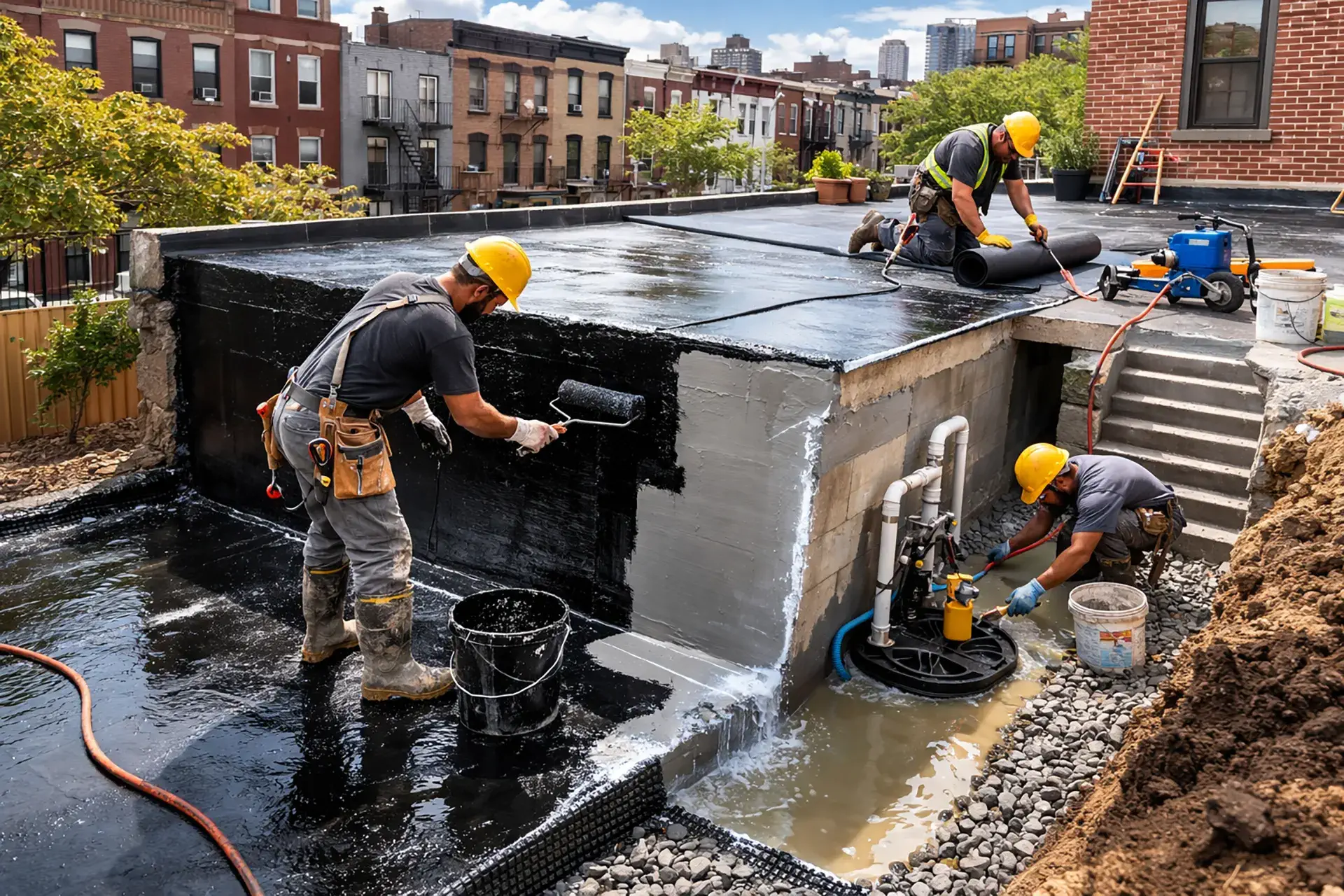
Waterproofing is not a single solution. It is a system-based approach.
Exterior Waterproofing Systems
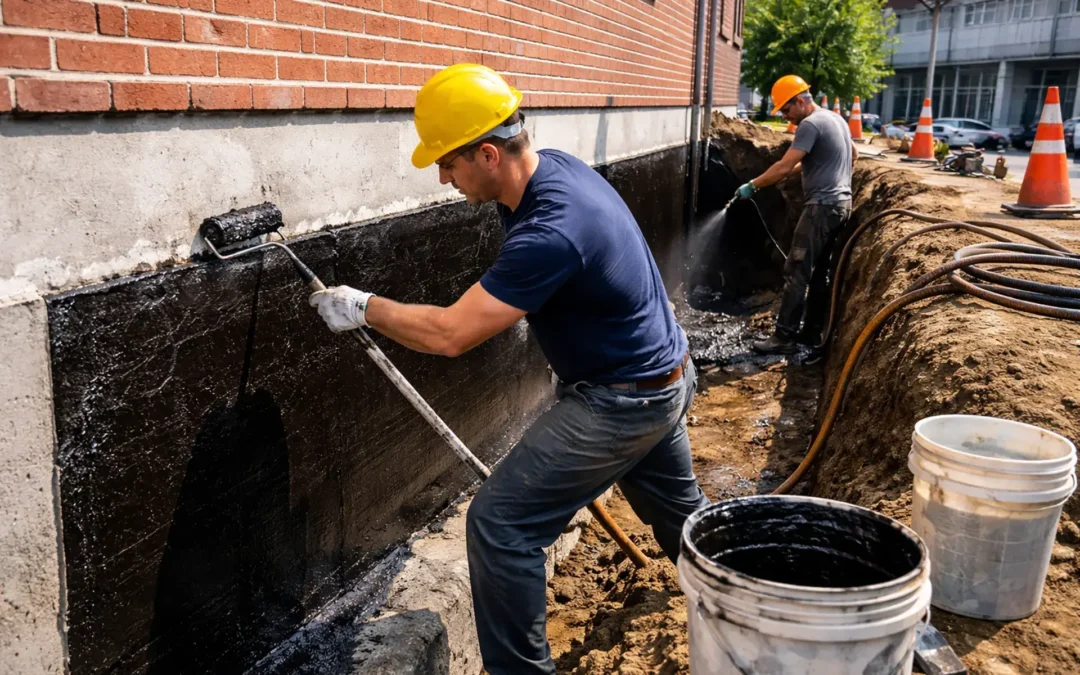
Exterior waterproofing addresses the source of water intrusion. This may include:
- Excavation around foundations
- Application of waterproof membranes
- Installation of drainage boards
- French drain systems
By redirecting water away from the structure, hydrostatic pressure is reduced.
Interior Moisture Control Solutions
Interior systems manage water that penetrates despite exterior defenses. These include:
- Interior sealants
- Epoxy crack injections
- Drainage channels
- Dehumidification systems
Interior waterproofing is often combined with exterior strategies for layered protection.
Drainage and Sump Pump Integration
In high-density environments, water tables fluctuate rapidly. A sump pump system collects groundwater and directs it away safely.
Without proper drainage integration, even sealed walls remain vulnerable.
The Role of Building Materials in Humidity Control
Material selection determines how a building reacts to moisture stress.
Vapor Barriers and Sealants
Vapor barriers prevent moisture diffusion through walls and slabs. Sealants close expansion joints and cracks.
These components form a protective envelope.
Modern Waterproof Coatings
Elastomeric coatings expand and contract with temperature shifts. Unlike rigid materials, they move with the building, preventing cracks during seasonal expansion.
This flexibility is critical in urban environments where thermal cycling is frequent.
Seasonal Strategies for Urban Properties
Humidity challenges change with the seasons. Waterproofing plans must adapt.
Summer Humidity Management
High humidity accelerates mold growth and condensation.
Strategies include:
- Enhanced ventilation
- Dehumidification systems
- Roof and flashing inspections
- Gutter maintenance
In summer, the battle is airborne moisture.
Winter Freeze-Thaw Protection
When water enters cracks and freezes, it expands. Repeated freeze-thaw cycles widen structural gaps.
Preventive sealing before winter minimizes expansion damage.
Why Professional Assessment Matters
Moisture behavior is complex. Surface inspection is rarely enough.
Moisture Mapping and Diagnostics
Professionals use infrared cameras, moisture meters, and drainage analysis to locate hidden intrusion.
This diagnostic approach prevents guesswork.
Customized Waterproofing Plans
Every building is unique. Soil composition, foundation depth, age, and climate exposure vary.
A tailored plan ensures long-term performance rather than temporary fixes.
Companies like Zavza Seal LLC. approach humidity control through structural analysis rather than superficial patchwork. This systematic method is especially critical in dense city environments.
Waterproofing Services Brooklyn: Urban Case Context
Brooklyn presents a distinct case study in seasonal humidity stress.waterproofing waterproofing services b
Climate and Coastal Impact
Located within Brooklyn, properties face coastal humidity, salt-laden air, and fluctuating groundwater levels due to proximity to the Atlantic.
Salt accelerates material deterioration. Moisture combined with salt becomes corrosive.
Aging Infrastructure Challenges
Many buildings were constructed decades ago. waterproofing services in brooklyn standards were different. Drainage systems were not designed for modern rainfall patterns.
This is why waterproofing services brooklyn have evolved to address both historical construction methods and modern climate realities.
Urban density adds complexity. Shared foundations and limited excavation access demand strategic engineering.
Preventive Maintenance and Long-Term Protection
Waterproofing is not a one-time event.
Inspection Schedules
Annual inspections identify early warning signs before seasonal shifts intensify them.
Spring and fall inspections are particularly effective.
Reapplication and Upgrades
Sealants degrade. Coatings wear. Drainage systems clog.
Routine upgrades maintain system integrity. Ignoring maintenance reduces lifespan significantly.
The Structural and Financial Impact of Ignoring Humidity
Moisture damage compounds over time.
Property Value Decline
Visible water damage reduces appraisal value. Buyers and investors consider moisture risk a liability.
Water intrusion history affects insurance assessments.
Health and Indoor Air Quality Risks
Persistent humidity fosters mold spores. Poor indoor air quality impacts respiratory health.
Structural moisture problems often become environmental health issues.
Zavza Seal LLC Serving the East Midwood Community and Beyond in Brooklyn
Zavza Seal LLC is dedicated to serving the diverse needs of the local community of Brooklyn, including individuals residing in neighborhood like East Midwood. With its convenient location near landmarks such as the Andries Hudde and major intersections like E 27th St and Avenue K (coordinates: 40.6247016, -73.9490237), we offer waterproofing services.
Get Waterproofing Services at East Midwood Now
Call Us or Contact Us: +17184007005
Navigate from East Midwood to Zavza Seal LLC Now
Seasonal humidity in urban environments is relentless. It shifts with temperature, rainfall, and air pressure. Buildings absorb, retain, and react to moisture in complex ways.
Waterproofing is not about aesthetics. It is about structural resilience. It protects foundations from hydrostatic pressure, prevents capillary migration, and stabilizes indoor environments.
In dense urban settings like Brooklyn, where coastal climate, aging infrastructure, and shared structural systems intersect, Interior Basement Waterproofing becomes essential infrastructure rather than optional maintenance.
A structured approach assessment, tailored solutions, layered defense, and routine inspection—ensures buildings withstand seasonal humidity cycles without degradation.
Professionally engineered solutions, such as those implemented by Zavza Seal LLC., demonstrate how systematic waterproofing safeguards urban assets against long-term environmental stress.
Humidity is inevitable. Structural damage is not.
How Waterproofing Services Address Seasonal Humidity Challenges in Urban Buildings
- Seasonal Humidity Impact on Urban Buildings:
- Urban buildings face elevated moisture risks due to increased indoor relative humidity (RH) and intensified rain events linked to climate change.
- Studies show airtight modern walls raise indoor RH by up to 10-15%, increasing mold and decay risks without proper moisture control.
- Example: Vancouver “leaky condo crisis” revealed moisture damage surged in 1980s due to airtight, insulated walls lacking effective waterproofing.
- Waterproofing Benefits Backed by Data:
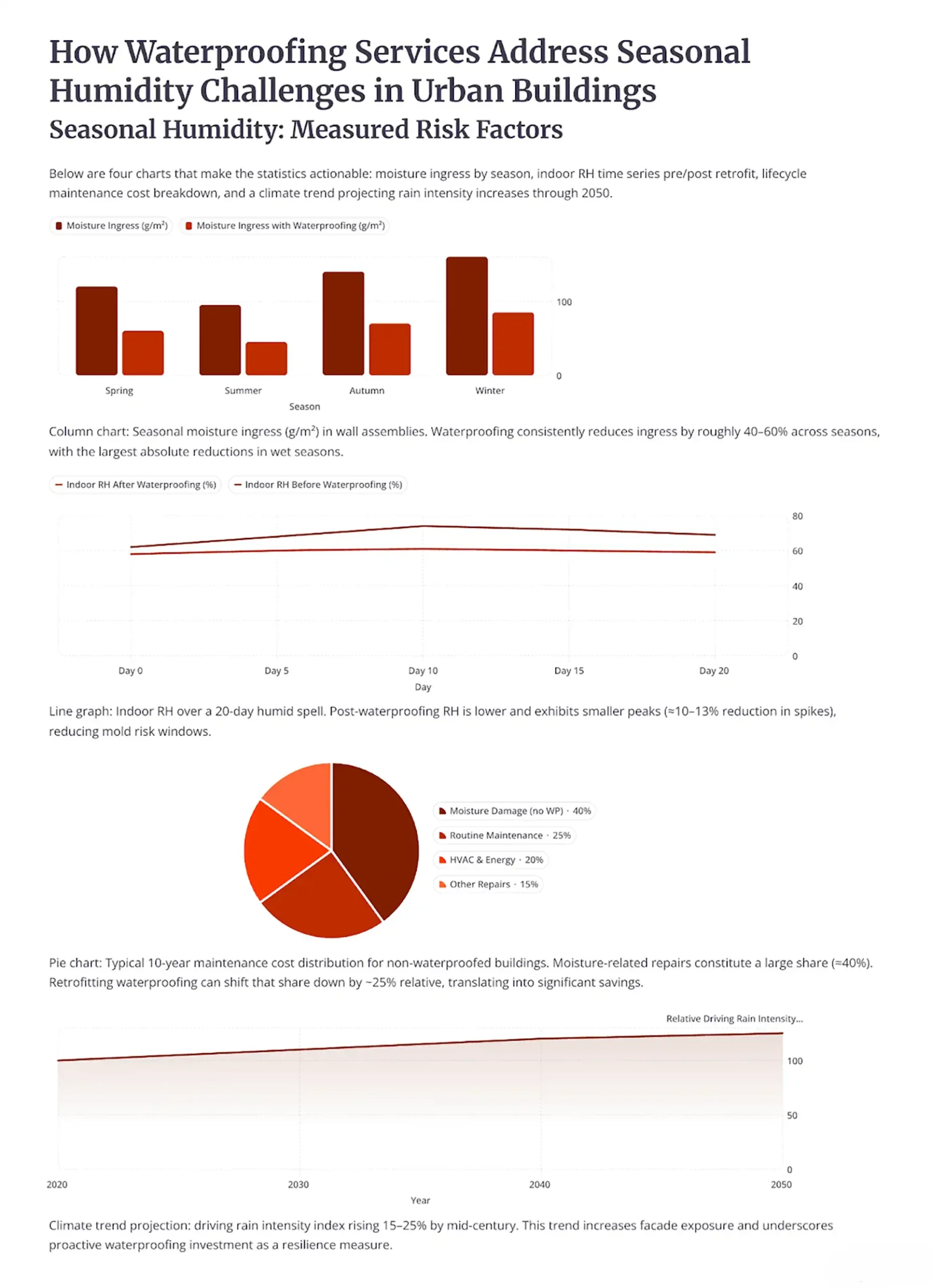
- Controlled field tests (e.g., Vancouver Test Hut Project) demonstrate waterproofing reduces moisture ingress by 40-60%, significantly lowering mold growth and structural decay.
- Hygrothermal simulations indicate waterproofing combined with proper ventilation can reduce interstitial condensation risk by over 50% during peak humidity seasons.
- Moisture buffering materials and waterproof membranes stabilize indoor RH fluctuations, improving occupant comfort and reducing HVAC loads.
- Key Statistical Insights:
- Buildings without waterproofing experience up to 25% higher moisture-related maintenance costs over 10 years.
- Hygrothermal datasets from alpine and urban environments confirm that waterproofing extends building envelope durability by 20-30% under extreme seasonal humidity.
- Climate projections predict a 15-25% increase in driving rain intensity by 2050, underscoring the growing importance of waterproofing in urban resilience.
- Visual Chart Suggestions:
- Bar chart comparing moisture ingress rates in walls with vs. without waterproofing across seasons.
- Line graph showing indoor RH fluctuations in buildings pre- and post-waterproofing installation.
- Pie chart of maintenance cost distribution highlighting moisture damage before and after waterproofing.
- Climate trend graph projecting increased seasonal humidity and rain intensity impacting urban buildings.
Sources: Vancouver Test Hut Project (2025), WUFI Moisture Risk Analysis (2025), Scientific Data on Hygrothermal Performance (2026), ICMB21 Moisture Decay Study (2021)
FAQs
1. How does seasonal humidity differ from regular water leaks?
Seasonal humidity refers to atmospheric moisture and soil saturation changes over time, while leaks typically originate from plumbing failures or roof damage. Humidity affects entire building envelopes, not just isolated areas.
2. Why are basements more vulnerable to humidity damage?
Basements sit below ground level, making them subject to hydrostatic pressure and groundwater exposure. Poor drainage amplifies moisture intrusion.
3. Can interior waterproofing alone solve humidity problems?
Interior solutions manage symptoms but may not address external pressure sources. A combined system approach delivers more durable results.
4. How often should waterproofing systems be inspected in urban areas?
At minimum, once per year. However, properties exposed to coastal conditions or heavy rainfall benefit from biannual inspections.
5. Does humidity impact new buildings the same way as older structures?
New buildings often include vapor barriers and advanced membranes, but improper installation or poor drainage design can still result in moisture intrusion. Preventive assessment remains critical.