
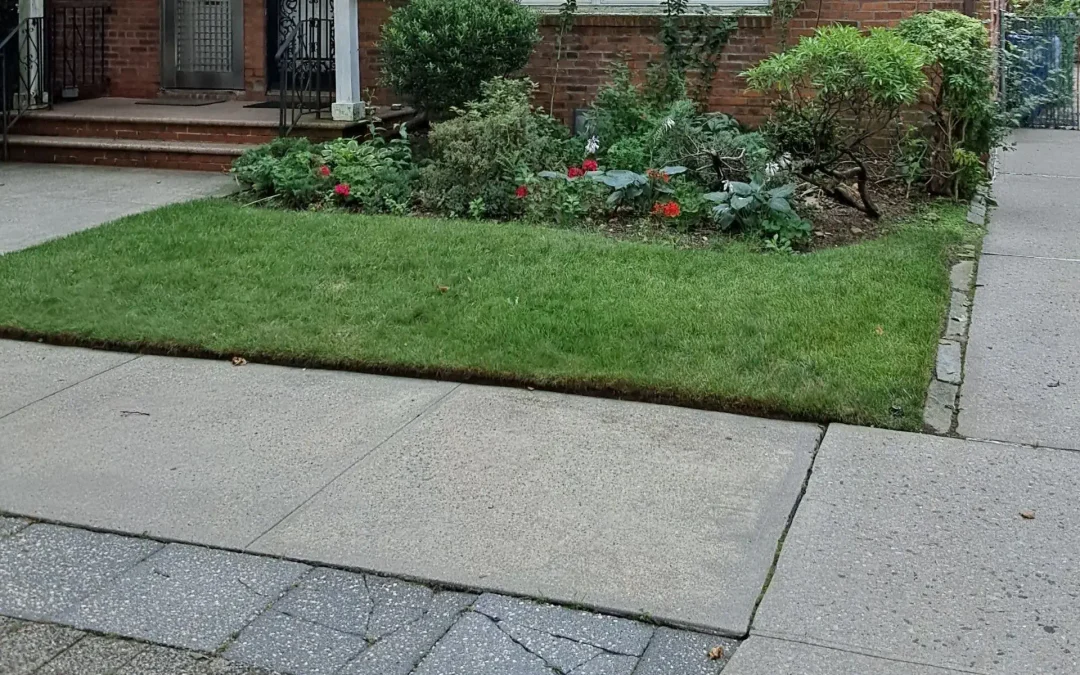
Salt keeps your driveway safe to walk on in winter. But over time, it can also quietly wear your driveway down.
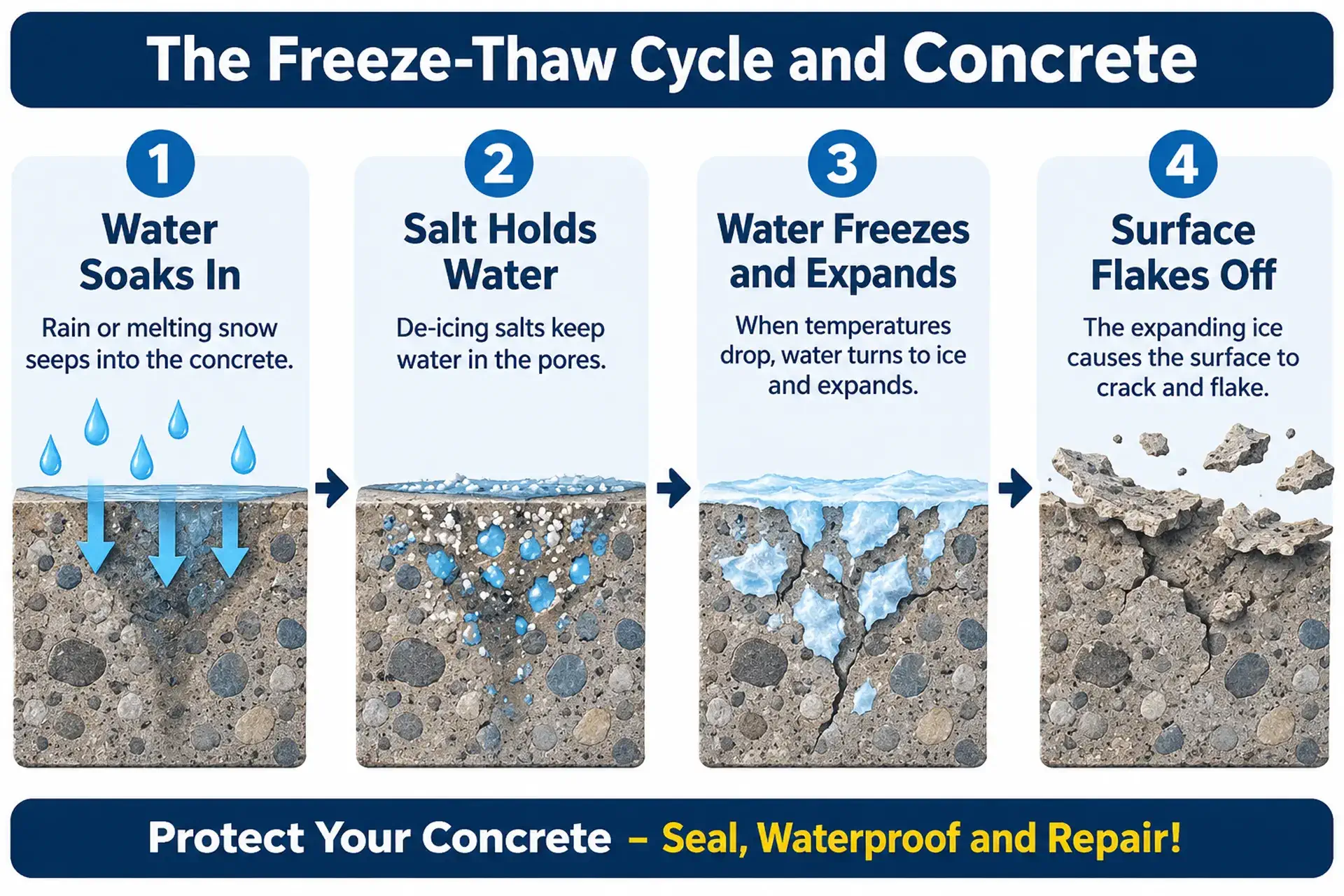
The short answer: yes, road salt can damage concrete driveways and pavers. Salt pulls extra water into the surface. When that water freezes, it expands and pushes the surface apart. Do this again and again every winter, and you get flaking, cracks and loose pavers.
If you live in Long Island, Brooklyn, Queens or the Bronx, your driveway goes through this often. Winter temperatures swing above and below freezing, and salt gets used on roads, sidewalks and driveways. The good news is that you can slow the damage a lot with a few simple habits. This guide explains what salt does, how to spot the early signs, and what to do about it.
How Does Road Salt Damage Concrete and Pavers?
Concrete and pavers look solid, but they are full of tiny pores. Water can soak into them like a sponge.
Here is what happens in winter:
- Snow or ice melts, and water soaks into the surface.
- Salt makes the surface hold on to more of that water.
- At night, the temperature drops and the water freezes. Ice takes up more space than water, so it pushes outward from inside.
- The next day it thaws, and the cycle starts again.
After many cycles, the top layer starts to break away. The salt also gets blamed for most of the damage, but it is really the combination of salt, water and freezing that does the harm.
Salt is not always the only cause
It helps to be honest about this. Salt does the most harm to concrete that is weak, poorly finished or not sealed. A brand-new driveway is also at higher risk in its first winter, because the concrete is still curing and is not at full strength yet. Water that sits on the surface and does not drain away makes everything worse.
Thyul;his is why a driveway next door may look fine while yours is flaking. The condition of the concrete and the way water drains matter just as much as the salt.
Signs of Salt Damage on Driveways and Pavers
Check your driveway in early spring, once the snow is gone. Look for these signs:
- Flaking or peeling surface. The top layer of concrete comes off in thin pieces and leaves a rough patch underneath.
- Small pits and holes. The surface looks pockmarked, like it has tiny dents.
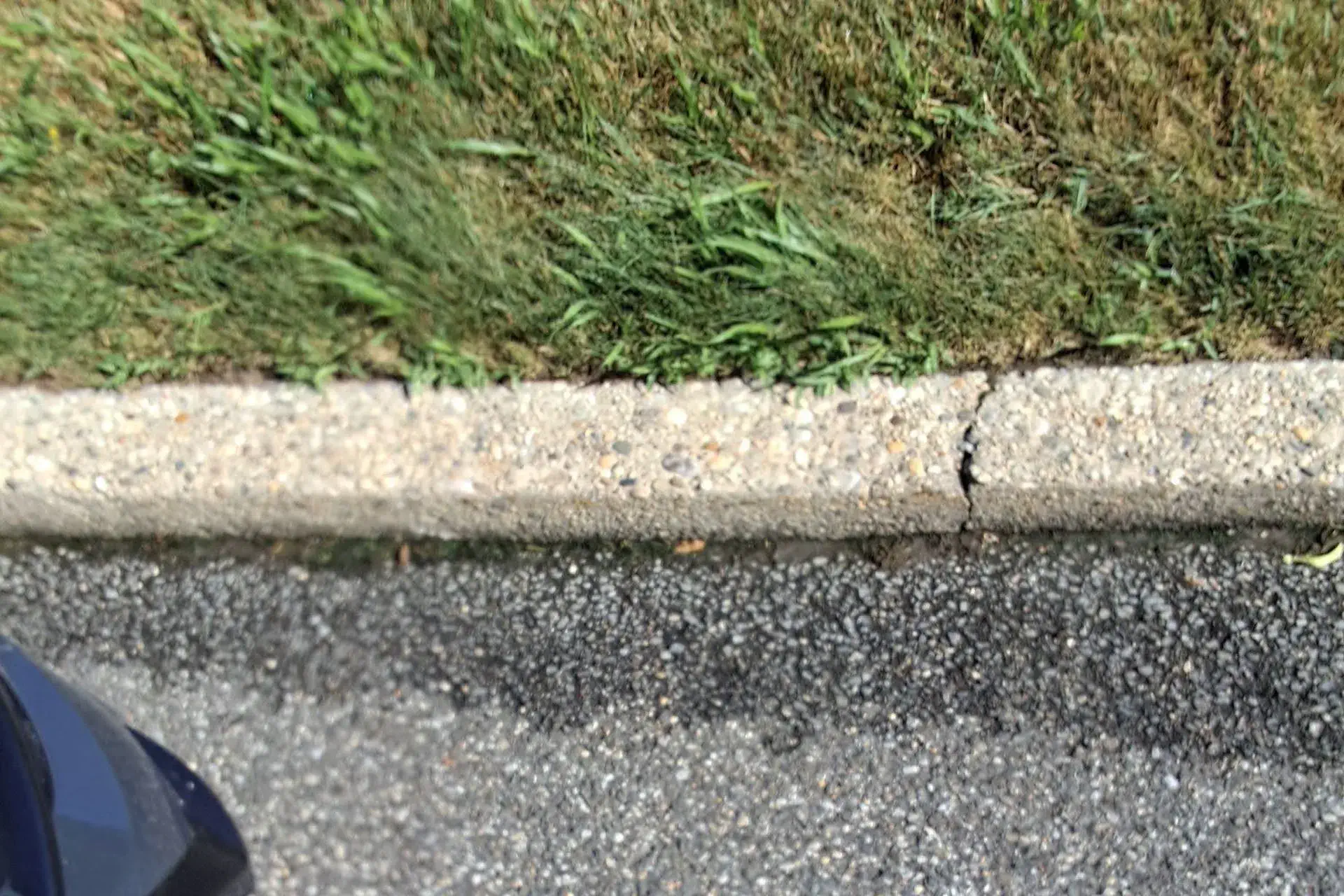
- New cracks. Fine cracks that were not there last year, or old cracks that got wider.
- White, powdery residue. This is often called efflorescence. It means water is moving through the material and leaving mineral deposits behind.
- Crumbling edges. Corners and edges of concrete or pavers break off.
- Loose, uneven or sunken pavers. Joint sand washes out and pavers shift.
Concrete vs. Pavers: Which Handles Road Salt Better?
Both can be damaged, but they react a little differently.
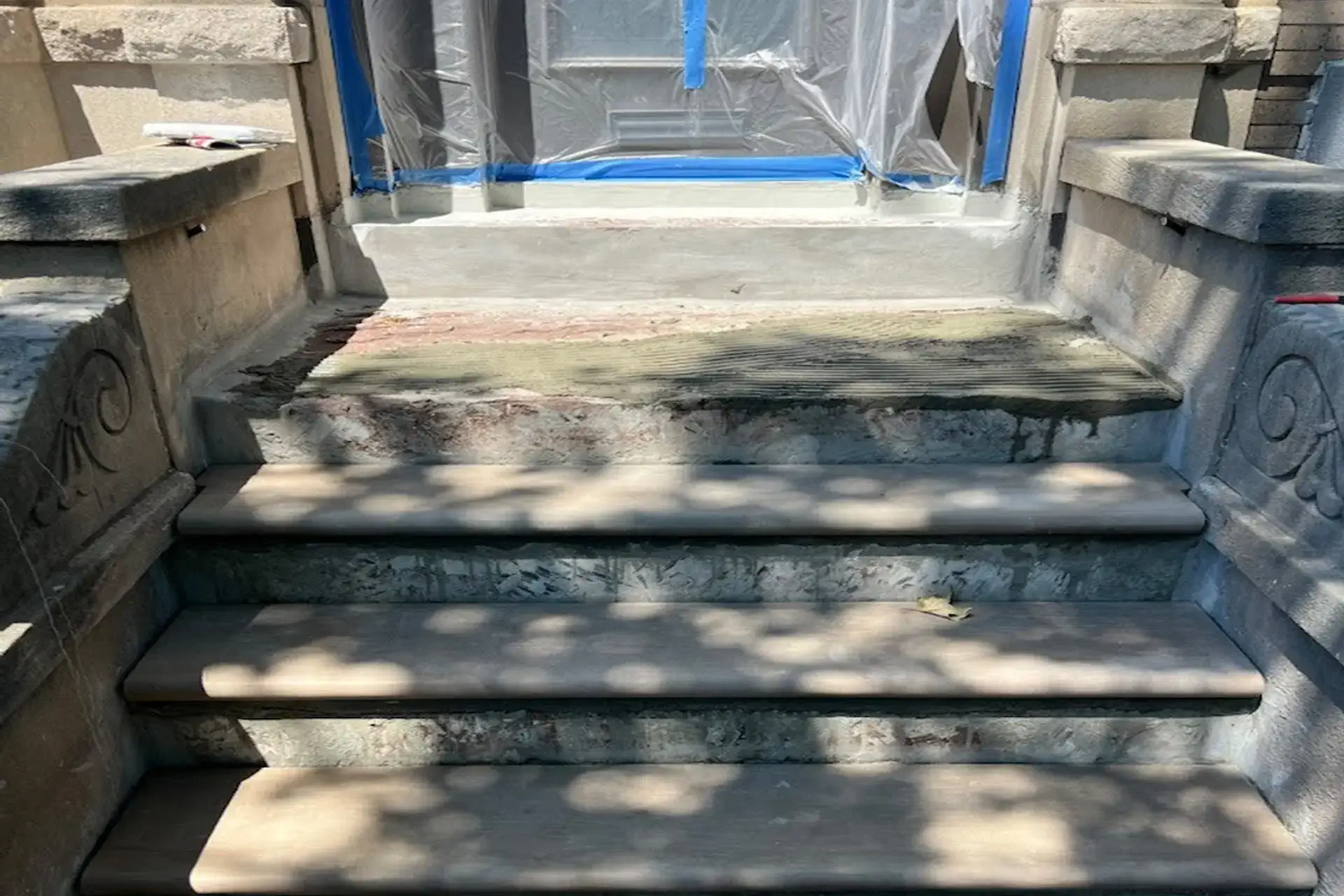
Concrete slabs are one solid piece. Once water gets in and freezes, flaking and cracking can spread across the surface. Unsealed concrete is the most at risk.
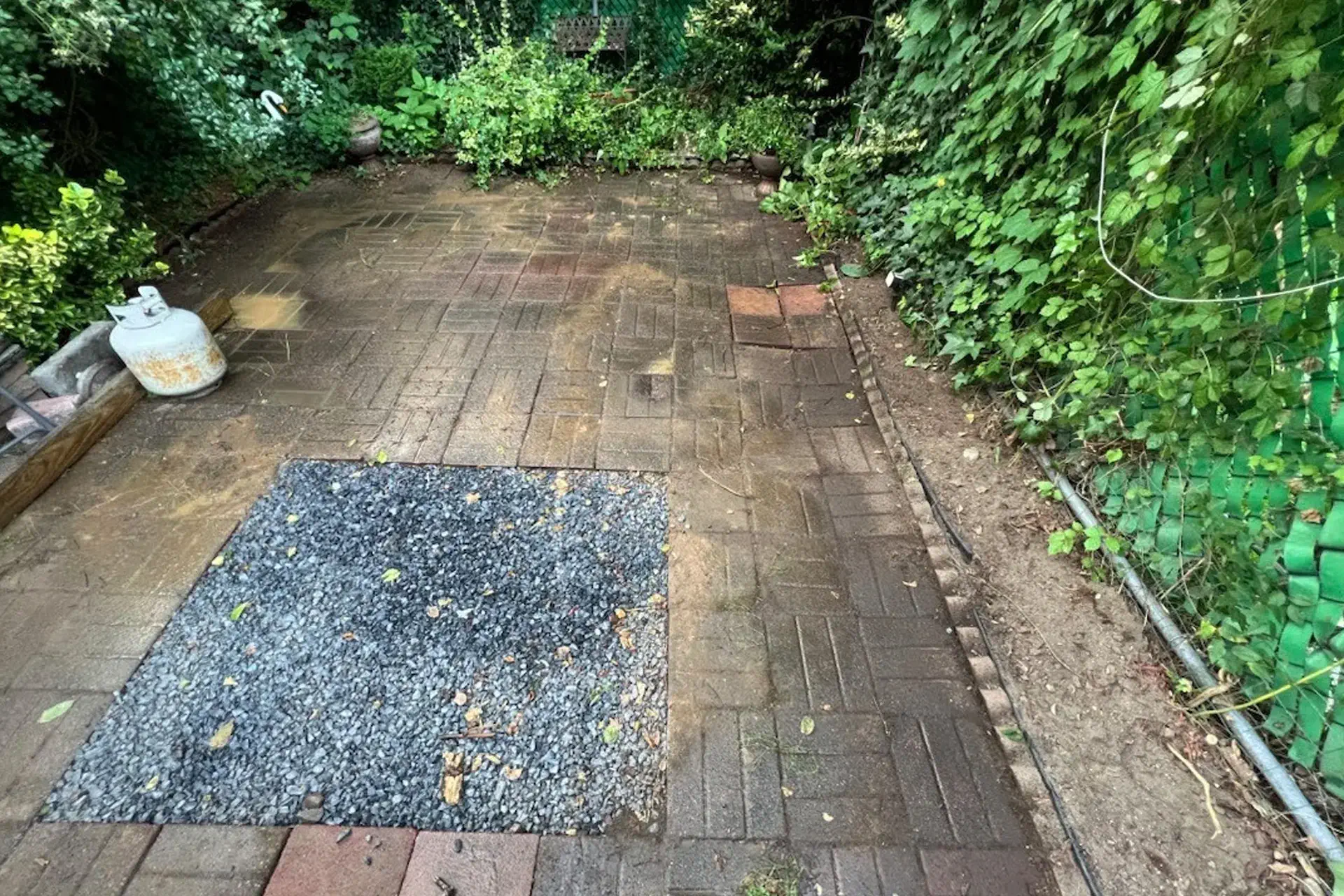
Pavers are usually denser, and because they are separate pieces, a small problem stays small. If one paver gets damaged, you can often replace just that one. But pavers are not salt-proof. The industry itself says that no paver is completely safe from de-icing salt, although most resist it well. Pavers also depend on the base underneath and the sand between them. If those wash out, pavers sink and shift no matter how strong they are.
[INSERT IMAGE 5: SIDE-BY-SIDE COMPARISON]
- What kind: A split or side-by-side photo: a concrete driveway on one side and a paver driveway or walkway on the other, both in good condition. Add short labels (“Concrete” / “Pavers”).
- Placement: At the end of this section.
- File name: concrete-vs-paver-driveway-winter.jpg
- Alt tag: Side-by-side comparison of a poured concrete driveway and a paver driveway in Long Island
Why Winters in Long Island, Brooklyn, Queens and the Bronx Are Tough on Driveways
Our area gets a lot of freeze-and-thaw swings. A driveway can freeze overnight, thaw by afternoon, and freeze again the next night. Each swing is another round of stress on the surface.
A few local things make it harder:
- Salt from many sources. Salt comes in on tires and boots, and from the roads and sidewalks around your property.
- Water that has nowhere to go. Driveways that sit flat or slope toward the house hold water, and the water ends up in the concrete.
- Shifting ground. Long Island has a lot of sandy soil, which can move over time and weaken the base under driveways and pavers.
Properties near the coast can have extra moisture and salt in the air as well.
How to Protect Your Driveway and Pavers From Road Salt
You do not have to stop using de-icer completely. The goal is to use less and keep water out of the surface. Here are the steps that make the biggest difference.
1. Shovel early and often
The sooner you clear snow, the less ice builds up and the less salt you need. Use a plastic-edged shovel so you do not scrape the surface.
2. Use only as much de-icer as you need
More salt does not melt ice faster. A thin, even layer works. Piles of salt just sit on the surface and soak into the concrete.
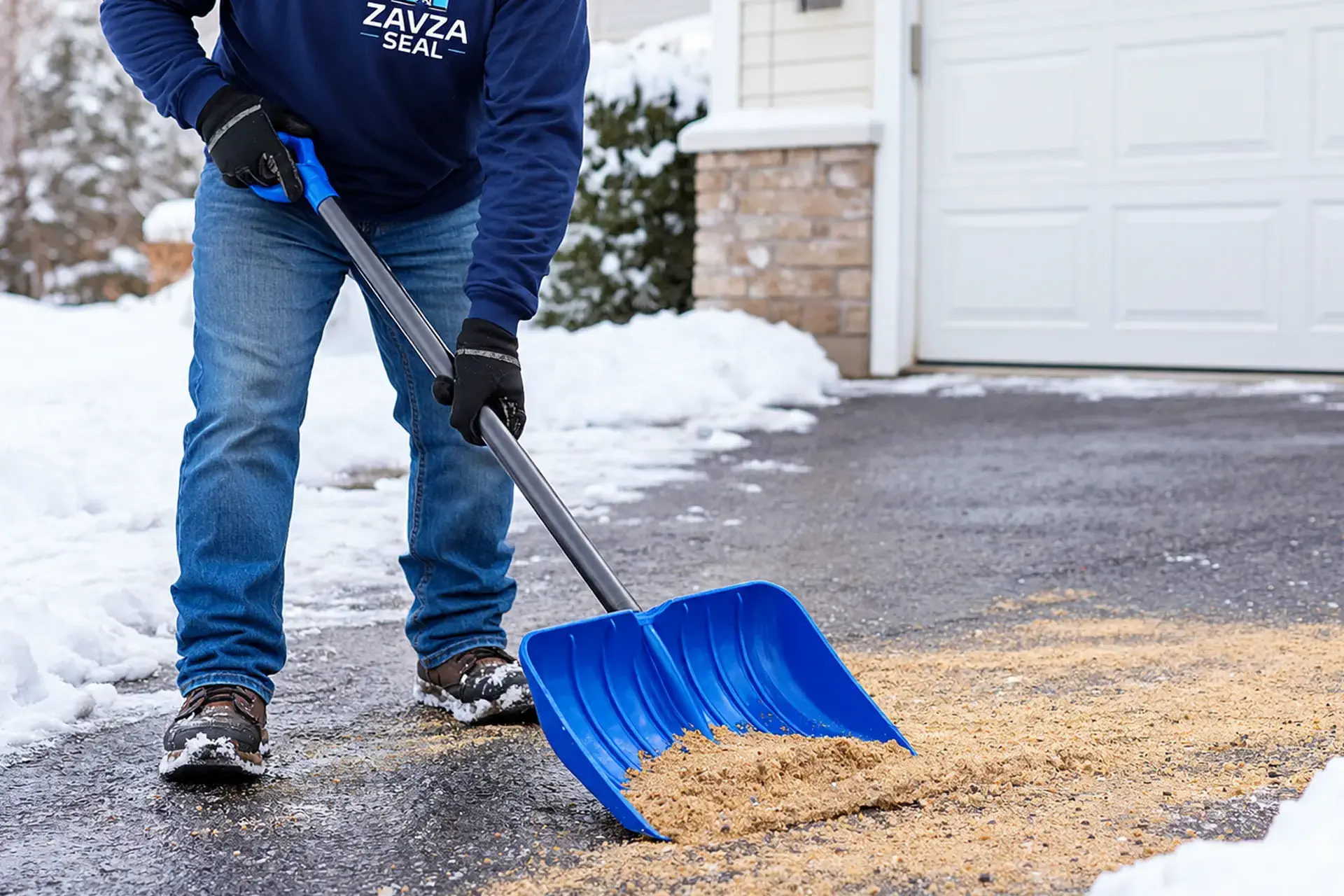
3. Use sand for grip
Sand does not melt ice, but it gives you traction, and it will not eat into your driveway. It is a good choice for walkways and steps.
4. Seal your concrete and pavers before winter
A good sealer helps keep water out of the surface. Sealing will not make your driveway salt-proof, but it slows the damage down. The best time is in dry, mild weather, before the first freeze. Ask a pro what type of sealer suits your concrete or pavers.
5. Fix cracks and refill paver joints
Small cracks let water in. Patch them early, and keep the sand between pavers topped up so they stay locked in place.
6. Make sure water drains away
Water should run off your driveway, not sit on it. Pooling water, or water running toward your foundation, is a sign the slope or drainage needs work. Our yard drainage installation team can help with that.
7. Rinse salt off in spring
When the weather warms up, rinse your driveway and walkways with water to wash away leftover salt.
What About Ice Melt Products?
Ice melt products are not all the same, and the labels can be confusing. Some are gentler on concrete, plants and pets than rock salt. But no product is risk-free for every surface.
A few simple rules:
- Read the label and check whether it says it is safe for concrete or pavers.
- Check your paver or concrete maker’s care instructions.
- Avoid using any de-icer on new concrete in its first winter, if you can.
- Use less than the label suggests, not more.
If you are not sure which product is right for your driveway, ask us.
Repair or Replace? How to Decide
Not all salt damage means a new driveway. Here is a simple way to think about it.
| What you see | What it usually needs |
|---|---|
| Light flaking or small pits on the surface | Cleaning, sealing and surface repair |
| A few small cracks | Crack repair and sealing |
| Sunken or loose pavers | Resetting pavers, adding base and sand |
| Large cracks, sinking slabs or deep damage | Concrete leveling or partial replacement |
| Widespread breakdown across the driveway | Resurfacing or full replacement |
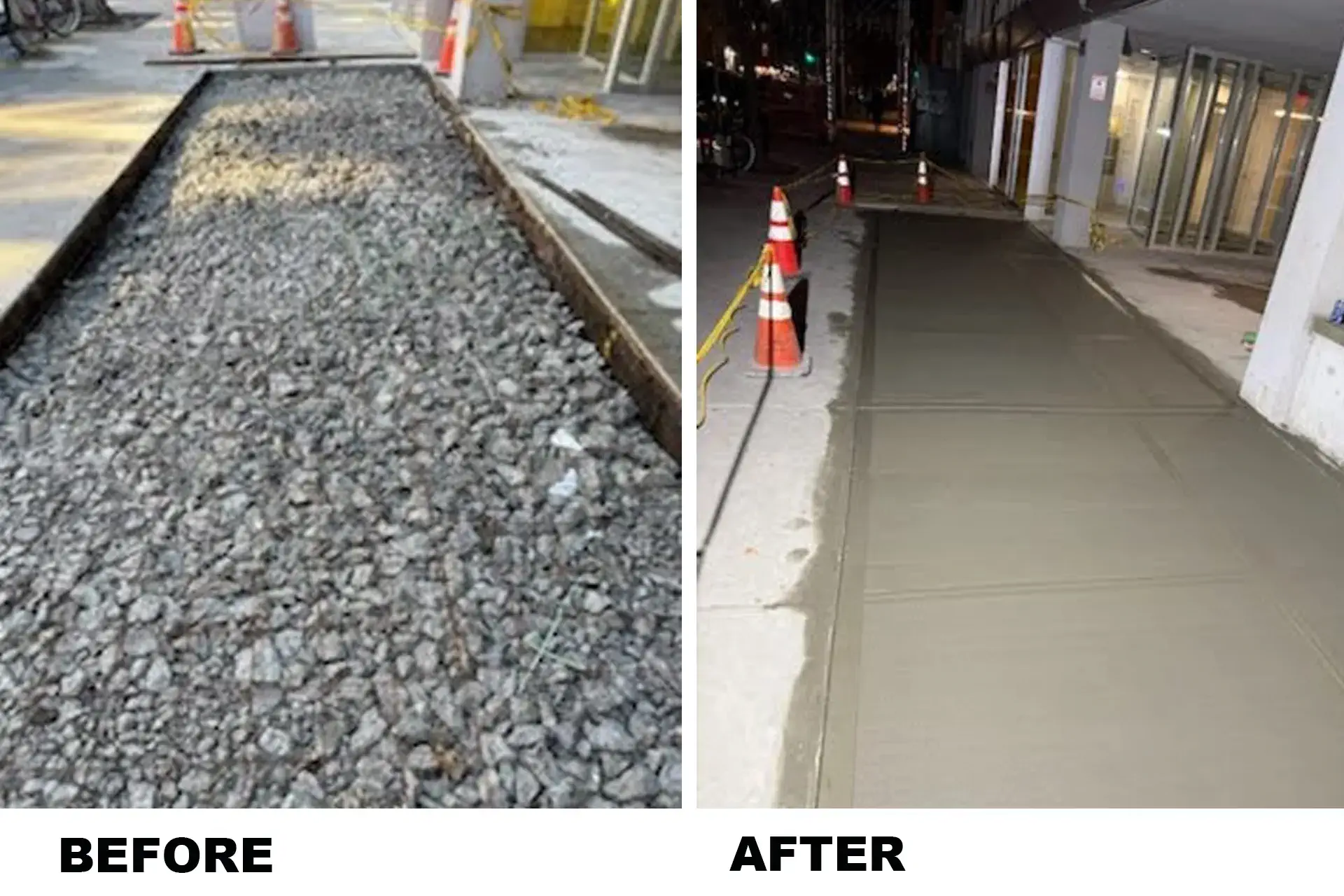
If you want to know where your driveway fits, we can inspect it. Depending on what we find, we may suggest concrete raising for sunken slabs, concrete slab installation for sections that need replacing, or new driveway paving, walkway pavers or patio pavers.
Frequently Asked Questions
Does road salt damage concrete driveways?
Yes. Salt pulls water into the surface, and when that water freezes it can cause flaking, pitting and cracks. Concrete that is unsealed, new or poorly finished is most at risk.
Does salt damage pavers?
It can. Pavers usually hold up better than plain concrete, but no paver is completely salt-proof. Heavy salt use over several winters can wear down the surface and wash out the joints.
Can I use rock salt on a new concrete driveway?
It is best not to, especially in its first winter. New concrete is still curing and is more likely to flake. Use sand for traction instead.
Should I seal my driveway or pavers before winter?
In most cases, yes. Sealing helps keep water and salt out of the surface. Do it in dry, mild weather before the first freeze, and ask a professional which sealer suits your surface.
How do I fix a driveway that has salt damage?
It depends on how bad the damage is. Light flaking can often be cleaned, repaired and sealed. Sunken slabs, loose pavers and deep cracks need leveling, resetting or replacement.
Get Your Driveway Checked Before the Next Freeze
A small problem now is much cheaper to fix than a big one after another winter of salt and ice. Zavza Seal inspects and repairs driveways, walkways and paver patios across Long Island, Brooklyn, Queens and the Bronx.