
This article was updated in January 2026 with the latest information on sagging floor causes, repair options, and pricing.
Noticing that your floor does not feel level anymore can be unsettling. Many homeowners immediately worry about serious structural damage or expensive repairs. That reaction is completely normal.
The truth is, sagging floors are common, especially in older homes. In many cases, they develop slowly over time and do not mean your house is unsafe. Some causes are minor, while others need professional attention. The key is understanding what is happening before jumping to conclusions.
In this guide, we will first explain what sagging floors are and why they occur. Then, we will walk through how they are fixed, and finally, when it makes sense to call a professional.
What Are Sagging Floors?
Sagging floors are floors that are no longer level and start to dip, slope, or feel uneven under your feet. This usually happens when the structure underneath the floor weakens or shifts over time.
Not all sagging looks the same. There are different levels of severity.
Slight dips: These are small low spots that you may only notice when walking across the room or placing furniture. They often develop slowly and may not affect the structure of the home right away.
Noticeable slopes: At this stage, the floor visibly tilts in one direction. Furniture may lean, and doors nearby may stop closing properly. This usually points to a deeper support issue that should be checked.
Structural sagging: This is when the floor framing or supports have weakened enough to affect safety. Structural sagging requires professional repair to prevent further damage.
It is important to know that a sagging floor does not always mean foundation failure. Many problems start in the floor joists, beams, or from moisture issues below the home. A proper inspection helps identify the real cause instead of assuming the worst.
Can Sagging Floors be Fixed?
Yes, sagging floors can be fixed. The approach to fixing sagging floors depends on the cause and severity of the issue. Common methods include shimming, sistering floor joists, and installing adjustable steel columns for additional support.
By addressing the root cause, such as water damage or foundation issues, homeowners can restore the stability and levelness of their floors. Seeking professional help ensures the repairs are done correctly and effectively.
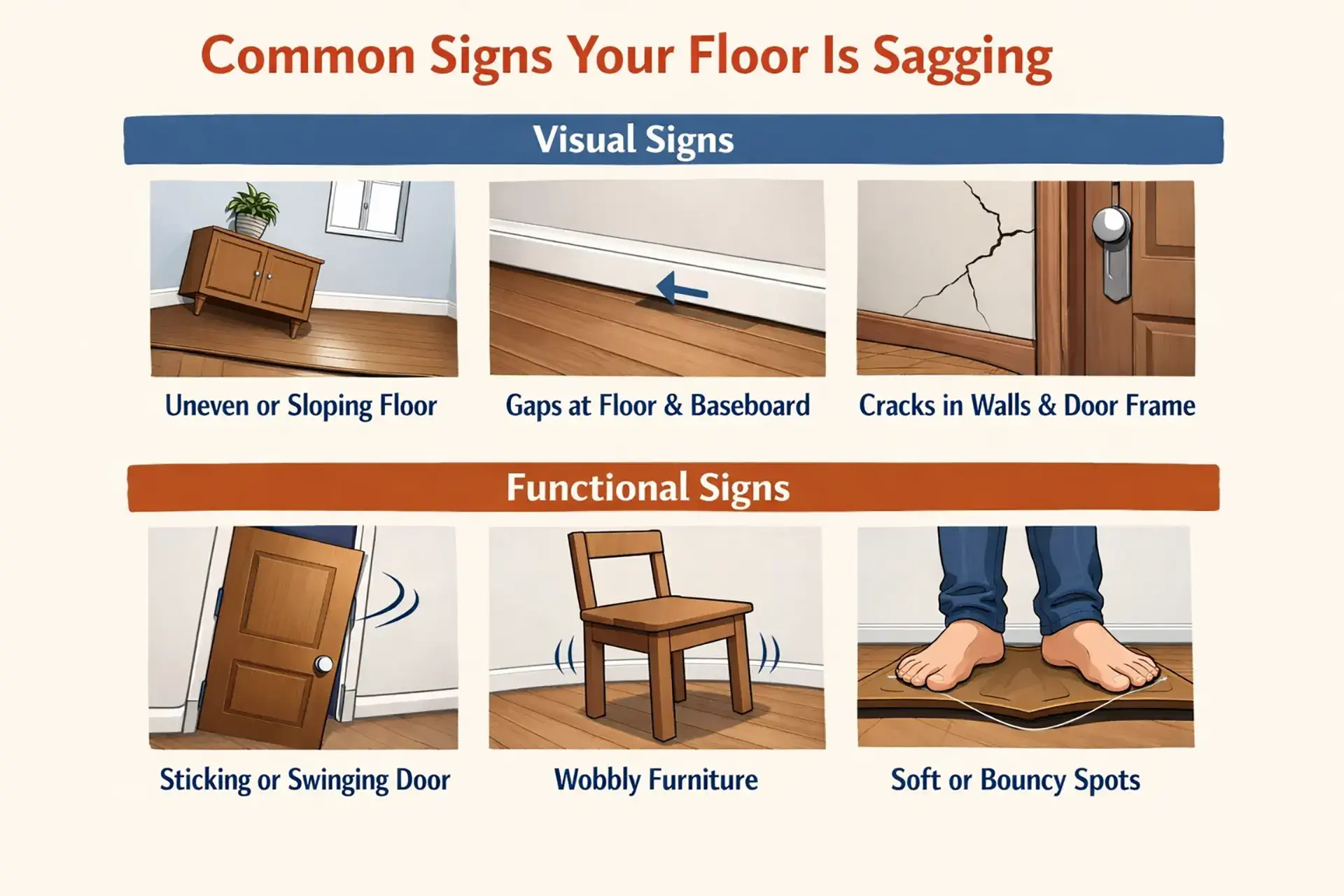
Common Signs Your Floor Is Sagging
Sagging floors often give warning signs before they become serious. Catching these early can save time, stress, and money.
Visual Signs
- Floors that look uneven or slope toward one side of the room
- Gaps forming between the floor and baseboards
- Cracks near door frames or along interior walls
These changes are often subtle at first and easy to overlook.
Functional Signs
- Doors that stick, drag, or swing open on their own
- Furniture that wobbles or no longer sits flat
- Bouncy or soft spots when walking across the floor
If you notice more than one of these signs, it is a good idea to have the floor evaluated before the problem worsens.
What Causes Sagging Floors?
Sagging floors usually develop slowly. Most homeowners do not notice the problem until the floor starts to feel uneven or doors stop working properly. In many cases, the cause is hidden beneath the surface.
Below are the most common reasons floors begin to sag.
1. Aging Floor Joists
Floor joists support the weight of your home. Over time, wood naturally weakens due to age and constant load. This is especially common in older homes where materials and building standards were different.
As joists lose strength, they can start to bend or dip, which causes the floor above to sag.
2. Moisture and Water Damage
Moisture is one of the biggest enemies of floor structure.
Common sources include:
- Basement moisture and poor drainage
- High humidity in crawl spaces
- Past leaks, plumbing issues, or flooding
When wood absorbs moisture, it can soften, rot, or lose its ability to support weight. Even after water dries, the damage often remains. Many floor sagging repair projects begin with fixing moisture issues first to prevent future problems.
3. Poor Original Construction
Some sagging floors are the result of how the home was built.
This can include:
- Floor joists that are too small for the span
- Improper spacing between joists
- Missing or insufficient support beams
These issues may not cause immediate problems, but over time, the structure can struggle to carry daily loads.
4. Foundation Movement
Foundation movement can also affect floors above.
This may happen due to:
- Natural settlement over time
- Soil shifting beneath the home
- Structural stress transferring upward
When the foundation moves, the floor system adjusts with it, which can lead to uneven or sloping floors. Understanding the cause is the first step toward choosing the right solution.
Are Sagging Floors Dangerous?
Not all sagging floors are dangerous. Some are cosmetic and develop slowly without affecting the safety of the home. Others, however, signal deeper structural issues that should not be ignored.
Cosmetic sagging usually involves minor dips that do not worsen quickly. Structural sagging, on the other hand, can continue to progress and place stress on walls, doors, and framing.
Ignoring structural sagging can lead to:
- Increased repair costs
- Damage spreading to other parts of the home
- Safety concerns over time
Early repair is often simpler, safer, and more affordable than waiting until the problem becomes severe.
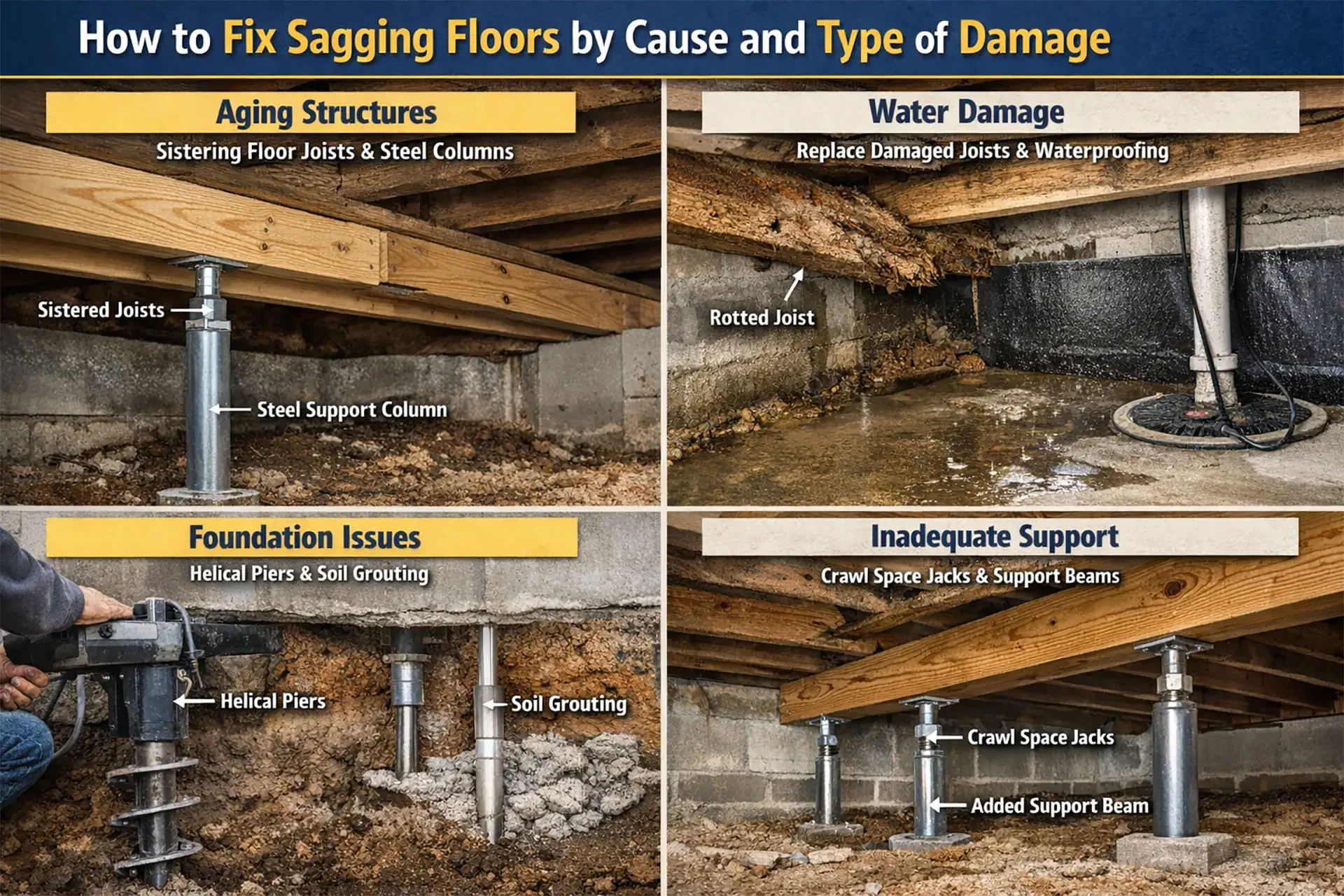
How to Fix Sagging Floors by Cause and Type of Damage
The right fix depends on why your floor is sagging. There is no one-size-fits-all solution, and proper repair always starts with identifying the root cause.
Fixing Minor Sagging
Minor sagging can sometimes be corrected with targeted solutions such as:
- Floor leveling techniques
- Reinforcing weakened joists
- Adding support where needed
These methods are often enough when the structure is still mostly sound and moisture issues are not present.
Fixing Major Sagging
Ficing major sagging floors can indicate serious structural issues that require prompt attention. Understanding the causes of sagging floors and the appropriate repair methods can help homeowners address these problems effectively. Below, we explore the various types of sagging, their causes, and the best methods to fix them.
1. Aging Structures
Type of Sagging: General Sagging Throughout the Floor
Over time, buildings naturally settle and materials degrade, leading to a general sagging of floors. This is common in older homes where the structural components have weakened due to age and wear.
Best Method to Repair:
- Sistering Floor Joists: Adding new joists alongside the existing ones for reinforcement. Secure the new joists properly to provide additional support and restore the floor’s levelness.
- Adjustable Steel Columns: Install these columns beneath the affected area to provide extra support. Use a jack to lift the floor back to its original position before securing the columns.
2. Water Damage
Type of Sagging: Sagging Near Water Sources
Leaks or flooding can weaken floor joists and supports, causing them to sag. This type of damage is often localized near bathrooms, kitchens, or basements where water exposure is frequent.
Best Method to Repair:
- Waterproofing and Drainage Solutions: Address the source of water damage by improving waterproofing and drainage around the affected area.
- Replacing Damaged Joists: Remove and replace any weakened or rotting joists. Use moisture-resistant materials to prevent future damage.
3. Foundation Issues
Type of Sagging: Sagging Near the Perimeter
Problems with the foundation, such as uneven settling or shifting, can result in floors sagging near the edges. This type of sagging indicates that the foundation is not providing adequate support.
Best Method to Repair:
- Helical Underpinning: Install helical piers deep into the ground to reach stable soil. These piers provide robust support and lift the foundation back to a stable position.
- Permeation Grouting: Inject grouting material to stabilize the soil and fill any voids, providing a solid base for the foundation.
4. Inadequate Support
Type of Sagging: Sagging in the Center
Insufficient or poorly installed floor supports can lead to sagging over time. This type of sagging is often seen in basements and crawl spaces where the floor joists or support beams lack proper reinforcement.
Best Method to Repair:
- Crawl Space Jacks: Install these steel jacks beneath the sagging joists. Gradually torque the jacks to lift the floor back to its original level.
- Adding Support Beams: Install additional support beams to distribute the load more evenly and provide extra stability to the floor structure.
👉 For a detailed breakdown of professional solutions, read our full guide on sagging floor repair methods.
Can You Fix a Sagging Floor Yourself?
Many homeowners wonder if a sagging floor is something they can fix on their own. The answer depends on what is causing the sagging and how severe it is.
What Homeowners Can Safely Check
There are a few things you can look for without risking damage or injury:
- Check for visible moisture in the basement or crawl space
- Look for obvious cracks, soft spots, or wood damage
- Note where the sagging is worst and whether it seems to be spreading
These checks help you understand the situation, but they do not replace a proper inspection.
Why DIY Fixes Often Fail Long-Term
Temporary fixes like shims or surface leveling may improve how the floor looks, but they often do not address the underlying cause. If moisture, weakened joists, or structural movement is ignored, the sagging usually returns and can worsen over time.
DIY repairs can also:
- Shift weight incorrectly
- Hide developing structural problems
- Lead to higher repair costs later
When a Professional Inspection Is Necessary
If the floor feels bouncy, continues to sink, or shows signs of structural damage, a professional inspection is the safest next step. An expert can identify the real cause and recommend a solution that lasts.
How Much Does It Cost to Fix Sagging Floors?
The cost to fix sagging floors can vary widely because no two homes have the same structure or damage. Some repairs are simple, while others require more involved structural work.
Several factors affect the final cost:
- Severity: minor dips cost less than structural sagging
- Cause: moisture damage, aging joists, or foundation movement
- Home structure: size, layout, and construction type
- Access: basement access is often easier than tight crawl spaces
👉 For real-world pricing and what affects cost, see our full breakdown of sagging floor repair costs.
How to Prevent Sagging Floors in the Future
While not all sagging can be prevented, many problems can be avoided with regular care.
Helpful prevention steps include:
- Controlling moisture in basements and crawl spaces
- Maintaining proper drainage around the home
- Scheduling periodic structural inspections
- Watching for early warning signs like soft spots or sticking doors
Early attention often prevents small issues from becoming major repairs.
When to Call a Professional for Sagging Floors
Some situations require expert evaluation to protect your home and your safety.
You should consider professional help if:
- Sagging is getting worse over time
- Floors feel unstable or bouncy
- Cracks appear near doors or walls
- Moisture or wood damage is present
A professional assessment provides clarity, identifies the root cause, and helps ensure long-term stability rather than temporary relief.
Why Homeowners Trust Zavza Seal for Sagging Floor Repair
Homeowners choose Zavza Seal because our approach focuses on understanding the problem before fixing it.
Our team has experience handling structural floor issues and identifying the underlying causes, whether they involve moisture, aging materials, or structural movement. We prioritize solutions that restore stability and help prevent future problems, rather than quick surface fixes.
With local expertise and a long-term repair mindset, Zavza Seal helps homeowners make informed decisions with confidence.
Frequently Asked Questions
Can sagging floors be fixed permanently?
Yes, sagging floors can be fixed permanently when the root cause is properly addressed. Permanent solutions involve strengthening the structure, correcting moisture problems, or stabilizing the foundation. Cosmetic or temporary fixes alone usually do not last.
Do sagging floors always mean foundation problems?
No. While foundation issues can cause sagging, many floors sag due to aging joists, moisture damage, or poor original construction. A professional inspection helps determine whether the foundation is involved or if the issue is isolated to the floor system.
How long does sagging floor repair take?
The timeline depends on the severity and cause of the problem. Minor repairs may take a day or two, while structural repairs involving joists, supports, or foundation work can take several days. Proper assessment ensures the repair is done correctly, not rushed.
Will sagging floors get worse over time?
In most cases, yes. Sagging floors tend to worsen if the underlying issue is not corrected. What starts as a small dip can lead to structural stress, higher repair costs, and safety concerns over time. Early repair is usually simpler and more affordable.
Can Sagging Floors Collapse?
Yes, sagging floors can collapse if left unaddressed, especially if the structural integrity continues to weaken. While not all sagging floors will collapse immediately, it’s essential to address the issue promptly to avoid severe damage and ensure the safety of the occupants.
Are Sagging Floors Dangerous?
Yes, sagging floors are dangerous. They pose tripping hazards and indicate potential structural concerns that could compromise the safety of the building. It’s important to address sagging floors to maintain a safe living environment and prevent further damage.
Will Homeowners’ Insurance Cover Sagging Floors?
Homeowners’ insurance coverage for sagging floors depends on the cause of the damage. If the sagging is due to a covered peril, such as a sudden water leak, insurance may cover the repairs. However, damage from neglect or wear and tear is typically not covered. Review your policy and consult with your insurance provider for specific details.
Who Fixes Sagging Floors?
Professional contractors and companies specializing in foundation repair, like Zavza Seal LLC, can fix sagging floors. They have the expertise and tools needed to address the issue effectively. Contact Zavza Seal for a comprehensive assessment and repair services to restore your floor’s stability.
Can You Sell a House with Sagging Floors?
Selling a house with sagging floors can be challenging, as it raises concerns about structural integrity. It’s advisable to address the issue before listing the property. Repairing sagging floors can enhance the home’s value and appeal to potential buyers.
How Much Does It Cost to Fix a Sagging Floor?
The cost to fix a sagging floor varies depending on the extent of the damage and the repair method. On average, repairs can range from $1,000 to $10,000. For an accurate estimate, it’s best to get a professional assessment from a qualified contractor.
How to Fix a Sagging Wood Floor?
To fix a sagging wood floor, follow these steps:
- Assess the cause of the sagging.
- Remove the damaged section of the floor.
- Sister new joists to the existing ones for added support.
- Shim and level the floor as needed.
- Secure the new joists and replace the floorboards.
How to Fix Sagging Floor in Crawl Space?
To fix a sagging floor in a crawl space:
- Inspect the crawl space for damage and identify the cause.
- Use a jack to lift the sagging area gently.
- Install adjustable steel columns or new support beams for added stability.
- Ensure proper drainage to prevent future issues.
How to Fix Sagging Laminate Flooring?
To fix sagging laminate flooring:
- Remove the affected laminate planks.
- Check and repair the subfloor for damage.
- Install a moisture barrier if necessary.
- Replace and secure the laminate planks, ensuring they are level and properly aligned.
How to Support Sagging Floor Joists?
To support sagging floor joists:
- Identify the sagging joists and assess the extent of the damage.
- Sister new joists alongside the existing ones for reinforcement.
- Use adjustable steel columns or support beams to provide additional stability.
- Secure all new supports and ensure the floor is level.
How Much Floor Sag is Acceptable?
A slight amount of floor sag is considered acceptable in many cases, typically around 1/4 to 1/2 inch over a 20-foot span. However, if the sag exceeds this range, it may indicate underlying structural issues that need to be addressed. Excessive sagging can compromise the stability and safety of the building, so it is important to seek a professional evaluation if you notice significant sagging in your floors.
Are Sagging Floors Covered by Insurance?
Whether sagging floors are covered by insurance depends on the cause of the damage. If the sagging is due to a covered peril, such as a sudden water leak or a structural failure caused by a natural disaster, homeowners’ insurance may cover the repairs. However, damage resulting from neglect, wear and tear, or poor maintenance is typically not covered. It is essential to review your insurance policy and consult with your provider to determine the specific coverage details.