
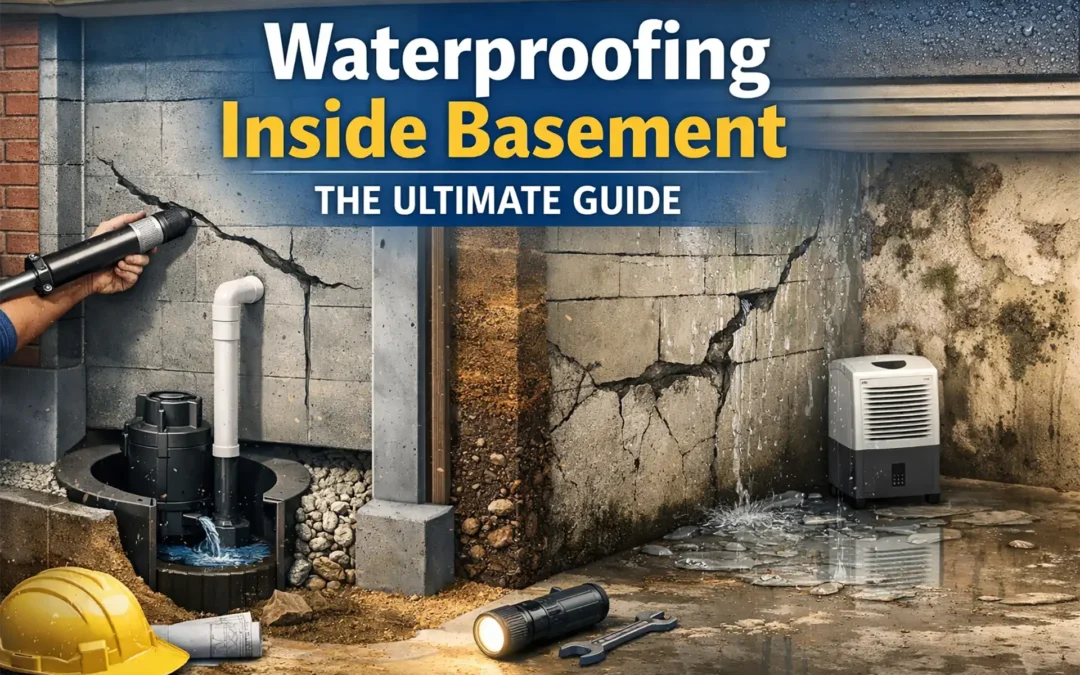
Basements are a part of your home that can easily have water problems. Leaks, damp walls, and standing water can damage your home, furniture, and even your health. The good news is that waterproofing inside basement can protect your home and give you peace of mind. This guide will explain why basements leak, how to fix them from the inside, the costs, and tips to keep your basement dry all year.
Why You Should Waterproof Your Basement From the Inside
Water in your basement is not just an annoyance. It can cause serious problems if left alone. Waterproofing your basement from the inside can help:
- Protect your furniture and belongings
- Keep your basement walls and foundation safe
- Prevent mold and unhealthy air
- Save you money on repairs in the long run
Sometimes exterior waterproofing is expensive or difficult. Interior solutions can be very effective, especially for homes with minor leaks. Inside basement waterproofing is a smart solution to control water before it damages your home.
Common Causes of Basement Leaks
Understanding why your basement is wet helps you fix it the right way. Common causes include:
- Cracks in walls or floors that let water in
- Hydrostatic pressure, which is water pushing against your foundation
- Leaky plumbing or old sump pumps
- Poor grading or drainage around your home
- High humidity that makes walls and floors damp
If you notice any of these issues, it is a good idea to consider waterproofing basement walls from inside.
Signs You Need Interior Basement Waterproofing
How do you know if your basement needs inside waterproofing basement? Look for these signs:
- Damp or wet floors
- Musty smells or mold on walls or floors
- White powdery stains called efflorescence on walls
- Cracks in walls or floor
- Standing water after rain
Even small signs should not be ignored. Acting early can prevent expensive repairs later.
How to Waterproof a Basement From the Inside
Here is a simple step-by-step guide on how to waterproof basement from inside.
Step 1: Inspect and Identify Problem Areas
Walk around your basement and look for wet spots, cracks, or leaks. This helps you decide the right solutions.
Step 2: Repair Cracks and Seal Walls
Use a professional sealant or epoxy to fill cracks in walls and floors. This prevents small leaks from getting worse.
Step 3: Install Interior Drainage Systems
A French drain inside the basement perimeter collects water that seeps in. It channels water to a sump pump. This is one of the most effective interior basement waterproofing systems.
Step 4: Add a Sump Pump
The sump pump removes water collected by the drain. Many pumps have battery backups to work during power outages.
Step 5: Reduce Humidity
Even without leaks, high humidity can make your basement damp. A dehumidifier keeps the air dry and prevents mold growth.
By following these steps, you can waterproof your basement from inside and protect your home.
Cost of Waterproofing Basement From Inside
Many homeowners ask about the cost of waterproofing basement from inside. The price depends on your basement size, type of system, and severity of leaks. Here is a rough idea:
- Interior sealants and small repairs: $1,500 to $3,500
- Interior French drain with sump pump: $3,500 to $10,000
Compared to exterior waterproofing, interior solutions are often more affordable while still very effective.
Case Study: How We Helped a Brooklyn Home Keep Their Basement Dry
A homeowner in Brooklyn was struggling with water seeping through basement walls after heavy rain.
Our team installed an interior French drain system connected to a sump pump. Cracks were sealed with professional-grade epoxy. The result was immediate. The basement stayed dry even after the next heavy rain. The homeowner avoided mold, furniture damage, and expensive repairs.
This is a perfect example of how basement foundation waterproofing inside can solve real problems quickly and effectively.
Read more of our project studies here.
Interior vs Exterior Waterproofing
It is helpful to understand the difference:
| Feature | Interior Waterproofing | Exterior Waterproofing |
|---|---|---|
| Location | Inside basement walls and floor | Outside foundation walls |
| Cost | Less expensive | More expensive due to excavation |
| Best For | Minor leaks or interior drainage | Severe water intrusion or foundation problems |
Interior waterproofing is often enough for most basements. Exterior waterproofing is only needed for very serious leaks.
Maintenance Tips for a Dry Basement
Even after professional interior waterproofing, it is important to keep your basement dry:
- Check the sump pump monthly
- Keep gutters and downspouts clean
- Inspect walls for new cracks
- Use a dehumidifier in humid months
These small steps help your waterproofing system last longer.
Frequently Asked Questions
Can you waterproof a basement from the inside?
Yes. Interior waterproofing can protect your basement from leaks and dampness.
How to waterproof basement from inside walls?
Seal cracks, install interior drains, and add a sump pump. This combination usually works very well.
Is interior waterproofing enough for my basement?
For most homes with minor leaks, yes. For severe flooding, combine with exterior waterproofing.
How much does waterproofing basement from inside cost?
The cost usually ranges from $3,500 to $10,000 depending on the system and basement size.
Protect Your Basement Today
If your basement shows signs of water or dampness, do not wait. Contact Zavza Seal for a free inspection. Our experts specialize in interior basement waterproofing and can provide the right solution for your home. Keep your basement dry, safe, and healthy all year.