
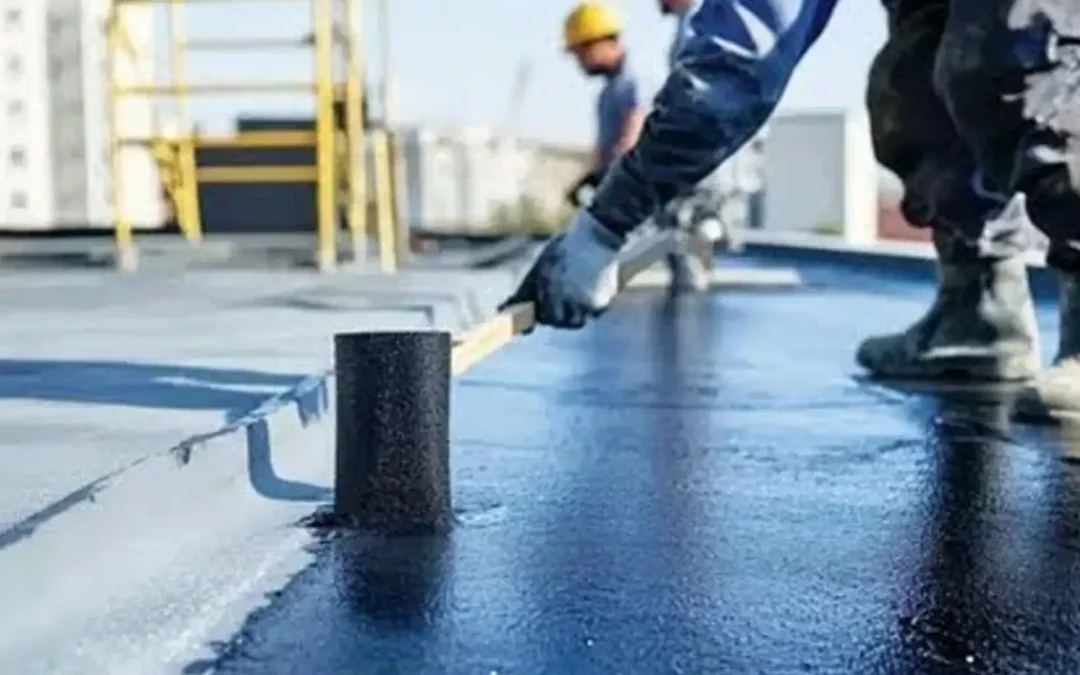
A small stain on a ceiling might point to a roof leak. A damp basement wall might indicate water intrusion through masonry. Soft flooring could be connected to moisture trapped beneath the subfloor. In some cases, the visible damage is several feet or even an entire room away from where the water originally entered.
That is why moisture inspections need to consider the building materials involved.
Concrete, brick, wood, drywall, insulation, roofing membranes, flooring systems, and metal components all respond differently when exposed to moisture. Some materials absorb water quickly. Others resist it but allow water to travel along their surfaces. Some show visible deterioration, while others can remain apparently normal despite elevated moisture levels.
For property owners researching licensed waterproofing contractors brooklyn, understanding what materials can be inspected provides useful context before any waterproofing or moisture-control work begins.
A professional inspection is essentially a process of following the evidence. The goal is not simply to find where something looks wet. It is to determine how moisture entered, where it traveled, which materials were affected, and whether the material has suffered deterioration.
How Moisture Moves Through a Building
Moisture can enter a building in several ways. Rainwater may penetrate through exterior walls, groundwater may push against foundation walls, plumbing leaks can release water inside wall cavities, and humid air can contribute to condensation.
Water does not always remain where it first appears.
Imagine spilling a glass of water onto a sponge. The water spreads through the sponge rather than staying in one spot. Building materials can behave in a similar way, although their moisture movement is governed by their porosity, density, temperature, construction, and surrounding conditions.
Water may move through cracks, porous materials, joints, cavities, insulation, and interfaces between different materials.
Surface Moisture vs. Hidden Moisture
Surface moisture is usually easier to identify. Examples include:
- Visible water stains
- Wet concrete
- Damp drywall
- Peeling paint
- Discolored wood
- Water pooling on floors
- Efflorescence on masonry
Hidden moisture is more complicated.
Water may be trapped behind drywall, under flooring, inside insulation, beneath roofing membranes, or within wall assemblies. The surface can sometimes appear dry even though the material beneath it has elevated moisture.
This is one reason a moisture inspection may involve more than simply touching a wall or looking for discoloration.
Why Moisture Can Travel Away From Its Source
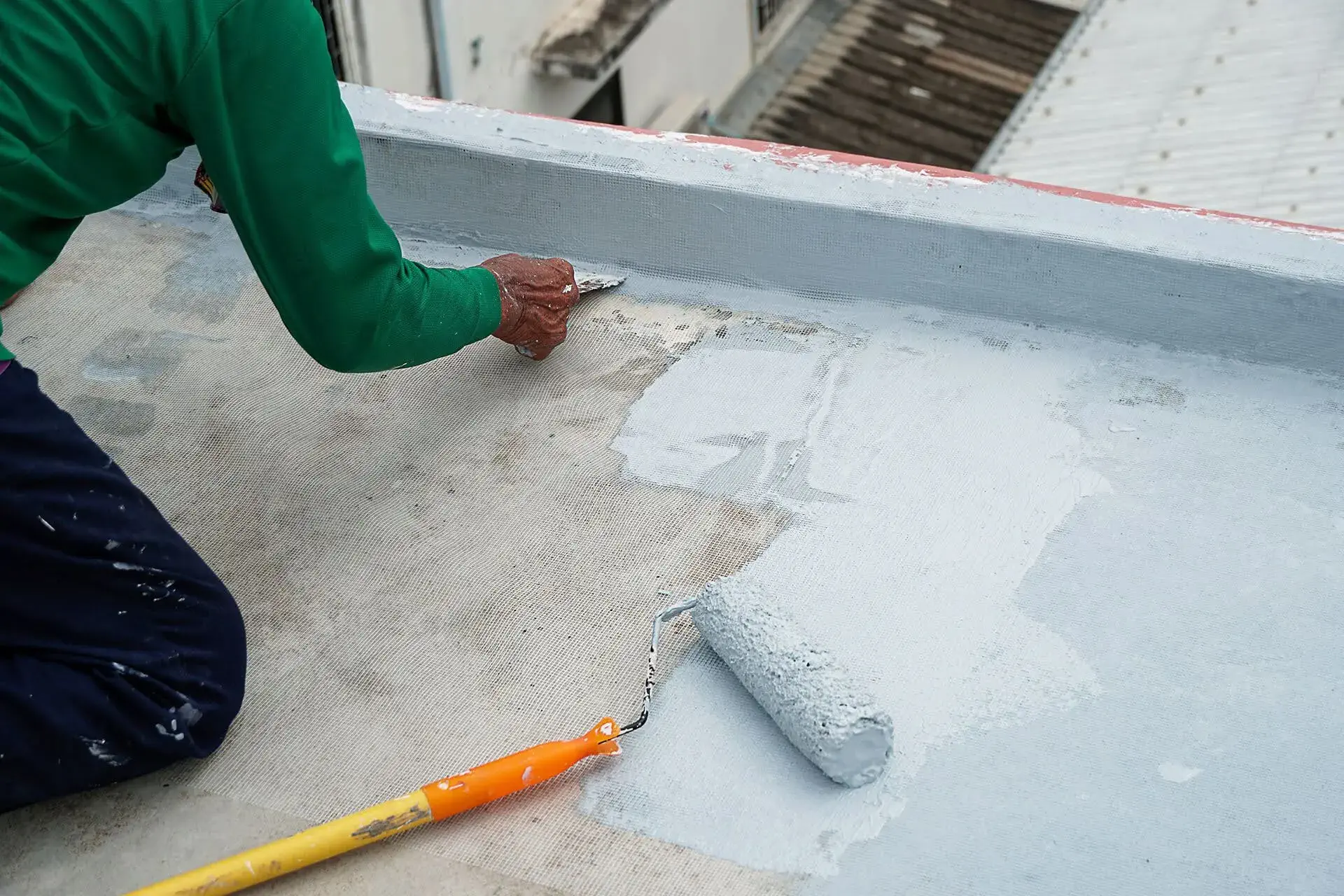
Gravity is only one part of the equation.
Capillary action can move water through porous materials. Pressure can force water through cracks and openings. Building materials can also transfer moisture from one layer to another when they are in direct contact.
For example, water entering around a roof penetration might travel along framing or sheathing before creating a ceiling stain somewhere else.
This means the location of a stain does not automatically identify the source.
Concrete and Reinforced Concrete
Concrete is one of the most common materials inspected during moisture investigations, particularly in foundations, basements, retaining walls, slabs, parking structures, and other below-grade areas.
Although concrete is strong and durable, it is not completely impermeable.
Concrete contains a network of pores and capillaries. Water can enter through these pathways, especially when there are cracks, construction joints, penetrations, poor drainage conditions, or hydrostatic pressure.
Common Moisture Damage in Concrete
Moisture-related concerns in concrete can include:
- Persistent dampness
- Efflorescence
- Surface deterioration
- Cracking
- Spalling
- Corrosion-related damage around reinforcing steel
- Coating or paint failure
- Moisture migration through slabs
A moisture inspection may consider both the condition of the concrete and the surrounding drainage or waterproofing system.
Cracks, Spalling, and Efflorescence
Cracks deserve particular attention because they can create pathways for water movement.
Not every concrete crack represents the same problem. Some cracks may be related to shrinkage, while others can be associated with movement, settlement, pressure, or other conditions.
Efflorescence is another useful clue. It appears as a white, powdery deposit caused by dissolved minerals being carried toward the surface by moisture.
Efflorescence does not necessarily mean that concrete itself has failed. Instead, it can indicate that water has been moving through the material.
Brick and Masonry
Brick is naturally porous, which means it can absorb and release moisture.
Masonry walls are designed to deal with some amount of moisture exposure. Problems develop when water enters at a rate or location that the wall system cannot effectively manage.
Water can penetrate through deteriorated mortar joints, cracks, damaged flashing, failed sealants, porous brick, or openings around windows and doors.
How Water Affects Brickwork
Repeated wetting and drying can place stress on masonry.
In colder conditions, absorbed water can freeze and expand. Over time, repeated freeze-thaw cycles can contribute to cracking, surface deterioration, or spalling.
In other situations, persistent moisture can contribute to staining, biological growth, mortar deterioration, and interior dampness.
For buildings in Brooklyn, masonry inspections can be particularly relevant because many older properties rely heavily on brick and mortar wall assemblies.
Mortar Joints and Deterioration
The mortar between bricks is not simply decorative. It forms an important part of the masonry assembly.
Deteriorated mortar joints can create pathways for water penetration. During an inspection, contractors may look for:
- Crumbling mortar
- Missing mortar
- Open joints
- Cracks
- Discoloration
- Previous patching
- Water staining
The condition of the mortar can help explain how moisture is interacting with the wall.
Stone and Natural Masonry Materials
Natural stone is often considered highly durable, but durability does not mean immunity to moisture-related problems.
Different stones have different porosity levels. Some absorb relatively little water, while others can take in significant amounts.
Moisture inspections may examine stone foundations, exterior walls, retaining walls, masonry details, window surrounds, and other stone components.
Potential signs include discoloration, staining, cracking, surface deterioration, biological growth, and moisture migration into adjacent materials.
The joints between stones can also be important. Water may enter through deteriorated mortar or sealant even when the stone itself appears to be in good condition.
Wood and Wood-Based Building Materials
Wood is particularly sensitive to prolonged moisture exposure.
Unlike concrete or stone, wood is an organic material that can absorb and release moisture as environmental conditions change. Extended exposure to elevated moisture can contribute to swelling, distortion, deterioration, and conditions favorable to fungal decay.
Wood may be inspected in:
- Floor framing
- Wall framing
- Roof framing
- Deck structures
- Window components
- Door components
- Sheathing
- Subfloors
- Structural supports
Structural Wood
When structural wood becomes persistently wet, the concern is not merely cosmetic.
Moisture can affect dimensional stability and create conditions that contribute to deterioration. A contractor may inspect accessible framing for staining, softness, deformation, discoloration, or other indications of prolonged moisture exposure.
However, moisture inspection does not automatically mean that structural failure exists. The significance of a finding depends on the material, duration of exposure, location, and extent of deterioration.
Plywood, OSB, and Other Engineered Wood
Engineered wood products can also be affected by moisture.
Plywood consists of layers of wood veneer bonded together, while oriented strand board (OSB) is manufactured from wood strands. Both are widely used for roof and wall sheathing and subfloor systems.
Water exposure can cause swelling, edge deterioration, delamination in certain materials, loss of dimensional stability, or deterioration of surrounding components.
Because these materials are often concealed beneath roofing, siding, flooring, or interior finishes, detecting moisture before extensive damage develops can be important.
Drywall and Plaster
Drywall is one of the easiest materials to recognize when moisture damage becomes visible.
Common warning signs include:
- Brown or yellow staining
- Soft areas
- Bubbling paint
- Peeling finishes
- Swollen edges
- Crumbling surfaces
- Persistent musty conditions
Yet visible damage does not always reveal the full extent of the moisture problem.
Signs of Moisture Behind Finished Walls
Water can enter behind a wall finish and remain inside the cavity.
A moisture inspection may therefore examine areas around plumbing fixtures, windows, exterior walls, roofs, foundations, and other potential entry points.
Plaster walls require somewhat different interpretation. Traditional plaster systems can be more durable than drywall, but prolonged moisture can still affect the plaster, underlying lath, fasteners, framing, paint, and surrounding materials.
Insulation Materials
Insulation is another building component that can be affected by moisture, even when it is hidden from view.
Insulation performance depends partly on maintaining the intended physical condition of the material. When insulation becomes wet, its performance and condition may change depending on the insulation type and the circumstances of exposure.
Fiberglass and Mineral Wool
Fiberglass and mineral wool do not behave exactly like wood or cellulose when exposed to moisture.
However, water entering an insulated wall or ceiling assembly can still create broader concerns. The surrounding drywall, framing, sheathing, fasteners, and finishes may be affected.
A contractor therefore looks at the entire assembly rather than assuming that the insulation is the only concern.
Cellulose and Other Absorbent Insulation
Cellulose insulation is made primarily from processed plant-based fibers and can absorb moisture.
If significant moisture enters a cavity containing cellulose, the material may become damp and compact. The surrounding assembly may also experience prolonged elevated moisture.
Other absorbent insulation products require similar consideration.
Roofing Materials and Roof Assemblies
Roofs are among the most important areas in a moisture investigation because they are the building’s primary defense against precipitation.
Roof assemblies can contain several layers, including:
- Roof coverings
- Underlayment
- Waterproofing membranes
- Insulation
- Decking
- Flashing
- Sealants
- Drainage components
A problem in one layer can affect materials beneath it.
Membranes and Waterproof Roofing Layers
Roofing membranes are designed to control water movement, but they can be damaged by punctures, aging, improper installation, movement, failed seams, or mechanical damage.
Inspection may focus on visible defects as well as signs of moisture beneath the membrane.
Flashing, Seams, and Penetrations
Roof penetrations are common areas of concern.
Plumbing vents, chimneys, skylights, HVAC equipment, parapets, and other penetrations interrupt the continuous roof surface.
Flashing and sealants help manage water around these transitions. If these components deteriorate or fail, moisture can enter the roof assembly.
Flooring Materials and Subfloor Systems
Floors can hide moisture for surprisingly long periods.
Potentially affected components include:
- Hardwood flooring
- Laminate
- Engineered wood
- Vinyl
- Carpet
- Tile
- Plywood subfloors
- OSB subfloors
- Concrete slabs
A floor that feels soft, buckled, swollen, or uneven may warrant further investigation.
In other cases, there may be no obvious surface defect. Moisture can exist beneath flooring materials, especially after plumbing leaks, flooding, foundation seepage, or prolonged humidity.
Tile, Grout, and Mortar Beds
Tile itself may resist water reasonably well, but a tiled assembly is more complicated than the visible tile surface.
Grout lines, joints, cracks, transitions, waterproofing membranes, and mortar beds all play roles in moisture management.
Bathrooms, kitchens, basements, balconies, and other wet areas can therefore require close attention.
A cracked grout joint does not automatically prove that water has entered the substrate. However, it can represent a potential pathway that deserves consideration alongside other evidence.
Plaster, Stucco, and Exterior Finishes
Exterior finishes help protect the building envelope, but they can deteriorate over time.
Stucco can develop cracks, gaps, or damaged transitions. Plaster can experience staining and deterioration when moisture reaches the system repeatedly.
During an inspection, the contractor may consider:
- Cracking
- Surface discoloration
- Failed sealants
- Open joints
- Damaged flashing
- Moisture staining
- Areas around windows and doors
The important point is that exterior finish damage can sometimes be the symptom rather than the underlying cause.
Metal Components and Corrosion
Metal may not absorb water like wood or masonry, but moisture can still cause significant problems.
Steel components can corrode when exposed to moisture and oxygen. Fasteners, brackets, flashing, reinforcement, pipes, and other metal components can therefore become relevant during an inspection.
Rust staining may provide clues about moisture movement.
For example, corrosion around a fastener may indicate repeated exposure to moisture, while rust staining beneath a metal component may help identify a water pathway.
How Contractors Identify Hidden Moisture Damage
Identifying moisture is often a combination of observation, measurement, and interpretation.
No single inspection method provides the complete picture in every building.
Visual Inspection
The first step is usually looking carefully at the building.
Inspectors may document:
- Stains
- Cracks
- Discoloration
- Peeling coatings
- Swelling
- Deteriorated materials
- Efflorescence
- Corrosion
- Damaged joints
- Drainage conditions
Visual evidence establishes the starting point for further investigation.
Moisture Meters
Moisture meters can help identify areas with elevated moisture.
Different meters work differently and may be designed for specific materials or applications. Readings can be influenced by material composition, temperature, salts, density, and other factors.
That is why a moisture reading should not be interpreted as an isolated diagnosis.
Thermal Imaging
Infrared cameras can sometimes help identify temperature patterns associated with moisture.
For example, evaporative cooling can create a temperature difference between damp and dry areas under suitable conditions.
Thermal imaging is useful as an investigative tool, but it does not directly measure moisture content in every situation. A thermal image generally needs to be interpreted alongside other inspection evidence.
Probing and Targeted Testing
When appropriate and permitted, targeted probing can help assess the condition of accessible materials.
The objective is to gather additional evidence without unnecessarily damaging the property.
A careful inspection should balance the need for accurate information with the need to minimize disturbance.
Why Moisture Readings Must Be Interpreted in Context
A moisture meter might show an elevated reading, but what does that actually mean?
That depends on the material, surrounding conditions, baseline readings, location, temperature, and the purpose of the inspection.
A concrete wall and a wooden floor cannot necessarily be evaluated using the exact same interpretation.
This is why experienced licensed waterproofing contractors in brooklyn may consider multiple forms of evidence before identifying a moisture problem.
Think of a moisture reading as one piece of a puzzle. It becomes useful when combined with the other pieces.
Common Causes of Moisture Damage in Buildings
Moisture damage can originate from numerous sources.
Common causes include:
- Foundation seepage
- Poor exterior drainage
- Roof leaks
- Damaged flashing
- Plumbing leaks
- Failed sealants
- Cracked masonry
- Deteriorated mortar joints
- Condensation
- Flooding
- Improper grading
- Blocked or damaged drainage systems
- Defective waterproofing
- Damaged window assemblies
- Water intrusion around penetrations
Identifying the material affected is important, but identifying the moisture source is equally important.
Otherwise, replacing damaged material without addressing the pathway can allow the same problem to return.
What Happens When Moisture Damage Is Left Unaddressed
The consequences depend on the material, moisture level, duration, and environmental conditions.
Concrete may develop continued deterioration. Masonry may experience worsening joints or surface damage. Wood can swell or deteriorate. Drywall may lose its structural integrity. Flooring can buckle or separate from the substrate.
Moisture can also affect multiple connected materials.
For example, a roof leak might initially affect the roof membrane, then the decking, insulation, framing, drywall, paint, and flooring below.
The longer moisture remains within a building assembly, the more difficult it can become to distinguish the original source from the secondary damage.
When Different Building Materials Require Different Solutions
There is no universal moisture repair method.
A concrete foundation with seepage presents a different situation from a wet wooden subfloor. A deteriorated brick wall requires different considerations from a leaking roof membrane.
This is why the inspection stage matters.
The material, moisture pathway, extent of exposure, construction method, and source of water all influence what should happen next.
For example, a masonry problem may involve deteriorated mortar or flashing, while a basement problem may involve drainage and hydrostatic pressure. A roof problem may involve membrane seams or penetrations.
The right response begins with understanding what is actually happening.
Role of Licensed Waterproofing Contractors
A licensed waterproofing contractor can evaluate moisture-related conditions within the scope of their expertise and applicable local requirements.
For property owners researching companies such as Zavza Seal LLC, it is useful to understand that waterproofing inspection is broader than simply searching for visible leaks.
The inspection process can involve examining the interaction between exterior surfaces, masonry, foundations, drainage, roofing components, interior finishes, and other building materials.
The contractor’s role is to identify evidence of water intrusion and help determine the likely pathway and affected areas.
Where conditions fall outside the contractor’s professional scope such as certain structural, electrical, plumbing, or environmental concerns additional specialists may be appropriate.
Zavza Seal LLC Serving the Kensington Community and Beyond in Brooklyn
Zavza Seal LLC is dedicated to serving the diverse needs of the local community of Brooklyn, including individuals residing in neighbourhoods like Kensington. With its convenient location near landmarks such as the LASER BY KAESTHETICS and major intersections like E 7th St and Avenue H (coordinates: 40.6292016, -73.9697749), we offer licensed waterproofing contractors.
Get licensed waterproofing contractors at Kensington Now
Call Us or Contact Us: +17184007005
Navigate from Kensington to Zavza Seal LLC Now
Moisture damage can affect far more than the surface where water becomes visible. Concrete, brick, stone, wood, drywall, insulation, roofing materials, flooring systems, plaster, stucco, and metal components can all provide important clues during a moisture investigation. Each material reacts differently, so understanding those differences helps explain why a professional inspection may involve several methods rather than one simple moisture reading.
For Brooklyn properties, especially older buildings with masonry walls, below-grade spaces, and complex building envelopes, tracing moisture back to its source can require careful observation and material-specific evaluation. Understanding what licensed waterproofing contractors brooklyn can inspect gives property owners a clearer picture of what happens during a professional moisture assessment and why identifying the source is just as important as identifying the visible damage.
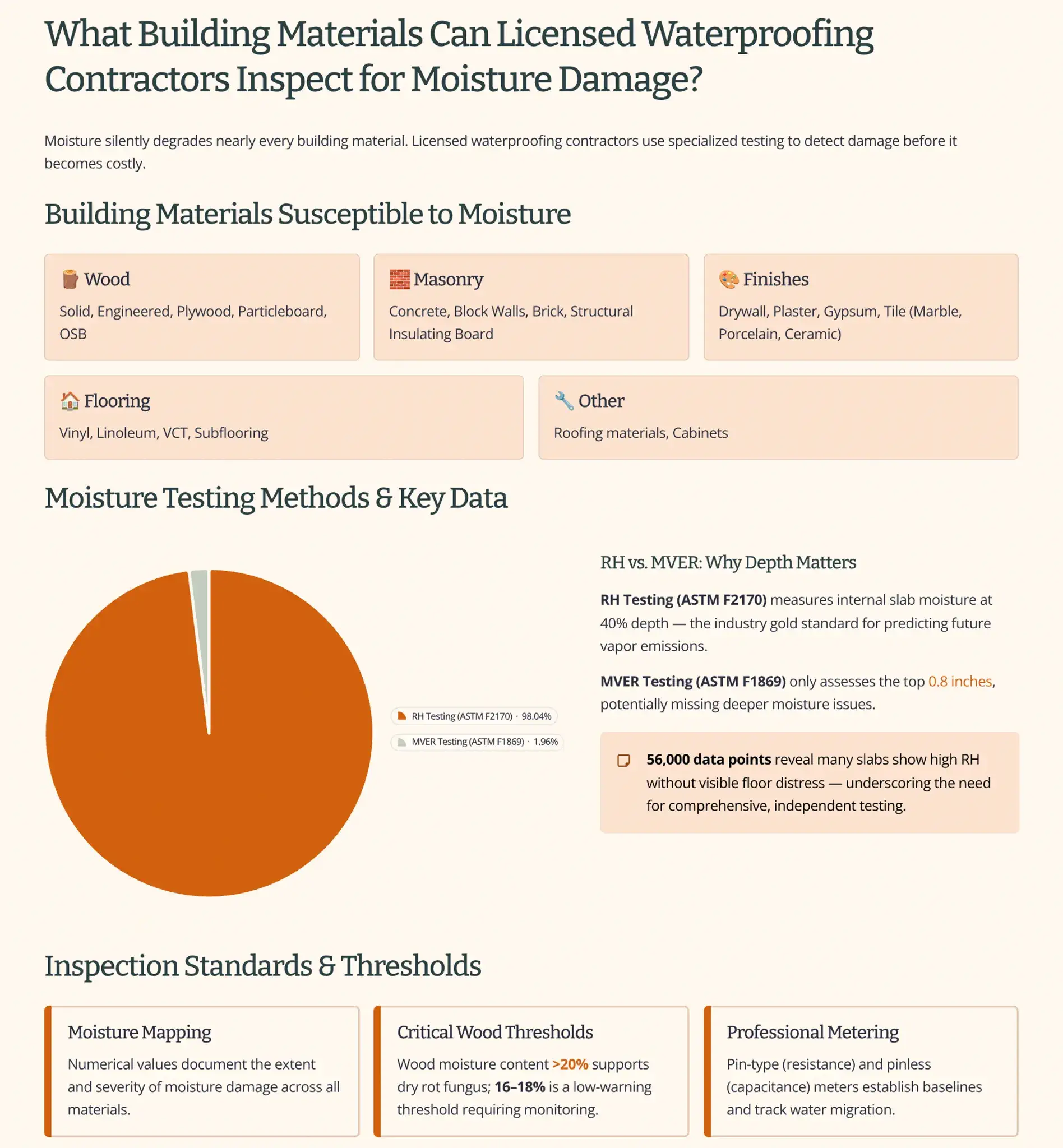
What Building Materials Can Licensed Waterproofing Contractors Inspect for Moisture Damage?
Building Materials Susceptible to Moisture
- Wood: Solid, Engineered, Plywood, Particleboard, OSB
- Masonry: Concrete, Block Walls, Brick, Structural Insulating Board
- Finishes: Drywall, Plaster, Gypsum, Tile (Marble, Porcelain, Ceramic)
- Flooring: Vinyl, Lino, VCT, Subflooring
- Other: Roofing materials, Cabinets
Moisture Detection Data: Relative Humidity (RH) vs. MVER
- RH Testing (ASTM F2170): Measures internal slab moisture; preferred for predicting future emissions.
- MVER Testing (ASTM F1869): Measures surface vapor emission; limited to top 0.8 inches.
- Key Insight: 56,000 data points show many slabs exhibit high RH without floor distress, highlighting the need for comprehensive, independent testing to avoid unnecessary, costly mitigation.
Inspection Standards
- Moisture Mapping: Uses numerical values to document extent and severity of damage.
- Thresholds: Wood moisture content >20% supports dry rot fungus; 16-18% is a low warning threshold.
- Professional Approach: Licensed contractors use pin-type (resistance) and pinless (capacitance) meters to establish baselines and track water migration.
Sources: Sambuz (2024), InterNACHI (2012), Building Science Corp (2018), ICRI (2024).
Frequently Asked Questions
1. What building materials are most commonly inspected for moisture damage?
Common materials include concrete, brick, mortar, stone, wood, plywood, OSB, drywall, plaster, insulation, roofing materials, flooring, tile, stucco, and metal components. The exact materials inspected depend on where moisture is suspected and how the building is constructed.
2. Can moisture damage exist even when there is no visible water?
Yes. Moisture can exist inside wall cavities, beneath flooring, within insulation, below roofing materials, or inside other concealed building assemblies. Moisture meters, thermal imaging, visual inspection, and targeted testing can help identify conditions that are not immediately visible.
3. Does efflorescence mean that a concrete or brick wall is failing?
Not necessarily. Efflorescence generally indicates that moisture has moved through a masonry or concrete material and carried dissolved minerals toward the surface. It can be an important clue about moisture movement, but it does not by itself establish structural failure.
4. Can waterproofing contractors inspect wood and drywall for moisture damage?
Yes, moisture inspections can include wood framing, sheathing, subfloors, drywall, and other building materials when they are relevant to a water-intrusion investigation. The inspection focuses on identifying moisture conditions and visible or measurable signs of damage.
5. Why is finding the source of moisture important before repairing damaged materials?
Replacing a damaged material without addressing the source can allow the same problem to happen again. For example, replacing stained drywall without resolving a roof or wall leak may only correct the visible symptom. Identifying the moisture pathway helps determine what part of the building system requires attention.