
The Problem: Cracked Basement Columns and Faulty Backyard Drainage in Smithtown, NY
A homeowner in Smithtown contacted Zavza Seal with two serious concerns.
Issue 1: Damaged Wooden Basement Columns
During our inspection, we observed 4 wooden load bearing posts in the basement with:
- Splitting and cracking
- Visible structural stress
- Signs of long term compression
These wooden posts were supporting a heavy load from the home above. When load bearing posts begin to split, it can lead to:
- Floor sagging
- Wall cracks
- Structural settling
- Safety risks
Wooden posts in basements are often exposed to moisture and pressure over time. According to the International Code Council, structural supports must meet proper load requirements to ensure safety. Damaged wood columns often no longer meet these standards.
The homeowner needed a permanent and stronger solution.
Issue 2: Faulty Sump Pump Discharge in Backyard Garden Area
We also found that the sump pump discharge line in the backyard garden area was faulty.
The existing pipe was not draining properly. This can cause:
- Water pooling in the yard
- Soil erosion
- Foundation moisture problems
- Basement water backup
A sump pump system is only effective if the discharge line safely directs water away from the home. The Environmental Protection Agency explains how poor drainage and water accumulation around a foundation can lead to structural damage and moisture problems.
Both issues needed to be fixed to protect the home.
The Solution: Steel Column Installation and New 4 Inch Drain Line
Zavza Seal created a two part solution to fix both the structural and drainage problems.
Part 1: Replacing Wooden Posts with Steel Basement Columns
Step 1: Temporary Structural Support
Before removing any columns, we installed temporary supports to safely hold the weight of the home.
Step 2: Remove the Damaged Wooden Posts
We carefully removed all 4 cracked and splitting wooden load bearing posts.
Step 3: Install New Reinforced Concrete Footings
To properly support the new steel columns, we:
- Cut and broke open the concrete slab
- Excavated down to create a deeper base
- Installed rebar reinforcement
- Poured high strength concrete to form new footings
Proper footing depth is critical for long term stability.
We allowed the concrete to cure for one full day.
Step 4: Install Steel Columns
The next day, we:
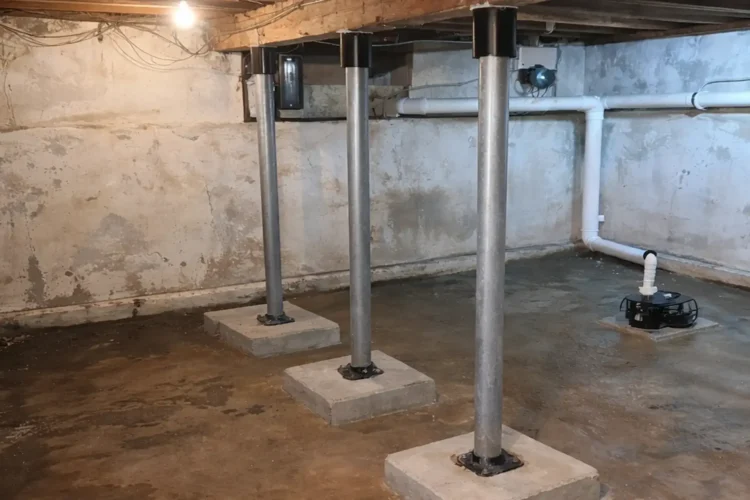
- Installed new adjustable steel columns
- Secured them directly onto the new reinforced footings
- Covered the steel bases with high strength cement to complete the installation
The basement now has strong, stable load bearing supports designed for long term performance.
Part 2: Backyard Sump Pump Discharge Replacement
To correct the drainage issue, our team performed the following
- Excavated a trench at least 1 foot wide and 1 foot deep
- Extended the trench approximately 55 linear feet
- Exposed and removed the existing faulty plumbing
- Installed new 4 inch PVC pipe
The new 4 inch PVC sump pump discharge line was routed away from the foundation and directed to an appropriate exterior discharge point, in line with local drainage and stormwater management guidelines. The system was designed to ensure proper flow while preventing water from returning toward the home or impacting surrounding areas.
After installation, we:
- Cleaned the system thoroughly
- Ran a drain snake through the new line
- Confirmed proper water flow and drainage
This ensures the sump pump now directs water safely away from the property.
The Result: Stronger Structure and Proper Drainage
After completing the project, the homeowner now has:
- Four new steel load bearing basement columns
- Reinforced concrete footings
- A properly functioning sump pump discharge line
- Improved structural stability
- Reduced risk of settling and water damage
The home is now safer, stronger, and better protected against water issues.