
The Problem
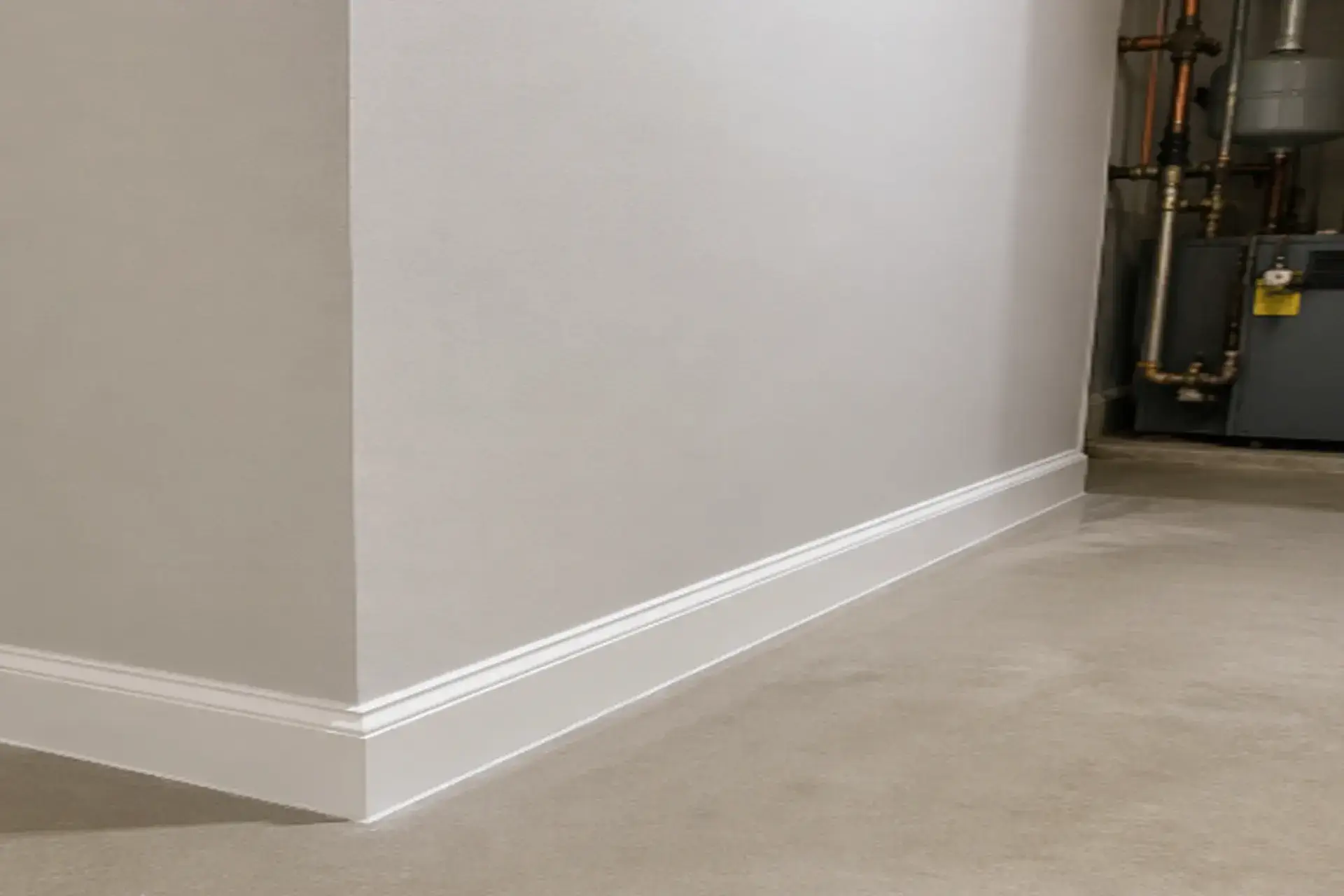
A homeowner in West Islip reached out to Zavza Seal after dealing with ongoing dampness in their basement bedroom and the adjacent boiler room. This was not a one-time issue. Moisture kept returning along the foundation wall joint, which is where the wall meets the floor.
During our inspection, we found that the drywall and baseboards in the bedroom were damp, and moisture was building up along the wall-floor joint. There were also early signs of water damage near the boiler room. Outside, the brick chimney showed worn and cracked mortar joints, which can also allow water to enter over time.
This type of issue is common in basements because water pressure builds up in the soil around the home and pushes moisture through weak points like joints and seams. If ignored, it can lead to mold growth, damage to materials, and poor air quality inside the home.
The Solution
Our team at Zavza Seal created a targeted plan to stop the water from entering and to restore the affected areas properly.
We started by opening up the problem area in the basement bedroom. The baseboards were carefully removed, and the drywall was cut about 12 inches above the floor. This allowed us to fully expose the concrete wall and clearly see where the moisture was entering.
Next, we prepared the surface so the waterproofing material would bond properly. We ground the concrete 4 inches up the wall and 6 inches across the floor. This step is very important because it creates a clean and rough surface that helps the waterproofing system stick and perform long term.
Once the surface was ready, we applied a mesh reinforced layer of Basecrete Waterproofing Cement along the wall-floor joint. This creates a strong barrier that blocks water, even under pressure, and seals one of the most common entry points in a basement.
After the waterproofing was completed, we restored the interior. The drywall was replaced, and the joints were taped and finished so the space looked clean and complete again.
We also repaired the exterior chimney, since damaged mortar can allow water to seep into the structure. The old mortar was removed and replaced with non-shrink cement, then finished smoothly to ensure proper sealing and a neat appearance.
The Result
After the work was completed, the basement remained dry and stable. The recurring dampness in both the bedroom and boiler room was fully resolved. The homeowner also noticed improved air quality and no longer had to worry about moisture returning.
The space is now safe, dry, and usable, with long-term protection in place.
Why This Repair Worked
Foundation wall joints are one of the most common places where water enters a basement. Instead of covering the symptoms, this repair focused on the exact entry point. By exposing the joint, preparing the surface correctly, and applying a reinforced waterproofing system, we were able to stop the problem at its source.
Signs You May Have the Same Problem
You might be dealing with a similar issue if you notice:
- Dampness or staining near the bottom of basement walls
- A musty smell that does not go away
- Water returning after cleaning or repairs
- Moisture along the wall-floor joint
These signs usually mean water is entering through the foundation and needs a proper inspection.