
Project Overview
A homeowner in Brooklyn, NY contacted Zavza Seal after noticing signs of moisture damage beneath the flooring in two bedrooms totaling approximately 260 square feet. The homeowner was concerned about recurring dampness, deteriorating subfloor materials, and the possibility of further damage if the problem was left untreated.
After a detailed inspection, our team developed a complete floor restoration and moisture protection system designed to stop moisture intrusion, improve indoor comfort, and provide a durable foundation for new flooring.
The Problem
The homeowner had experienced ongoing moisture-related issues beneath the bedroom floors. During our evaluation, we identified damaged and rotted sections of the wood substrate near the foundation wall.
The existing flooring system provided little protection against moisture migration from below. Over time, moisture had contributed to wood deterioration and created conditions that could lead to additional structural damage if not addressed.
Several challenges needed to be solved:
- Damaged and rotted subfloor lumber
- Moisture movement through the floor assembly
- Air leakage through gaps and joints
- Potential mold and mildew concerns caused by damp conditions
- Need for a durable flooring system without penetrating the moisture barrier
Without corrective action, the damage would likely continue to spread and shorten the lifespan of the new flooring.
Our Solution
Zavza Seal designed a comprehensive moisture control and floor restoration system to address both the visible damage and the underlying causes.
Step 1: Removal of Existing Materials
Our team carefully removed the existing flooring and baseboard moldings. The moldings were preserved whenever possible so they could be reinstalled after the project was completed.
The work area was then thoroughly cleaned and prepared for repairs.
Step 2: Structural Subfloor Repairs
After exposing the subfloor, we removed all damaged and rotted lumber.
To ensure long-term stability, replacement lumber was installed with proper support extending to the nearest floor joists. Each repair section was secured to provide a solid structural base for the new flooring system.
Because portions of the damaged wood were located close to the foundation wall, specialized cutting tools were used to safely remove deteriorated materials while minimizing disruption to surrounding components.
Step 3: Wall and Floor Joint Restoration
The lower portions of the wall assembly were prepared and cleaned where necessary.
Our team then applied high-strength repair mortar rated at approximately 6,500 PSI to rebuild damaged areas and create a stable surface. Afterward, a 6,000 PSI waterproofing cement layer was installed and troweled smooth to create a durable and moisture-resistant transition between the wall and floor system.
Step 4: Installation of Reinforced Vapor Barrier
To prevent moisture migration, we installed a premium 15-mil reinforced polyethylene membrane across the entire bedroom floor area.
This membrane is manufactured from 100% virgin polyethylene and reinforced with woven polyethylene ribbons that provide exceptional puncture and tear resistance. The seamless design creates continuous protection without welded joints or panel connections.
Step 5: Air Sealing and Sound Control
All seams, joints, transitions, and difficult-to-access areas were sealed using an elastomeric air-control sealant.
This process helped create a hermetic seal that blocks microscopic pathways where moisture and air can travel.
A soundproof membrane was then installed above the vapor barrier to provide an additional moisture-control layer while reducing sound transmission between floors.
Step 6: Floating Floor Installation
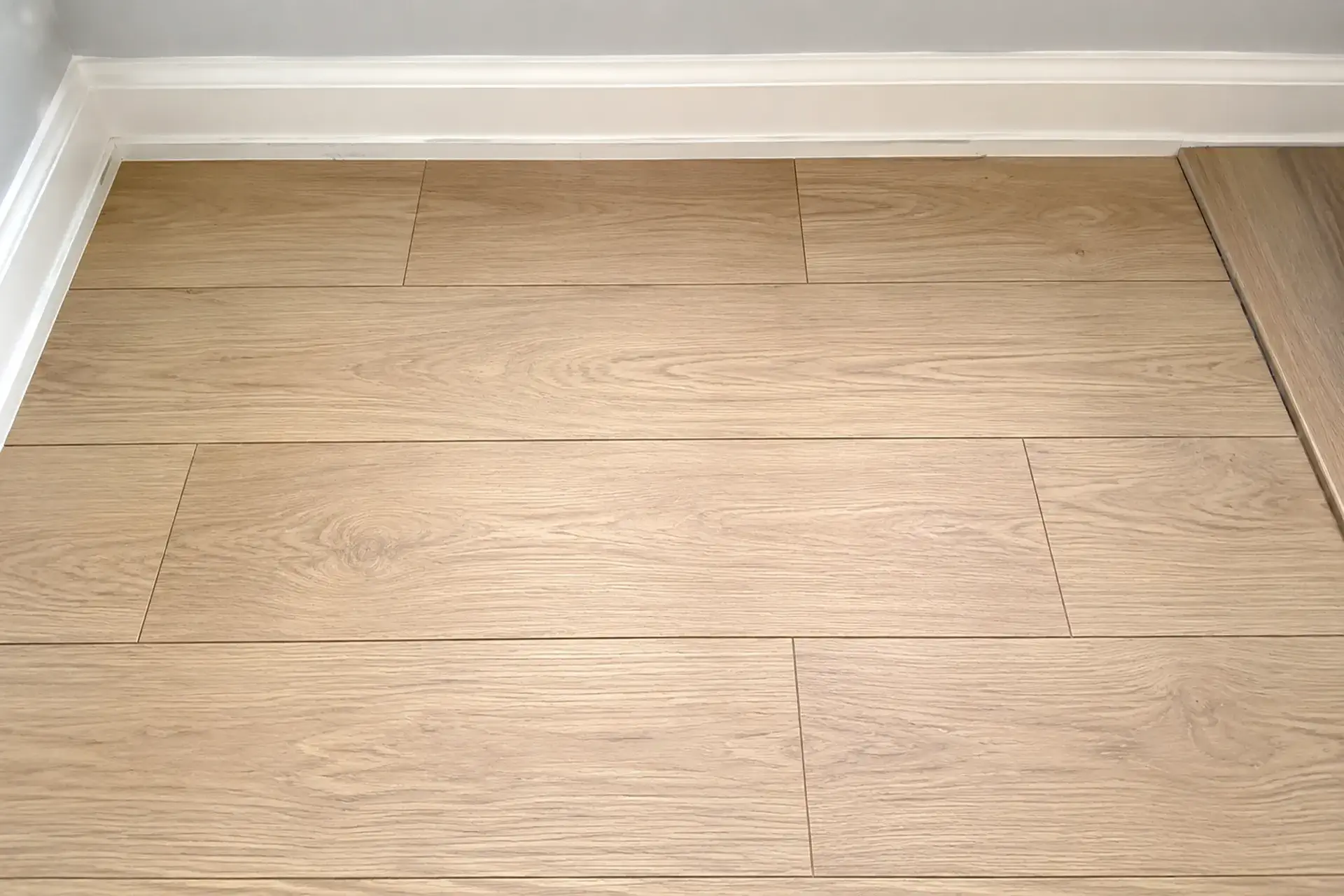
To preserve the integrity of the waterproofing system, a floating floor assembly was installed.
Unlike traditional flooring systems that require nails or fasteners, a floating floor eliminates penetrations through the vapor barrier. This approach helps maintain continuous protection against moisture intrusion.
The homeowner selected the final flooring material, and our team completed the installation.
Step 7: Finishing Work
Any drywall sections removed during the repair process were restored, and the original baseboard moldings were reinstalled to complete the project.
The Result
The Brooklyn homeowner now has a fully restored bedroom flooring system protected by multiple layers of moisture defense.
Benefits of the completed project include:
- Repaired and reinforced subfloor structure
- Long-term moisture protection
- Reduced air leakage
- Improved indoor comfort
- Lower risk of future wood deterioration
- Enhanced sound reduction between floors
- Durable foundation for new flooring
By addressing both the visible damage and the root cause of moisture intrusion, Zavza Seal delivered a complete solution designed for long-term performance and peace of mind.
Why Brooklyn Homeowners Choose Zavza Seal
Zavza Seal specializes in waterproofing, moisture control, structural repairs, and basement solutions throughout Brooklyn and the surrounding New York area. Our team focuses on solving the source of the problem, not just covering up the symptoms.
Every project is designed to provide lasting protection, improved durability, and a healthier indoor environment.
Need help with moisture-damaged floors or subfloor repairs in Brooklyn, NY? Contact Zavza Seal today to schedule an inspection and learn about the right solution for your home.