
The Problem:
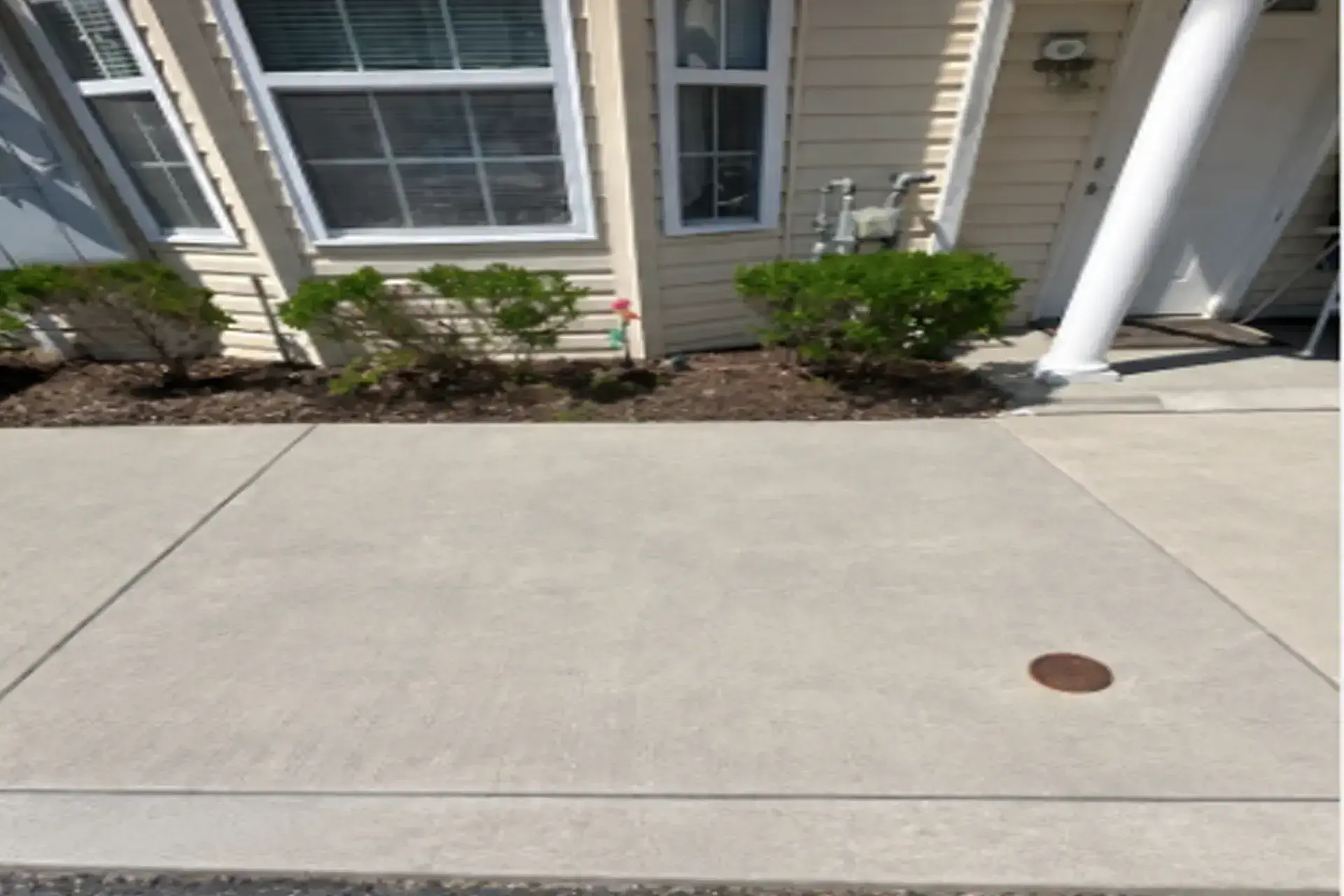
During our inspection of an assisted living complex in Brooklyn, our team found numerous sidewalk areas that had settled or become uneven.
Several concrete sidewalk flags had shifted, creating vertical differences between adjacent slabs. These uneven areas created trip hazards for residents, staff, visitors, and anyone using the walkways.
Because the property is an assisted living facility, keeping the sidewalks level and safe was especially important.
The goal was to correct the problem while avoiding unnecessary removal of large sections of otherwise usable concrete.
The Solution:
Zavza Seal developed a repair plan using a combination of slab stabilization, concrete replacement, surface grinding, and non-slip traction strips.
For many of the settled sidewalk flags, our team used structural slurry grout injection. Small injection ports were drilled into the concrete, allowing the grout to be placed beneath the slabs. This helped lift and stabilize the settled sections while reducing stress on the surrounding concrete.
Where the concrete could not be restored through lifting or grinding, we removed and replaced the affected sidewalk sections.
Areas 1 to 47
We removed and replaced four sidewalk flags.
Around approximately 25 settled flags, we saw-cut isolation joints to help relieve pressure between the affected slabs. We then drilled injection ports and pressure-injected structural slurry grout beneath the concrete to lift and stabilize the sidewalk.
All injection ports were patched after the work was completed.
Areas 49 to 98
Approximately 46 settled sidewalk flags were treated with isolation cuts and structural slurry grout injection.
This allowed our team to carefully raise and stabilize the concrete while limiting disturbance to the surrounding sidewalk.
The injection ports were patched after completion.
Areas 101 to 113
One sidewalk flag was lifted and stabilized using the slurry injection process.
Another flag was mechanically ground to remove the uneven vertical edge. A non-slip traction strip was also installed to improve walking safety.
Areas 115 to 121
The sidewalk flag in front of Apartment 116 was removed and replaced.
The flag between Apartments 117 and 119 was mechanically ground to correct the uneven surface, and a non-slip traction strip was installed.
We also removed and replaced the sidewalk section in front of Apartments 121 and 122. The replacement area measured approximately 14 feet by 6 feet.
Areas 123 to 125
Two sidewalk flags were removed and replaced.
Areas 127 to 129
Two sidewalk flags were mechanically ground to correct surface displacement.
Apartment Area 133
Two sidewalk flags were removed and replaced.
The Result:
The project addressed a large number of sidewalk trip hazards throughout the assisted living complex.
Instead of replacing every affected section, our team used different repair methods based on the condition of each sidewalk flag. Settled slabs were stabilized and lifted where possible, while damaged sections were replaced and smaller height differences were corrected through grinding.
This approach helped restore safer, more even walking surfaces while limiting unnecessary concrete replacement.
Why Sidewalk Trip Hazard Repair Matters in NYC?
New York City property owners are generally responsible for maintaining the sidewalks next to their properties. NYC DOT considers a vertical difference of 1/2 inch or more between adjacent sidewalk flags a trip hazard that can result in a sidewalk violation.
For properties serving older adults and other residents who may have mobility concerns, uneven sidewalks can create an even greater safety concern.