
The Problem:
A Brooklyn homeowner called Zavza Seal after noticing cracks, movement, and overall instability in their basement. What initially looked like an old house issue turned out to be a serious structural concern.
At the center of the basement, an older wooden beam had been partially replaced in the past with a smaller beam that simply could not carry the load it was supposed to support. Over time, the remaining original beam had cracked along the sides and bottom and showed signs of age and deterioration.
The situation was made worse by a bowing foundation wall near the southwest corner of the basement. Soil pressure from the outside was pushing the wall inward, and cracks had already formed. To complicate things further, the wall had no traditional footing, which meant any repair had to be carefully planned and executed.
The basement had also been excavated previously, and not in a safe way. Soil had been removed too close to the foundation, increasing the risk of collapse. Temporary supports were in place, but they needed immediate professional evaluation.
This was not a cosmetic repair. The home needed real structural correction, done safely and the right way.
The Solution:
Zavza Seal created a step by step structural repair plan focused on safety, long term strength, and proper engineering coordination.
Replacing the Undersized Beam
Before touching the damaged beam, our team installed temporary structural supports to carry the load safely. We then removed the undersized beam section and the nearby post.
To properly support the home, we installed a new 127 inch long 6 by 6 Douglas Fir beam. A pocket was carefully created in the foundation wall to receive the new beam, and a non shrink cementitious base was applied to ensure solid support. The new beam was securely tied into both the wall and the existing beam, restoring proper load transfer. Once everything was locked in place, the temporary supports were removed.
Strengthening the Existing Wood Beam
Parts of the original beam were still usable but needed reinforcement. To access the beam fully, we temporarily removed nearby pipes, electrical conduits, and cables.
We treated the damaged wood to stop rot wood restorer. This process strengthened weakened areas, sealed the wood against moisture, and stopped existing cracks from spreading further.
Adding Steel Plate Reinforcement
Because the beam carried a heavy load, additional reinforcement was necessary. Zavza Seal installed ten hot rolled steel plates on both sides of the wood beam, effectively sandwiching it for added strength.
The plates were secured using galvanized threaded bolts and structural epoxy. Once the reinforcement was complete, all pipes and conduits were carefully reattached.
Stabilizing the Bowing Foundation Wall
The south foundation wall was pushing inward due to exterior soil pressure. First, all visible cracks were repaired using high strength mortar and reinforced mesh, followed by waterproofing cement.
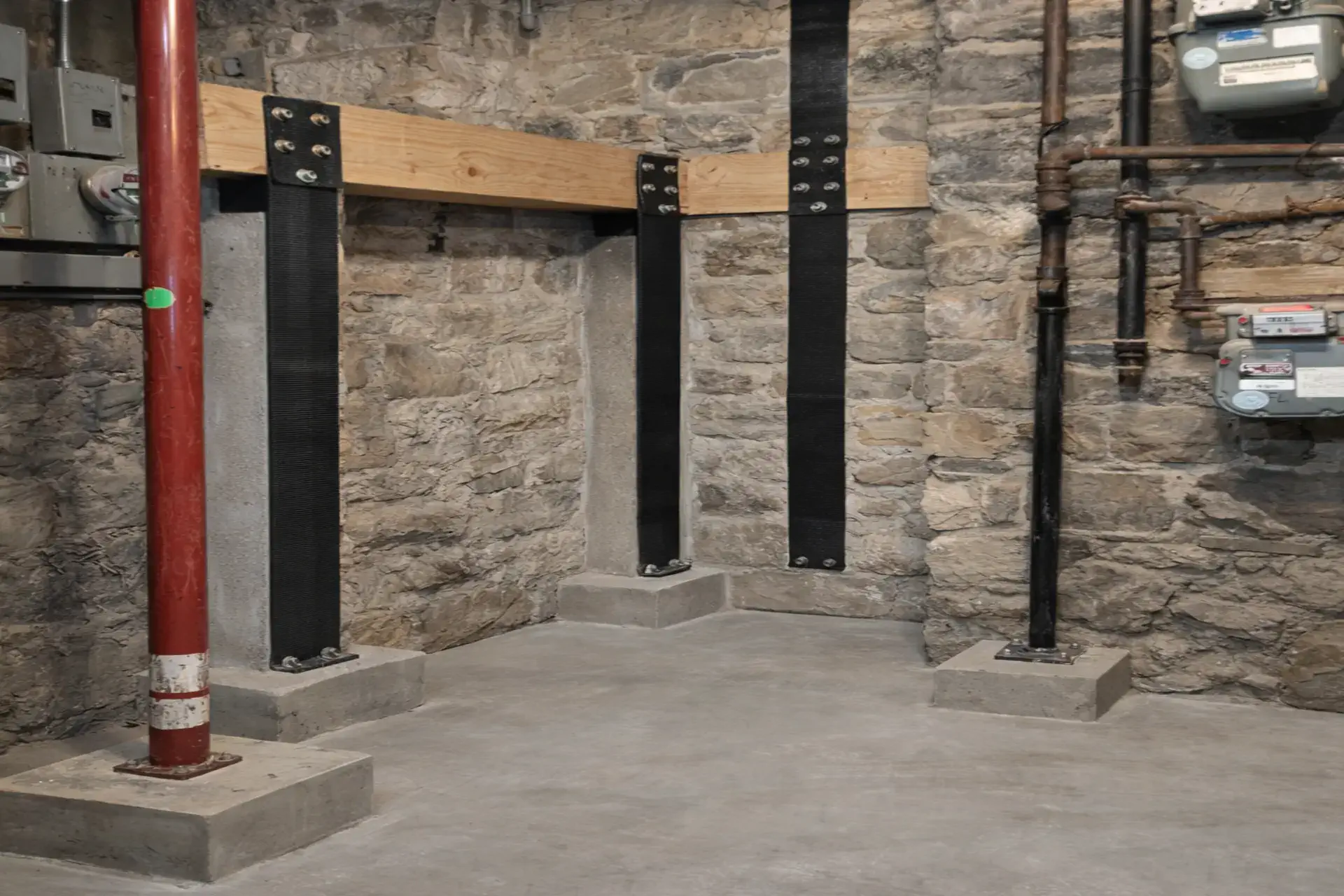
We then installed an ICC certified carbon fiber wall reinforcement system. This system included vertical and horizontal carbon fiber straps anchored to the rim joists and secured directly into the stone foundation. Because the wall had no footing, the work required additional care, precision, and temporary support during installation.
Making the Basement Structurally Safe
Safety came first. Zavza Seal corrected unstable areas immediately by removing improperly supported posts and replacing them with permanent steel columns set on reinforced concrete footings.
The basement was excavated in controlled sections to allow proper height clearance while protecting the structure. Underpinning was performed in small, staggered sections so the house was never left unsupported. Each footing was reinforced with rebar, compacted soil, and poured with high strength concrete. A vapor barrier was installed to help protect against future moisture issues.
The Result:
The basement is now structurally sound, properly supported, and stabilized for the long term. The central beam can safely carry the load it was designed for, the foundation wall is secured against further movement, and the entire basement structure is safe and reliable.
What started as a high risk situation was turned into a stable foundation that the homeowner can trust for years to come.
Why This Matters for Brooklyn Homes?
Many Brooklyn homes are older and have been altered over time. Past repairs that were done incorrectly can create serious safety risks. Structural work requires experience, planning, and the right methods to protect both the home and the people inside it.
This project shows how Zavza Seal approaches complex basement and foundation repairs with care, precision, and long term results in mind.