
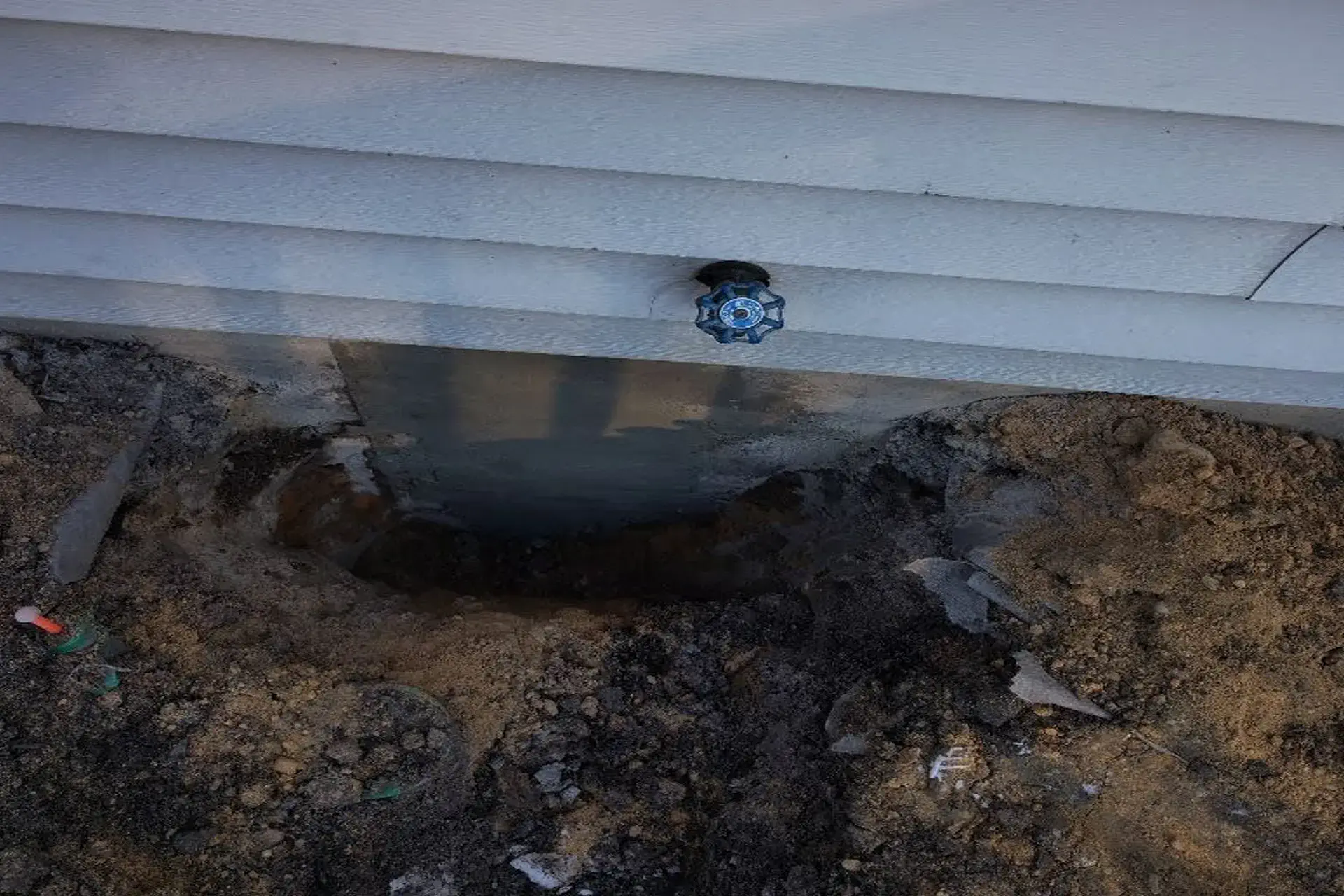
The Problem:
The homeowner noticed visible cracks on the outside of their foundation wall.
There were three structural cracks showing above ground level. The concern was that these cracks could go deeper below the surface, but the basement was fully finished. This made it impossible to see how far the damage extended from inside.
Main concerns included:
- Water getting into the foundation
- Cracks getting worse over time
- Hidden structural damage behind finished walls
Foundation cracks are not something you want to ignore. Even small cracks can grow and lead to serious problems if not repaired early.
Our Inspection:
We started by inspecting all visible cracks from the exterior.
Since the basement was finished, the only safe way to understand the full depth of the cracks was to open the ground from the outside.
We explained to the homeowner that we would:
- Excavate around each crack about 2 feet down
- Check if the cracks stopped at that depth
- Decide the best repair method based on what we find
This approach avoids unnecessary damage inside the home.
The Solution:
Step 1: Exterior Excavation
We carefully excavated the soil around all three crack locations to about 2 feet deep.
This allowed us to trace the cracks and confirm their depth.
Step 2: Crack Preparation
To make sure the repair holds long term, we fully prepared the surface:
- Used diamond blades to open and clean the cracks
- Removed all loose and damaged material
- Exposed solid concrete underneath
This step is critical. Repairs do not last if the surface is not properly prepared.
Step 3: Structural Repair
We rebuilt the damaged areas using high-strength materials:
- Filled cracks with 6,500 PSI repair mortar
- Applied fiberglass mesh for reinforcement
- Added two layers of 6,000 PSI waterproofing cement
This process restores strength to the wall and prevents further cracking.
Step 4: Waterproofing Protection
After the structural repair, we sealed the area completely:
- Applied a thick layer of liquid rubber waterproofing
- Created a barrier to stop water from entering
This ensures the foundation stays dry even during heavy rain.
Step 5: Backfill and Restore
Once everything was complete, we backfilled the soil and restored the area.
The repair was done with minimal disruption to the property.
If the Cracks Had Gone Deeper
We always plan for every scenario.
If the cracks had extended deeper than 2 feet, we had two solutions ready:
- Continue excavation down to the footing and repair the full crack from the exterior
- Or perform interior crack injection using epoxy and urethane for both strength and waterproofing
This ensures the problem gets fixed the right way no matter how deep it goes.
The Result:
After the repair:
- All cracks were fully sealed and reinforced
- The foundation was structurally strong again
- Water can no longer enter through those areas
The homeowner now has peace of mind knowing the issue is fully handled.
Why This Matters for Long Island Homes?
Homes in East Setauket and across Long Island often deal with:
- Soil movement
- Moisture and heavy rain
- Older foundations
These conditions can cause cracks over time. Fixing them early helps avoid major structural repairs later.
What Could Have Happened If Ignored?
If these cracks were left untreated:
- Water could enter the basement
- Mold and moisture damage could develop
- Cracks could expand and weaken the foundation
- Repair costs could increase significantly
According to the International Association of Certified Home Inspectors, even small foundation cracks can lead to serious structural issues if not repaired early.
Need Foundation Crack Repair in Long Island
If you see cracks in your foundation, it is best to deal with them early.
Small cracks can turn into major structural problems if ignored. A proper repair now can save you time, stress, and money later.