
The Problem:
The building owner noticed the structure was starting to lean toward the north side.
This is a serious warning sign. When a building shifts like this, it usually means the foundation is no longer properly supported.
Main concerns included:
- Continued movement of the structure
- Cracks forming in walls and foundation
- Long term structural damage
There was also a narrow space between this building and the neighboring one, which raised concerns about water getting trapped and affecting the soil.
Our Inspection:
We began with a detailed inspection of the property.
As part of our process:
- We sent a crew member to the roof to check the roof line between both buildings
- We reviewed the direction and extent of the lean
- We planned for a possible waterproofing solution for the space between the buildings
This helped us understand both the structural issue and what might be causing it.
The Solution:
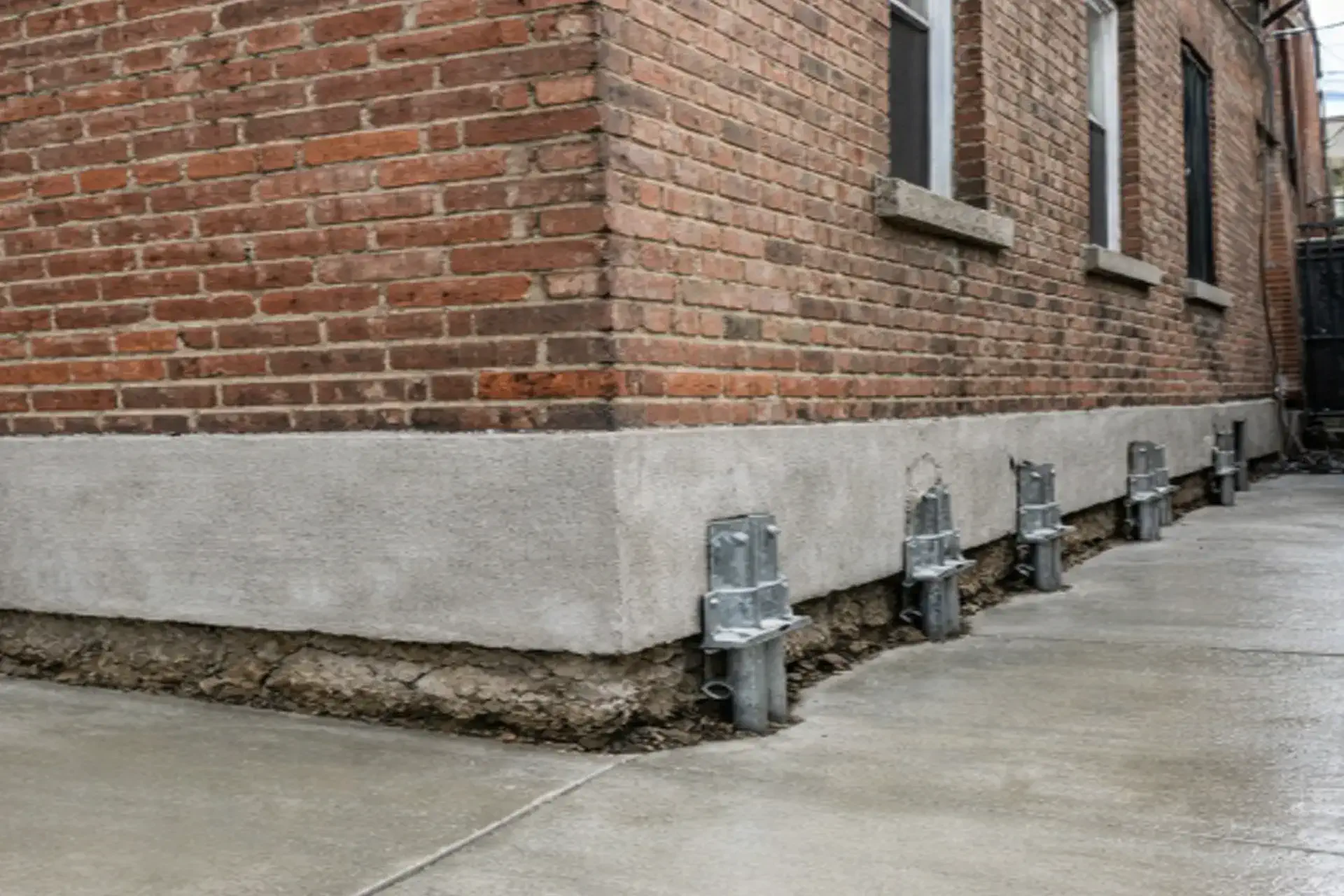
To stop the building from moving further, we installed a deep foundation support system using helical piles.
Step 1: Access and Preparation
We cut and removed a 5 foot wide section of concrete along the affected side of the building.
This gave us full access to the foundation where support was needed.
Step 2: Helical Pile Installation
We installed 7 helical piles along the foundation wall.
Each pile was:
- Driven deep into stable soil
- Installed to a minimum capacity of 20 tons
- Built using strong steel shafts with helical plates
These piles transfer the weight of the building to stronger ground below.
Step 3: Securing the Foundation
We attached galvanized steel brackets to the piles and secured them to the foundation footing.
This locks the building in place and prevents further settlement.
It is important to note that this project was designed to stabilize the structure only. Lifting the building was not recommended and was not performed.
Step 4: Site Restoration
After the structural work was complete:
- Soil was compacted properly
- A new 5 inch concrete slab was installed
- A 3 inch crushed stone base was added
- Steel reinforcement was used for strength
- The surface was finished cleanly
Challenges:
This project required careful planning and execution.
Key challenges included:
- Working in a tight space between buildings
- Stabilizing the structure without lifting it
- Making sure the piles reached strong soil for proper support
Every step had to be done precisely to ensure long term stability.
The Result:
After the installation:
- The building was fully stabilized
- Further movement was stopped
- The foundation now has strong support from deep soil
The owner now has confidence that the structure is secure.
What Could Have Happened If Ignored?
If the issue was not addressed:
- The building could continue to lean
- Structural cracks could get worse
- Repairs could become much more expensive
- Safety risks could increase
According to the Federal Emergency Management Agency, foundation movement can lead to serious structural damage if not corrected early.
Why This Matters for Brooklyn Properties?
Many Brooklyn buildings are older and built on soil that can shift over time.
Common causes include:
- Weak or loose soil
- Water affecting the ground
- Buildings built close together
Helical piles are one of the most reliable ways to stabilize foundations in these conditions.
Need Foundation Stabilization in Brooklyn
If your building is leaning or showing signs of settlement, it is important to act early.
Stabilizing the foundation now can prevent bigger structural problems later.