
The Problem:
A homeowner in East Hampton was dealing with ongoing water intrusion in their basement. Water was entering at the floor and wall joint, especially during heavy rain. Over time, this created damp conditions, visible cracks, and pressure buildup under the concrete slab.
Our inspection showed multiple issues happening at the same time. The main problem was hydrostatic pressure forcing water through weak points in the foundation. There were also pipe penetrations allowing water to enter directly into the basement, cracks in the slab, and an inefficient sump pump system that was not relieving pressure properly.
Outside, the drainage system had failed. Corrugated pipes were clogged, and water was collecting near the foundation instead of being directed away. Under the deck, large volumes of water were building up with no proper drainage path.
This combination of interior and exterior issues made the problem worse over time and increased the risk of structural damage.
The Solution:
Our team at Zavza Seal created a full waterproofing plan that addressed both the inside and outside of the home. The goal was to stop water entry, relieve pressure, and strengthen the foundation.
We started inside the basement by preparing the work area carefully. Plastic barriers were installed from floor to ceiling to isolate the space and keep the rest of the home clean. We removed sections of sheetrock where needed to expose the foundation walls.
The foundation surface was then cleaned using diamond grinding tools. This removed paint, mold, and buildup so the waterproofing materials could bond directly to the concrete.
Next, we applied a multi-layer waterproofing system. A high-performance grout was used first, followed by two layers of 7,000 PSI waterproofing cement. Between these layers, we installed reinforced fiber mesh to add strength and durability. This system not only stops water but also strengthens the foundation wall itself. This allows us to offer a long-term 30-year warranty.
Unlike a traditional interior French drain, this method avoids cutting into the slab. It keeps the structure intact while still stopping water intrusion effectively.
Fixing Entry Points and Weak Areas
We sealed two pipe penetrations that were allowing water to flow directly inside. The pipes were cut back, capped with epoxy, and sealed using high-strength grout to match the wall and floor surface.
Cracks in the basement slab and expansion joints were repaired using reinforced mesh and waterproofing cement. A flexible sealant was applied to joints to allow movement without future cracking.
We also injected waterproof grout into voids and cavities around the home’s perimeter. This stopped hidden water pathways and reinforced the surrounding soil structure.
Upgrading the Sump Pump System
The existing sump pump was not effective because it was installed too high. This allowed pressure to build under the slab before the system activated.
We replaced the old basin with a deeper one that included drainage openings on the sides and bottom. This allowed water to enter faster and reduced pressure buildup. The upgrade improved system efficiency and reduced the risk of long-term damage.
Exterior Drainage Improvements
To fully solve the problem, we addressed the water outside the home as well.
In the garden area, we removed clogged corrugated piping and installed a new drainage system. This included a soil separator, gravel base, and a perforated PVC pipe connected to a dry well. The dry well was placed at a safe distance from the foundation to carry water away from the home.
Under the deck, we installed multiple catch basins connected to a discharge line that leads to another dry well. This system captures heavy water flow and prevents it from reaching the foundation in the first place.
We also repaired a damaged section of the concrete slab near the sump pump using reinforced 4,000 PSI concrete to restore structural strength.
Access and Finishing Work
To ensure complete waterproofing, we temporarily removed a shelving unit to access the wall behind it and reinstalled it after the work was complete. All treated areas were restored to their original condition as closely as possible.
The Result:
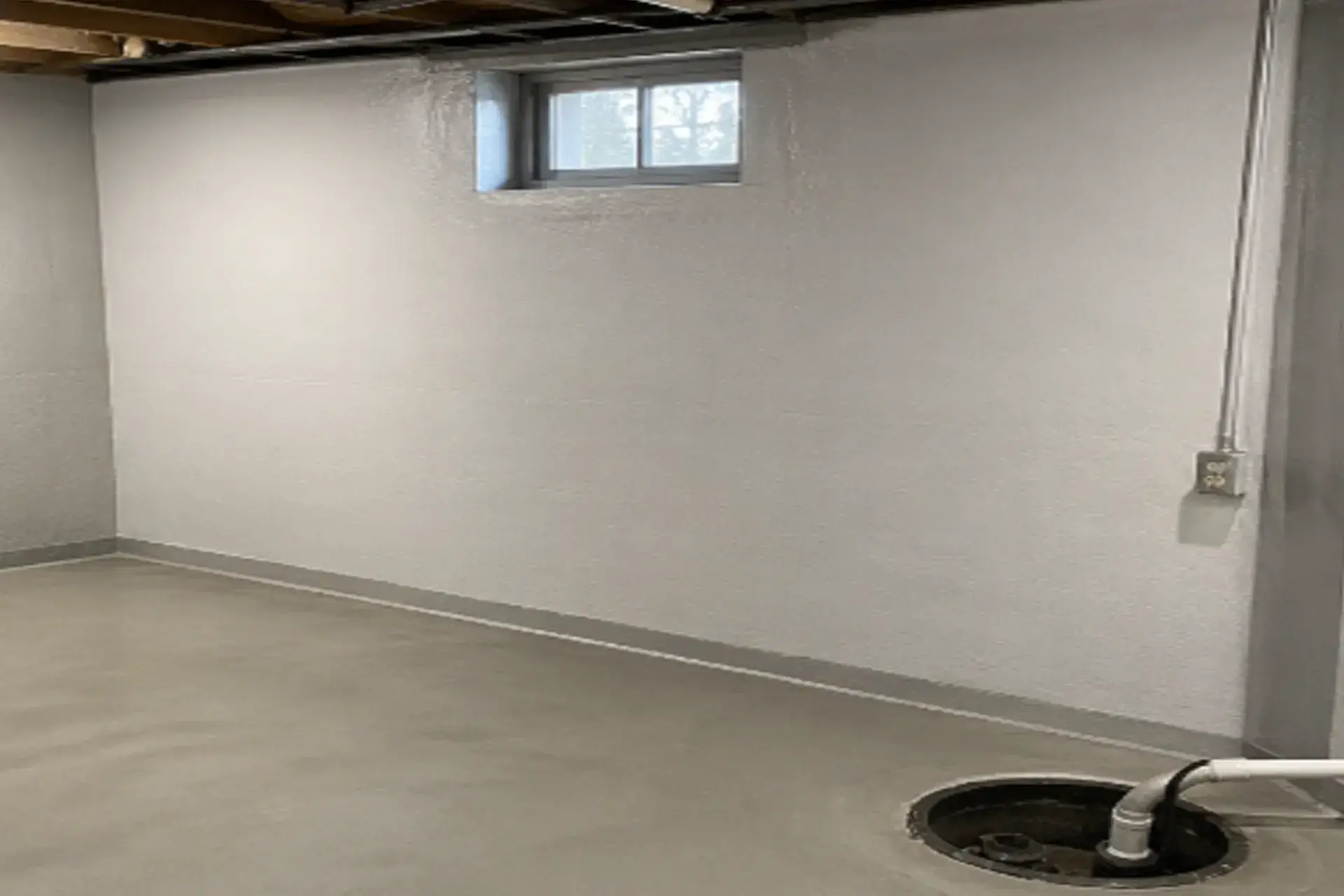
The basement is now fully protected from water intrusion. The combination of interior waterproofing and exterior drainage has eliminated pressure buildup and stopped leaks at the source.
The homeowner now has a dry, stable, and usable basement with no need to rely heavily on mechanical systems like sump pumps. The structure is stronger, and the risk of future damage has been greatly reduced.
Why This Method Works Better?
This project shows why interior cement-based waterproofing can be a smarter option than traditional drainage systems in many cases. It strengthens the foundation instead of weakening it, requires no ongoing maintenance, and avoids the risks that come with sump pump failure.