
Project Overview
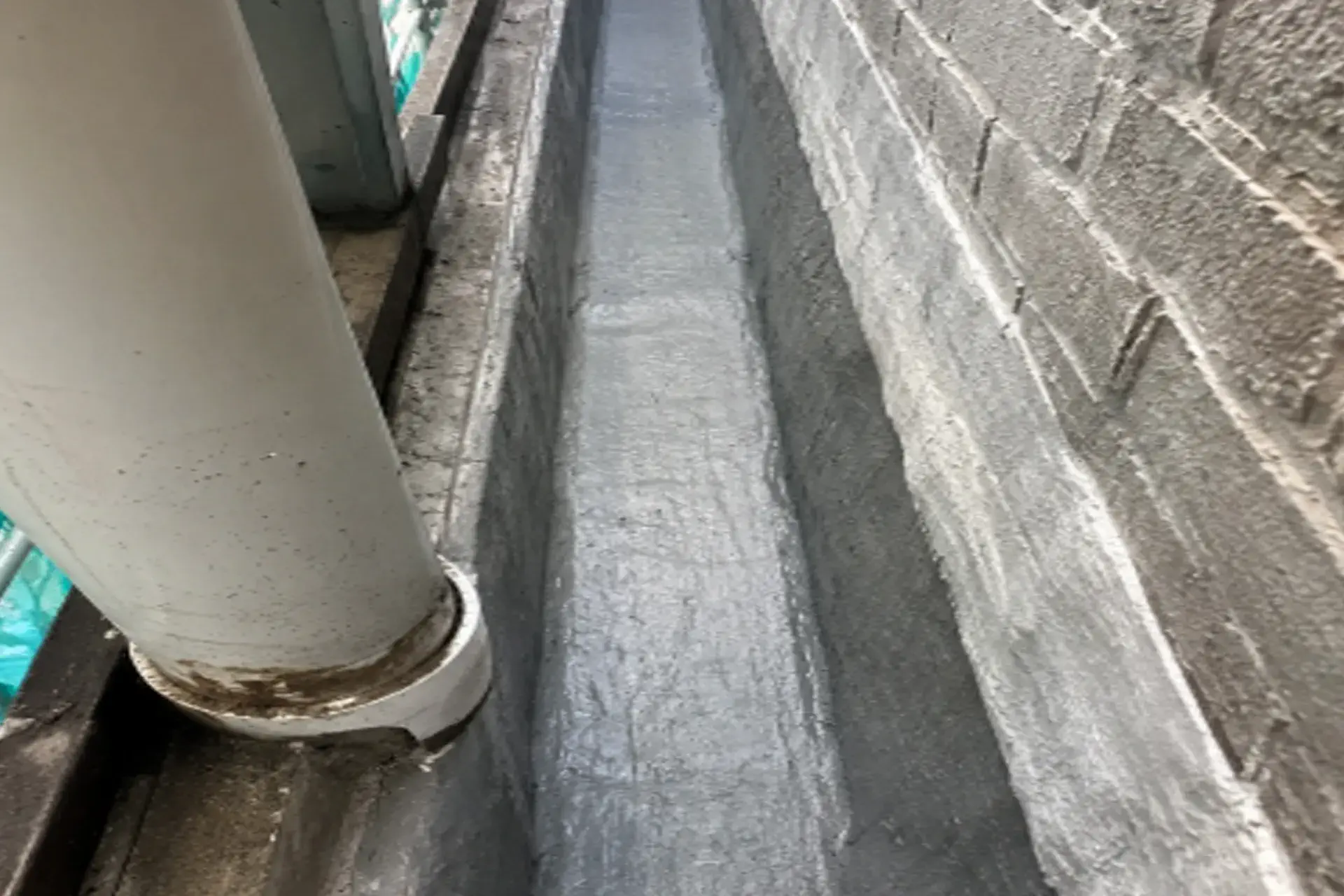
Our team at Zavza Seal completed a waterproofing project in Brooklyn, NY involving a difficult water intrusion issue between a PVC pipe cavity, our waterproofing channel system, and a neighboring wall.
The customer reported recurring water entry inside the structure, damp wall conditions, and signs of hidden moisture behind finished surfaces.
Problem Summary
Water Intrusion From Neighbor Side
Water was entering from the neighbor’s side and traveling behind the existing waterproofing system. During its downward flow, the water was encountering obstacles inside the cavity and redirecting into the customer’s structure instead of draining properly.
Key Issues Identified
- Water leaking through a hidden cavity between the waterproof channel and neighbor wall
- Possible obstruction points causing water diversion
- Risk of trapped moisture behind drywall and insulation
- High probability of mold growth in wet materials
- Difficulty in exterior repair due to neighbor-side limitations
Based on the site conditions, exterior-only waterproofing was not reliable because even small disturbances like nails or screws could damage the system later.
Our Analysis
After reviewing the structure, we determined that moisture was likely spreading into interior wall assemblies. This increases the risk of mold development and long-term structural damage.
We also concluded that an interior waterproofing strategy would be more effective because:
- Damaged interior materials may already need removal due to mold risk
- Exterior access was limited and not fully controllable due to neighbor-side conditions
- Interior repair allows full control over drainage and sealing systems
We recommended exploratory infrared scanning and moisture testing before finalizing remediation steps.
Solution Implemented
1. Cavity Stabilization and Anchor Installation
- Installed long threaded anchors angled approximately 30° upward from the waterproof channel toward the neighbor wall
- Created a stable base to support sealing layers inside the cavity
2. Waterproof Barrier Creation
- Installed solid waterproofing strips over anchors from channel to neighbor wall
- Injected epoxy and urethane materials into voids and gaps to block water pathways
- Applied waterproofing paste across the full surface for complete sealing
3. Waterproof Channel Extension (2 feet section at 5° slope)
- Carefully cut through facade and substrate
- Formed a custom drainage channel inside the cut
- Injected waterproofing compounds to prevent blockage
- Sealed edges using hermetic caulking
- Applied waterproof cement, sealants, and waterproof membranes for long-term protection
4. Main Waterproof Channel (Approx. 16 linear feet at 5° slope)
- Created controlled openings through facade and substrate
- Built a custom internal drainage channel system
- Ensured proper water flow direction and no internal obstruction
- Fully sealed system using waterproofing membranes and cement-based coatings
5. Moisture Investigation Plan
We also proposed:
- Infrared thermal scanning of affected walls
- Moisture mapping of suspected areas
- Identification of all wet drywall and insulation zones
- Cost and repair report based on findings
- Clear remediation plan before final restoration work
Final Outcome:
The system was redesigned to safely collect and redirect water into the waterproof channel instead of allowing it to spread into the structure. All cavities were sealed, reinforced, and treated to prevent future water intrusion.
This approach improved long-term durability and reduced the risk of hidden mold and structural deterioration.
Zavza Seal also provides a 40-year warranty on waterproofing work for added protection and peace of mind.
Educational Note: Mold and Moisture Risks
Moisture trapped behind walls can quickly lead to mold growth, which can affect both building materials and indoor air quality. Proper waterproofing and moisture control are essential in preventing long-term damage.
This Brooklyn waterproofing project required a highly technical solution due to complex water movement between neighboring structures and hidden cavities. By combining structural anchoring, epoxy injection, custom drainage channels, and full waterproof sealing, Zavza Seal successfully controlled the water intrusion and protected the interior structure from further damage.